
Culinary Herbs and Vegetables
Herbs are the leaves we cook with; the vegetables here give us leaves, stems, and roots. Many herbs taste strong for a reason: the oils in their leaves help protect them from insects and grazing animals.
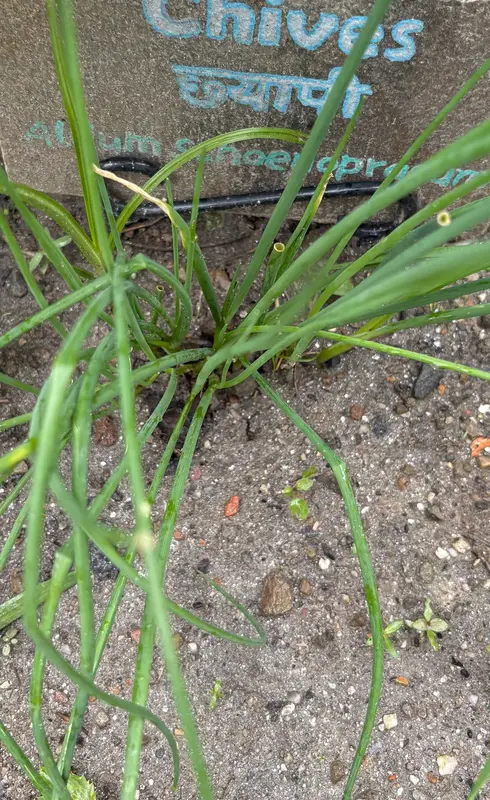
Chives
छ्यापी
Allium schoenoprasum
The smallest onion in the kitchen: its hollow, grass-like leaves have a mild onion flavor, and its round purple flower heads are edible too.
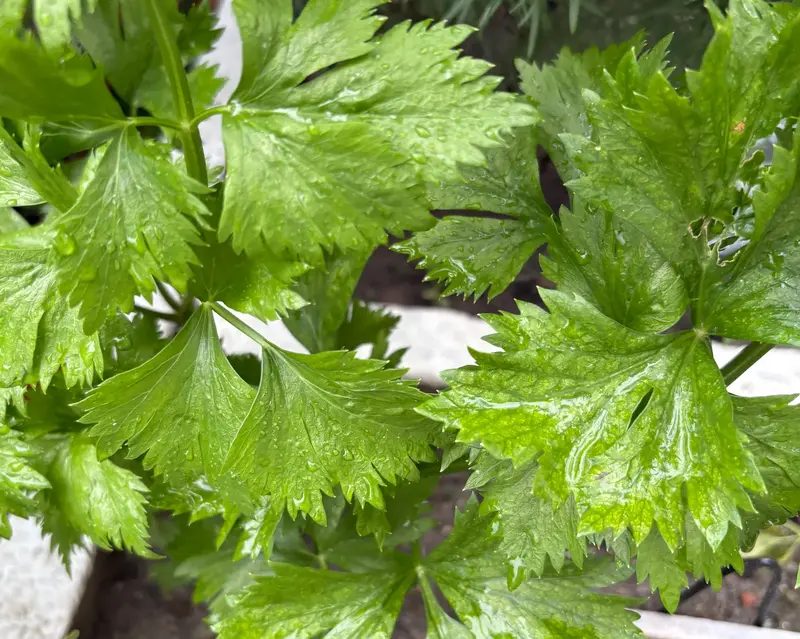
Celery
Apium graveolens
Celery is a relative of carrots and coriander, and the stalk we eat is the stalk of a leaf. The same plant gives celery seed, used as a spice.
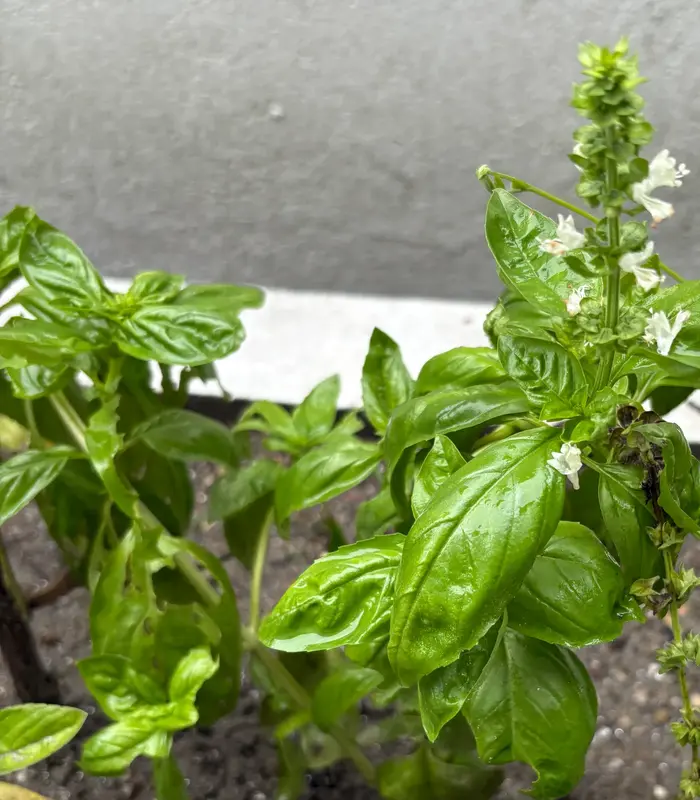
Sweet Basil
तुलसी
Ocimum basilicum
Crush a sweet basil leaf and its aroma bursts out instantly — oils packed into the leaf release the moment its surface breaks, which is why basil is usually torn or chopped just before serving.
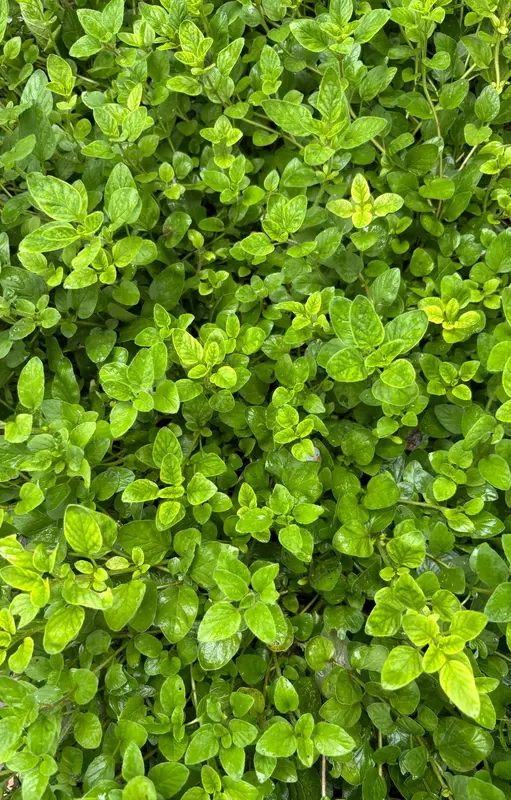
Oregano
Origanum vulgare
The herb on pizza, and a member of the mint family: look for its square stems and leaves in pairs. Its flavor gets stronger when the leaves are dried.
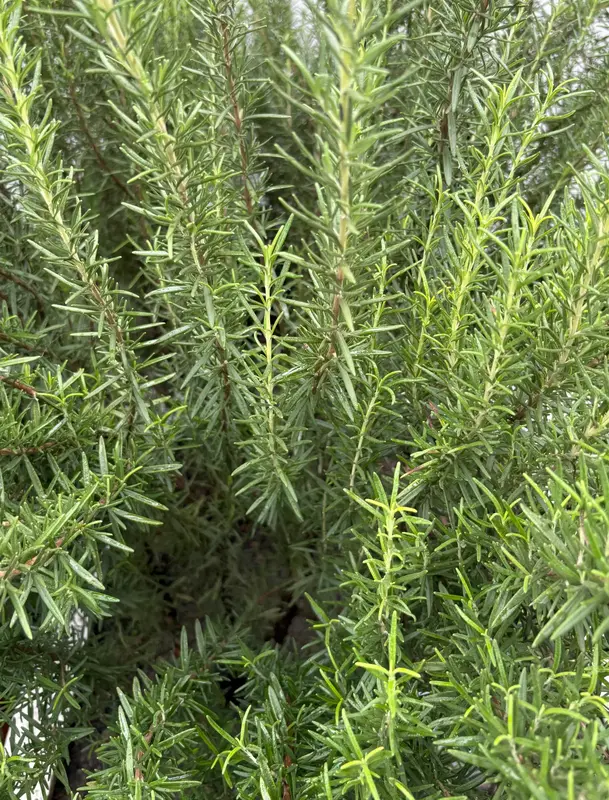
Rosemary
Salvia rosmarinus
Its needle-like leaves roll under at the edges to save water in dry Mediterranean summers. Botanists recently moved it into the sage genus, Salvia.
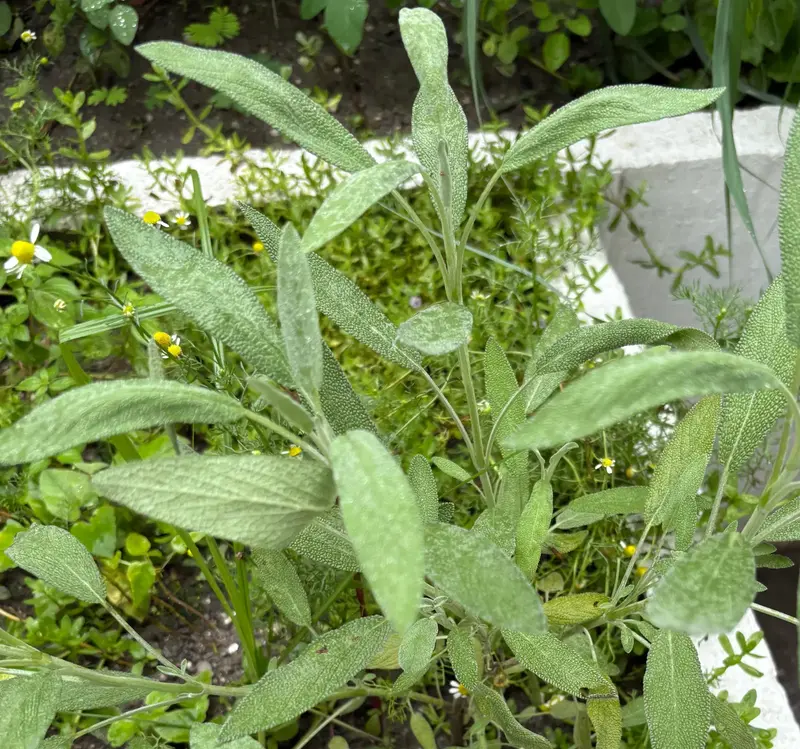
Sage
Salvia officinalis
Its soft, gray-green leaves are covered in fine hairs that shade them and hold in moisture. Like rosemary, it is a salvia, in the mint family.
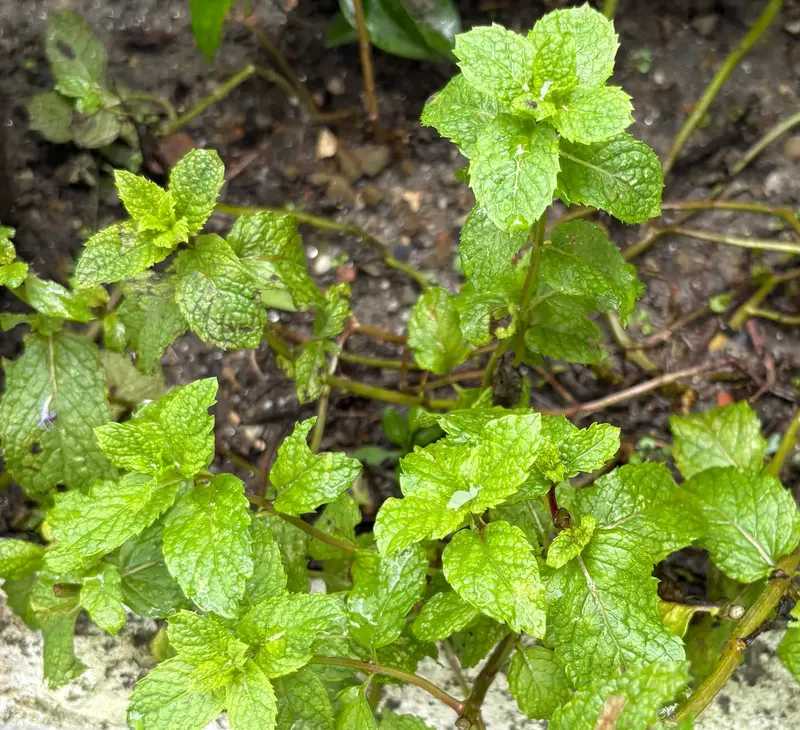
Spearmint
बाबरी / पुदिना
Mentha spicata
Mint spreads underground with runners, so one plant soon becomes a patch. Spearmint is the gentler mint of chutney and tea; peppermint is its stronger hybrid.
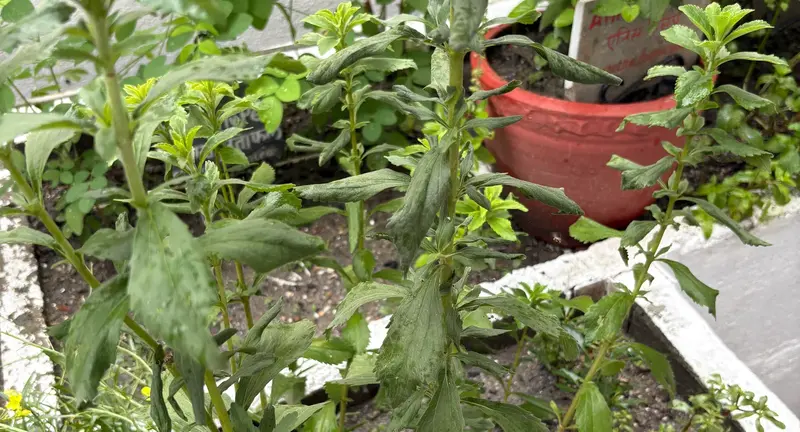
Stevia
Stevia rebaudiana
Chew a leaf and it is startlingly sweet: its natural sweeteners are 200 to 300 times sweeter than sugar. It comes from Paraguay, where people have long used it to sweeten tea.
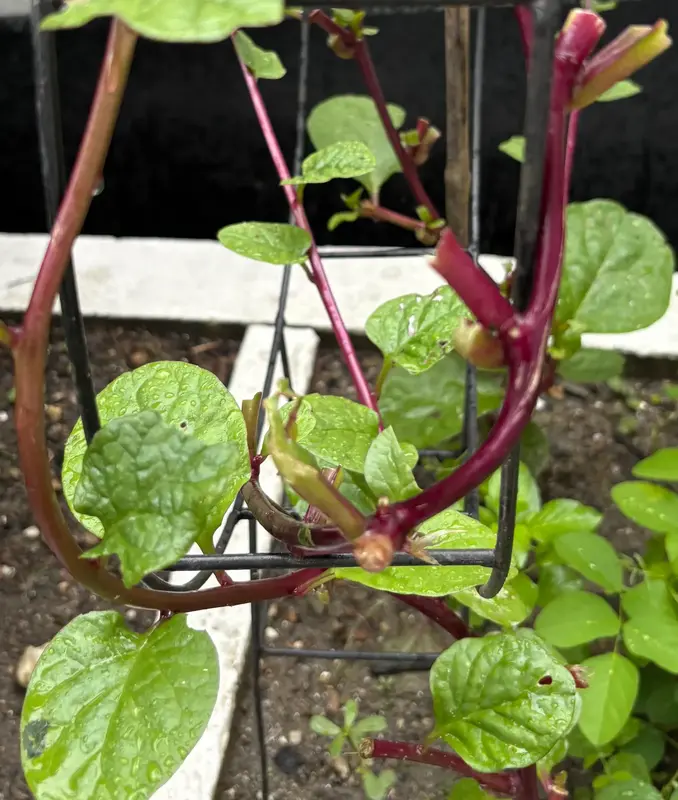
Malabar Spinach
Basella alba
Malabar spinach climbs by twining its stem around a support, growing quickly up a trellis while its thick, glossy leaves are harvested continually for cooking.
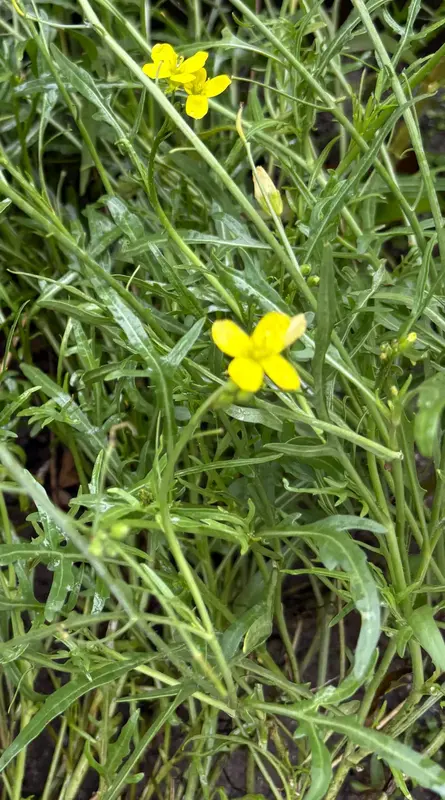
Wild Rocket
Diplotaxis tenuifolia
Also called wall rocket: a wild cousin of the arugula sold in shops, with narrower leaves, bright yellow flowers, and an even sharper, peppery bite. It is in the mustard family.
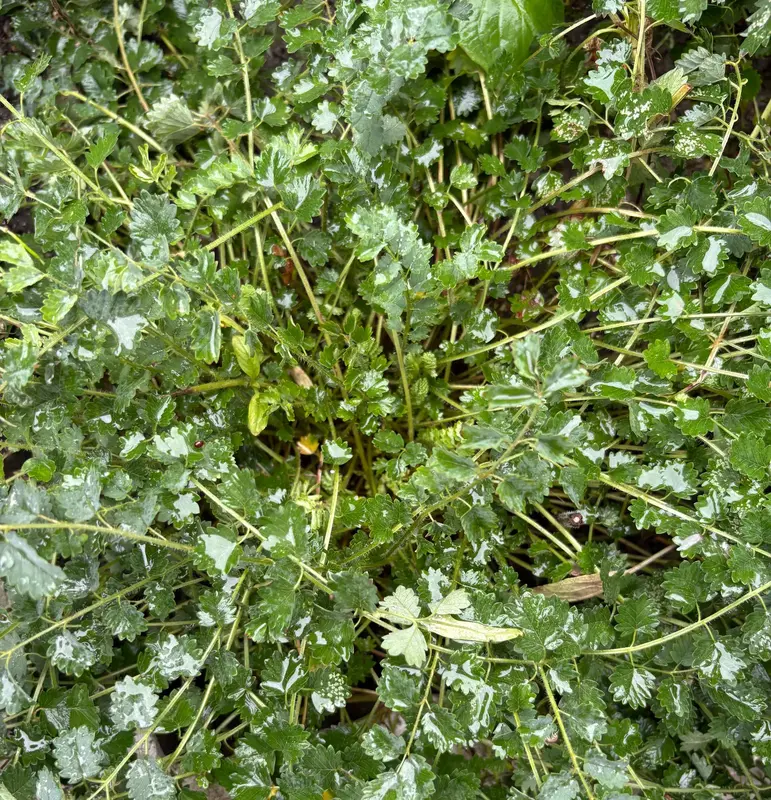
Salad Burnet
Sanguisorba minor
Its small, toothed leaves taste like cucumber. It is in the rose family, and its round green flower heads have no petals and are pollinated by the wind.
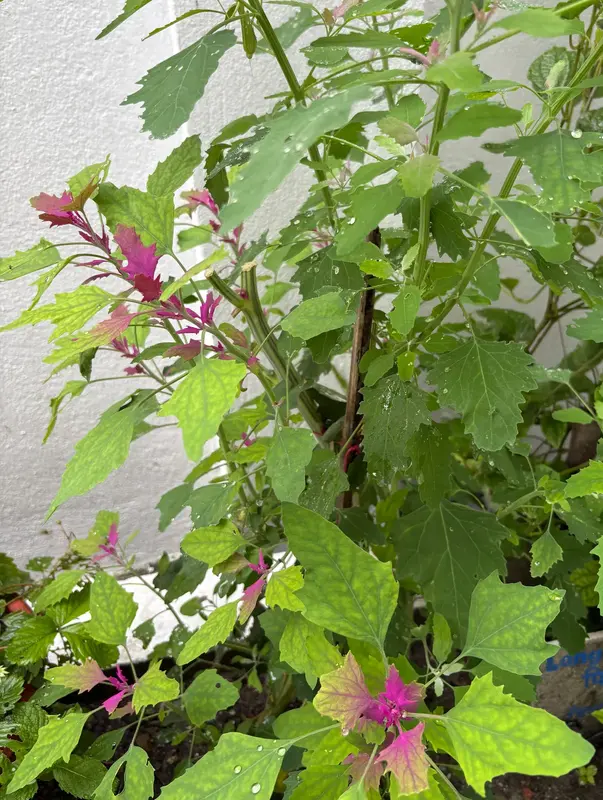
Tree Spinach
Chenopodium giganteum
Its young leaves are dusted with bright magenta powder. It is a giant relative of bethe saag and can grow taller than a person.
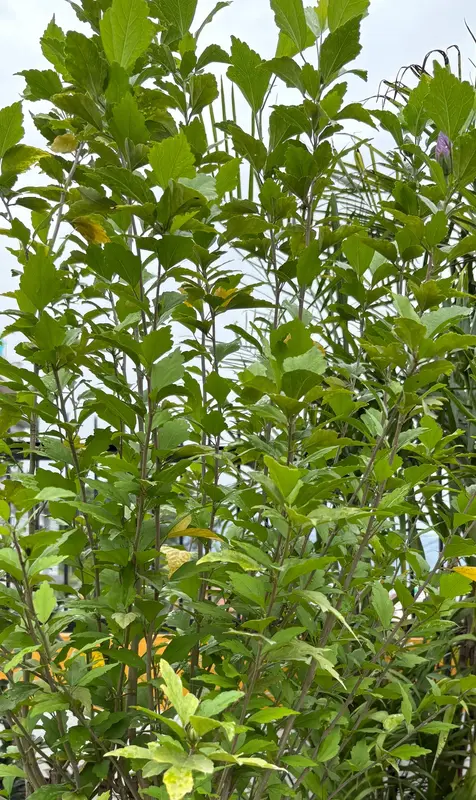
False Roselle
Hibiscus acetosella
A hibiscus grown for its deep red-purple leaves, which are sour and can be cooked as a vegetable or steeped into a red tea.
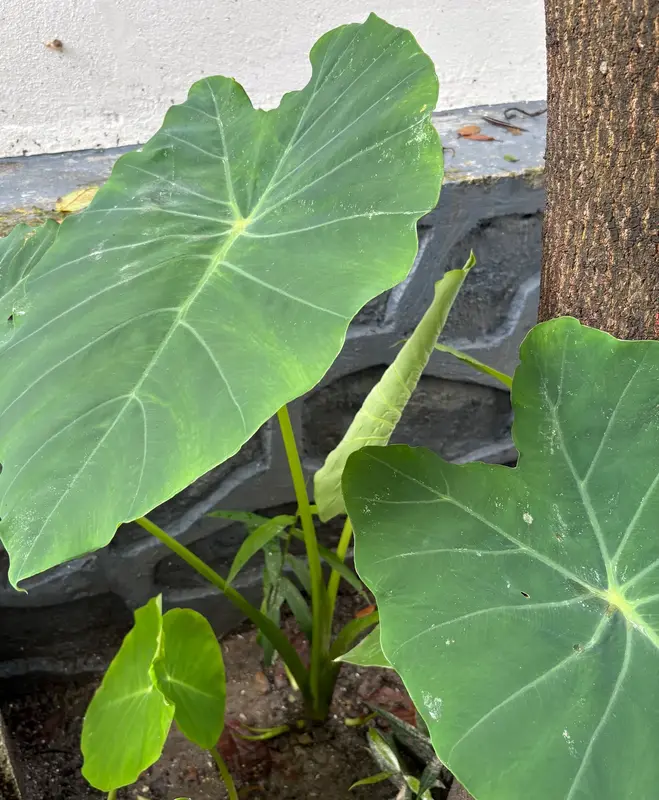
Taro (Pindalu)
कर्कलो (पिँडालु)
Colocasia esculenta
Its corms and leaves are eaten across Nepal as pindalu and karkalo, always cooked: raw, they sting the mouth. Water beads up and rolls right off its leaves.
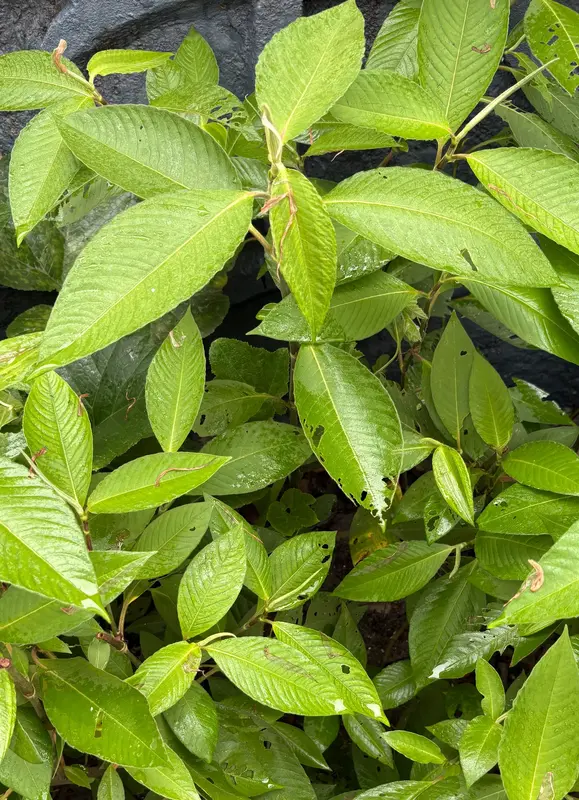
Thotne (Sikkim Knotweed)
ठोट्ने
Koenigia mollis
A tall Himalayan knotweed. In Nepal its young shoots are peeled and eaten for their sour taste, fresh or as achar. It is a relative of buckwheat and rhubarb.
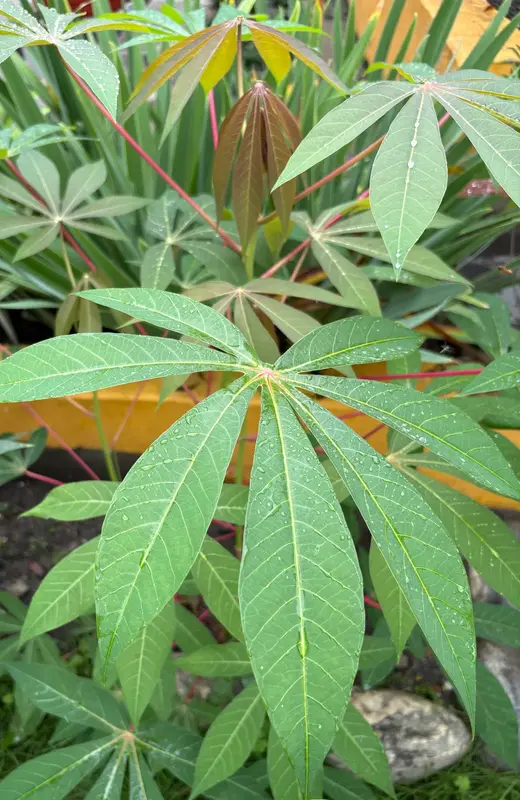
Cassava
सिमल तरुल
Manihot esculenta
Cassava roots feed hundreds of millions of people in the tropics, and tapioca is made from them. They must be peeled and cooked first: raw cassava contains natural cyanide compounds.
More in Food and Medicine
The garden is alive and changes through the year. Some plants flower, fruit, or rest only in certain seasons, so what you see depends on when you visit.
See them for yourself
Every plant here grows on our campus in Bhaktapur. Walk the garden on your visit.
Book a Visit