
Scent, Poison and Latex
Plants can't run, so many defend themselves with chemicals: oils in glands that smell when crushed, poisons, and milky latex.
A plant can’t run from an animal that eats it, so many defend themselves with chemicals. Some make strong-smelling oils in glandular tissue, in tiny glands or hairs on their leaves, and the smell keeps many insects away. Others hold poisons, or sharp crystals that make the mouth swell. Plants also store some wastes as latex, resin and gum, and these protect them too: latex seals a wound and is sticky or bitter to insects. Look at the poisonous plants here, but never pick or taste them.
See it in our garden
- Dumb Cane: its cells hold needle-like crystals that make the mouth and throat swell if it is chewed. Look, but never break or taste it.
- Variegated Oleander: every part of it is highly poisonous. Look, but never pick or taste it.
- Chinese Taro: it looks like the taro people grow for food, but sharp crystals in its cells make the mouth swell painfully. Look, but never taste it.
- Vicks Plant: look closely at its fleshy, fuzzy leaves; among the fuzz are glandular hairs full of the oil that gives it its smell.
- Baby Blue Eucalyptus: round, silvery-blue leaves with oil glands inside, full of the oil that gives eucalyptus its smell.
- Lemongrass: long leaves that smell of lemon, from an oil stored in special cells.
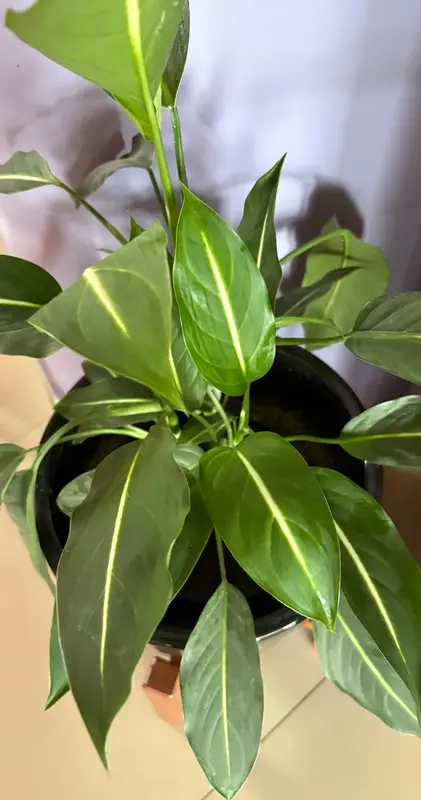
Dumb Cane
Dieffenbachia seguine
Its sap holds needle-like crystals that make the mouth and throat swell painfully, which once left people unable to speak: a defense against anything that bites it. Beautiful, but look, never taste.
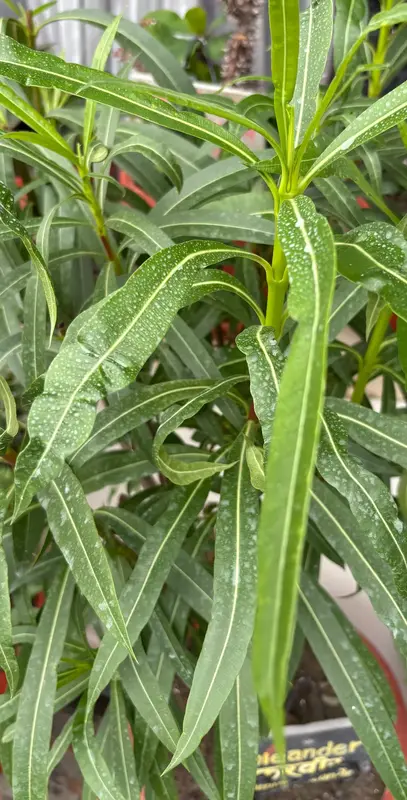
Variegated Oleander
करवीर फूल
Nerium oleander ‘Variegatum’
Every part of an oleander is highly poisonous, its defense against animals that would eat it. An oleander with cream-edged leaves and pink flowers; look, never taste.
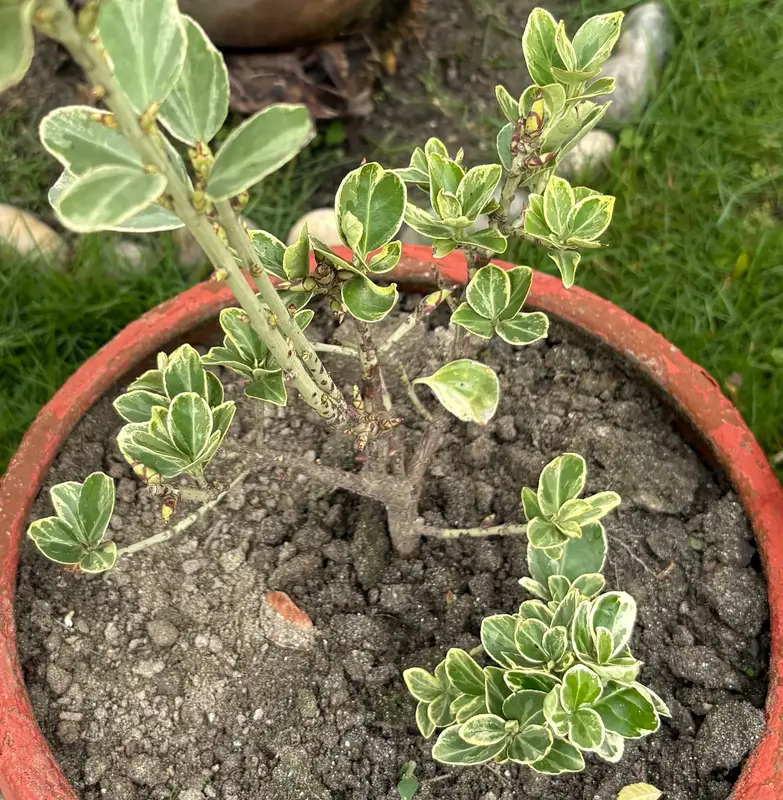
Variegated Japanese Spindle
Euonymus japonicus
A glossy hedge shrub with leaves edged in gold. Its colorful fruits are poisonous to people, though birds eat them and spread the seeds.
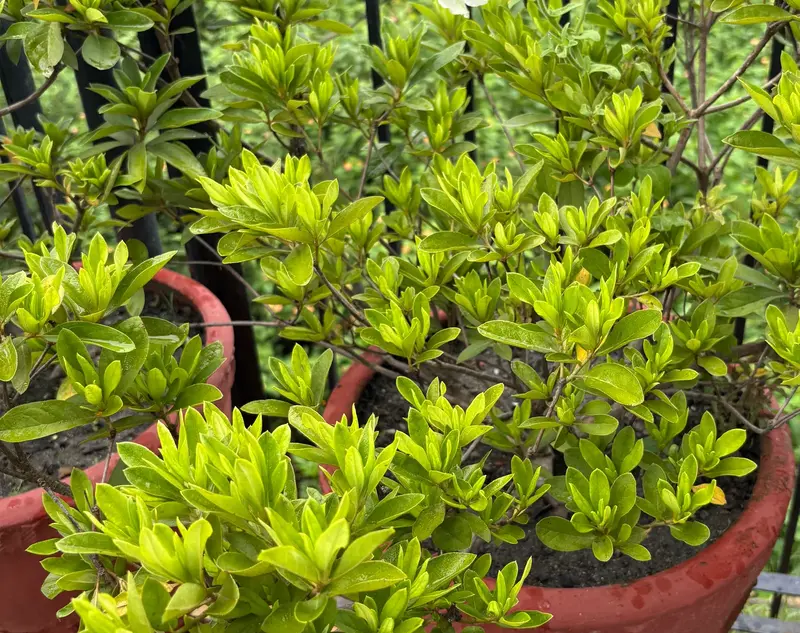
Azalea
Rhododendron sp.
Every part of an azalea is poisonous if eaten, even the nectar. It is a rhododendron, like Nepal’s lali gurans, whose leaves grazing animals leave alone for the same reason. Spots on its upper petal guide bees to the nectar.
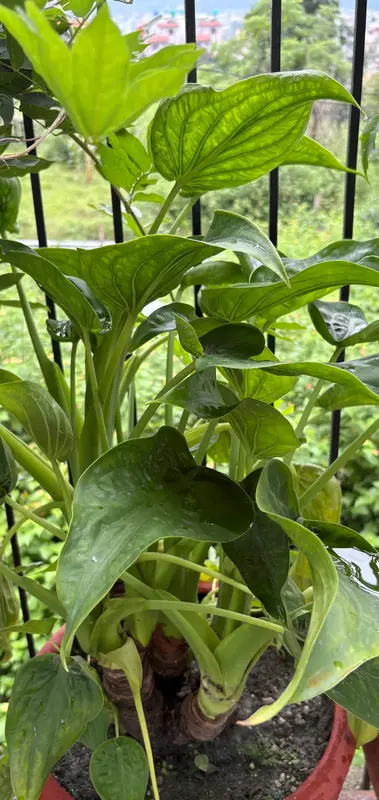
Chinese Taro
चाइनिज पिँडालु
Alocasia cucullata
It looks like the taro people cook, but eaten raw it makes the mouth swell painfully, from sharp crystals in its cells. Its heart-shaped leaves end in a hooded tip.
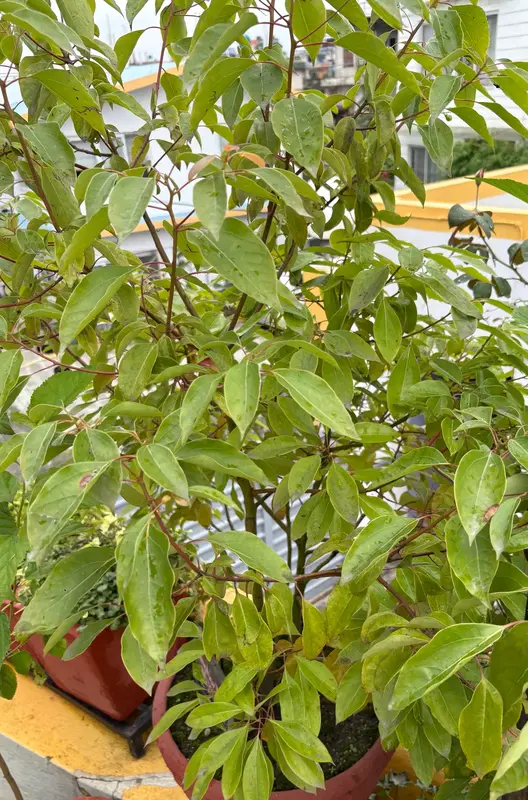
Camphor Tree
कपूरको रूख
Cinnamomum camphora
Crush a leaf and you smell camphor, an oil made and stored in special cells in its leaves and wood, which keeps many insects away. The same substance is burned in worship and used in balms. A cousin of the cinnamon tree.
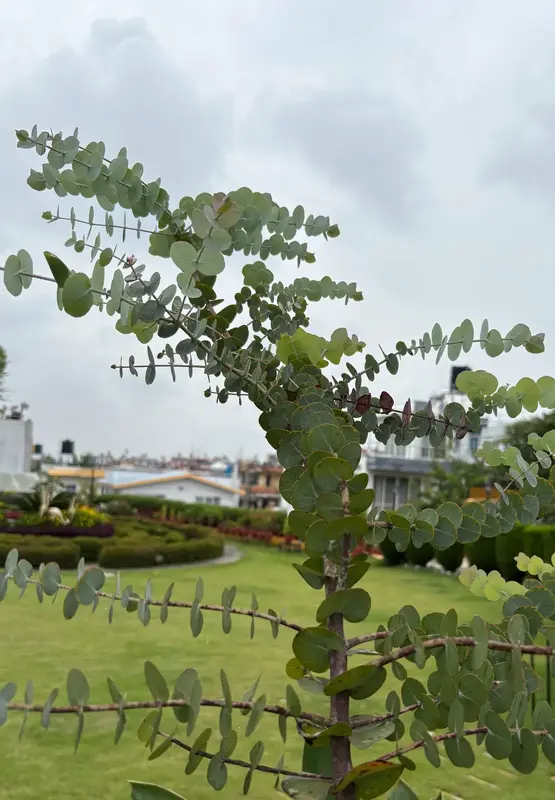
Baby Blue Eucalyptus
Eucalyptus pulverulenta ‘Baby Blue’
Hold a leaf to the light to see tiny dots: oil glands full of the aromatic oil that gives eucalyptus its smell and keeps most leaf-eaters off. Its round, silvery-blue leaves are coated in powdery wax. Eucalyptus trees come from Australia.
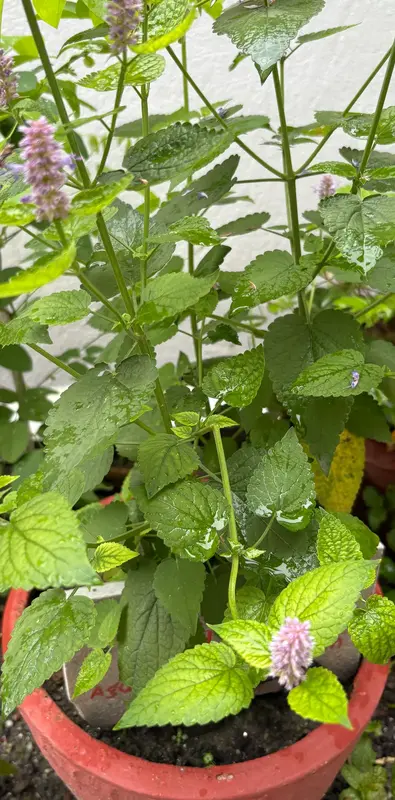
Anise Hyssop
Agastache foeniculum
Rub a leaf and it smells like licorice: tiny glandular hairs on the leaf burst and release their oil, like every mint’s. Its leaves make a sweet herbal tea, and bees crowd its purple flower spikes.
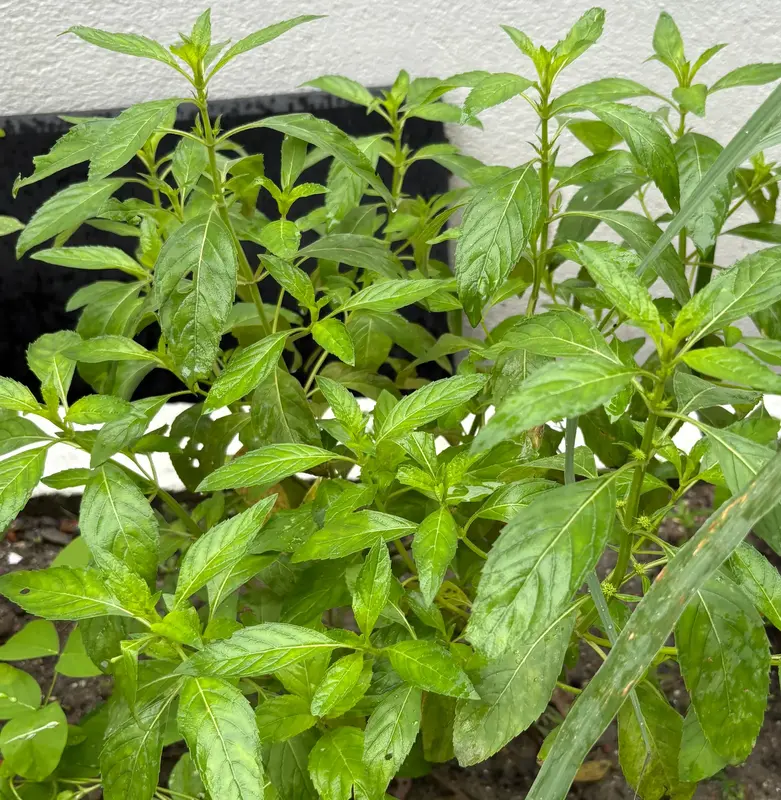
Bee Balm
Monarda didyma
Rub a leaf and it smells of citrus and mint, from oil in glandular hairs. Its shaggy red flower heads bring bees and butterflies, and in North America, hummingbirds.
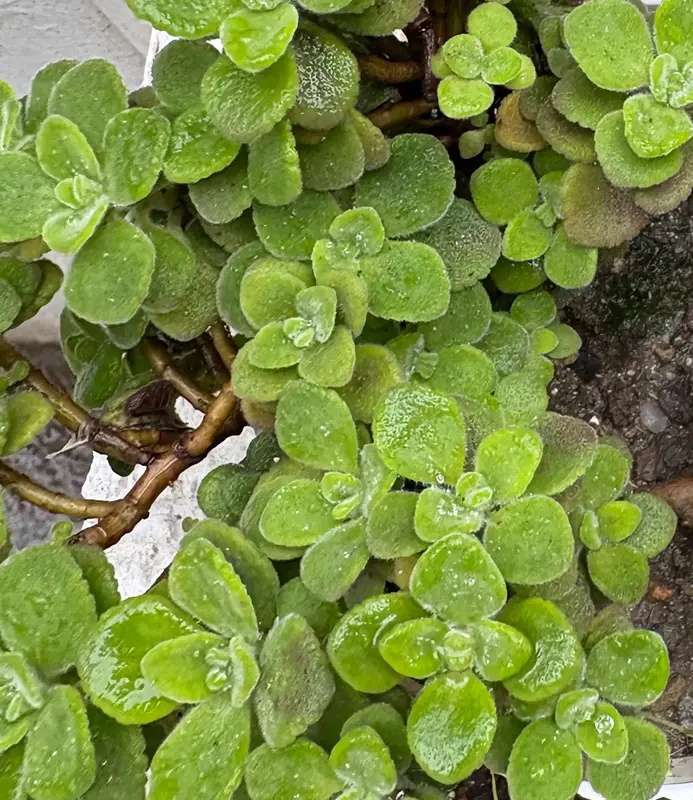
Vicks Plant
Plectranthus amboinicus
Rub a fleshy, fuzzy leaf and it smells like chest rub: the fuzz is glandular hairs full of oil. Also called Mexican thyme, but it comes from Africa and isn’t a thyme.
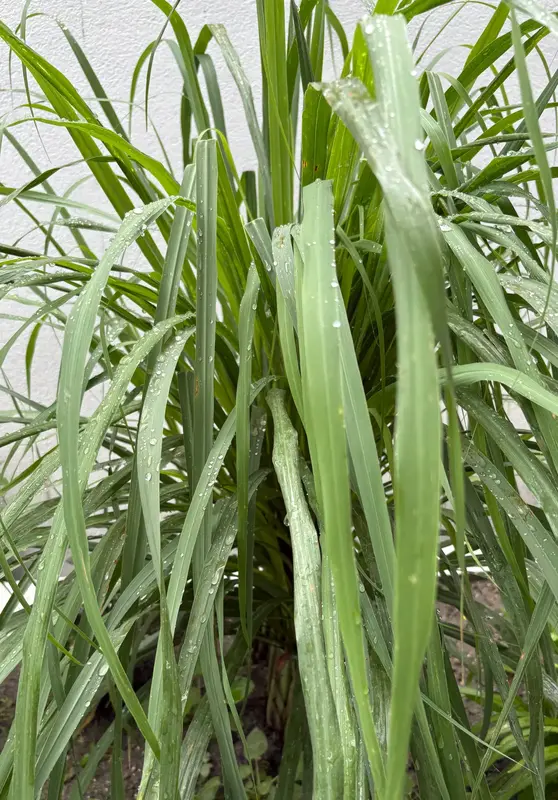
Lemongrass
Cymbopogon citratus
A grass that smells and tastes of lemon, thanks to citral, the same oil found in lemon peel, stored in special cells in its leaves. Its stalks flavor curries and tea.
More in How Plants Live Where They Grow
The garden is alive and changes through the year. Some plants flower, fruit, or rest only in certain seasons, so what you see depends on when you visit.
See them for yourself
Every plant here grows on our campus in Bhaktapur. Walk the garden on your visit.
Book a Visit