
Speaking Up, in Practice
Small steps to speaking well in front of others. Pick one, try it, and tick it off.
120 small things. Open one, try it, and tick it off.
Nerves
- Stop waiting to feel calm first
It’s the most common fear there is. Plan to speak with the nerves, not after they’ve gone.
Some evidence - Remember your nerves show less than you feel
You feel every shake. The audience sees far less of it.
Some evidence - Climb a speaking ladder, one rung a week
One friend, then three, then a small group, then the class. A rung a week.
Moderate evidence - Talk to yourself by your own name
“Sujata, you’ve done the work.” Your own name puts a little distance between you and the fear.
Some evidence - Drop one thing you hide behind
Each safety habit whispers “you’d have failed without me”. Try one talk without it.
Some evidence - Think about them, not about how you look
Swap “How am I doing?” for “What do they need to hear?”
Some evidence - Stand tall, but skip the power pose
Standing well helps your breath and how you look. It won’t change your hormones.
Some evidence - Breathe out slowly before your turn
Long, slow breaths out while you wait. Practice at home so it’s ready.
Expert guidance - Practice making a mistake and going on
Slip on purpose in rehearsal. Then a real slip is just something you’ve done before.
Expert guidance - If you go blank on stage, pause and look down
Stop. Breathe. Look at your card. Say the next point, even if you skipped one.
Not tested on its own - Don’t replay it all evening
One thing that worked, one to change, then stop.
Some evidence - Watch your video as if you were a stranger
Predict the disaster, then watch. It’s usually much smaller.
Some evidence - If you stammer, take the time you need
It’s how you talk, not a failing. Your words deserve the time they take.
Official advice - If the fear keeps you from school, get help
If you’re skipping class to avoid speaking, that’s worth telling someone.
Official advice
In class
- Get ready for the speaking test’s questions
Two of the 8 marks are for answering questions about yourself. Prepare three answers.
Official advice - Describe a picture in six sentences
Where, who, what they’re doing, what’s around, what might happen, what you think.
Official advice - Use your one minute to plan three things
“One minute to think: three points and a last line. Then speak.”
Official advice - Answer with the part you do know
“I’m not sure of the whole thing, but I know…” beats a silent stare.
Not tested on its own - Answer so the last bench can hear
Lift your chin, talk to the back wall, and finish the sentence.
Expert guidance - Ask the teacher to warn you first
“Could you tell me before class if you’ll ask me?” Many teachers will agree.
Not tested on its own - Mark the pauses before you read aloud
A pencil slash at each pause. Your voice, and the listeners, can follow it.
Expert guidance - Add to what a classmate said
“Adding to what Dawa said…” is the easiest way into a discussion.
Expert guidance - Disagree with the idea, not the classmate
“I see that differently, because…” Then the reason. No “That’s stupid.”
Not tested on its own - In a viva, think first and say how you know
Pause. Answer what was asked. Say what you did and why.
Expert guidance - Agree who says what in a group talk
One person, one part, one spoken handover. Practice the joins.
Not tested on its own - Ask a guest one short question
Name, class, one question. Then listen to the whole answer.
Not tested on its own - Say one thing in class this week
Others notice your slips far less than you think. One question a week is a start.
Some evidence - Ask the teacher a precise question
Instead of “I didn’t understand”, point to the exact step you got stuck on and ask why it works.
Some evidence
Giving a talk
- Say your whole talk in one sentence first
If they remember one thing, what should it be? Write that first.
Expert guidance - Ask who is listening, and why
What do they know? Why are they here? What would make it matter to them?
Expert guidance - Keep the greetings short, then get to the hook
Greet the people you must, then start with something that makes them look up.
Expert guidance - Say your three points at the start
““Three things: first… second… third…” Then keep your promise.”
Expert guidance - Write short sentences for the ear
Short sentences. Key words repeated. Read it aloud and fix what trips you.
Expert guidance - Time your talk aloud, then cut
Three minutes is about 400 words. Time it aloud, not in your head.
Plain arithmetic - Speak from key words, not a full page
A few words per point on one card. Glance, look up, speak.
Expert guidance - Learn your first and last lines by heart
Exact words at both ends. The middle in your own words, from your points.
Expert guidance - End with one thing to do
Your point once more, one real action, then stop and say thank you.
Expert guidance - Practice out loud, on your feet
Silent reading doesn’t count. Stand up and say it.
Expert guidance - Ask “Where did I lose you?”
Better questions than “How was it?” get answers you can use.
Expert guidance - See the room and try the mic first
Where will you stand? Is there a mic? Who calls your name? Find out before.
Expert guidance - Try your talk without slides first
If they understood without it, you don’t need that slide.
Expert guidance - Make each slide’s title its message
A slide’s title is a sentence that says the point. One point per slide.
Expert guidance - Put a picture where the paragraph was
People read or listen, not both. Give them something to look at, and speak.
Expert guidance - Face the people, not the screen
Glance at the screen, turn back, and speak to people.
Expert guidance - Be ready to speak with no projector
File in two places, printed key slides, and a talk that works in the dark.
Expert guidance - Repeat the question, breathe, then answer
Repeating the question gives you time, and the back row hears it.
Expert guidance - Give a two-minute talk at assembly
One idea, about 300 words at most, and a voice for the open air.
Expert guidance - Host a program without getting names wrong
Names checked, order written down, your own words short.
Not tested on its own - Introduce a speaker in three facts
Three true facts, why they matter today, then hand over.
Expert guidance - Give a short vote of thanks
Who, what they did, one thing you’ll remember. Under a minute.
Not tested on its own
Debate and contests
- In a debate, know your speaker’s job
First sets up, second builds and answers, third answers most. One team, one case.
Expert guidance - Say what the motion means first
Say what the key words mean, fairly, before you argue.
Expert guidance - Write down their arguments as they speak
Small cards, their exact points, and your answer beside each.
Expert guidance - Answer their strongest point, not the silly one
If their main point falls, most of the rest falls with it.
Expert guidance - Prepare the other side’s case too
Guess their arguments, then plan your answers before you walk in.
Expert guidance - In a debate, speak to the judges, don’t read
Content, style and strategy each count. Reading aloud loses style marks.
Expert guidance - Argue with the point, never the person
“My friend from the other team” and a calm voice beat any insult.
Not tested on its own - In the reply, sum up what’s left standing
Your points that stood, their points that fell, and your stance once more.
Expert guidance - Read the contest rules before you write
Time limit, language, topic, marking, and what the bell means.
Expert guidance - In elocution, talk to people, don’t chant
Your own words, your own voice, louder and softer where it means something.
Expert guidance - “Answer a surprise topic: point, reason, example”
Point. Reason. Example. Point again. Thirty seconds of thought is enough.
Not tested on its own
Voice and body
- Breathe low, with your shoulders down
If your shoulders rise when you breathe in, your breath is too high.
Expert guidance - Reach the back row without shouting
Pick the farthest person, and send your voice to them. Don’t push from your throat.
Expert guidance - Keep your voice up to the last word
If the ends of your sentences vanish, your listeners lose the point.
Expert guidance - Open your mouth to stop mumbling
A half-open mouth is like talking through a book. Let your jaw drop.
Expert guidance - Measure your speaking speed
Read aloud for one minute, and count. 120 to 160 words is the usual aim.
Expert guidance - Pause after your most important line
The pause feels endless to you. To them, it’s thinking time.
Expert guidance - Swap some “um”s for silence
A few are normal. When you hear yourself reaching for one, stop and breathe.
Some evidence - Say one sentence four ways
Lean on a different word each time. Hear how the meaning changes.
Expert guidance - Warm up with a yawn and a hum
Yawn, hum, loosen your jaw. Two minutes before you speak.
Expert guidance - Rest your voice before a big day
Water, short silences, and no shouting at the match the night before.
Official advice - If you’re hoarse, don’t whisper or shout
Whispering strains it too. Rest it, and see a doctor if it lasts over two weeks.
Official advice - Let your hands help you speak
Hands out of your pockets. Show them how big, how far, which way.
Moderate evidence - Plant your feet, and move only for a reason
Weight even, feet apart. Walk only to reach new listeners.
Expert guidance - Look at one person for a whole thought
One sentence, one person. Then find someone in another corner.
Expert guidance - Record one minute, and count your habits
One minute, one habit noticed, one habit changed.
Expert guidance - Aim to be clear, not to lose your accent
Your accent is yours. The job is to be understood.
Some evidence - Tell one story three times, faster each time
Four minutes, then three, then two. Same story, new listener.
Some evidence - Listen to hard words before you use them
If you’ve only read it, listen to it first. Which part is strong?
Not tested on its own - If a word won’t come, describe it
“The thing you use for…” keeps you talking, and people usually supply the word.
Not tested on its own - Keep three phrases for thinking time
“Let me think.” “That’s a good question.” “What I mean is…”
Not tested on its own
Interviews
- Find out what they’re looking for
The notice tells you the questions. List what they want, and what you’ve done that fits.
Expert guidance - Prepare “Tell me about yourself”
“Now, then, next: what you do, what you’ve done, why you’re here.”
Expert guidance - Prepare three STAR stories from school life
Situation, Task, Action, Result. Three stories cover most questions.
Expert guidance - Know why you want this one
If your answer works for any school, it isn’t an answer yet.
Expert guidance - Name a real weakness, and how you’re fixing it
A true weakness plus the step you’ve taken. Never “I have none”.
Expert guidance - Back each strength with one example
Not “I’m a team player”. Say what you did.
Expert guidance - Pause before you answer
Two seconds of silence looks thoughtful, not stupid.
Expert guidance - Ask them to repeat a question you missed
“Could you repeat the question, please?” is a good answer to a bad line or a hard accent.
Expert guidance - If your mind empties, ask for a moment
“May I have a moment?” is fine. So is “Could we come back to that?”
Expert guidance - Bring two questions of your own
Write two down before you go. Never “No, sir.”
Expert guidance - Hold a mock interview with someone strict
Sit at a table, dress for it, and ask someone to be strict.
Expert guidance - Practice with AI, then with a person
Good for questions and drills. Bad for memorized answers. Check every fact.
Expert guidance - Don’t complain about your old school
Complain about them, and they’ll wonder what you’d say about this place.
Expert guidance - Get everything ready the day before
Clothes, papers, route, time. Don’t leave any of it for the morning.
Expert guidance - Be polite to everyone from the gate on
Your interview starts at the gate, not at the panel’s table.
Expert guidance - Answer for yourself, with parents in the room
“Baba, let me answer first, please.” Agree on it before you go in.
Not tested on its own - Do a phone interview standing up
Quiet room, charged phone, standing, name first, notes in view.
Expert guidance - Set up your phone or laptop for a video interview
Light in front, camera at eye level, plain wall behind, charger plugged in.
Expert guidance - On video, look at the camera, not the face
The lens is their eyes. Notes beside it, and a small gap before you speak.
Expert guidance - In a group discussion, help the group
Make your point, build on others, bring in the quiet one, and watch the clock.
Expert guidance - Ask ahead for what you need at an interview
Ask when you’re invited. “I stammer, so please allow me a little more time.”
Expert guidance - Walk out of an interview that feels wrong
Asked for money, or to go somewhere private? Say no, and leave.
Not tested on its own - Write down the questions as soon as it ends
Notes straight after. Thanks within a day. A no is practice.
Expert guidance
Everyday speaking
- On the phone, say who you are and why
“Namaste, I’m Sita from Grade 10. I’m calling about…”
Expert guidance - Write three lines before a hard call
Who, what, and the question. Your script is on the table, and they can’t see it.
Expert guidance - Call instead of texting when it matters
It feels awkward beforehand. It usually isn’t.
Some evidence - Read back dates and numbers on a call
“So that’s Sunday at ten, room four?” Then write it down.
Not tested on its own - Introduce yourself in 20 seconds
Name, where you’re from, one interesting thing. About 50 words.
Expert guidance - Introduce two people to each other
Two names, and one thing they have in common. Then step back.
Not tested on its own - When you’re not sure, use तपाईँ
Too polite is rarely a problem. Too familiar can be.
Not tested on its own - Speak Nepali even if it isn’t your first language
More than half of Nepal’s people grew up with another language. Keep speaking.
Some evidence - Don’t laugh at how someone speaks
A laugh at an accent can silence someone for a year.
Not tested on its own - Let someone who stammers finish
Listen, wait, keep looking at them. That’s all they ask.
Expert guidance - Tell an office what you want in one line
“I’ve come for a character certificate. Which counter is it?”
Not tested on its own - Say “Sorry, I didn’t catch that”
One quick question now saves a wasted trip later.
Not tested on its own - Say “I see it differently, because…”
Agree with what you can, give your reason, and let it go if it’s not the moment.
Not tested on its own - Get a word in without shouting
“Can I add something?” at a break, in a clear voice, then one point.
Expert guidance - “Complain calmly: what happened, what you want”
Fact, then request. Keep your voice low and your receipt in your hand.
Not tested on its own - Say it, then stop
You’ve answered. Close your mouth. The silence is theirs.
Expert guidance
General information, not professional advice. No page can fit every situation. You use it at your own risk: see our terms. Spotted a mistake, or know something better? Tell us.
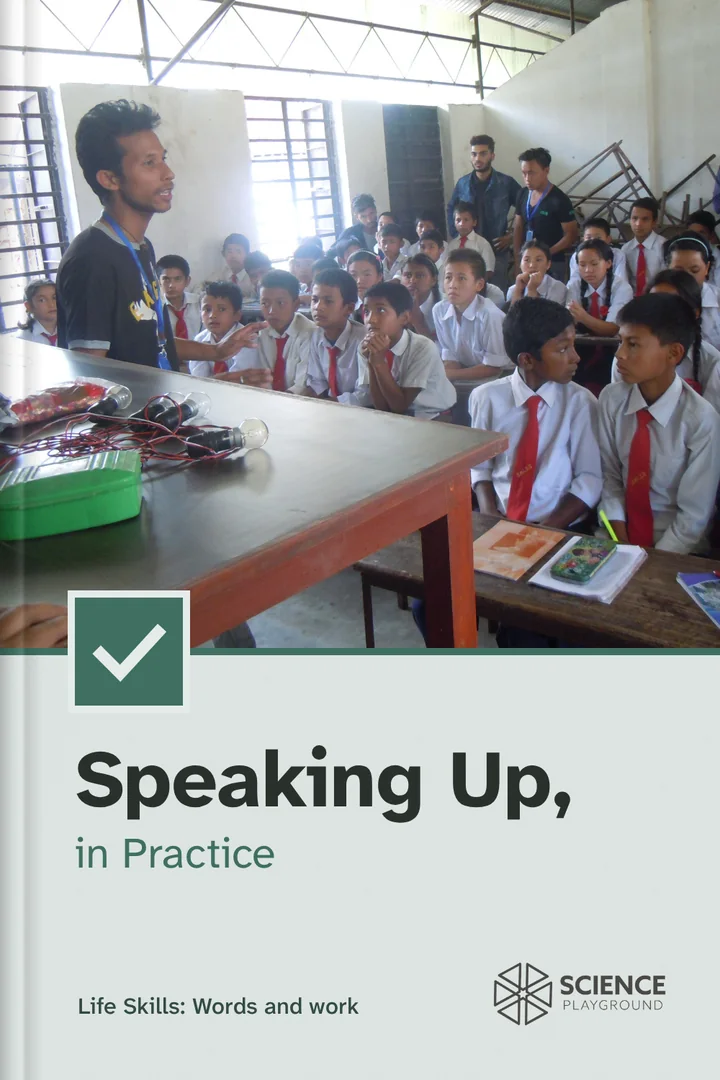
Cover photo: Sangit.niroula, CC BY-SA 4.0
