
At ten in the morning of 1 February 2005, King Gyanendra appeared on the state’s television and read out a royal proclamation. It took him twenty-eight minutes. He said the parties had misused their place in parliament and had failed to stop the Maoists, he dismissed the prime minister, Sher Bahadur Deuba, and he said that he would now lead the council of ministers himself, for up to three years. Within the hour the telephones and the internet across the country had gone dead. Flights coming in were turned back, soldiers took up places in the offices of newspapers and radio stations, and the leaders of the parties, Deuba among them, were kept in their homes under guard.
Some Nepalis welcomed it, hoping that a king with a free hand could bring the war to an end. The parties called it a royal coup, शाही कू (shahi ku) in the Nepali papers. What followed went faster than almost anyone expected. Within fifteen months the king had handed power back. Within three years and four months, Nepal had no king at all. In between, the parties and the Maoists came to an understanding, a movement of nineteen days in April 2006 filled the streets of every town, the war ended in a peace agreement, an interim constitution was written, and Nepalis elected a Constituent Assembly, a body chosen to write a new constitution. At its first meeting, in May 2008, the Assembly ended the kingdom the Shah kings had ruled since Prithvi Narayan Shah took the valley in 1768. This chapter is the story of how that happened.
The king’s government
The king gave his reasons that morning. He said he had acted to defend multiparty democracy, which the politicians had put in danger by “focusing solely on power politics” while the country was being torn apart by “terrorists”, his word for the Maoists. The House of Representatives had been dissolved since May 2002, no election had been held since, and since October 2002 the king had chosen the prime ministers himself. Now he would govern himself, with a council of ten ministers he chose. Many of them were royalists who had served under the Panchayat. They set out a program of twenty-one points, most of it about ending corruption. Several hundred people were detained in the first days, and the telephones that people had at home came back only a week later.
Those who welcomed it could point to a record. The parties had governed for twelve years, and they had neither ended the war nor held the election that was due. In Kathmandu the only demonstration was a small one in the king’s favor, and many people seemed indifferent, tired of politics and hoping someone would fix things.
Outside Nepal the takeover found few friends. India called it “a serious setback to the cause of democracy” and stopped its military aid, and Britain suspended its own. The United States and the UN’s secretary-general, Kofi Annan, called for democracy to be restored. India’s prime minister stayed away from the summit of South Asia’s governments that was due in Dhaka, and without him it couldn’t be held.
Meanwhile the war went on, and people who weren’t fighting went on dying. On the morning of 6 June 2005, at Madi in Chitwan, the Maoists set off a bomb under a crowded bus on which a dozen soldiers in plain clothes were also riding. Thirty-nine people were killed, thirty-six of them civilians, and seventy-two were hurt. The Maoists admitted it, said the attack didn’t reflect their policy, and told the UN’s human rights office that four or five of their members were being held to account; the office, which investigated it, found no clear evidence that anyone was. In February 2006 the king’s government held elections to the towns’ municipalities. The parties refused to take part. A year after the takeover, the peace his supporters had hoped for hadn’t come, and the parties he had dismissed had begun talking to the rebels they had been fighting.
Twelve points
The parties’ quarrel with the Maoists had been bitter. For ten years the Maoists had killed party workers in the villages, and the parties’ governments had sent the police and then the army against them. Now both had the same opponent. Seven parties of the dissolved House had joined in an alliance against the king, which the papers called the Seven Party Alliance. The Nepali Congress dropped its support for a constitutional monarchy from its own rules. And the Maoists were already changing course. In September 2005 they declared a ceasefire of three months, and a meeting of their leaders in October agreed that the party would one day enter the politics of many parties.
On 17 November 2005 the leaders of the alliance and of the Maoists met face to face in New Delhi. Five days later, on 22 November, both sides put out the same text in separate press statements, without signing anything: the twelve-point understanding.
It began by naming what the two sides were against, the “autocratic monarchy”, which it called the main obstacle to peace and democracy. Both wanted an elected Constituent Assembly, though they didn’t yet agree on the road to it. The parties wanted to bring back the dissolved House first and form a government of all the parties; the Maoists wanted a national conference of political forces and an interim government; they would keep talking about that. During the election, both the Maoists’ army and the Royal Nepal Army would be watched by “the United Nations or a reliable international supervision”. The Maoists promised to accept a “competitive multiparty system”, civil liberties, human rights and the rule of law, and to let the people they had driven from their villages go home and take back their land and houses. Each side admitted, in its own paragraph, that it had made mistakes. And they would both boycott the king’s municipal elections.
What part India played is still argued over, and each account can be told only as its own. Nepal’s school history book says the understanding was reached with the Indian government’s mediation. India’s government, at first, said only that it had “seen newspaper reports” of it, and that Nepal’s troubles were for Nepalis themselves to settle. Analysts who followed the talks closely wrote that India had quietly backed them, and that one Indian newspaper’s report that India’s intelligence agencies had managed the whole process was probably an exaggeration. The text itself said that Nepal should keep friendly relations with all countries, “especially with India and China”, and warned against the “fake” nationalism of the king and those who backed him.
Not everyone liked it. The king’s ministers attacked the new alliance and called it a deal made at foreigners’ bidding, and conservative commentators and American diplomats had warned the parties against a deal with rebels who still had their guns. The parties said it was the way to bring those rebels into peaceful politics.
Nineteen days in April
The alliance called a general strike for four days from 6 April 2006 (24 Chaitra 2062). Its plan was to protest in every town and district at once, rather than in one great march in Kathmandu. The government declared curfews. The strike didn’t end after four days. It went on for nineteen.
Among the first to die was Dashan Lal Yadav, a UML worker shot by the police in Rajbiraj on 5 April, the day before the strike began; he died in hospital. In the valley the crowds gathered along the Ring Road, at Kirtipur, Gongabu, Balkhu and Kalanki, where the city’s roads meet the highways. At Gongabu on 11 April the police fired live bullets into them; on 15 April small rallies joined at Balkhu into a crowd of tens of thousands, met with tear gas and rubber bullets. On 20 April three people were killed at Kalanki, the first deaths in the capital. Many leaders of civil society, people active in public life outside the parties, had been in jail since a round-up in January. The Maoists joined the alliance’s rallies and held open meetings of their own, and their support counted for much, but the people in the streets didn’t rally under the Maoist flag.
How many died depends on who counted. The International Crisis Group counted eighteen deaths it could confirm; the parties and the papers named twenty-one martyrs; Nepal’s school history book says twenty-five.
On 20 April India’s special envoy, Karan Singh, met the king. The next day the king spoke again. “Executive power,” he said, was “returned to the people”, and he asked the alliance to name a prime minister. The crowds and the parties turned the offer down: it said nothing about bringing back the House or electing a Constituent Assembly, and it left the army in the king’s hands. On 22 April the crowds broke through the curfew lines, and the parties planned to surround the capital on the 25th.
They didn’t have to. On 24 April (11 Baishakh 2063), the king read out a second proclamation. It brought back the House of Representatives that had been dissolved four years before, “according to the road map of the agitating Seven Party Alliance”, and called it to meet on the 28th. On 30 April Girija Prasad Koirala of the Congress, then eighty-four, was sworn in as prime minister. The families of those killed were each given ten lakh rupees. On 18 May the House declared Nepal a secular state, no longer a Hindu kingdom.
The parties and the Maoists still didn’t agree on what to do with the king. Koirala himself, for a time, favored keeping one with only a ceremonial role. The UML wanted the people to decide in a referendum, and Koirala was against one, fearing a royalist campaign. In the end, they left it to the Assembly.
From war to peace
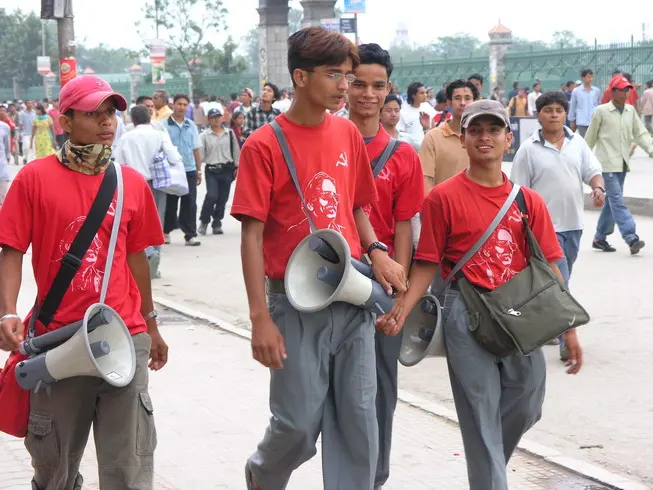
On 21 November 2006, Koirala and the Maoists’ chairman, Pushpa Kamal Dahal, known as Prachanda, signed the Comprehensive Peace Agreement. It declared the war over. It also settled much more than the fighting. The king would have no power over the government. The property of King Birendra’s family would go to a trust for the nation, and what Gyanendra owned as king would belong to the state. Whether Nepal kept a king at all would be decided by a simple majority at the Constituent Assembly’s first meeting. The “centralized and unitary” state would be restructured, and there would be land reform to end what it called feudal landholding.
The two armies were kept apart. The Maoists’ fighters went into seven main camps, in Kailali, Surkhet, Rolpa, Nawalparasi, Chitwan, Sindhuli and Ilam, each with smaller camps around it, and their weapons were locked away, the key kept by the party and the UN watching. The Nepal Army went back to its barracks and locked up the same number of its own weapons. Both sides promised to free the people they held within fifteen days and, within sixty, to make public the names of the people who had been killed or had disappeared, and to set up a commission to find out the truth about the war. It was set up only in 2015, and ten years later it had not resolved a single case.
The UN came, as the twelve points had asked. In January 2007 the Security Council set up the United Nations Mission in Nepal, UNMIN, to watch the camps and the weapons and to help with the election. Its teams registered 31,318 fighters in the camps, and 3,475 of their weapons. Over the next year they checked every fighter’s age and the date of joining, along with 932 more people who hadn’t been registered the first time. They verified 19,602 fighters, 3,846 of them women. Another 8,640 never came to be checked, and 4,008 were found not to count as fighters under the agreement, most of them, 2,973, because they had been under eighteen when the ceasefire was agreed, in May 2006.
On 15 January 2007 (1 Magh 2063) an interim constitution came into force, to govern Nepal until the Assembly wrote a lasting one. It put sovereignty in the people, called Nepal “a secular, inclusive and a fully democratic State”, and made every mother tongue spoken in Nepal a national language. It gave the king no power over the governing of the country: the prime minister would do it all. The House was replaced by an interim legislature of 330 members, with 73 seats set aside for the Maoists. On 1 April the Maoists joined the government, taking five of its twenty-two ministries.
That January, too, protests began in the Tarai, where Madhesi groups wanted more from the new order than the interim constitution gave them. That movement belongs to the next chapter.
The Assembly’s election was promised for June 2007, then put off to 22 November. In September the Maoists left the government. They wanted the republic declared before the election, and all the seats elected in proportion to the votes. In October the election was put off again. Each side blamed the other for the delays, and the UN’s reports complained of “excesses” by the Young Communist League, the Maoists’ youth wing. The army let it be known that a republic declared without a public vote could provoke a revolt. On 23 December the two sides signed a twenty-three-point agreement. The interim constitution was changed to say that Nepal would be a federal democratic republic, and that the Assembly would put it into effect at its first meeting.
The Assembly and the end of the kingdom
On 10 April 2008 (28 Chaitra 2064), Nepalis voted. About 17.6 million were on the rolls, and about six in ten of them voted. The Assembly would have 601 members. Of these, 240 were elected in constituencies, one each, by the candidate with the most votes; 335 from lists that each party put up, in proportion to its share of the votes across the country; and 26 would be appointed by the government. Voting had to be held again at 106 of nearly 21,000 polling centers. The European Union’s observers found the voting well run and mostly smooth, but the campaign before it tense, with “a general climate of fear and intimidation” in many places.
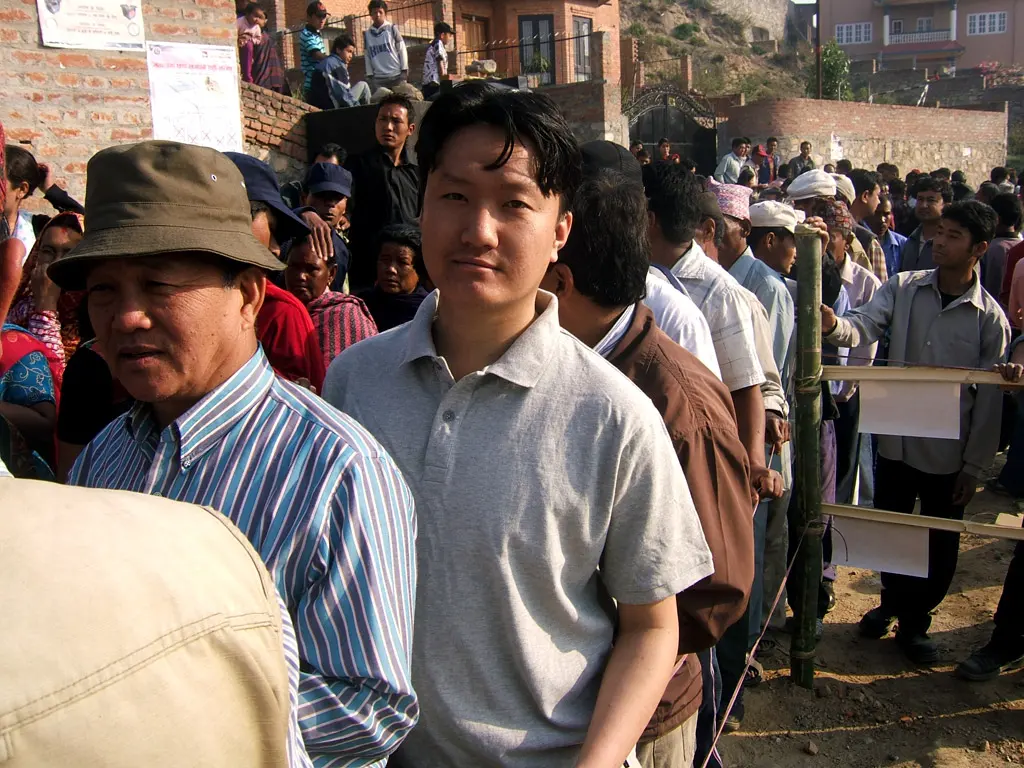
The result turned Nepal’s politics upside down. The party that had been fighting a war two years before won 220 of the 575 elected seats: 120 of the 240 constituencies and 100 seats from its list. The Congress won 110, the UML 103. The new Madhesi parties won 81 between them, and became the fourth force in the Assembly. The three royalist parties, which wanted the king’s fate put to a referendum, won fewer than twenty, all of them from their lists. Several of the old leaders lost their own seats, among them the UML’s leader, Madhav Kumar Nepal. No party had a majority, let alone the two-thirds of the Assembly needed to pass a constitution.
The new Assembly looked like Nepal as no parliament before it had. Of its 575 elected members, 191 were women, about one in three, where the House elected in 1999 had had twelve. The parties’ lists had to include women, Madhesi, Dalit and Janajati candidates in set shares, and the observers wrote that the Assembly was more varied than any before it.
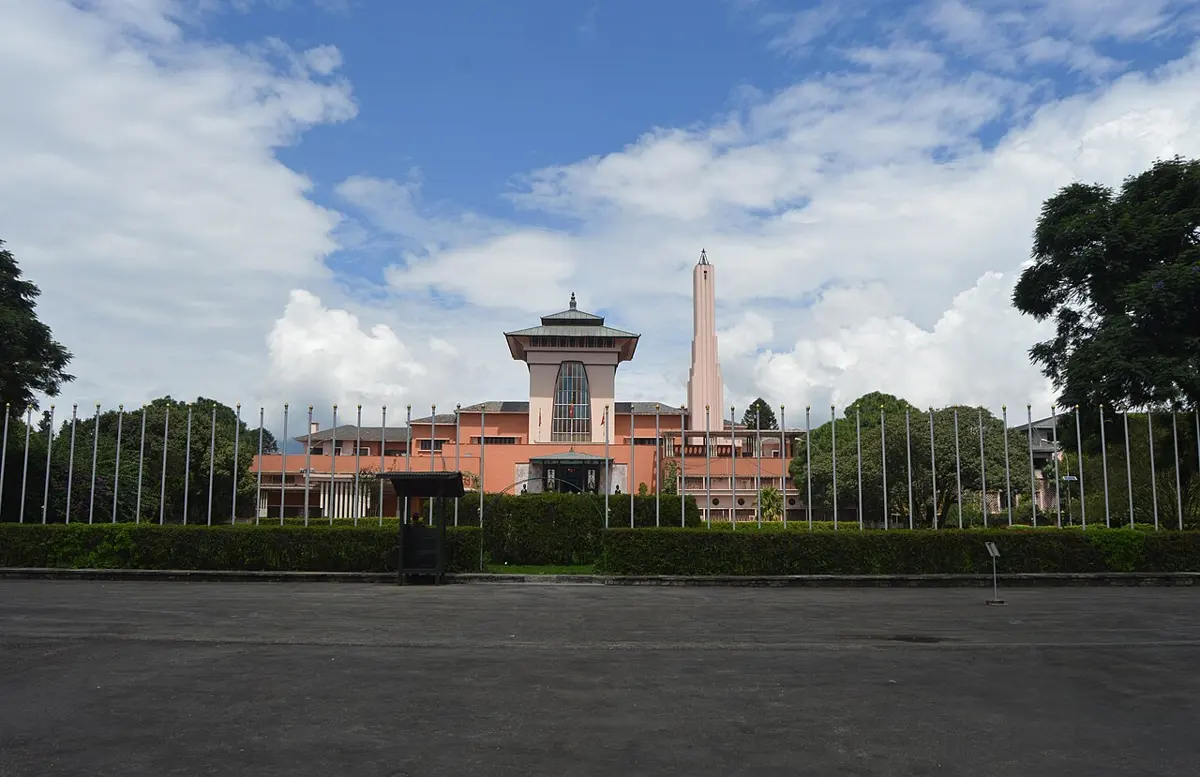
The Assembly met for the first time on 28 May 2008 (15 Jestha 2065). Late that night, it voted 560 to 4 to make Nepal a federal democratic republic. The king was given fifteen days to leave the palace at Narayanhiti, which would become a museum. Outside, crowds cheered and chanted “Long live the republic!”
On 11 June Gyanendra spoke to journalists at the palace. “I have accepted the decision,” he said, and added that he had “no intention of leaving the country”. He had already handed over the crown and the scepter. Then he moved out, to Nagarjun, a former royal hunting lodge outside the city.
Not every Nepali agreed with what the Assembly had done. Those who wanted a king said that a decision so large should have been put to the people. Kamal Thapa, who led one of the royalist parties, asked in 2009 for a referendum on the monarchy, on whether Nepal should be secular and on the federal states, and argued that Nepal should have “a king as the symbol of cultural and national unity, and also as the constitutional head”.
The fighters in the camps waited longer than anyone had planned. The 4,008 who had been disqualified, most of them taken in as children, were discharged from the camps from January 2010. In April 2012 the Nepal Army took over the camps. Most chose to retire with a cash payment of five to eight lakh rupees each, and in the end about 1,400 joined the Nepal Army.
The movement of 2062–63 and the Assembly that followed changed Nepal in a way that a single election usually doesn’t. In little more than three years, a kingdom became a republic, a Hindu state became a secular one, and a party that had fought a war became the largest in an elected Assembly. It happened through an agreement between enemies, a strike across the country, a peace agreement watched over by the UN, and a vote. Each side still tells it in its own way: for the parties, as the people’s movement they led; for the Maoists, as the result of their war; for those who wanted a king, as a decision taken without asking the people. The Assembly’s next task was harder: to agree on a constitution, and on how a federal Nepal should be divided. That is the next chapter.
Meanwhile, in the world: since the end of the Cold War the UN had sent missions to help end wars in many countries, among them Cambodia, Mozambique and East Timor. UNMIN, set up by the Security Council on 23 January 2007 for a year, was extended again and again, and left on 15 January 2011 with the Maoists’ fighters still in their camps.
Found a mistake? Please tell us.