
For a while the transmitter had to be hidden. A group of environmental journalists in Kathmandu had built a small radio station of their own, and while they waited for the government to let them use it, its technical director kept the transmitter in his house. “I had the transmitter hidden in my residence,” he said later, “and at night kept it as if it were my pillow.” The tower they put up was made of drinking-water pipes, and they tested how far the signal reached by riding out on motorbikes to listen.
In May 1997 the license came at last, with a long list of conditions: a small transmitter, a few hours a day, and no news. Four days later, on 22 May, Buddha’s birthday, Radio Sagarmatha went on air at 102.4 FM. For nearly fifty years, every radio broadcast in Nepal had come from the government’s own Radio Nepal. Now a station that didn’t belong to the state was speaking to Nepalis, and the government’s hold on the radio was over.
That was what the years after 1990 were like. The people’s movement had won a constitution that put power in the people’s hands and promised that nothing printed would be censored. Over the next twelve years Nepalis used that freedom in every way they could think of. They voted in three general elections, in 2048, 2051 and 2056 by Nepal’s calendar. They started newspapers and radio stations. Peoples who had long felt left out of the nation (Janajati, Dalit, Madhesi, and women everywhere) organized and made their demands out loud. And hundreds of thousands of young men left to find work abroad. It was a time of great hopes, and of disappointments almost as great.
Three elections
On 12 May 1991 (29 Baisakh 2048), Nepalis voted for a parliament with parties for the first time in thirty-two years. Anyone of eighteen or over could vote, and about eleven million were on the rolls. Twenty parties put up candidates for the 205 seats of the House of Representatives, and about two in three voters turned out. Observers came from twenty-two countries to watch.
The Nepali Congress won 110 seats, a majority. The new Communist Party of Nepal (Unified Marxist–Leninist), the UML, formed only that January by joining two communist parties, won 69 and became the opposition. Its slogans had been “एक ठाम एक बाम” (one place, one left) and “गाँस, बास, कपास” (food, a roof and clothing). The UML did best in the east, the Congress in the west. The two parties that came from the old Panchayat’s leaders, both called the Rastriya Prajatantra Party (RPP), won only a handful of seats between them, and the Nepal Sadbhavana Party, which spoke for the people of the Tarai, won six. The night’s great surprise was in Kathmandu, where the interim prime minister, Krishna Prasad Bhattarai, lost his own seat to the UML’s general secretary, Madan Bhandari, by 751 votes.
So Girija Prasad Koirala of the Congress became prime minister, the second elected one after his brother B. P. in 1959. The opposition fought his government hard, in parliament and on the streets. Its fiercest quarrel was over an agreement with India on the Tanakpur water project. The government said it was a minor understanding that didn’t need two-thirds of parliament to approve it, as a treaty would; the left called it a sell-out.
Then, in May 1993, a jeep carrying Madan Bhandari and Jivraj Ashrit, two of the UML’s top leaders, went off the road at Dasdhunga, above the Trishuli, and both men died. Two government commissions found that it was an accident. The UML has never accepted that, and its own inquiry called it a planned killing. Who was right has never been settled. Angry protests followed.
In the end, though, the government fell to its own party. The Congress was split between Koirala and leaders who opposed him, among them Bhattarai and Ganesh Man Singh. In July 1994, when some of the party’s own members stayed away from a vote on the government’s program, Koirala asked the king to dissolve the House and call a fresh election. His opponents went to the Supreme Court, and the court let the dissolution stand.
The second election, in November 1994 (Kartik 2051), left no party with a majority. The UML won 88 seats, the Congress 83 and the RPP, now one party, 20. The king asked the largest party to form a government, and Man Mohan Adhikari, a veteran communist leader, became prime minister of a UML government that didn’t have a majority. It was the first communist government Nepal had ever had. Its best-known programs were “आफ्नो गाउँ आफैँ बनाऔँ” (let’s build our own village ourselves) and a social security allowance paid by the state.
After nine months, facing a vote that could have brought it down, the government asked for the House to be dissolved again. This time the Supreme Court said no. It ruled that a new government could still be formed from the House as it was, and it brought the House back. Adhikari lost a vote of no confidence and resigned in September 1995.
What followed was a game of numbers. With no party able to rule alone, a government lasted only as long as its partners stayed with it, and the RPP and the Sadbhavana Party, with a few dozen seats between them, could make or break one. Sher Bahadur Deuba of the Congress led a coalition with them, and to keep it together his cabinet grew to 48 ministers, the largest Nepal had ever had. It came through two attempts to bring it down and fell at the third, in March 1997. Then Lokendra Bahadur Chand of the RPP led a government with the UML, and it lasted seven months. Then Surya Bahadur Thapa of the RPP led one with the Congress. When Thapa in turn asked for the House to be dissolved, the king asked the Supreme Court for its opinion, and the court said no again. In April 1998 the Congress took over once more under Koirala. That spring the UML split, partly over a treaty with India on sharing the Mahakali’s water, and a new Marxist–Leninist party broke away under Bamdev Gautam.
Every party took part in this game, and every party blamed the others for it. Many voters blamed all of them. In 1998 it came out that some MPs had let other people travel abroad on the red diplomatic passports given to members of parliament.
The third election came in May 1999 (Baisakh and Jestha 2056), held in two rounds two weeks apart because of the violence then spreading in the hills. The Congress had said beforehand that Bhattarai would be its prime minister, and it won 111 seats, a majority again. The UML won 71. Between them, the UML and the party that had broken away from it won more votes than the Congress did, but split, the left lost many seats it might have won together. Before the vote, a survey of almost eight thousand voters had asked what troubled them most. The answers were the lack of development where they lived, rising prices, and the shortage of jobs.
A majority didn’t bring quiet. Within a year, dozens of Congress MPs had turned against Bhattarai, and in March 2000 he resigned. Koirala became prime minister again, and in July 2001 Deuba replaced him. Between the first election and 2002, Nepal had nine governments. Yet every one of those changes had been made in parliament or in court, as the constitution laid down, and the losers had accepted the Supreme Court’s rulings.
Papers and radio
The new constitution’s promise about the press was kept more than many people had expected. In February 1993 two daily papers appeared that belonged to a private company, Kantipur in Nepali and The Kathmandu Post in English. They were the first national broadsheet dailies in either language run by a private company rather than by the government.
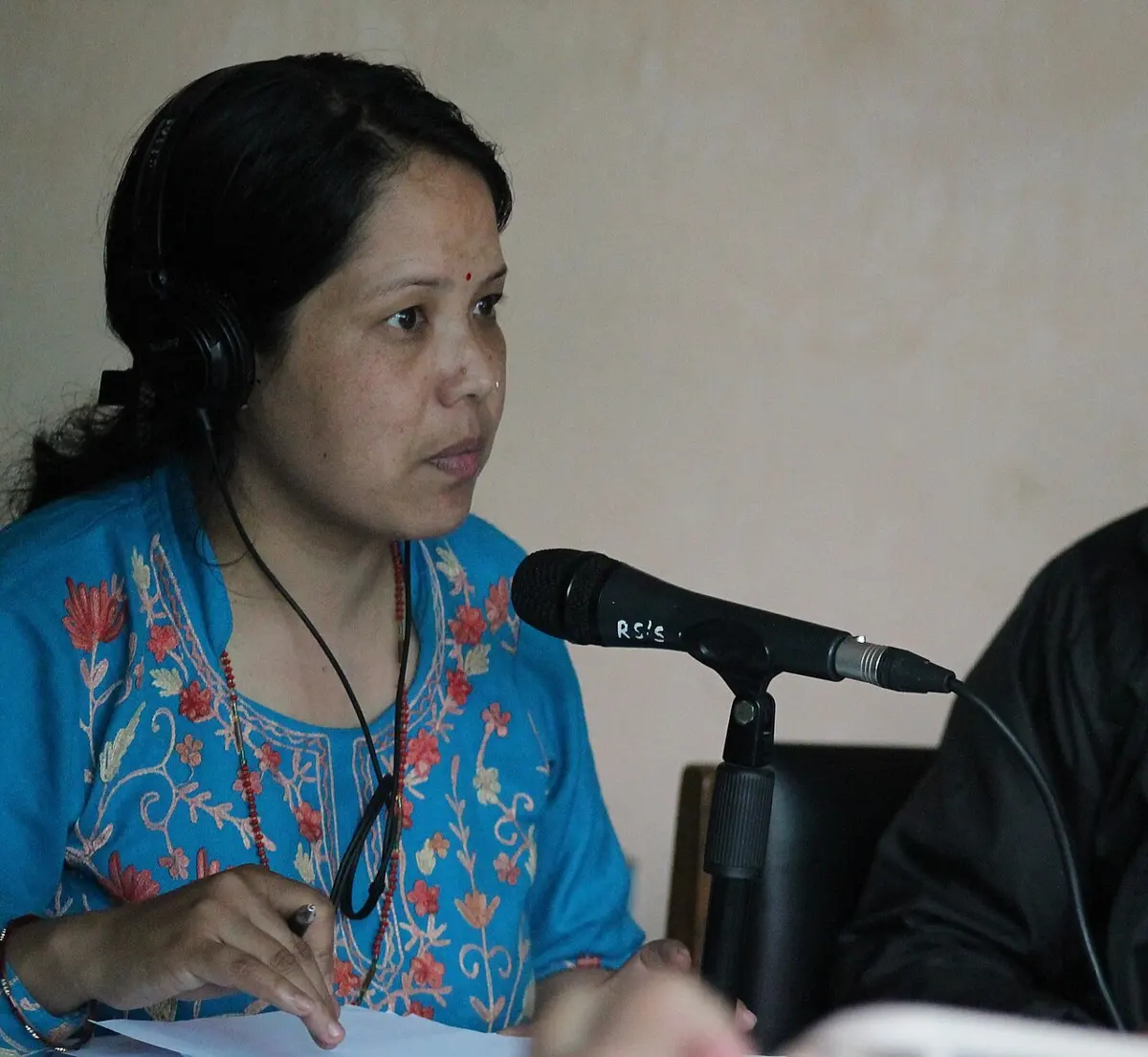
The radio took longer. Radio Nepal was the only station in the country until November 1995, when it started a second, FM channel of its own in Kathmandu. Then came Radio Sagarmatha, after years of asking, and in October 1998 Kantipur FM. Others followed in the towns. In 2000 a station opened in Madanpokhara, in Palpa, owned by the village itself, and others run by community groups followed in places the national papers hardly reached.
The rule against news was hard to keep, and the stations gave their news programs other names. When the government ordered the FM stations in 2001 not to air news of their own, the Supreme Court struck the order down. By 2006 about fifty independent stations were on air across Nepal. Radio Sagarmatha by then had programs in Nepal Bhasa, Tamang and Maithili, so a farmer could hear the news in the language spoken at home.
Who is the nation?
Under the Panchayat, the nation had been one king, one dress and one language. The new constitution called Nepal “multiethnic, multilingual”, and it also called it a Hindu kingdom, kept Nepali as the only language of government, and forbade any party based on religion, caste, community or region. That mix pleased hardly anyone completely, and in the open years people said so.
The peoples who called themselves Janajati, the nationalities, were the first to organize. In 1990, eight of their organizations came together as the Nepal Janajati Mahasangh, the federation of nationalities, today NEFIN. They chose the word जनजाति for peoples with their own language and culture who stood outside the Hindu order of castes: Magar, Tamang, Rai, Limbu, Gurung, Tharu, Newar, Sherpa and dozens more. Their demands were a state that didn’t favor one religion, equality for every language, a share of jobs and seats, and, as the decade went on, a federal Nepal, divided into states that would give the peoples a say in the places where they lived. Language groups set up classes; the Limbu, for example, began teaching their language and their own script, Sirijanga, in 1993.
The governments of the 1990s set up five commissions and task forces on these questions, and mostly left their reports on the shelf. When Kathmandu’s city government decided to use Nepal Bhasa, the language of the Newar, beside Nepali, others challenged it in court, and in 1999 the Supreme Court ruled that a local government could use only Nepali. In 2002 the government at last set up a national foundation for the Janajati, which listed fifty-nine peoples.
The Dalit, the people the old caste order had called untouchable, had the law on their side at last, for the constitution made untouchability a crime. Life changed much more slowly. Dalit organizations multiplied after 1990 and campaigned against the discrimination that still went on every day. In politics, though, Dalits were almost nowhere: not one was made a minister between 1990 and 2002, and they held hardly any of the top jobs in government. A national Dalit Commission was set up only in 2002.
Women won a guarantee that at least one in twenty of each party’s candidates would be a woman, and little more. In 1999, of the 205 MPs, only 12 were women. The bigger fights were in the courts. A daughter could inherit her parents’ property only if she was still unmarried at thirty-five, and had to give it back if she married. In 1993 a lawyer, Meera Dhungana, took the law to the Supreme Court, and in 1995 the court ordered the government to bring a new bill. It took parliament until 2002 to change it. In the same year, abortion, for which many women had been sent to jail, was made legal in the first twelve weeks of a pregnancy.
In the Tarai, the Sadbhavana Party asked for citizenship certificates for the Tarai’s people, many of whom still couldn’t prove they were Nepali, and for a fixed share of government jobs for Madhesi and hill peoples. It never won more than six seats, and in 1998 its members burned copies of the constitution in protest. In the mid- and far west, the कमैया (kamaiya), Tharu families bound to landlords by debt, won their freedom in July 2000 after their own campaign.
Few of these demands were met in the 1990s. Every one of them would come back.
Leaving home
At the same time, two great movements of people crossed Nepal’s borders, one coming in and one going out.
The one coming in began in Bhutan. In the south of that country lived the Lhotshampa, people of Nepali language and descent whose families had settled there over generations. In the late 1980s Bhutan’s government brought in strict new rules on citizenship, counted the people of the south to find those it said had come in illegally, ordered everyone to wear Bhutan’s national dress and stopped teaching Nepali in schools. Its case was that migrants from Nepal and India had been settling in the south, and that it had to protect the survival of the Bhutanese people as a nation with its own culture. When the Lhotshampa protested in 1990, the government called the protesters “anti-nationals”, blamed them for attacks on officials and cracked down hard. Over the next two years tens of thousands left. They crossed India and came into Nepal’s far east, and Nepal asked the United Nations refugee agency for help. By the end of the decade about a hundred thousand people were living in camps in Jhapa and Morang.
The two sides tell what happened next differently. Bhutan said most of the people in the camps had never been its citizens, or had left by choice and signed papers saying so, and that some had been frightened into leaving by the anti-nationals themselves. The refugees, and the human rights groups who listened to them, said they had been driven out of their own country, and that the papers had been signed under threat. Nepal and Bhutan talked about them for years and agreed on almost nothing.
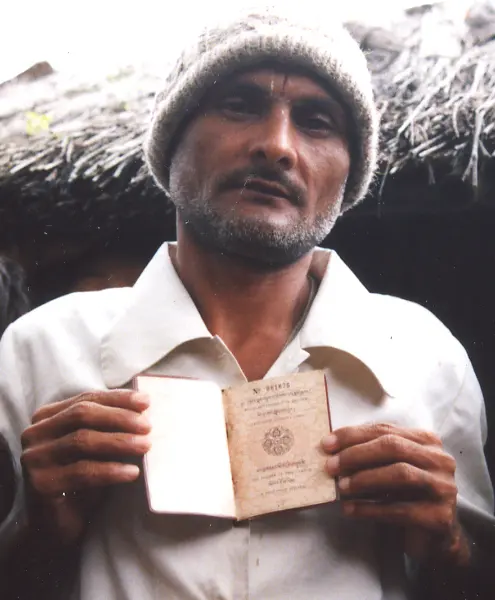
The movement going out was much larger, and it changed Nepal far more. Nepalis had gone to work in India for centuries, and in the 1990s perhaps three-quarters of a million were working there. What was new was the distance. In 1993 the government gave only a few thousand Nepalis permits to work in countries other than India. By 2000 the number was more than fifty thousand a year, most of them young men going to the countries of the Gulf. In 2001 Malaysia opened its doors to Nepali workers, and within a year tens of thousands had gone there too. Nepal’s economy grew more slowly at the end of the decade, and there weren’t jobs at home for the young men leaving school. The money they sent back became one of the biggest parts of Nepal’s income; by one estimate, already about a fifth of everything the country earned.
What the open years left
The open years gave Nepal much that was new: a free press, radio stations far beyond the capital, parties that handed over power after elections, a Supreme Court that every side obeyed, and peoples who had never been asked what they wanted, saying it out loud. They also left many Nepalis disappointed. Governments spent much of their strength on staying in power, villages saw little of the development they had been promised, and few of the demands of the peoples who wanted a different kind of nation were met.
Not everyone had been willing to wait. In February 1996, while the parties in Kathmandu were still making and unmaking governments, the Communist Party of Nepal (Maoist) began an armed rebellion, which it called a “People’s War”, in the hills of the mid-west. By 1999 the election had to be held in two rounds because of it. In May 2002, Deuba dissolved the House, and the next election couldn’t be held at all. How that war grew, and what it did to Nepal, is the next part of the story.
Meanwhile, in the world: in December 1991, seven months after Nepal’s first election in thirty-two years, the Soviet Union broke up into fifteen countries, and communist parties everywhere had to rethink what they stood for. In April 1994, South Africa held its first election in which people of every race could vote, and Nelson Mandela became its president.
Found a mistake? Please tell us.