
In November 1349 an army from Bengal, about 400 kilometers to the south-east, came up into the Kathmandu Valley. Its leader was Shamsuddin Ilyas, the Sultan of Bengal, who a few years earlier had taken the plains of Tirhut, just south of the hills. The Valley’s own chronicle gives the raid a few lines, and they are some of the starkest it has. The Sultan’s men broke the image of Pashupati into three pieces. They set fire to everything, for seven days on end. The whole of Nepal, the chronicler wrote, was reduced to ashes, and people ran in panic.
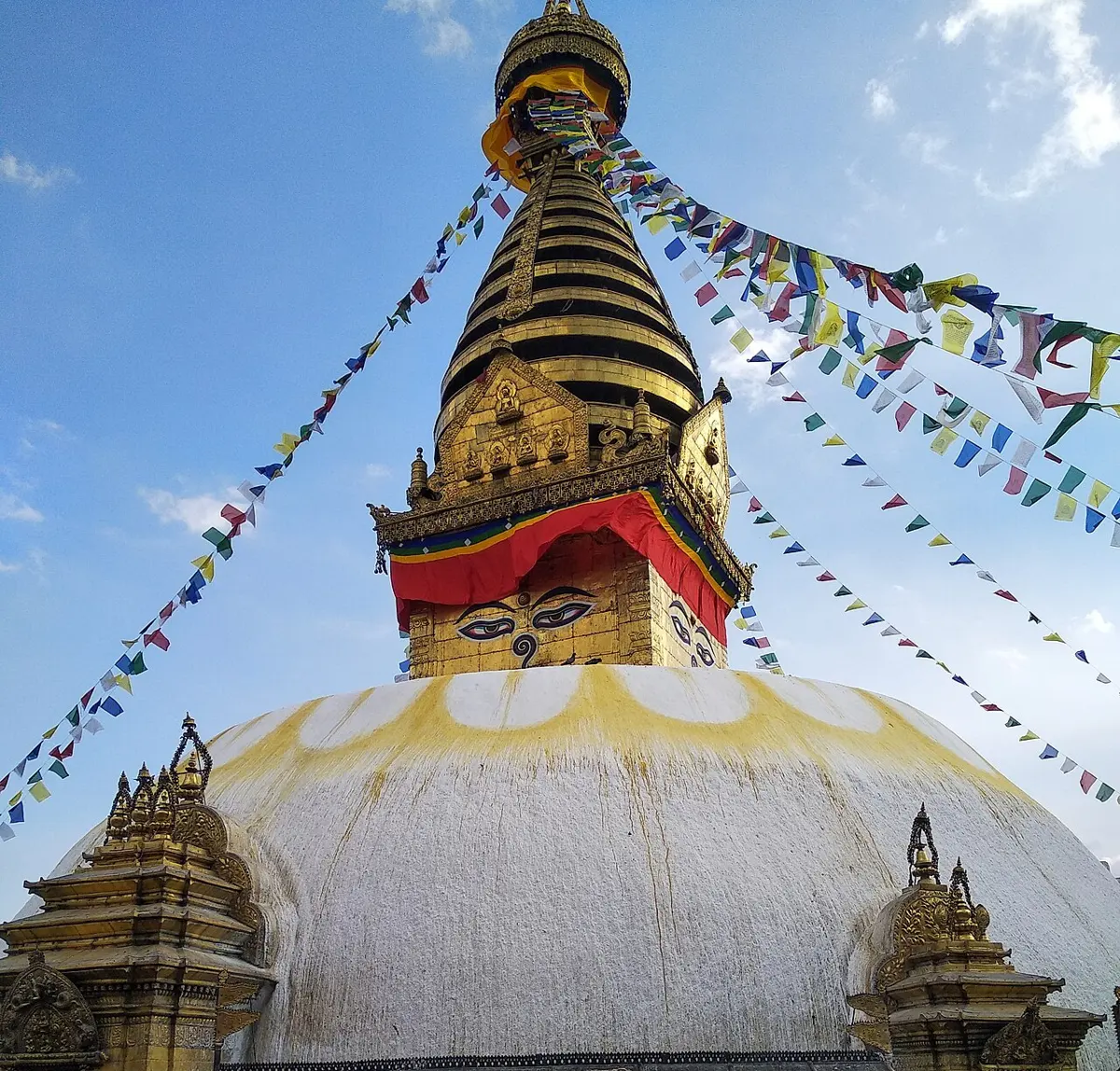
The Valley recovered, and we can watch it happen. In 1360 Pashupati’s image was set up again. At Swayambhu, a stone of 1372 tells how the army “from Bengal” had broken and burned the great stupa, and how it was rebuilt. Another stone, in a monastery courtyard in Patan, mentions the raid too. Yet the chronicles of the Muslim kings, which record the Sultan’s wars, say nothing about it. If the Valley hadn’t written it down, we wouldn’t know it happened.
That is what these centuries are like. Most of what we know about them hangs on a chronicle, a few dozen stones, and notes scribbled at the ends of old books. The rest is silence, and stories told much later.
The Valley’s documents call its kingdom नेपालमण्डल (Nepālamaṇḍala), Nepal Mandala. In the places its documents name, it was the Kathmandu Valley and its edges: Nuwakot to the west, Pharping to the south, Banepa and Palanchok to the east, and, in some years, Dolakha beyond them. Wider bounds are also drawn for it, from the Koshi in the east to the Trishuli in the west. When people in these centuries said “Nepal”, this is what they meant.
Historians call the long stretch from 879, when a new count of years begins, to 1768–69, when Gorkha took the Valley, Nepal’s medieval period. Through all of it, the land that is Nepal today was many countries, not one. In the far west the Khas kings ruled from Sinja, in the Karnali valley. In the plains to the south, the kings of Tirhut ruled from Simraungadh. Those two have chapters of their own. This one stays in the Valley, where the story falls into three parts: about three hundred years that are almost blank, then two centuries of weak kings, quarreling nobles and raids from outside, and finally a man who came “from the south”, married into the royal family, and put the Valley back in order.
A new count and a long silence
The last Licchavi kings set up stones with dates on them, and then, after a stone of 733, they nearly stop. For the next century and a half, only five dated documents are known. Then, in 879, a new way of counting the years begins, one the Newars still use: नेपाल संवत् (Nepal Sambat). It started in the autumn of 879, in the reign of a king named Raghavadeva.
Why a new count began just then, nobody knows. The best-known answer is a story. A merchant of Kathmandu named Sankhadhar Sakhwa, it says, found that a pile of sand he had carried home had turned to gold, and with it he paid off the debts of everyone in the country. To mark the day, a new count of years began. Nepal declared him a national hero in 1999, and Newar families still celebrate the new year of Nepal Sambat at म्ह पूजा (Mha Puja), during Tihar. The story is told only in chronicles written centuries later, which get the king of the time wrong. But a Tibetan manuscript, centuries old though much younger than the count, is said to date the era “from the cancellation of debts”, so the idea of a fresh start, with debts wiped clean, may be older than the chronicles that tell the story. Whether Sankhadhar was a real person, no document says.
The new count did something useful for us: it tells us when the books of the Valley were copied. From 879 to 1200, about ninety dated documents survive, and most of them aren’t stones at all. They are colophons, the few lines a scribe added at the end of a book he had copied, saying when he finished, where, and who was king. A copy of a Buddhist scripture now in Cambridge, for example, ends by saying it was finished on a day we can work out as Thursday, 31 March 1015, at a monastery in Nepal Mandala, while one king ruled half the kingdom and two others shared the rest. Notes like this are where most of these kings’ names come from. They tell us who ruled. They hardly ever tell us what happened.
They show something else too. In these centuries Buddhism was dying out in the plains of northern India, and much of what its teachers had written was being lost there. The Valley kept on copying. Many Buddhist books survive because someone in Patan or Kathmandu copied them, and families kept the copies.
Every so often a document lets us see ordinary people. The oldest dated document in the Newar language, Nepal Bhasa, is a palm leaf from Uku Bahal in Patan, dated 1114. It is about money and grain: how the income from a monastery’s fields was to be shared between the farmers who worked them and the monastery’s members. Those members were married householders with families.
So the “dark age”, as these centuries are often called, was not dark for the people who lived in it. Farmers farmed, scribes copied, kings came and went. It is dark only for us, because so little of what they wrote was the kind of thing that tells a story.
Kings called Malla
Around 1200, the colophons start naming a king called Ari Malla. Malla became a royal name, though some kings after him still took the old ending, Deva, and from the late 1300s every king of the Valley carried it, until Gorkha’s conquest. A chronicle written six hundred years later explains the name: Ari Malla was wrestling when a son was born to him, so the boy was given the title “Malla”, a wrestler. It is only a story. How Ari Malla came to the throne, nobody knows. The old chronicle remembers mainly that there was famine and sickness in his reign, and that a silver coin bought only two measures of rice.
The name sounds grand, but the kings mostly weren’t. From the 1250s two families took turns on the throne, by an agreement nobody wrote down but everybody seems to have followed. One family, called Tripura after its palace, was based in Bhaktapur. The other, called Bhonta, was based in the Banepa area, east of the Valley. One family supplied the king, the other the heir, and then the other way round. Real power lay with the nobles, the भारो (bhāro), who held land and castles around the Valley and changed sides as it suited them. The chronicle’s pages from these years are full of nobles seizing castles, prisoners killed and kings pushed aside.
It also gives us the rest of life, because its writer noted everything. He recorded hailstones and snowfalls, one in 1242 that lasted seven days and killed the cattle. He recorded what people paid, down to the levy per house and per field when the rulers needed money in a hurry to pay off an enemy. Kings and nobles gave rich gifts to temples and paid for plays, and in 1320 Rudramalla, the head of the Tripura family, took a part in one himself at court.
Raiders from three sides
The Valley was rich, small and hard to get into, surrounded by hills with only narrow ways in. In these two centuries, armies came anyway, from three directions.
The first came over the hills from the west, in 1288. They were Khas soldiers, from the kingdom whose capital was Sinja, and they came back twice in the next two years. Another Khas king came in 1313, made offerings at Pashupati and Swayambhu, and left after eighteen days. In 1321 Khas soldiers came fighting again, and the chronicle seems to say they wrecked the fort of the Tripura palace in Bhaktapur. Another king came in 1328, and in 1334 a Khas army stayed about six months and left only when it had been paid. After that the Khas raids stopped.
From the south came the soldiers of Tirhut, first in 1291. Their raid of 1300 shows how the Valley’s own quarrels let outsiders in. The chronicle names the three local men who “brought” the raiders: the Bhonta family’s leader, the king it had most likely put on the throne, and a learned Brahmin of Bhaktapur. They wanted to use the soldiers against the Tripura family. Bhaktapur was attacked, and a levy was raised from the people to pay the raiders to leave. In 1311 the Tirhut men came again, called in by the same Bhonta leader. This time they held Patan for about a year, took a ransom and carried off the treasures of Deopatan, Pashupati’s town, and then, the chronicle says, they went home, “being unable to govern the country”.
That line says something about the whole period. None of these armies stayed for good. They took what they could carry and left. Even the Sultan of Bengal’s army, the worst of them, went home after its week of burning.
A man from the south
The Valley’s next ruler came from outside, but he came by marriage. The king of Tirhut, Harisimha, lost his capital to the Sultan of Delhi in 1324 and, after a year as the sultans’ captive and then their vassal, fled into the hills in the winter of 1325–26, where he died (Chapter 12). His widow, historians think, was Devaladevi, a woman who appears in the Valley’s chronicle from 1336, managing the Tripura family’s affairs in Bhaktapur. No document calls her his widow; it is worked out from how her family is later linked to his. Her son and Nayakadevi, the heiress of the Tripura family, had a daughter there, Rajalladevi, born in January 1347. Her mother died ten days later, and her father soon vanished into prison. Devaladevi raised her, and through her, ran the household that held one half of the Valley’s crown.
In September 1354 Devaladevi arranged her granddaughter’s marriage. The bride was seven years old. The groom was Jayasthiti Malla, perhaps still a boy himself. Marrying the heiress’s daughter made him, in time, the head of the Tripura family. The chronicle says only that he “came from the south”, and that Devaladevi brought him. Where he really came from, it never says. His father is named as Ashoka Malla, and nothing more about him is known for sure. Historians have guessed Tirhut, since he was chosen by Devaladevi and since Maithili-speaking people from Tirhut start appearing in the Valley’s records during his rule. It remains a guess.
For years Devaladevi kept the reins herself, until she died in 1366. Then Jayasthiti began to take them. He ruled the Tripura side, but the throne still belonged to a Bhonta king. In 1372, when men from Patan attacked Thimi, he fought them himself, and the chronicle says fifty-three of the attackers were beheaded. Then, in 1380, he had the Bhonta king sent off to Banepa, which amounted to exile. The king made one last try, was arrested, and died a prisoner in Bhaktapur in 1382. That September the nobles gathered before him in a great ceremony at court. For the first time in generations the Valley had one ruler with his hand on all of it.
His rule was the quietest the Valley had known in a long time. The chronicle lists canals and water sources repaired, twelve of them in a single year. It notes that once people had raised 1,200 measures of paddy for one canal’s water, he freed them from paying for it “till the Earth, the Sun and the Moon continue to exist”. Scribes dated dozens of books and documents by his name. Among the books of his time is the oldest book in Nepal Bhasa that carries a date, a law book of 1380, in Sanskrit with Nepal Bhasa. He died in 1395. A scribe finishing a manuscript wrote the news on its last leaf: a cry of sorrow spread, and people’s faces filled with words of grief.
A history written for a king
The old chronicle, the गोपालराजवंशावली (Gopālarājavaṃśāvalī), seems to have been put together in Jayasthiti’s reign by someone close to his court, and its last entries come from his time. It is the main reason we know anything about the centuries before him. It is also the reason to read it carefully, because a history written close to a king has a job to do.
You can see the job in where its list of kings ends. After the burning of 1349 and all the raids, kings murdered and nobles changing sides, the list arrives at Jayasthiti. Devaladevi brought him, it says. He is compared to the god Rama and called an incarnation of the Buddha. In his reign, “there are no thieves at night or day time”. The whole sad story leads up to the man who ended it. And on the one thing a reader most wants to know, who he was and where he came from, the chronicle that praises him so much says no more than “from the south”.
Later writers filled the gap. Chronicles written in the 1800s, four hundred years after him, give Jayasthiti a royal father descended from the old kings of Tirhut. They have him rule for forty-three years and die in 1429, more than thirty years after his real death. And they make him the Valley’s great lawgiver: he set the size of houses and the measures of land, ordered fines instead of beatings, divided the people into sixty-four castes with the help of five learned men, and fixed what the lowest castes could wear and how they could roof their houses. Such laws, the chronicle adds, had existed before and fallen out of use, and he brought them back. They also say he built the temple of Kumbheshwar in Patan.
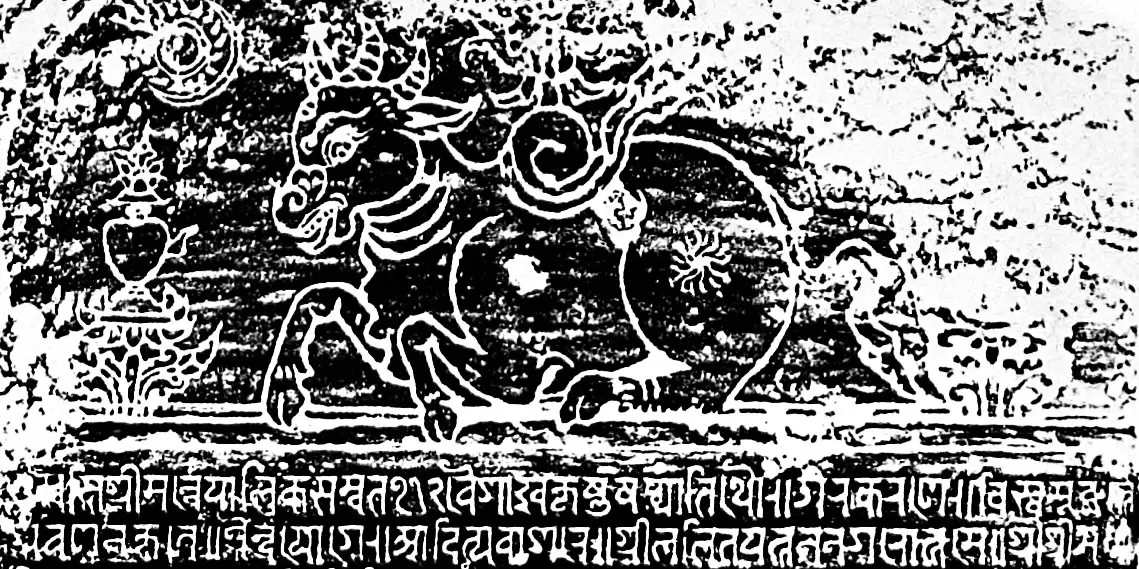
That last claim can be checked, and it shows how such stories grow. In the temple’s courtyard the English scholar Cecil Bendall found a slab of slate dated 1392, cut in Jayasthiti’s lifetime. It does name him, as the king reigning in Patan. But it says the temple was built by someone else, a man named Jayabhima, who had promised the god a temple if his wife recovered from a fever. She died. He built it anyway, with the agreement of his second wife and his sons. Four centuries later the chronicles gave the temple to the king, along with a death date three decades too late.
The laws and the castes are harder to check. A law book was copied in his reign, the one of 1380, but no document of his own time says he made new laws or sorted the people into castes. Caste was not new in the Valley either: the Licchavi stones speak of it centuries before him. So the story is read in two ways. The one most Nepali students learn is that Jayasthiti reorganized society and its laws, building on what was already there, with the help of learned men. Others point out that the rules the later chronicles list describe the Valley of the last Malla kings, centuries after him, and think they were credited to a famous king of long ago, though his time may well have brought stricter rules as learned men came up from Tirhut. Either way, he is remembered for much more than the records of his own day can show.
That doesn’t make the old chronicle worthless. For the raids, the famines and the snow, it is the best witness there is, and two stones agree with it about the Sultan from Bengal. It only means that it was written by people close to a king, about the king’s family, and that what it chose to say and leave out was shaped by that.
So Nepal Mandala was the Valley’s kingdom, small and rich, through five centuries that we see mostly through scribes’ notes and one court’s chronicle. After 879 the Valley counted its years in Nepal Sambat. From 1200 most of its kings were called Malla, but the nobles and two quarreling royal families held the power, and their quarrels let raiders in from the Khas west, from Tirhut and once from Bengal. Then Jayasthiti Malla, who came from the south and married into the royal family, brought the whole Valley under one ruler. His court gave us our main history of these years, and later centuries gave him reforms his own time never mentions. Asking who wrote a history, and for whom, is how we can tell the two apart.
Found a mistake? Please tell us.