
In the middle of July 2020, in a year that began with a pandemic, the NEPSE index stood at 1,362. A year later it was more than twice as high, and on 18 August 2021 it closed at its record, 3,198.60, as Chapter 23 tells. Then it fell, and Chapter 21 has what the fall meant for anyone who had to sell.
Two months before the record, the exchange’s spokesperson put it plainly: “We see people following others.” This chapter is about that crowd: why a price runs past what anything is worth, how to read the numbers the crowd was watching, who gains when it runs, what borrowed money does when it turns, and the contracts that can protect a price or turn it into a much bigger bet. None of it says what to buy; it’s about seeing when you are being played.
Why prices overshoot
A price on a share market is only what the last buyer paid, and buyers decide partly on what the share might be worth and partly on what other people will pay for it soon. The second part is the trouble. When prices rise, the people who bought early make money and say so. Their friends hear it, buy, and push the price up further, which makes the early buyers’ story better still. A rising price becomes its own reason to buy. It works the same way down: falling prices frighten people into selling, and their selling pushes prices lower. So prices don’t move gently to the right level and stop. They swing past it, both ways.
The economist John Maynard Keynes described this in 1936 with a newspaper competition of his day. Readers were shown a hundred photographs of faces and had to pick the six prettiest, and the prize went to whoever came closest to the most popular choice. A clever entrant wouldn’t choose the faces he liked. He would choose the faces he expected others to choose, and the cleverest would choose the faces he expected others to expect others to choose. Keynes thought professional investing had become something like it: guessing what the crowd will think next, rather than what a company is really worth. He also compared it to musical chairs. Everyone knows the music will stop, and the game is to have a chair when it does, which means somebody won’t.
Why do sensible people join in? The money writer Morgan Housel points out that people will believe almost anything when the stakes are high and they feel they have few other choices. “That’s the trigger of misbelief: high stakes and limited options.” Few things offer high stakes as often as a share market. In Housel’s words, “Investing is one of the only venues that offer daily opportunities for extreme rewards.” A young person who sees no good job ahead and hears that a cousin doubled his money in six months isn’t foolish to listen.
Then there’s whose stories reach you. Of a thousand people who bought in 2021, the one who tripled his money tells everyone, and the one who lost half tells nobody. So the market you hear about is far kinder than the real one, as Thinking Clearly, for the Curious shows in its chapter on the missing stories. And among thousands of people guessing, a few will be right five times running by pure chance and look like geniuses.
Reading the price line
The crowd follows a table. Nepal’s price tables, on the exchange’s site and in the news, give each company’s share one line, and the line is easier to read than it looks.
The big number is the last traded price, the price at which the most recent buyer and seller agreed. Beside it is the change: how far that is from the previous close, the last price of the trading day before, in rupees and as a percentage. Here it is up Rs. 28 on yesterday’s Rs. 400, or 7%. The open is the first price of the day. The day’s high and low are the highest and lowest prices anyone paid today, and the bar shows where the last price sits between them. The 52 weeks’ high and low do the same for the past year: this share is near the top of today’s range but about 30% below its best of the year.
The other three numbers tell you how busy the day was. Volume is how many shares changed hands, trades is how many separate deals that took, and turnover is the money that moved, the shares times what was paid for each. A price is only as solid as the trading behind it: a jump of 7% on a few hundred shares tells you much less than one on fifty thousand.
What the line can’t tell you is why. A price that has risen for twenty days in a row might be rising because the company is doing well, or because a group of people want it to look as if it is.
Pushing a price
Pushing a price on purpose is old enough to have a name. In a pump and dump, as the American regulator’s site for investors puts it, fraudsters “spread false or misleading information to create a buying frenzy that will ‘pump’ up the price of a stock”, then “dump” their own shares on the buyers they have drawn in. Small companies that little is known about, with few shares to trade, are the easiest to move. A group can make a share look popular by trading the same shares round and round among themselves, which is circular trading, or buy up so many that hardly any are left for others, which is cornering. Once the price has risen enough to draw a crowd, the group sells into it, and when the selling ends, so does the price.
On 15 June 2021, at the height of the boom, the Securities Board of Nepal (SEBON) published a list of 51 listed companies whose shares it called risky and overvalued, with the measures it had looked at: a share price up more than 300% in the last year, a price more than a hundred times the company’s yearly earnings per share, earnings per share below zero, and a company’s net worth per share below the price its shares were first sold at; it looked at each company’s present finances too. SEBON said it had found signs of insider trading, circular trading and cornering, began a detailed study, and urged investors to look at a company’s finances rather than act on rumors. It was also reported to have warned self-styled experts against spreading false information. Not everyone agreed it should have named companies at all. A column published the next day argued that a regulator shouldn’t publish such a list. Either way, the list is a short course in warning signs, each one visible in a price table or a yearly report.
This is why a tip deserves a question before anything else: what does the person sharing it gain if you act on it? Someone who already holds a share gains if more people buy it, and gains most if they buy just as he is selling. He may believe every word he says and still be passing his risk to you.
The groups have moved onto phones. In October 2026, for World Investor Week, SEBON warned investors against AI-made ads in online groups, “viral” opportunities pushed by finfluencers, the influencers who talk about money, and deepfakes and cloned voices. Its advice holds whatever the tool: be wary of promises of very high profits and of pressure to decide quickly, and trade only through a broker SEBON has licensed. The fake video of a famous person recommending a scheme is the same old pump in a new coat, and Thinking Clearly takes it apart in its chapter on money traps.
There’s one more way to win at others’ expense, and it doesn’t need any rumors at all. Some people know things before the public does: that a company’s profits are about to fall, that it is about to be bought, that a regulator is about to name it. Trading on that kind of knowledge, or passing it on so that someone else can, is insider trading, and Nepal’s Securities Act 2063 makes it a crime. The Act’s insiders are a wide circle: a company’s directors, staff and shareholders, the lawyers, auditors and advisers who work for it, and anyone in direct or indirect contact with them. The same Act forbids the other tricks too: trades that don’t really change who owns anything, trades arranged to make a share look busy, and anything done to move a price or mislead the market.
Why a crime and not just sharp business? Because every trade has two sides. When an insider sells before bad news, someone buys from him at a price that the insider knows is too high, and loses what the insider saved. If people come to believe the game is fixed, they stop buying shares at all, and companies can no longer raise money from the public, which is what the market is for. The suspicion is easy to reach even inside a regulator. SEBON’s board had decided on 14 June 2021 to publish its list of 51, but it came out only after trading ended the next day, and an official investigating it said there was a suspicion that the decision had leaked and some people had sold first, at higher prices. A government inquiry was expected to look into it.
The people paid to advise can be pulled the same way. A broker earns a commission on every trade, whether it makes you money or not; a tipster may earn from the shares he talks up, an influencer from whoever pays for the post. That doesn’t make them dishonest, but it is a reason to ask any adviser: how are you paid, do you own what you recommend, and is your license on the regulator’s list?
Borrowing to buy
Chapter 22 showed a dairy borrowing money and its owners’ profits swinging far more widely than its business did, because the loan had to be paid first. A person can do the same thing with shares. With a margin loan, a broker lends part of the price of the shares you buy and holds the shares as security. In Nepal, a SEBON directive that came into force in February 2026 sets the rules for brokers. The buyer must pay at least 30% of the shares’ market value from their own money. That is the initial margin, and the broker lends the rest. The shares are valued every day at the market price, and the buyer must keep a maintenance margin of at least 20%. If their part falls below that, the broker makes a margin call: the buyer must put in more money, and if they don’t, the broker may sell the shares. The directive doesn’t say 20% of what; Kushal’s broker below counts it, as American rules do, against what the shares are worth that day.
Kushal, who is made up, has Rs. 30,000. He can buy Rs. 30,000 of shares, or he can use the Rs. 30,000 as his 30% and borrow Rs. 70,000 to buy Rs. 1 lakh of shares. If prices rise 20%, the bigger holding earns him Rs. 20,000 instead of Rs. 6,000, which is why people borrow. Now let them fall.
The loan doesn’t shrink when the shares do, so the whole fall comes out of Kushal’s own part. A 10% fall costs him 10% on his own, and a third of his money with the loan. After a fall of only 12.5%, his part is down to 20% of what the shares are worth, and any further fall brings a call. After 20% he must find Rs. 6,000 or the broker may sell his shares at the bottom, turning a loss on paper into a real one. After 30% his Rs. 30,000 is gone, and below that he owes more than his shares are worth. The shares on their own would have needed to fall to nothing to take everything; with the loan, they only had to fall by 30%.
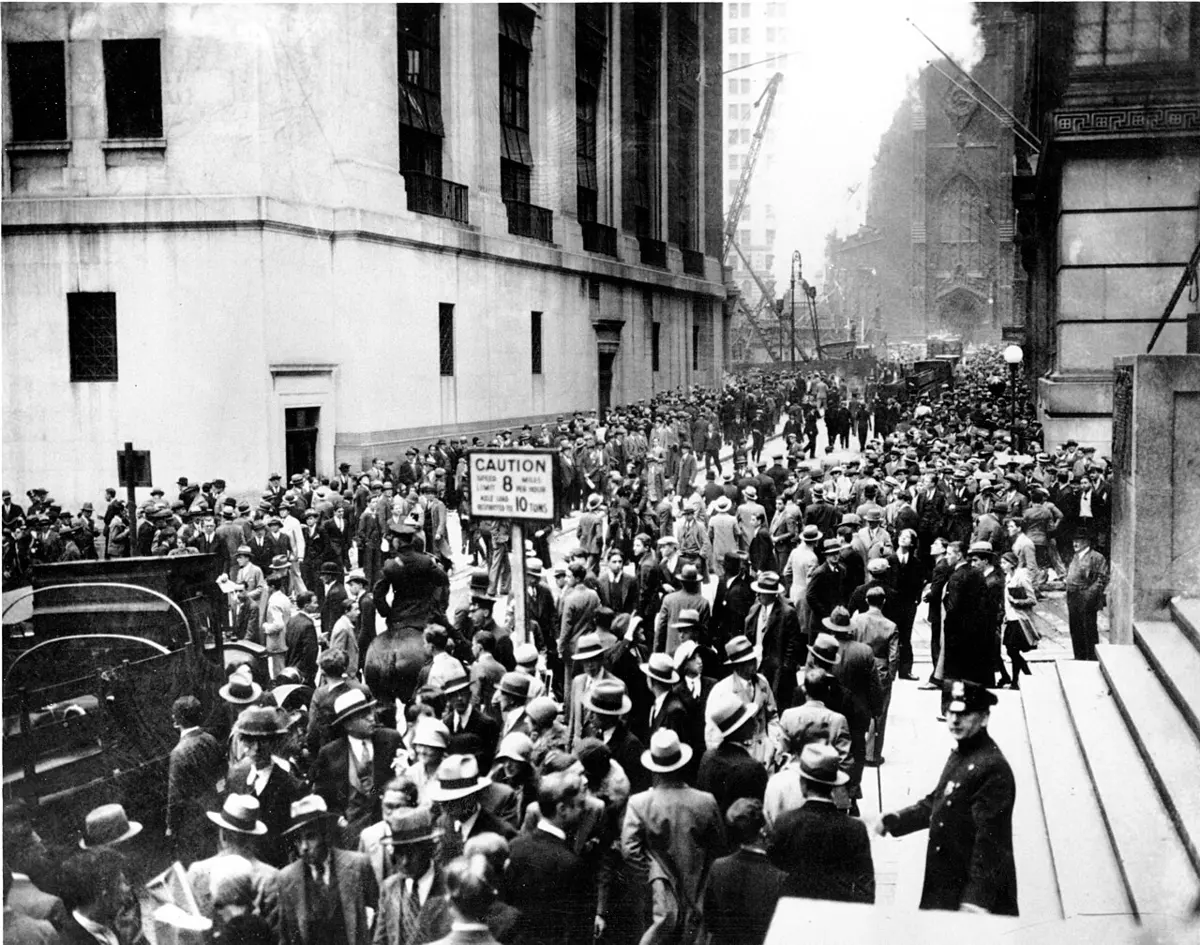
That is also why a fall in a market full of borrowed money feeds on itself. Each margin call that isn’t met becomes a sale, the sales push prices down, and lower prices bring the next round of calls. The loop that drove prices up runs backwards. The best-known case came in New York in 1929, when buyers often put down only 10% and borrowed the rest. At 10%, a fall of 10% wipes a buyer out. The Dow Jones index of American shares peaked at 381.17 on 3 September 1929. In late October it fell nearly 13% on one day and nearly 12% the next, and by the summer of 1932 it was at 41.22, 89% below its peak.
Nepal’s regulators think about this too. In August 2021, days before the index peaked, Nepal Rastra Bank announced a cap on the loans against shares that one person or company could take: Rs. 4 crore from one bank or finance company, and Rs. 12 crore from all of them together. SEBON’s advice for World Investor Week 2026 was to avoid investing with borrowed money as much as possible. A margin loan isn’t wicked; it stretches every result, and a stretched bad one can take more than you brought.
Contracts on a price
So far the bets have been on shares. Some of the oldest contracts in finance are bets on a price itself, and they began as protection. They are called derivatives, because their value derives from the price of something else: wheat, oil, a currency, a share or an index.
Picture Gyanu, a wheat farmer in the Tarai, and a flour mill in town. At sowing time neither knows what wheat will fetch at harvest. If prices fall, Gyanu earns less than her costs; if they rise, the mill pays more than it can charge for its flour. So they agree today: at harvest, she will sell the mill 10 tonnes at Rs. 40 a kilo, whatever the market says then. That is a forward contract, a deal made now for a sale later at a price fixed now. Both sides give up the chance of a lucky price to be safe from an unlucky one. An importer who must pay in dollars in three months can fix the exchange rate with a bank the same way.
A forward is a private deal, so each side must trust the other, and it is hard to get out of. A futures contract is the same kind of deal turned into something an exchange can trade: the quantity, quality and date are made standard, the exchange stands between buyer and seller, and each side pays a deposit, again called a margin. Every day, gains and losses are settled from the deposits, and a deposit that runs low brings a margin call, just as with Kushal’s loan.
An option goes one step further. It gives the right, but not the duty, to buy (or sell) at a fixed price by a certain date, and the right costs money. Suppose that instead of a forward, the mill pays Rs. 1 a kilo, Rs. 10,000 in all, for the right to buy Gyanu’s 10 tonnes at Rs. 40. If wheat rises to Rs. 48, the mill uses the right and pays Rs. 80,000 less than the market price, Rs. 70,000 less once the right’s cost is counted. If wheat falls to Rs. 36, the mill lets the right go and buys at the market price; it has lost only the Rs. 10,000, like an insurance payment. The idea is ancient. Aristotle tells a story, “so the story goes”, of the philosopher Thales, who expected a good olive harvest and in winter paid small deposits to hire every olive press in Miletus and Chios, then let them out at whatever price he liked when everyone wanted them at once. Its shape is an option’s: a small payment now for a right worth a lot only if things go one way.
Here is where the same contract becomes a much bigger bet. The mill and Gyanu are hedgers: they use the contracts to protect a price they are already exposed to. But anyone can buy them, including a speculator who has no wheat and no mill, only a view. Suppose the futures contract for 10 tonnes needs a deposit of 10%, Rs. 40,000 on Rs. 4 lakh of wheat. A move of Rs. 4 a kilo, a tenth of the price, is Rs. 40,000, the whole deposit, gained or lost. The option buyer is stretched further still. If wheat ends at Rs. 48, the right that cost Rs. 10,000 is worth Rs. 80,000, a gain of seven times the money. If it ends at Rs. 40 or below, all Rs. 10,000 is gone. The contract that is insurance for the mill is a lottery ticket for the speculator. Markets need speculators, because someone has to take the other side of a hedger’s deal, but a buyer should know which of the two they are.
In Nepal this is mostly still to come. NEPSE trades shares, not contracts on them, and the law for exchanges where futures on goods could be traded, the Commodities Exchange Market Act of 2017, had not brought a single licensed exchange by the middle of 2026. A committee of SEBON’s was set up that October to plan new kinds of contracts, futures on goods and currencies among them.
Crowds, tips, loans and contracts all come back to one question: whose risk is this, and who gains if I take it? A price rising for months is a reason to ask why, not proof that it will go on. A tip is worth what the person giving it stands to gain from your buying. A loan doesn’t change what happens to the shares, only how much of the result lands on you. None of this means a share market is a casino. It means the crowd is loudest just when it is least to be trusted, and the person who can sit out a fall, with no loan and no hurry, is the one the crowd can’t push around.
Try this
- Open a price table on any news site and pick one company. Find its last traded price, the change, the day’s high and low and the year’s, and the volume. Is today’s price nearer the year’s high or low?
- Work it out: someone puts Rs. 10,000 of their own and Rs. 10,000 borrowed into shares, and prices fall 25%. The shares are worth Rs. 15,000, the loan is still Rs. 10,000, and Rs. 5,000 is left: half their money gone, from a quarter’s fall.
- Next time someone shares a tip, ask them two questions: do you own it, and when would you sell? Notice whether the answers change how the tip sounds.
- Find a broker’s name in any ad or message about shares and look for it on SEBON’s list of licensed brokers.
- Take the option in this chapter and work out what the mill gains or loses if wheat ends at Rs. 44. (The right is worth Rs. 4 a kilo, Rs. 40,000, so after its Rs. 10,000 cost the mill is Rs. 30,000 better off than buying at the market.)
Found a mistake? Please tell us.