
Prakriti is in Grade 11 in Bhaktapur, and her geography teacher has asked the class to copy the population of each of Nepal’s 77 districts from the 2021 census into a table. Halfway down the page she stops. Bhojpur 157,923. Dhankuta 150,599. Morang 1,148,156. Solukhumbu 104,851. Taplejung 120,590. Her pen keeps writing a 1 first. Then Jhapa, 998,054, and she realizes how seldom it has written a 9.
It looks like an accident of the districts she happened to copy. The numbers are of every size, from Manang’s 5,658 people to Kathmandu’s 2,041,587, and there are nine digits a number can start with. Surely, over all 77 districts, each digit gets about a ninth of them?
Guess first. Of the 77 districts’ populations, how many start with the digit 1?
Pick an answer to see why.
Count them yourself
Switch between the lists. Before each one, predict how tall the 1s bar will be.
- Countries: people. The 195 countries of the world, from Vatican City’s 882 people to more than a billion each in China and India: 60 start with 1 (31%), and 10 start with 9 (5%).
- Countries: area. The same countries’ areas in km², from Monaco’s 2 to Russia’s 17 million: 55 of 194 start with 1 (28%).
- Chessboard rice. The grains on the 64 squares of the chessboard in the old story, 1 on the first square, 2 on the next, then 4, 8, 16, doubling every time, up to 9,223,372,036,854,775,808 on the last: 19 of the 64 start with 1 (30%).
Four lists that have nothing to do with each other, and the same shape every time: a tall bar for 1, then each bar a little lower than the one before, down to about 5% for 9. People, land and doubled rice somehow agree.
The pattern doesn’t depend on how the numbers are written (in Nepal’s style Morang’s 11,48,156 still starts with 1), nor on their size: thousands and lakhs, crores, and rice numbers too long to say.
Now try the fifth list, Elements’ masses. Here the pattern breaks: 42 of the 118 masses start with 1, but 44 start with 2, more than with 1, and then the bars drop to a flat handful each. Keep that in mind; it is a clue to what the pattern needs.
In the countries’ populations, about how many times as common is a first digit of 1 as a first digit of 9?
Pick an answer to see why.
Why 1 gets the most room
Think about what it takes for a number’s first digit to change. Suppose you have Rs 1,000 in a bank, and it grows. To stop starting with 1, it must reach Rs 2,000: it has to double. To get from a first digit of 5 (Rs 5,000) to 6 (Rs 6,000), it only has to grow by a fifth, 20%. And to get from 9 (Rs 9,000) to 10,000, where the first digit is 1 again, it needs to grow by only a ninth, about 11%.
So a growing amount gets stuck on 1 for a long time, then hurries through 7, 8 and 9 and is back on 1, for the next long stay. Here is Rs 1,000 growing by the same percentage every year for 100 years. Each dot is one year’s amount; only its first digits decide where it sits on the ruler, so Rs 1,500, Rs 15,000 and Rs 1,50,000 all sit at the same place, 1.5. Year 0 is at the top and year 99 at the bottom.
At 10% a year the money takes 24.2 years to grow ten times, one trip all the way across the ruler, and 7.3 of those years are spent between 1 and 2. In 100 years the dots cross the ruler four times; 32 of the years start with 1, 4 with 9.
The ruler is the secret. It is marked so that multiplying by the same number always moves you the same distance: from 1 to 2 is as far as 2 to 4, or 4 to 8, or 5 to 10. That is the scale of the slide rule (see How Did a Book of Numbers Make Multiplying Easy?): the distance from 1 to a number x is , the power you must raise 10 to, to get x. With the whole ruler from 1 to 10 one unit long,
- the stretch for 1, from 1 to 2, is long, about 30% of the ruler;
- the stretch for 9, from 9 to 10, is , under 5%.
Growing by 10% every year is multiplying by 1.1 every year, so the dots step along the ruler in equal steps, and wrap round each time they reach 10. Equal steps spend time in each stretch in proportion to its length. That is why about 30% of the years start with 1, whatever the rate (try 5%, 20%, 50%), as long as the money crosses the ruler several times.
The rule
The stretch for a first digit d runs from d to d + 1, so its share is
This is Benford’s law (also called the first-digit law, or the Newcomb–Benford law): in many collections of real numbers, the share starting with the digit d is close to . Despite its name it is not a law of nature like gravity, only a strong tendency of numbers spread smoothly over several powers of ten; plenty of lists break it.
| First digit | 1 | 2 | 3 | 4 | 5 | 6 | 7 | 8 | 9 |
|---|---|---|---|---|---|---|---|---|---|
| Share | 30.1% | 17.6% | 12.5% | 9.7% | 7.9% | 6.7% | 5.8% | 5.1% | 4.6% |
The nine shares add up to exactly 1, because the nine stretches fill the ruler: . Here are the lists again with the law drawn over them:
The countries and the chessboard follow the dots closely; the districts less closely, because 77 numbers are few (more on that below). The elements’ masses don’t fit at all.
Set the growth to 1% a year. Why do 70 of the 100 years start with 1, far more than 30%?
Pick an answer to see why.
Change the units
Here is a second, quite different reason to expect the pattern, and it shows why no other pattern can take its place.
Suppose there really were a law for the first digits of the countries’ areas. It can’t depend on the units they were measured in: nature doesn’t know about kilometers. So if you measure the same areas in square miles, or in ropani and bigha, the land units Grade 9 meets (1 ropani is 508.72 m² and 1 bigha 6,772.63 m²), the share starting with 1 should stay about the same. Changing units multiplies every number by the same factor, so try multiplying. The slider only needs to run from ×1 to ×10: multiplying by 0.386 (km² to square miles) or by 3.86 gives numbers that differ only in where the decimal point is, so they have the same first digits.
The real areas hardly notice. In square miles 33% start with 1, in ropani 30%, in bigha 32%; across every factor from ×1 to ×10, the share stays between 24% and 36%. The made-up list, one each of the 900 whole numbers from 100 to 999, starts perfectly even, 11% for every digit. Multiply it by 2 and it falls apart: 500 of the 900 numbers now start with 1. An even spread of first digits is even in one unit only.
Why only Benford’s law survives
Doubling is the cleanest test. When every number is doubled, which numbers start with 1 afterwards? Exactly those that started with 5, 6, 7, 8 or 9 before (5 becomes 10 to 11.99…, 9 becomes 18 to 19.99…). The numbers that started with 1 become 2s and 3s. So a pattern of first digits that doesn’t change under doubling must give
The even pattern fails at once: is not . Benford’s law passes exactly: 5 to 10 is the stretch from to 1 on the ruler, of length , the same as the stretch from 1 to 2.
Doubling alone doesn’t settle it (other patterns pass that one test), but a law can’t know the units, so it must survive every factor. Multiplying by any number slides every dot along the ruler by the same distance, wrapping round at 10. Dots spread evenly look the same after any slide. Dots bunched anywhere don’t: some slide moves the bunch. So the only spread that survives every slide is the even one, which is Benford’s law. The mathematician Roger Pinkham proved this carefully in 1961: if a first-digit pattern stays the same whatever the units, it must be Benford’s law. That “if” is the catch: no real list is perfectly unit-free, so real data only come close to the law.
A third reason: mixing
Frank Benford’s own data, below, were mixed: river areas, populations, numbers from science and from newspapers. In 1995 the mathematician Theodore Hill proved that mixing itself pushes towards the law: pick many different kinds of data at random, without favoring any particular scale, take some numbers from each, and the first digits of the combined list come closer and closer to Benford’s. No single source has to follow it.
So three things push real numbers towards the law: growth (multiplying again and again), units (a law about nature can’t depend on them), and mixing. What they share is that they spread numbers evenly along the ruler, over many powers of ten.
When the pattern breaks
The elements’ masses fail because they don’t grow by multiplying. Each element is a little heavier than the last, and they run only from 1.008 (hydrogen) to about 295, less than three trips across the ruler, with the steps getting shorter on the ruler as the masses grow. 86 of the 118 pile into the 1s and 2s.
Benford’s law needs numbers that spread over several powers of ten, smoothly. It fails, and an honest analyst doesn’t expect it, when:
- The numbers are squeezed into a narrow range. The heights of Grade 11 students in centimeters nearly all start with 1. The heights of Nepal’s eight peaks over 8,000 m all start with 8, from Everest’s 8,849 m to Annapurna I’s 8,091 m.
- The numbers are labels, not amounts. Phone numbers, roll numbers, bus routes and bank account numbers are handed out by someone, and follow whatever plan they used. Roll numbers 1 to 60 start with 1 to 5 eleven times each, with 6 twice (6 and 60), and with 7, 8 and 9 once.
- Someone has set a limit or a habit. Prices are set at Rs 99 or Rs 499; a fee is the same Rs 500 for everyone.
- There are only a few numbers. Chance alone moves small lists around. The districts’ 25 ones look higher than Benford’s 23 (30.1% of 77); but even for 77 numbers that follow the law perfectly, the count of 1s lands anywhere from 16 to 31 in 95% of cases. Nepal’s 25 is well inside. With a list of ten numbers, nothing can be concluded either way.
Which of these lists would you expect to follow Benford’s law most closely?
Pick an answer to see why.
Catching made-up numbers
Because real amounts follow the law and invented ones usually don’t, accountants who hunt for fraud use it. One of the best-known is Mark Nigrini, who wrote about it for accountants in 1999. The case he made famous was State of Arizona v. Wayne James Nelson (1993). Nelson, a manager in the office of Arizona’s State Treasurer, was found guilty of trying to defraud the state of nearly $2 million. He had sent 23 cheques to a vendor that didn’t exist.
Most of the amounts were just under $100,000, perhaps because larger payments were looked at more closely; they started small and grew; none was a round number, and none was repeated, as if to look random. But over 90% of them started with 7, 8 or 9. Benford’s law gives those three digits together , about 3.6 of 23 cheques; more than 20 of 23 is almost impossible by chance (about 2 in a thousand million million). Invented on purpose to look random, the amounts came out nothing like real payments.
Auditors look further than the first digit. Benford’s law also predicts the second digit, much more gently: 0 comes second in 12.0% of numbers, 9 in 8.5%. Nigrini’s tests also look for numbers repeated too often, too many round numbers, and amounts piled just under a limit, as Nelson’s were. Each test only picks out numbers worth checking; then a person checks them, against the receipts.
The same idea has been tried well beyond company accounts. In 2011 four German researchers compared the economic data the countries of the European Union had sent to its statistics office with Benford’s law: of the euro countries, Greece’s data were furthest from it.
A story from maths
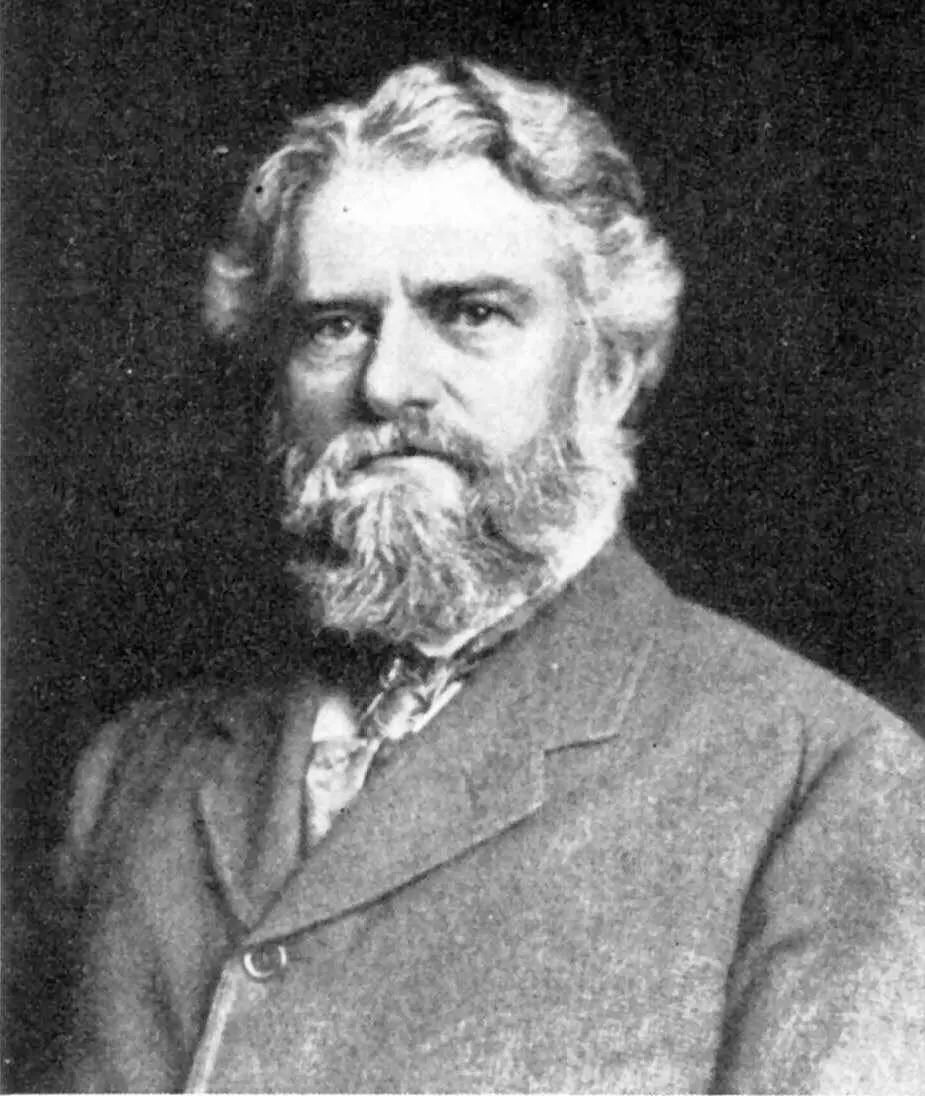
Hill’s paper names computer design and mathematical modeling as uses beside fraud detection; and Newcomb ended his note by saying the law could tell whether a large table of results was made of measured amounts or of their logarithms.
Questions
★ In base 2, the binary of computers, every number is written with the digits 0 and 1. What share of numbers start with the digit 1?
Pick an answer to see why.
Use and to find the share of numbers that start with 4, by Benford’s law. In a list of 500 real amounts, about how many would you expect to start with 4?
Answer
Which of these would you expect to follow Benford’s law, and which not? Give a reason for each. i. The lengths of all the rivers in Nepal. ii. The weights of Grade 9 students in kilograms. iii. The number of tourists arriving in each country in a year. iv. The serial numbers on Rs 100 notes.
Answer
Why does doubling every number in a list turn exactly the numbers starting with 5, 6, 7, 8 or 9 into numbers starting with 1? Then check that Benford’s law gives 1 the same share as 5 to 9 together.
Hint
Answer
Of the 23 cheques in the Nelson case, how many would Benford’s law lead you to expect to start with 7, 8 or 9? Over 90% of them did: what is the least number that can be?
Answer
On the chessboard, the grains double from square to square, and 19 of the 64 squares’ numbers start with 1. Without counting, explain why about 30% should, using the ruler.
Answer
By Benford’s law, what share of numbers start with the two digits 1 then 0 (like 10, 107, 1,042)? And with 9 then 9? Explain how you found them.
Hint
Answer
A company’s 2,000 payments last year were all between Rs 1,000 and Rs 9,999, and their first digits were spread evenly, about 222 each. An auditor says this list doesn’t follow Benford’s law and must be suspicious. Is she right? What would you ask before deciding?
Answer
Where to go next
- How Did a Book of Numbers Make Multiplying Easy? Logarithms, the slide rule’s ruler, and the very books whose first pages wore out.
- Why Is a Magnitude 8 Earthquake Not Just a Bit Bigger Than a 7? More numbers that make sense only on a scale of powers of ten.
- Can 1,000 People Speak for 3 Crore? Samples, and how much chance moves a small list.
- How Much Rice Is on the Chessboard? (Grades 6–8) The doubling grains, counted.
- Grade 10 Math: Growth, growth by the same percentage each year, and Grade 10 Math: Probability, the shares as chances.
Where these facts come from
- Nepal’s 77 district populations, 2021 census (total 29,164,578): Central Bureau of Statistics, as tabulated by City Population, “Nepal: Administrative Division”, read October 2026 (CBS’s own census site could not be reached).
- The countries’ populations and areas: the site’s World Map data (
web/src/lib/countries/world.json, from Wikidata, each country’s latest figure there, so from different years, built 2026); the elements’ atomic masses: the Periodic Table’s data (PubChem: the standard atomic weight, or for elements without one the mass of the longest-lived isotope, e.g. technetium 96.906). Every count, share and range in this topic fromchecks/textbooks/math-further-9-12/32/tmp/answers.py. - Benford’s law, its first- and second-digit shares, Benford’s 20,229 numbers from 20 kinds of data (river areas 335, populations 3,259, constants 104, molecular weights 1,800, death rates 418), where it does not apply (narrow ranges, assigned numbers, truncated lists), scale invariance (Pinkham 1961, “On the Distribution of First Significant Digits”, Annals of Mathematical Statistics 32) and the mixing result: Wikipedia, “Benford’s law”, read October 2026.
- Newcomb’s note, its opening words, its shares and its last remark: S. Newcomb, “Note on the Frequency of Use of the Different Digits in Natural Numbers”, American Journal of Mathematics 4 (1881), 39–40, a scan of the original, read October 2026. Newcomb’s dates and the Nautical Almanac Office: Wikipedia, “Simon Newcomb”, read October 2026.
- Benford’s dates, General Electric’s laboratory, the 1938 paper (Proceedings of the American Philosophical Society 78, 551–572) and its kinds of data (baseball statistics, atomic weights, river areas, magazine articles): Wikipedia, “Frank Benford”, read October 2026. The paper itself was not opened (behind JSTOR’s paywall).
- T. P. Hill, “A Statistical Derivation of the Significant-Digit Law”, Statistical Science 10 (1995), 354–363, its abstract (mixing distributions; computer design, mathematical modeling and fraud detection), via Crossref, read October 2026.
- The Nelson case (23 cheques, nearly $2 million, over 90% starting with 7, 8 or 9, most just under $100,000, no round or repeated amounts) and auditors’ tests: M. J. Nigrini, “I’ve Got Your Number”, Journal of Accountancy, May 1999, read October 2026.
- Greece’s data furthest from the law among the euro countries: B. Rauch, M. Göttsche, G. Brähler and S. Engel, “Fact and Fiction in EU-Governmental Economic Data”, German Economic Review 12 (2011), 243–255, its abstract via Crossref, read October 2026.
- Elections, the law’s verdicts “essentially equivalent to a toss of a coin”: J. Deckert, M. Myagkov and P. C. Ordeshook, “Benford’s Law and the Detection of Election Fraud”, Political Analysis 19 (2011), 245–268, its abstract via Crossref, read October 2026.
- Land units, 1 ropani = 508.72 m² and 1 bigha = 6,772.63 m²: CDC’s Grade 9 Mathematics textbook, its table of land units, read October 2026.
- The heights of the eight peaks over 8,000 m in Nepal: Wikipedia, “Eight-thousander”, read October 2026.