
Bhumika put Rs 5,000 in a bank. Two years later the bank gave her back Rs 5,800. She did no work for the extra Rs 800, so why did the bank pay it, and was it a good deal?
Now think of a neighbor who borrows from a moneylender at “5 rupees on the hundred”. That sounds small. It is not, if it is charged every month.
Saving and borrowing both run on one small idea: money rented out for a time. By the end of this unit you can work out what any saving or loan really pays or costs, and in Back to Bhumika you will put those two deals side by side.
7.0 Review
You already know the two tools of this unit: the unitary method and percents. Try them on a real loan before any new words come in.
Look at what you just did. You never needed a formula: you counted the hundreds, then counted the years. The whole of this unit is that, written neatly.
7.1 Simple Interest
When you lend money, you can’t use it for a while, and you may not get it back. So the borrower pays you for the use of it, much as a tenant pays rent for a room. That payment is interest. It works both ways. Take a loan, and you pay interest to the lender. Deposit money in a bank, and the bank is the borrower, so it pays interest to you.
| Word | Meaning | Bhumika’s |
|---|---|---|
| Principal or sum (सावाँ), P | the money borrowed, lent or deposited | Rs 5,000 |
| Interest (ब्याज), I | the extra money paid after a fixed time | Rs 800 |
| Time (समय), T | the fixed period the money is used for | 2 years |
| Rate of interest (ब्याजदर), R | the interest on Rs 100 for one year | 8% |
| Amount (मिश्रधन), A | principal and interest added together | Rs 5,800 |
Institutions such as banks, cooperatives and savings groups lend to people who don’t have enough money to buy something, run a business or meet a need, and they take interest in return after a fixed time.
What a rate means
Rs 800 tells you little by itself. Was it much? That depends on how much was deposited and for how long. To compare any two deals we ask one fair question: what does Rs 100 earn in one year? The unitary method answers it for Bhumika:
| The interest on | is |
|---|---|
| Rs 5,000 for 2 years | Rs 800 |
| Rs 1 for 2 years | Rs |
| Rs 1 for 1 year | Rs |
| Rs 100 for 1 year | Rs |
So Bhumika’s rate of interest is 8% a year, or 8% per annum (p.a.), which is Latin for “by the year”. It means that Rs 100 earns Rs 8 in one year. That answers the question in the opening.
A cooperative pays 6% per annum on deposits. What does that mean?
Pick an answer to see why.
From the rate to the interest
For a., run the unitary method forward, from the rate.
| The interest on | is |
|---|---|
| Rs 100 for 1 year | Rs 12 |
| Rs 1 for 1 year | Rs |
| Rs 50,000 for 1 year | Rs |
| Rs 50,000 for 3 years | Rs |
She pays Rs 18,000 in interest. For b., take the same steps with letters.
| The interest on | is |
|---|---|
| Rs 100 for 1 year | Rs R |
| Rs 1 for 1 year | Rs |
| Rs 1 for T years | Rs |
| Rs P for T years | Rs |
That last line is the rule of the whole unit:
Interest worked out like this, always on the first principal, is called simple interest. Why is it P × T × R over 100? Because you count boxes, as you counted person-days in Unit 6. Each box is one Rs 100 for one year.
Worked examples
Months need care. A rate per annum is for a whole year, so the time must be in years before it goes into the formula.
What is the time, in years, for 18 months?
Pick an answer to see why.
The formula has four letters. Know any three, and you can find the fourth.
Doing this each time is safest, because you can’t forget a rule. If you like, the same step gives you three short forms:
Rs 2,000 is lent at 10% per annum for 2 years. What is the simple interest?
Pick an answer to see why.
Exercise 7.1
Question 1
Write very short answers.
What is interest?
Answer
What is principal?
Answer
Write 30 months in years.
Answer
What is meant by the rate of interest?
Answer
Question 2
Find the simple interest by the unitary method.
Principal Rs 500, rate 10%, time 3 years.
Answer
Principal Rs 5,200, rate 12%, time 5 years.
Answer
Principal Rs 3,300, rate 7.5%, time 3 years 6 months.
Answer
Principal Rs 1,200, rate 3%, time 3 years 3 months.
Answer
Question 3
Find the time T.
Principal Rs 1,260, rate 5%, interest Rs 378.
Answer
Principal Rs 1,250, rate 13%, interest Rs 650.
Answer
Principal Rs 4,500, rate 4%, interest Rs 900.
Answer
Question 4
Find the rate of interest R.
Principal Rs 7,200, time 5 years, interest Rs 1,080.
Answer
Principal Rs 6,000, time 3 years 6 months, interest Rs 1,155.
Answer
Principal Rs 2,160, time 4 years, interest Rs 648.
Answer
Question 5
Find the principal P.
Rate 9%, time 9 years, interest Rs 810.
Answer
Rate 4.8%, time 1 month, interest Rs 39.96.
The textbook gives an interest of Rs 3,996, but its own answer, Rs 9,990, doesn’t fit: Rs 3,996 needs a principal of Rs 9,99,000. So the book’s numbers don’t work together; Rs 39.96 gives Rs 9,990.
Answer
Rate , time 5 years, interest Rs 400.
Answer
Questions 6 to 10
Ankita deposits Rs 3,500 in Nepal Bank Limited at 7% a year. How much interest will she get from the bank after 4 years?
Answer
Nishant borrows Rs 18,000 from a bank at 6.6% a year. How much interest must he pay after 30 months?
Answer
Bhargav received Rs 550 of interest on a sum after 4 years, at 5.5% a year. What sum did he deposit?
Answer
A bank gave Sarisma Rs 1,254 as interest after 3 years on a deposit of Rs 7,600. Find the rate of interest.
Answer
For how many years must Rs 900 be deposited at 12% to earn as much interest as Rs 1,080 earns in 4 years at 10%?
Answer
7.2 Amount
What a saver takes home, or a borrower must hand over at the end, is the principal and the interest together. That total is the amount, written A:
Can we find the amount in one step? Start from A = P + I, and put in what I is:
The last line has a plain meaning. TR is the interest on Rs 100 for the whole time, so Rs 100 grows to Rs (100 + TR). At 8% for 3 years, every Rs 100 becomes Rs 124, and Lakpa has 100 hundreds: Rs 12,400.
Now watch an amount grow, one year at a time.
Worked examples
Rs 1,000 at 10% a year for 3 years. What is the amount?
Pick an answer to see why.
Tax on interest
Interest you earn is income, so a tax is taken from it. The tax is a percent of the interest, not of the principal.
Back to Bhumika
Bhumika’s bank paid 8% a year, and the neighbor’s “5 rupees on the hundred” a month is 60% a year, seven and a half times as much.
Five rupees a month on each Rs 100 is 5 × 12 = 60 rupees a year. That monthly rate isn’t made up: a joint secretary at the Home Ministry told the Kathmandu Post in 2022 that loan sharks in Nepal kept two papers, one showing 10% a year for the courts and the real one showing 5% a month. This lending, meter byaj (मिटर ब्याज), grew into a national problem: by 2023 an official commission had collected about 28,000 cases, and the law now makes it a crime to charge interest of more than the principal.
Was 8% a good deal? It would be today. Rates go up and down, and in July 2026 one large bank, Nepal Investment Mega Bank, paid 2.75% on most savings accounts and 3% on fixed deposits of 1 to 2 years. Exam questions often use rounder, higher rates. Figure 7.4 shows those rates on one scale.
Where this is used
Why does a bank pay you at all? Because it lends your money to someone else at a higher rate, as in Figure 7.5.
- Bank deposits and loans. Fixed deposits, home loans and loans to start a farm or shop all quote a rate per year. Banks really work out most of them by compound interest, but the rate is still a rate per year.
- Savings groups and cooperatives. Members put in small sums and lend to each other, like Jeevan’s group, so interest stays in the village.
- Comparing offers. Turning every offer into a rate per year is how you compare a shop’s payment plan, a cooperative and a bank.
How the exam asks it
Grade 8’s final exam follows CDC’s specification grid for Mathematics, Grades 6–8. There, Arithmetic is 14 marks in three questions, each built around a real setting with parts at different levels. The grid’s Grade 8 model paper uses this unit in question 3, about Anjali, who deposits Rs 1,00,000 in a commercial bank for 2 years at Rs 5 on every Rs 100 a year:
| Part | Level | Marks | What it asks |
|---|---|---|---|
| a. | knowledge | 1 | the rate as a percent per year |
| b. | application | 2 | the interest in 2 years at that rate |
| c. | higher ability | 2 | shares in the ratio of her daughters’ ages, 12 and 8: how much more the elder gets |
The answers are 5%, then Rs 10,000, then Rs 60,000 and Rs 40,000, a difference of Rs 20,000. So the question also reaches back to ratio. Here is one of our own in that shape.
Anisha deposits Rs 80,000 in a bank for 3 years, at Rs 6 on every Rs 100 a year. What is the rate of interest per year, as a percent? [1]
Answer
How much interest does Anisha’s Rs 80,000 earn in 3 years at that rate? [2]
Answer
Anisha then shares the Rs 80,000 between her two nephews in the ratio of their ages, 9 and 7. How much more does the elder get? [2]
Answer
Exercise 7.2
Question 1
Find the amount A.
Principal Rs 50,000, time 7 years, rate 3%.
Answer
Principal Rs 2,160, time 4 years, rate 3.5%.
Answer
Principal Rs 55,500, time 2 years, rate 7.5%.
Answer
Principal Rs 5,24,000, time 3 months, rate 11%.
Answer
Questions 2 to 9
Karuna takes Rs 2,00,000 from a bank at 12% a year to raise cows. If she pays back the loan with its interest after 30 months, how much does she pay in total?
Answer
What will the amount be if Rs 35,000 is deposited at 3% a year for 54 months?
Answer
How much must be deposited in a bank at 10% a year to earn Rs 610 as interest in 4 months?
Answer
How much must be deposited to get a total amount of Rs 2,51,225 at 5% a year in 4 years 6 months?
Answer
What amount will be paid back when Rs 7,500 is deposited at 5.5% a year for 42 months?
Answer
Adira saves Rs 40,000 in a bank at 5% a year, and she pays 5% of the interest as income tax. How much will she receive after 4 years?
Answer
A bank takes 5% tax on the interest on Rs 75,000 at 5.6% a year for 6 months. What amount will be received after 6 months?
Answer
5% of the interest on Rs 10,800 at 10% a year for 4 years must be paid as tax. What will the total amount be after 4 years?
Answer
Question 10
Ujwal borrows Rs 3,00,000 at 12% a year for 2 years 6 months to go abroad for work.
Find the simple interest on Ujwal’s loan of Rs 3,00,000 at 12% a year for 2 years 6 months.
Answer
Find the total amount Ujwal needs to clear that loan.
Answer
Mixed exercise
These questions go back over all the arithmetic so far: whole numbers, rational and irrational numbers, ratio and proportion, profit and loss, and this unit.
Question 1
Two Grade 8 students, Krish and Prasanna, have new rulers. Their friend Sonam asks how much they paid. Krish says “Rs 10100₂” and Prasanna says “Rs 100₅”.
Sonam can’t understand Krish’s Rs 10100₂ and Prasanna’s Rs 100₅. Write both prices in the proper form, so everyone can understand them.
Answer
If Sonam also needs a ruler, whose shop is better for him: Krish’s (Rs 10100₂) or Prasanna’s (Rs 100₅)?
Answer
Question 2
The height of Mt. Everest is 8,848.86 m. Express it in scientific notation.
Answer
Question 3
Take the population of Pakistan as 200,960,000 and that of Sri Lanka as . Which country has the larger population, and by how much?
Answer
Question 4
Pratima’s favorite novel has 200 pages in all.
Write 200 in scientific notation.
Answer
Express 200 in the quinary number system.
Answer
Express 200 in the binary number system.
Answer
Pratima has read 150 of the novel’s 200 pages. Find the ratio of the pages read to the pages left.
Answer
Question 5
Manisha’s monthly salary is Rs 43,689.
Write 43,689 in scientific notation.
Answer
Express 43689 in the quinary number system.
Answer
Find Manisha’s expenditure and saving, if their ratio is 2 : 1.
Answer
Question 6
There are two water tanks. The first holds liters and the second liters.
How much water is in the two tanks, of and liters, altogether? Express it in scientific notation.
Answer
How much water must be added to the first tank to make it equal to the second?
Answer
If 1 liter of water costs 10 paisa, find the cost of the water in the second tank.
Answer
Question 7
The Mahendra Highway from Kakarbhitta in the east to Mahendranagar in the west is 1,027.67 km long.
Which of these is the scientific notation of 1,027.67?
- i.
- ii.
- iii.
- iv.
The textbook prints option (i) with , but that is 10,276.7, so the book’s numbers don’t work: no option is right. is the fix.
Answer
Write 1028 in the quinary number system.
Answer
If ■ stands for 1 and □ for 0, color six blocks to show 35 in the binary system.
Answer
Question 8
Kopila and Jenisha are sisters, aged 8 and 12. Their mother gives them Rs 500 to divide in the ratio of their ages.
How much does each of them receive?
Answer
What percent more than Kopila does Jenisha receive?
Answer
Question 9
Sujan and Sudarshan are brothers, aged 20 and 15. They can spend Rs 10,500 a month in all, shared in the ratio of their ages.
How much can each of them spend?
Answer
What percent less than Sujan can Sudarshan spend?
Answer
Question 10
In 50 liters of milk mixture, the ratio of pure milk to water is 7 : 3.
Find the amount of pure milk and of water in the mixture.
Answer
If 1 liter of the mixture costs Rs 100, how many liters can be bought for Rs 900?
Answer
A shopkeeper buys 50 liters of milk for Rs 5,000. He mixes in 5 liters of water and sells it all at 5% less than the price per liter he paid. What is his profit or loss?
Answer
At what price should he sell the 50 liters, bought for Rs 5,000, without mixing water, to make a profit of 10%?
Answer
Question 11
Rohan deposits his money in two banks, A and B, in the ratio 3 : 2. The deposit in bank A is Rs 60,000.
How much did he deposit in bank B?
Answer
How much interest and what amount will Rohan get from bank A after 2 years at 5% a year?
Answer
How long must his Rs 40,000 stay in bank B, at the same rate, to earn the same interest as bank A’s Rs 6,000?
Answer
Question 12
Lochan deposits Rs 80,000 for 4 years at 10% a year.
Write the formula for simple interest.
Answer
How much interest does Lochan’s Rs 80,000 earn in 2 years at 10%?
Answer
If Lochan withdraws Rs 30,000 of his Rs 80,000 after 2 years, what total interest does he earn, and what amount does he receive at the end of the 4 years?
Answer
How long does it take a sum to become three times itself at 10% a year?
Answer
Lochan spends Rs 30,000 on his children’s education and health in the ratio 3 : 2. Find what he spends on each.
Answer
Question 13
A table and 4 chairs cost Rs 16,000 together. The cost of the table and the cost of the 4 chairs are in the ratio 3 : 5.
Find the cost of the table, if the table and 4 chairs cost Rs 16,000 in the ratio 3 : 5.
The textbook prints the ratio 3 : 4, but its answers, Rs 6,000 and Rs 2,500, need 3 : 5, so the book’s numbers don’t work together. With 3 : 4 the table would be Rs 6,857.14 and a chair Rs 2,285.71.
Answer
How much does one chair cost?
Answer
At what price is the set of a table and 4 chairs, marked Rs 16,000, sold after a 10% discount?
Answer
Question 14
Shivani has anemia: the amount of hemoglobin in her blood is lower than normal. Her doctor tells her to take a tablet twice a day for 15 days. 10 tablets cost Rs 17 at a pharmacy.
How much does the medicine for 15 days cost, at two tablets a day and Rs 17 for 10 tablets?
Answer
Which of these prices is used to work out a discount?
- i.Buying price
- ii.Selling price
- iii.Marked price
- iv.All of the above
Answer
If Shivani gets a 10% discount on the Rs 51 medicine, how much discount does she get?
Answer
Shivani doesn’t recover fully in 15 days, so her doctor tells her to take one tablet a day for one more week. Can she buy these tablets, at Rs 17 for 10, for Rs 10?
Answer
Question 15
For Dashain and Tihar a supermarket offers a discount on electronic goods. Srijana sees that a mobile set priced at Rs 20,000 can be bought for Rs 17,000 after the discount. She wants a laptop marked Rs 90,000.
Find the rate of discount the supermarket gives, if a mobile set of Rs 20,000 sells for Rs 17,000.
Answer
How much discount does Srijana get on the laptop marked Rs 90,000?
Answer
If Srijana sells the laptop she bought to her friend Ramita at a 10% profit, how much does Ramita pay?
Answer
Question 16
Three friends, Rizwan, Shreya and Swastika, together invest Rs 60,00,000 to set up a company, their shares in the ratio 3 : 4 : 5. After one year the company fails and they sell it for Rs 12,00,000 less than that.
How much did each of them invest?
Answer
How much of the Rs 12,00,000 loss does Rizwan bear?
Answer
Swastika deposits what she gets back in a bank for 2 years at 10% a year. What amount will she receive after 2 years?
Answer
Printable PDFs
- Study notes 2 pages
- Harder practice questions 2 pages Answer key
Practice every question in the book, and keep track of the ones you miss →
Where these facts come from
- Loan sharks’ two papers (Back to Bhumika, the figure): Tika R Pradhan, interview with Bhishma Kumar Bhusal, joint secretary at the Home Ministry, The Kathmandu Post, 26 September 2022, read November 2026.
- Cases and the law on meter byaj (Back to Bhumika): “Commission faces daunting task amid rising cases of usury”, The Kathmandu Post, 13 March 2024, read November 2026.
- Bank rates (Back to Bhumika, the figure): Nepal Investment Mega Bank’s interest rates from 17 July 2026 (1 Shrawan 2083), as published on NEPSE Trading, read November 2026.
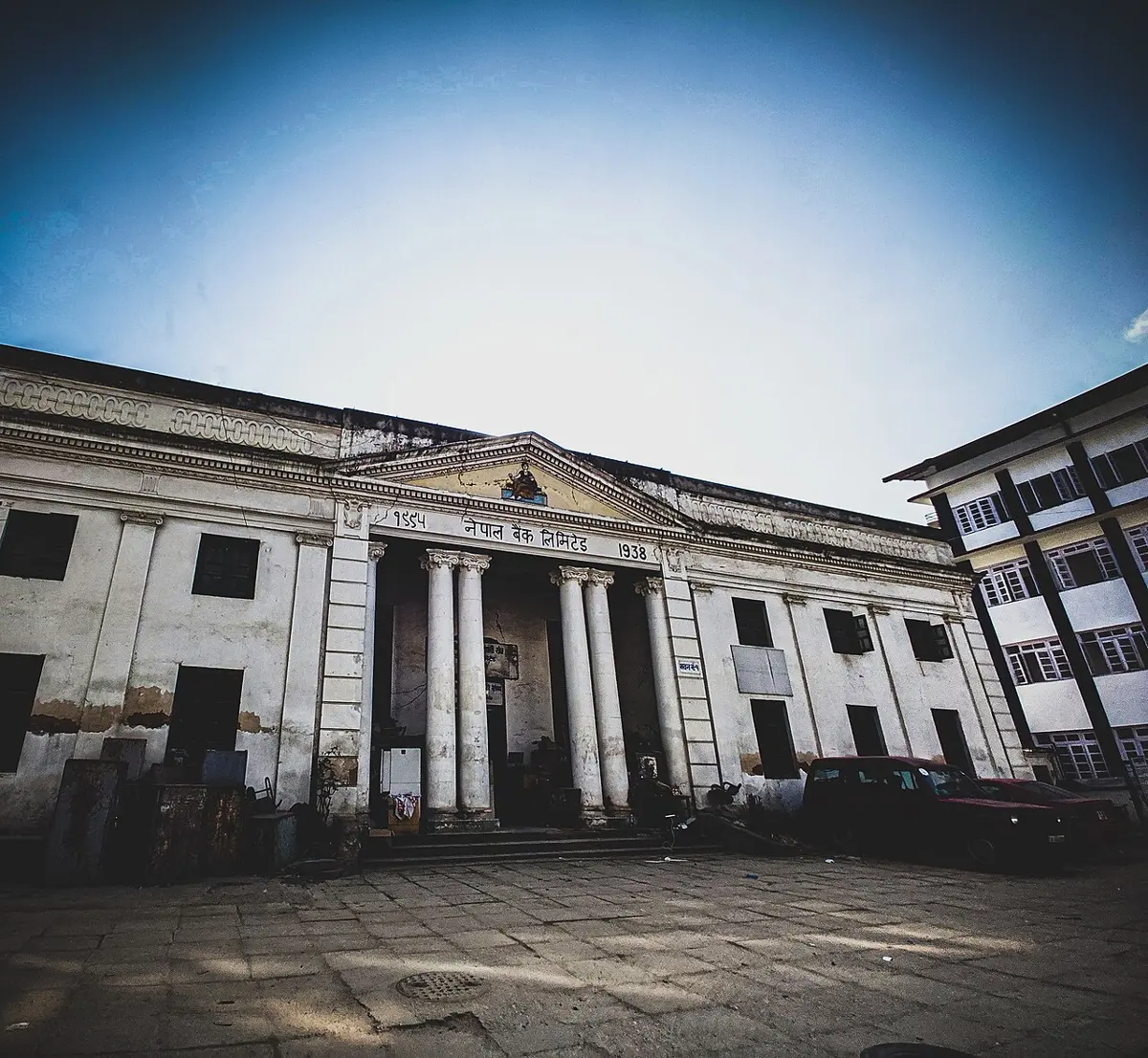
- Tejarath Adda and Nepal Bank (the fact): Nephil Matangi Maskay, A Study of the Trends in the Nepalese-Indian Currency Exchange Rate during the Period of 1932–1960, NRB Working Paper 3 (2007), footnote 5; “Development of Bank in Nepal”, art2nite.blogspot.com, 2013, for 1877 and no deposits; for Nepal Bank as the first commercial bank, Library of Congress, Nepal: A Country Study, “Money and Banking”; all read November 2026.
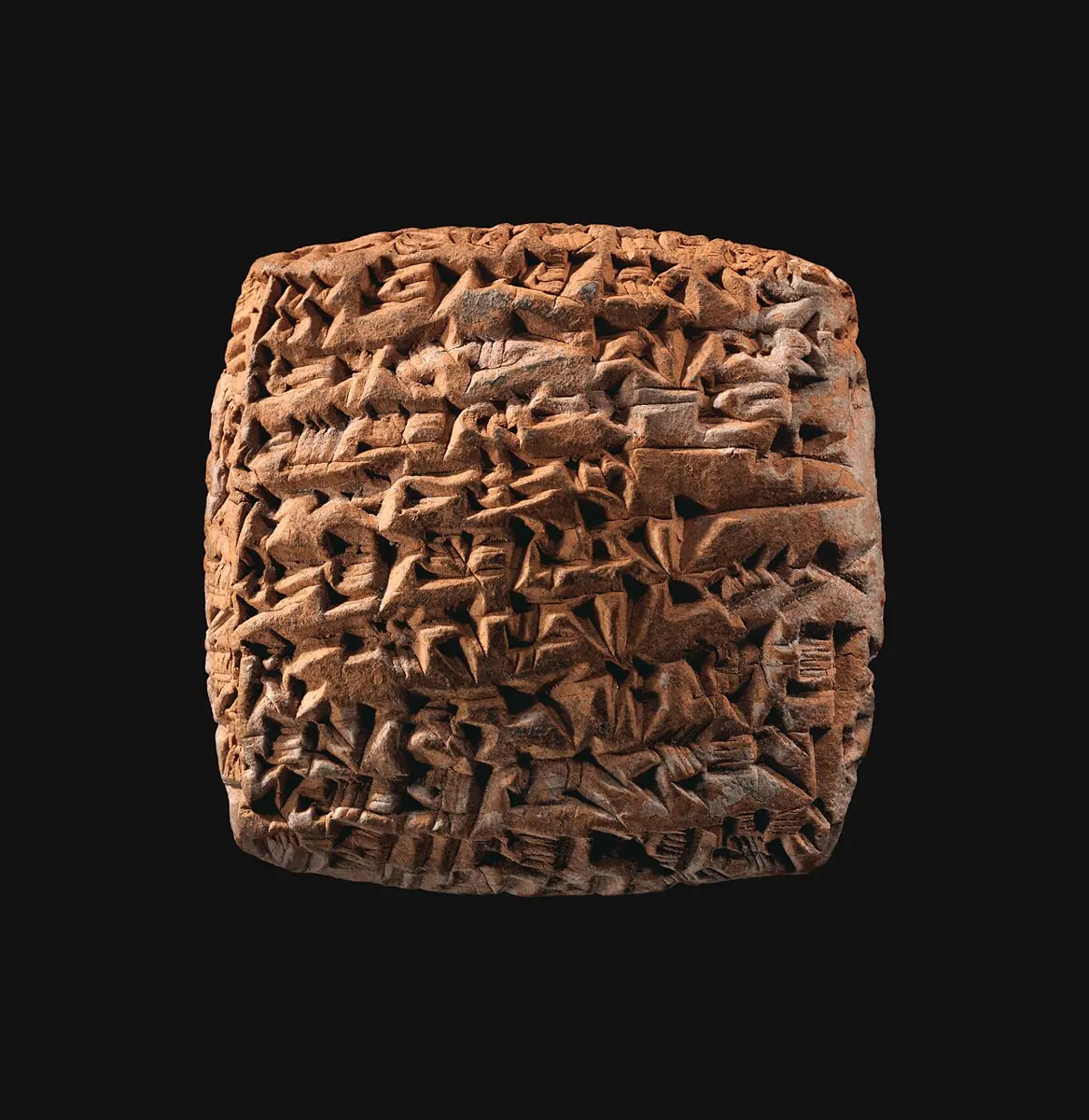
- Interest and calves (the story): Michael Hudson, “How Interest Rates Were Set, 2500 BC–1000 AD”, Journal of the Economic and Social History of the Orient 43 (2000), for máš as a “kid” or “calf” word and as a birth of fractions; his “How Did Ancient Bureaucrats Set Their Interest Rates?”, Biblical Archaeology Society, for 1/60 a month from about 2000 BC; Brad W. Setser, “Cows, calves and the interest rate”, Council on Foreign Relations, 16 May 2005; all read November 2026.
- Populations (Mixed exercise, Question 3): World Bank, indicator SP.POP.TOTL, read November 2026.
- The exam (For the exam, How the exam asks it): CDC, Specification Grid and Model Questions, Mathematics, Grades 6–8 (2080), its Grade 8 model question paper (question 3). Our question is our own.
- Time in years (the careful box in 7.1): CDC, शिक्षक निर्देशिका कक्षा ८ गणित (2081), Lesson 7.
- Every answer: worked out here and checked by a computer program.
A companion to your textbook, not a replacement for it: study from the book your school uses, and where the two differ, follow your teacher. Found a mistake? Please tell us.