
Your bag is too heavy to carry up the stairs, and a friend is walking past. You could say “Carry this!”, or you could say “Could you help me with this bag, please?” Both ask for the same thing. Which one would you rather hear, and which one is more likely to get you help?
This unit is about making requests and answering them: saying yes kindly, and saying no without hurting anyone. You will read an old story from the Buddha’s time, about a mother who knocks on every door in her village with one strange request, hear six friends invite each other out, and read a letter to the editor of a newspaper about the air we breathe. On the way, you will practice can, could, will and would for requests, offers and ability, try some famous tongue twisters, write a letter about a problem in your own area, and read a tailor’s conversation that ends with a surprise.
Getting started
A. What are they saying?
The unit opens with four pictures:
- A man bends over a big, heavy sack, trying to lift it. Another man stands beside him, watching.
- A schoolgirl walks an old man with a walking stick across a zebra crossing.
- A boy sits at a table, bent over a book.
- A girl stands at the end of a bed, arms folded, where someone is still asleep. The window is open, and it is morning.
Look at the pictures and guess what the people in the pictures are doing or saying.
Model answers
Each picture has a request in it: someone asking someone else to do something. That is what this unit is about.
B. Listen and sing
The short poem (from a collection called I Love Poems) asks the listener, gently, not to close their heart: there is a lot of room inside it, and kindness is hidden there like treasure, under the veins, inside the cage of the ribs. Then it asks the listener not to close their eyes, but to look everywhere, deep in the ocean, up in the sky, to the right and the left, before letting them rest.
The poem itself is a request: it begins with Please. Its message is to stay kind and open to others, and curious about the world.
What does the poem tell you not to do? Talk to each other in pairs.
Answer
Reading I: Kisa Gotami and the Mustard Seed
Before you read
How do people feel when their relatives pass away?
A model answer
Is death sure to happen?
A model answer
The story, part by part
1. A mother and her son. Kisa Gotami lives with her only son; her husband has died not long before. She loves the boy more than anything and works only for him.
2. The boy dies. One day the son falls ill and dies. Kisa can’t believe it. She refuses to accept that he is gone. The villagers come to console her (give her comfort and sympathy) and tell her to prepare for his funeral, the ceremony for a dead person. She refuses.
3. From door to door. Instead, she carries her son’s body in her arms from house to house, begging people to bring him back to life. They can see nothing can be done. For days she won’t let anyone touch him or take him to the graveyard.
4. The old man’s advice. An old man sees her pain and tells her to go to Gautama Buddha, who has a remedy (a way to make things better) for all suffering. Full of hope, Kisa runs with her son to the Buddha, who is meditating (sitting silently to calm the mind) under a peepal tree.
5. Kisa’s request. She begs the Buddha to use his power to bring her son back to life. The Buddha thinks, then says he can help, if she does exactly as he says.
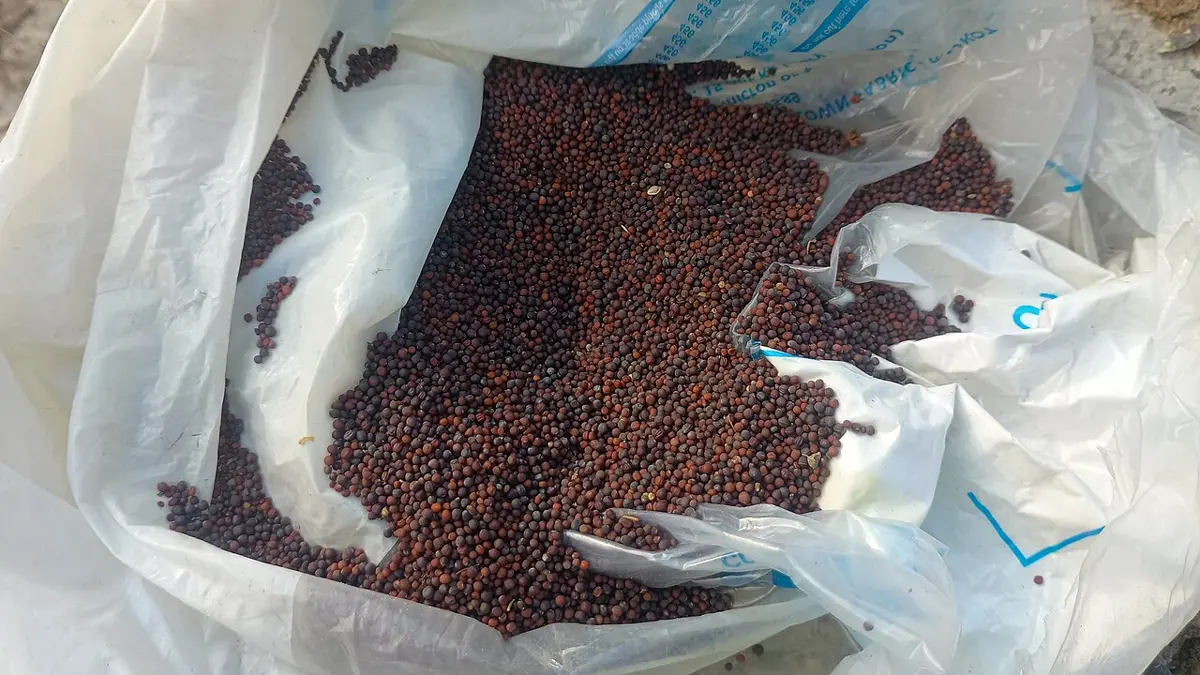
6. The task. He asks for a handful of mustard seeds from a house where no one has ever died. Mustard seeds are in every kitchen, so Kisa thinks it will be easy.
7. Every house has lost someone. At the first door, a neighbor gladly agrees to give the seeds. Then Kisa remembers the condition and asks whether anyone has died there. The neighbor’s father died a year ago. At the next house, a grandmother died a few weeks ago. At every door, the answer is the same: a mother, a daughter, a father, years ago or days ago.
8. What Kisa understands. At last Kisa sees what the Buddha wanted her to learn. Death comes to everyone one day; it is inevitable (it can’t be avoided). She is not alone in her loss: every family has lost someone it loved. Everyone who is born is destined to die.
Why did the Buddha ask for mustard seeds from a house where no one had ever died?
Pick an answer to see why.
What does Kisa do at the first house when the neighbor goes to get the seeds?
Pick an answer to see why.
Words from the text
| Word | Meaning |
|---|---|
| console | to give comfort and sympathy to someone who is sad (consoled in the story) |
| funeral | the ceremony for a dead person, for burying or burning the body |
| graveyard | an area of land where dead people are buried |
| remedy | a way of making a bad situation better; also a medicine |
| meditate | to sit in silence to make the mind calm (meditating in the story) |
| inevitable | sure to happen; impossible to avoid |
| grief | very great sadness, especially when someone dies |
| destined | sure to happen to someone, as if planned |
| handful | as much as you can hold in one hand |
| restore | to bring back to how it was before |
A. Match the words
Find the words from the text above and match them to the meanings below.
- a.gave sympathy to somebody
- b.a ceremony for burying or burning a dead person
- c.an area of land where dead people are buried
- d.a way of improving a difficult situation
- e.sitting in silence in order to make the mind calm
- f.sure or certain to happen
Answer
B. Answer the questions
Did Kisa love her son? How do you know?
Answer
What did she not accept?
Answer
What help did she first ask for from the neighbors?
Answer
Why did she not prepare for her son’s funeral?
Answer
What did the old man advise Kisa to do?
Answer
What was Gautama Buddha doing when Kisa saw him?
Answer
What request did she make to Gautama Buddha?
Answer
What did Gautama Buddha tell Kisa to do?
Answer
Did Kisa find a house where no one had ever died?
Answer
What did Kisa finally learn?
Answer
C. What did you learn?
What did you learn from the story that is linked to events today? Talk to your friends.
A model answer
Pronunciation: tongue twisters
A tongue twister is a sentence full of similar sounds, so it is hard to say quickly. Twisters are great practice: they make your tongue and lips move exactly, and they are funny when you get them wrong. Here are three famous ones.
a. Peter Piper. Four lines about a man called Peter Piper who picked a peck of pickled peppers, and a question about where those peppers are. Nearly every stressed word starts with /p/. A peck is an old measure of dry goods, about 9 liters, and pickled peppers are kept in vinegar or oil, like our achar.
b. Betty Botter. Betty buys some butter, but it tastes bitter, so it will make her batter (a mix for cakes) bitter. She decides a bit of better butter will make the batter better. This one mixes /b/ and /t/ with short vowels that are close together: butter, bitter, batter, better, bit.
c. The woodchuck. It asks how much wood a woodchuck would chuck (throw) if a woodchuck could chuck wood. It mixes /w/, /ʊ/ and /tʃ/: wood, would, woodchuck, chuck, could.
Practice saying the three tongue twisters, slowly first and then quickly. Then make a short twister of your own with one sound.
Models of your own
Listening
A. Before you listen
Answer these questions.
- a.What do you do if you want someone to do something for you?
- b.If someone asks you to help him or her lift a load, how do you respond politely?
- c.How do you politely reject a request to lend someone your pencil?
Model answers
In the recording, six friends invite each other to things: an art gallery, karaoke, a technology show, a concert, a sale and a film. Listen for how each invitation is made, and how each is accepted or refused.
B. Complete the dialogues
Listen to the audio and complete the dialogues with the missing words, phrases or sentences.
- A: Hey Lisa, I’m going to the new art gallery at the weekend. ……… to come with me? B: ……… . I have to study for exams at the weekend.
- A: Some of my friends and I are going to sing karaoke tonight. ……… to join us? B: ……… , I’d love to. It sounds like fun.
- A: There’s a technology show at the International Convention Centre. ……… ? B: Yes, ……… . Will they have smartphones? I need a new one.
- A: Hey Jim, we’re going to see a concert tonight at the stadium. I was wondering if ……… ? B: ……… . But I have to work tonight.
- A: Tony, there’s a big sale at Central. ……… ? We could get some cheap brand-name clothes. B: ……… . I love buying brand-name clothes.
- A: Hey BJ, there’s a new horror movie playing tonight. I’m going with some friends. ……… B: ……… . I love horror movies. What time are you going to meet?
Answer
| To invite | To accept | To refuse |
|---|---|---|
| Would you like to come? | I’d love to. | Sorry, I can’t. |
| Do you want to join us? | Thanks, I’d love to. | Thanks for asking, but I have to… |
| I was wondering if you’d like to go. | Sure! | I’d love to, but I’m busy. |
| Can you come? | Yes, it sounds like fun. |
C. Act them out
Work in pairs to act out the dialogues. Practice the expressions so they sound natural.
Tips
Speaking: requests and responses
A. Who said it to whom?
Read these sentences from the story (Reading I) and say who said them to whom.
- a.Will you please help me?
- b.Would you please use them to restore my son back to life?
- c.Well! Kisa, I think I can help you.
- d.Could you please lend me a handful of mustard seeds to bring my son back to life?
- e.Yes, I can surely do that.
Answer
B. Requests and responses
In Grade 6, you made requests with can, could, will and would. Here they are again, from the most direct to the most polite, with the answers that go with them.
| Request | How it sounds |
|---|---|
| Will you lend me your book, please? | direct, a little firm |
| Can you show me your photo album, please? | friendly, with family and friends |
| Could you show me the way to the post office, please? | polite, with anyone |
| Would you help me with this exercise, please? | very polite |
| Would you mind carrying this for me? | very polite; note the -ing |
| Saying yes | Saying no |
|---|---|
| Sure, here you are. | No, I’m sorry, I need it. |
| Of course. | I’m afraid I can’t. |
| No problem. | I’d love to, but I’m busy today. |
Put these expressions in the correct column: requests or responses.
- a.Can you show me your photo album please?
- b.No, I’m sorry I need it.
- c.Will you lend me your book please?
- d.Sure, here you are.
- e.Could you show me the way to the post office please?
- f.I’m afraid, I can’t.
- g.Would you help me with this exercise please?
- h.I’d love to but I’m busy today.
- i.Of course.
Answer
C. The request board game
The book’s board is a winding path from Start to Finish. Each square names a situation, with a clue in brackets for the request to make. Played in order, the squares are:
| Situation | Request clue |
|---|---|
| I’ve never been to the city. | be my guide |
| I’m talking to you. | listen to me |
| Dad came in and left the door open. | close the door |
| I’m leaving for two days. | look after my cow |
| I have to clean the house before my parents come home. | help me |
| The music is terrible and too loud. | turn it off |
| I’m reading a book. | be quiet |
| I’ve got a terrible headache. | leave me alone |
| I don’t understand the instructions. | translate them |
| My bag is in my room. | bring it to me |
| The matches are on the table. | light the fire |
| I’m organizing a party. | come |
| The cat must be very hungry. | feed it |
| The bag is very heavy. | hold this for me for a second |
| It’s freezing out there. | close the window |
| I don’t understand my homework. | help me with it |
| The luggage is heavy. | carry it |
| I’m going to sleep. | wake me up at 6 |
| I’m really thirsty. | make lemonade |
| I’m starving. | give me some bread |
| It’s really hot here. | open the window |
Work in pairs. Roll a die, move along the board and make the request for the square you land on. Your partner answers.
Model requests for every square
D. Your own requests
Work in pairs. Take turns to make requests and respond in these situations.
- a.You want to find out where the nearest bus stop is.
- b.You want to fill a water bottle at a coffee shop.
- c.You want to write something but you have lost your pencil.
- d.You want your friend to go to the cinema tomorrow.
- e.It’s raining outside. You want to borrow your friend’s umbrella.
- f.You want to know the time but you don’t have a watch.
Model exchanges
Grammar I: requests with can, could, will and would
A. When do we use them?
Study these sentences. When do you use them?
- a.Will you help me please?
- b.I would like a drink please.
- c.Would you mind turning off the music please?
- d.Could you pass the juice please?
- e.Can you pass the salt please?
Answer
B. Which is correct?
Remember the rule from Grade 6: after can, could, will and would, use the plain verb: no to, no -s, no -ing. In a question, the modal comes first, then the subject, then the verb.
Which is correct? Choose the correct one in each pair.
- a.Could you please send me the money? / Could you please to send me the money?
- b.Could you to help me please? / Could you help me please?
- c.I would liking a drink. / I would like a drink.
- d.She would likes a coffee. / She would like a coffee.
- e.Could you please bring my keys? / Could please you bring my keys?
- f.Can I have another drink please? / Can I have to another drink please?
Answer
C. Can, could, will or would?
The same four words do other jobs too, not only requests. Look at the job first.
| Job | Present or future | Past |
|---|---|---|
| Ability | She can swim. | She could swim when she was five. |
| Request | Can / Could / Will / Would you help me? | |
| Offer | Can I help you? Would you like some tea? | |
| Future, promise | I will help you tomorrow. | He said he would help (the future seen from the past). |
| Permission | You can borrow my bike. |
Complete the sentences with will, would, can or could.
- a.He ran as fast as he ……… .
- b.She ……… swim when she was just five.
- c.Raju ……… speak six languages.
- d.I don’t think I ……… pass the test.
- e.He failed the test because he ……… answer only two questions.
- f.He said that he ……… help but he didn’t.
- g.You ……… borrow my car if you want.
- h.Who ……… cook dinner today?
- i.……… you like to dance with me?
Answer
“My grandfather ___ climb to the temple in ten minutes when he was young.”
Pick an answer to see why.
Reading II: a letter to the editor
Before you read
Have you ever written a letter to the editor of a magazine or newspaper?
A model answer
Why would you write to an editor?
A model answer
The letter, part by part
A letter to the editor is a formal letter written for a newspaper to print. Many people read it, so it is short, clear and polite.
| Part | In Nitin’s letter |
|---|---|
| Sender’s address and date | Kathmandu, 19 September 2021 |
| Receiver | The Editor, The Rising Nepal, Kathmandu, Nepal |
| Subject | Air pollution, a concern |
| Salutation | Dear Sir/Madam |
| Body | the problem, its causes, its harm and what should be done |
| Closing | Yours faithfully, |
| Sender’s name | Nitin Rai |
The body has four steps, in order:
- Why he writes. He uses the newspaper (he politely calls it esteemed, much respected) to draw attention to the air pollution in his city.
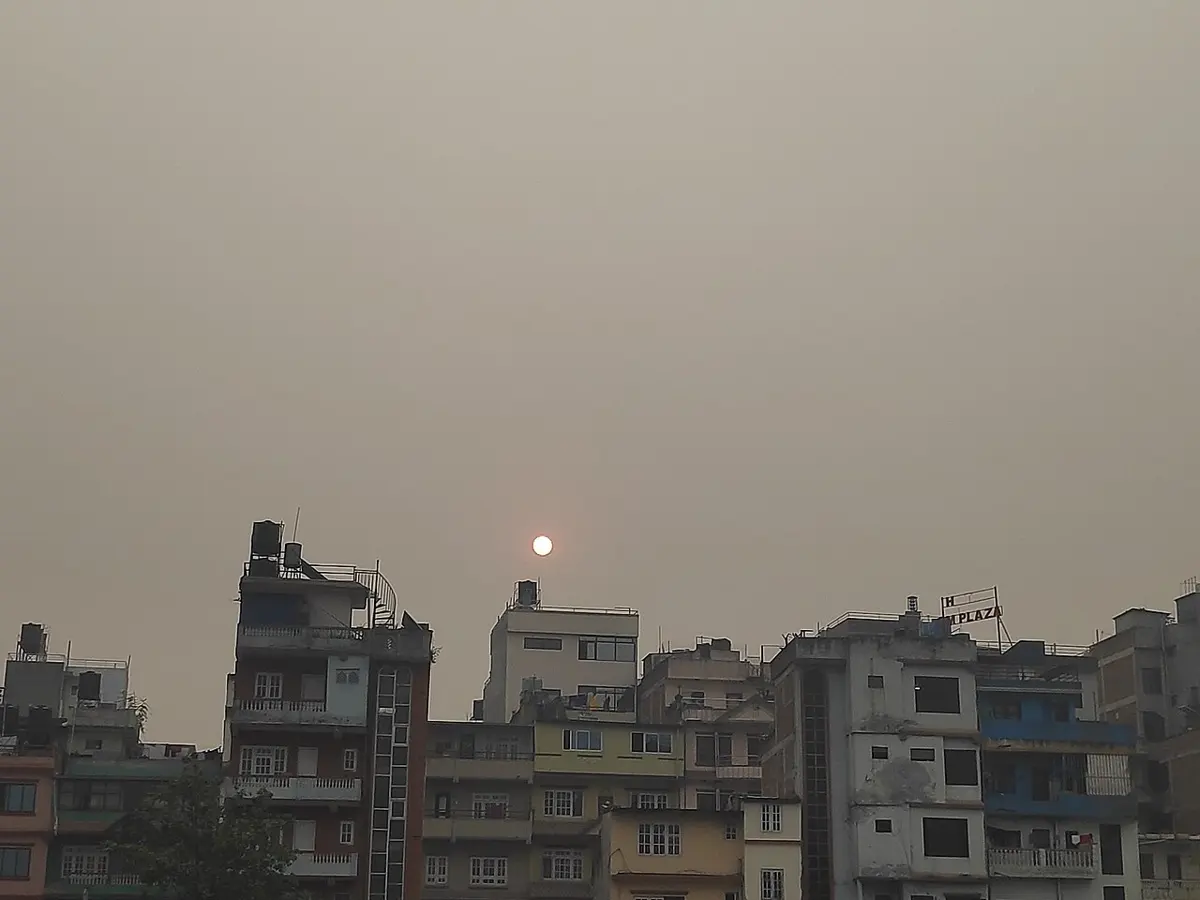
- The cause. Air pollution is rising, and he says factories are the main source of air and water pollution.
- The harm. Polluted air causes suffocation (difficulty getting enough air), breathing problems and lung diseases. The thick smoke emitted (sent out) from factory chimneys is full of poisonous gases, which mix with clean air.
- The solution. Factory owners should take responsibility for the environment, and there should be a strict law to punish owners who don’t keep the air clean.
A. Complete the table
Complete the table with information from the letter: sender’s address, receiver, name of the newspaper, subject of the letter, sender’s name.
Answer
B. Answer the questions
What type of problem is air pollution?
Answer
What are the major sources of air pollution?
Answer
What health problems are caused by air pollution?
Answer
What does the smoke from chimneys contain?
Answer
How does the smoke from factories pollute the pure air?
Answer
What, according to Nitin, is necessary to stop air pollution?
Answer
Who, according to Nitin, should take responsibility for air pollution?
Answer
Writing: a letter about a public problem
Use Nitin’s letter as your guide: the same parts in the same order, one problem, its effects, and what should be done. Be polite: you want the reader on your side.
Is there any public problem (for example noise, traffic or drainage) in your locality? Write a letter either to the editor of a local newspaper or to the ward chairperson about the problem. Use the letter above as a guide.
A model letter
Grammar II: offers, requests and ability
A. Study the sentences
The book’s sentences do three different jobs:
| Request (please do something) | Offer (I’ll do something for you) | Permission (may I?) |
|---|---|---|
| Could you please do me a favor? | Would you like some help? | I’ve finished my work. Can I go now? |
| Will you stop talking like that, please? | Can I help you? | |
| Would you mind closing the window, please? | Would you like some cake? | |
| Will you give me a hand, please? |
Do me a favor means do something kind for me; give me a hand means help me.
A shopkeeper says, “Can I help you?” What is she doing?
Pick an answer to see why.
B. Complete the sentences
Complete these sentences with can, could, will or would. Use negative forms where necessary.
- a.My grandmother is eighty-five, but she ……… still read and write without glasses.
- b.……… I come with you?
- c.……… you help me with the housework please?
- d.There was a time when I ……… stay up very late.
- e.You ……… lose any more weight because you eat a lot.
- f.I ……… get you a shawl from Kashmir.
- g.……… you take care of my cow for a day?
- h.……… you swim when you were 10 years old?
- i.He’s amazing, he ……… speak five languages.
- j.She’s seven but she ……… read yet.
Answer
Project work: requests around school
Extra bit: at the tailor’s
The dialogue is at a tailor’s shop, a place where clothes are made to fit you. It is full of polite requests and offers.
- The tailor offers help: What can I do for you, sir? The customer wants a woolen suit made.
- The tailor offers to sell the cloth, but the customer has brought his own suit-length (enough cloth for one suit).
- The tailor asks permission to take his measurements. The customer wants a tight-fitting suit.
- The customer asks how long it will take. About three weeks, says the tailor, because of the holiday rush (everyone wants new clothes before a festival). The customer is fine with that, as long as it is ready before the end of the month.
- They choose pockets: three inside the jacket, no hip pocket in the trousers, but a small ticket pocket. The tailor asks him to come for a fitting (trying on the half-made suit) next Tuesday; the customer would rather come on Wednesday.
- The surprise. Only now does the customer ask the price. The tailor says his prices are competitive (as low as other shops’) and shows the list. The customer is shocked by 777 rupees for making a suit, and says he will go elsewhere. The tailor, still perfectly polite, recommends another shop, FITWELL, across the street, and says goodbye.
The joke is in the order: after choosing every pocket and fitting, the customer finds out the price at the very end. And the tailor, who has just lost a customer, stays polite to the last word.
Act out the dialogue in pairs and answer the questions.
- a.Where is the dialogue taking place?
- b.Who is taking part in the dialogue?
- c.Is the customer a man or a woman? How do you know?
- d.When will the suit be ready?
- e.At the end of the dialogue, what does the customer decide to do? Why?
Answer
In the dialogue, which line is an offer?
Pick an answer to see why.
Exercise
Make a polite request for each situation.
- a.You want your classmate to lend you a ruler.
- b.You want a stranger to take a photo of your family at Phewa Lake.
- c.You want your brother to turn down the TV.
Answer
Answer each request: say yes to the first, and no politely, with a reason, to the second.
- a.Could you help me carry these books to the library?
- b.Will you lend me your new phone for the trip?
Answer
Correct the mistakes.
- a.Could you to open the door?
- b.She can sings beautifully.
- c.Would you mind to wait a minute?
Answer
Complete with can, could, will or would.
- a.When I was small, I ……… climb trees, but now I’m afraid of heights.
- b.……… you like some sel roti?
- c.Don’t worry, I ……… call you as soon as I reach Pokhara.
Answer
Write a short letter to the editor of a newspaper about the noise from loudspeakers late at night in your area.
A model answer
Printable PDFs
- Study notes 2 pages
- Harder practice questions 2 pages Answer key
Practice every question in the book, and keep track of the ones you miss →
A companion to your textbook, not a replacement for it: study from the book your school uses, and where the two differ, follow your teacher. Found a mistake? Please tell us.