
A boy from a village with no school, eleven days’ walk from the nearest classroom, grew up to give sight back to about 120,000 people. A city has stood in one valley for over a thousand years, survived two great earthquakes, and still has a temple whose name became its own. To tell their stories, we need to describe people and places well.
This unit is about describing. You will read the life of the eye surgeon Dr. Sanduk Ruit and a short guide to Kathmandu, and write a biography and a description of your own town or village. In grammar you will learn to join two sentences into one with who, which and where (Dr. Ruit is a surgeon who gives sight to the blind), and to make questions for a given answer.
Getting started
A. Describe the pictures
The unit opens with four pictures of people and places in Nepal:
- A woman lawyer in a black coat, standing beside a wooden witness box in a courtroom.
- A farmer plowing a field with two oxen.
- Rows of bright green tea bushes covering rolling hills.
- A climber in a down jacket on a snowy mountain ridge.
What do you think you see in the pictures? Describe them to your friends. Say five things for each picture.
Model answers
B. Listen and sing
The song is a happy one: the singer feels so light that she could float up into space like a hot-air balloon, and asks everyone who knows what happiness means to them to clap along. The lines end in space and you, and the task is to find words that rhyme with them.
Look for five other words that rhyme with space and you.
Answer
Reading I: Dr. Sanduk Ruit
Before you read
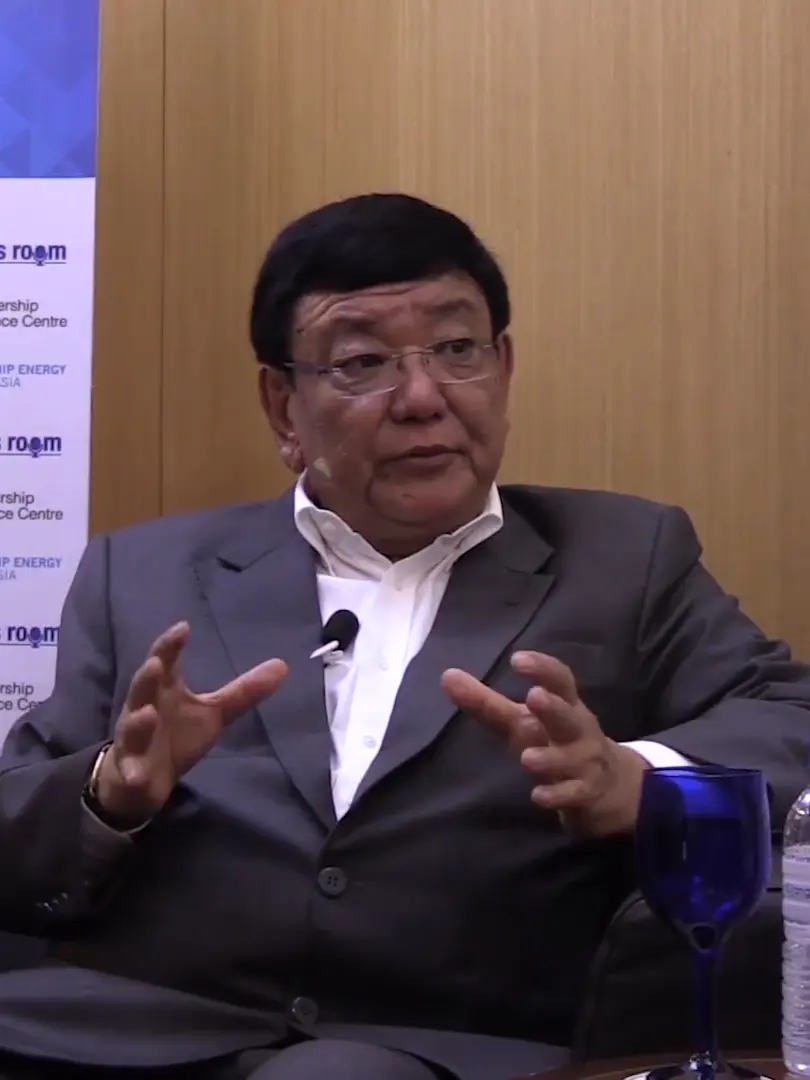
Who do you think the person in the picture is?
Answer
What do you think his profession is?
Answer
The biography, part by part
A biography is the story of a real person’s life, written by someone else. It usually goes in time order, with dates.
Childhood. Sanduk Ruit was born on 4 September 1954 in Olangchunggola, a village high in the mountains of Taplejung, in the far east of Nepal. It was one of the most remote places in the country: no electricity, no school and no health post. He was the second of four children.
School. The nearest school was in Darjeeling, in India, eleven days’ walk away. His father, who ran a small business, believed education came first, and sent him to St. Robert’s School there. Ruit passed his SLC in 1969 from Siddhartha Vanasthali School in Kathmandu.
Studies. He studied medicine (MBBS) at King George’s Medical College in Lucknow, India, from 1972 to 1976, then at the All India Institute of Medical Sciences in Delhi, and later in the Netherlands, Australia and the United States.
A turning point. In 1980, while working on a survey of blindness in Nepal, he met Fred Hollows, an Australian eye surgeon, who became his mentor (a wise teacher and guide). Hollows helped him find his life’s work: to give sight back to people who are blind for no good reason. Both believed that everyone whose blindness can be treated has a right to see again. Ruit then trained with Hollows in Sydney.
His invention. In 1995, Ruit developed a new lens (the small clear disc put into the eye in a cataract operation) that could be made far more cheaply. It is now used in more than 60 countries, and his way of operating is taught in medical schools in the USA. It is much cheaper than western methods but works just as well.
Tilganga. In 1994, Ruit and the Fred Hollows Foundation set up the Tilganga Eye Centre in Kathmandu, now the Tilganga Institute of Ophthalmology. It has trained more than 500 eye workers from around the world, and by 2015 it was operating on about 30,000 patients a year and making 450,000 of the small lenses a year. (Source: Nicholas Kristof, In 5 minutes, he lets the blind see, 2015.)
Awards. He has received many honors: the Ramon Magsaysay Award in 2006, India’s Padma Shri in 2018, and Nepal’s Suprasiddha Prabal Janasewashree (First) in 2021. He also co-founded the Himalayan Cataract Project, whose aim is to give sight back to anyone who needs it, whether or not they can pay.
Words from the text
| Word | Meaning |
|---|---|
| priority | something more important than other things |
| restore | to bring back what was there before |
| remarkable | unusual, and worth noticing |
| treatable | that can be cured |
| tribute | something done or given to show respect |
| ophthalmologist | a doctor who treats eye diseases |
| prestigious | respected and admired |
| mission | an important aim |
| surgeon | a doctor who does operations |
| mentor | a wise person who guides someone younger |
A. Find the words
Which words in the text have the following meanings? Write the words from the text. The first letter has been given.
- a.something that you think is more important than other things: P…
- b.to bring back a situation that existed before: R…
- c.unusual way that causes people to take notice: R…
- d.that can be treated/cured: T…
- e.an act to show respect: T…
- f.a doctor who treats eye diseases: O…
- g.having a lot of prestige: P…
- h.aim: M…
- i.a doctor who performs operations: S…
Answer
B. Complete the table
Complete the table with the information from the text above.
| Year | Event |
|---|---|
| 1954 | Born |
| 1972–1976 | |
| 1980 | |
| 1995 | |
| 2006 | |
| 2018 | |
| 2021 |
Answer
C. True or false?
Write True or False for the following statements.
- a.Dr. Ruit was born in the early 50’s.
- b.He is the eldest child of his parents.
- c.His father gave importance to his children’s education.
- d.He did his SLC in India.
- e.He studied MBBS in Nepal.
- f.Ruit developed cheaper eye lenses.
- g.Tilganga Eye Centre is now known as Tilganga Institute of Ophthalmology.
Answer
D. Answer the questions
Where was Dr. Ruit born?
Answer
What was his father’s occupation?
Answer
How far was the nearest school from his home?
Answer
Name the countries where he studied.
Answer
What is special about Dr. Ruit’s new eye lenses?
Answer
When was Tilganga Eye Centre established?
Answer
What type of awards has Dr. Ruit got?
Answer
Who helped Ruit choose his life’s path?
Pick an answer to see why.
E. Talk about Dr. Ruit
Work in pairs. Take turns to talk about Dr. Sanduk Ruit in your own words.
A model answer
Pronunciation: the -ologists
All eight words are people who study something. -logy is a subject (biology, zoology), and -logist is the person who studies it. In every one, the stress falls on -ol-, the third syllable from the end: oph-thal-MOL-o-gist, zo-OL-o-gist, psy-CHOL-o-gist.
Learn these words with the help of your teacher: ophthalmologist, radiologist, biotechnologist, zoologist, psychologist, dermatologist, ornithologist, criminologist.
Answer
Writing I: a biography
A short biography follows the order of a life. Use the book’s six clues as your paragraphs:
- Full name, date and place of birth. One sentence opens the biography.
- Early life: family, childhood, where they grew up.
- Education, and any big achievements in it.
- Their work and what they did for society.
- Why they are famous.
- Awards and achievements.
Use the past simple for the life (was born, studied, met), and the present for what is still true (He is a surgeon. The hospital helps thousands every year.). Join your facts with who, which and where (see Grammar I below).
Write a short biography of a person you like most. Use the following clues to help you.
- a.Full name, date of birth, place of birth
- b.Early life
- c.Educational details highlighting any major achievements
- d.His/her contribution to the society
- e.Why he/she is famous
- f.Awards and achievements
A model answer
Grammar I: who, which and where
A. Two sentences into one
Look at two short sentences about Dr. Ruit:
Dr. Sanduk Ruit is an ophthalmologist. He cures people’s eyes.
The second sentence tells us more about the ophthalmologist. We can join them with who, which takes the place of he:
Dr. Sanduk Ruit is an ophthalmologist who cures people’s eyes.
The part who cures people’s eyes is called a relative clause. It goes straight after the noun it describes, and tells us which one, or what kind.
| Use | For | Example |
|---|---|---|
| who | people | She is the girl who cuts my hair. |
| which | things and animals | Olangchunggola is a remote place which lies in Taplejung. |
| where | places, when the clause says what happens there | This is the house where I was born. |
Notice what drops out: he, she, it, them or there disappears, because who, which or where now does its job.
- They are the boys. They were dancing at the party. → They are the boys who were dancing at the party.
- This is the house. I was born here. → This is the house where I was born.
Which sentence is correct?
Pick an answer to see why.
B. Who, where or which?
Complete the sentences with who, where or which.
- a.I have a friend ……… speaks four languages.
- b.We should only buy products ……… can be recycled.
- c.I can’t find the pen ……… I borrowed from you.
- d.Do you remember the park ……… we met?
- e.At the party, there were three people ……… knew me.
- f.I want to see the film ……… everybody’s talking about.
- g.What’s the name of the man ……… lives next door?
- h.This is the computer ……… I bought from my friend.
- i.Look at the man ……… is dancing with your sister.
- j.That’s the house ……… I lived as a child.
Answer
C. Combine the sentences
Combine the sentences using who, which or where. The beginning of each sentence is given.
- a.These are the friends. I met them in Kathmandu. — These are the friends ………
- b.That’s the neighbor. He helped us. — That’s the neighbor ………
- c.What’s the name of the film? You watched the film yesterday. — What’s the name of the film ……… ?
- d.He drives a car. The car is very expensive. — He drives a car ………
- e.The octopus is the only animal. It has three hearts. — The octopus is the only animal ………
- f.That’s the shop. I bought my TV from that shop. — That’s the shop ………
- g.This is the school. I studied in this school. — This is the school ………
- h.That’s the bus. It broke down yesterday. — That’s the bus ………
Answer
Listening: what is it?
A. Name the things
There are four pictures: an electric fan, a pillow, a wheelbarrow and a cup of coffee.
Name the following things.
Answer
What are they used for?
Answer
B. Complete the sentences
Complete the sentences with the words from the audio. Use only one word.
Fan: It’s made of ……… and metal. It is used for keeping the room ……… .
Pillow: It is ……… in shape. It is used for ……… .
Wheelbarrow: It is used for moving things around in the ……… . It has one wheel and two ……… .
Coffee: It is ……… in color. It gives us ……… .
Answer
C. Talk about the objects
Three questions describe any object:
- What is it made of? It is made of plastic and metal.
- What does it look like? It is rectangular. It is soft. It is brown.
- What is it used for? It is used for keeping the room cool. (used for + -ing)
Talk to your friends about the objects above. Say: what they are, what they are made of and what they are used for.
Model answers
Speaking
A. Describe and identify
There are ten workers in the pictures: a woman doctor with a stethoscope and a white coat; a bus driver beside a red bus; a woman teacher at a blackboard; a pilot with a plane behind him; a porter carrying a heavy sack on his back; a farmer with a hoe on his shoulder; a shopkeeper in his shop; a carpenter sawing wood; a policeman in a blue uniform; and a mason building a brick wall.
Look at the pictures. Work in pairs and take turns to describe and identify each person. Example: A: Who is the woman wearing a white coat? B: The woman who is wearing a white coat is a doctor.
Model answers
Look at the images again. Do you think there are any problems with them? Talk to your friends.
A model answer
B. Describe a scene
The picture shows a garden with a wooden swing. One girl sits on the swing, laughing; another stands beside it. There are flowering bushes behind them, a wooden table and two pots of plants.
Look at the picture. Describe the scene in five sentences.
A model answer
C. Describe objects
Look at the objects. Describe them. Talk about: what they are made of, what they look like and what they are used for. Example: The pencil is made of wood. It is long. It is used for drawing.
Model answers
Reading II: Kathmandu
Before you read
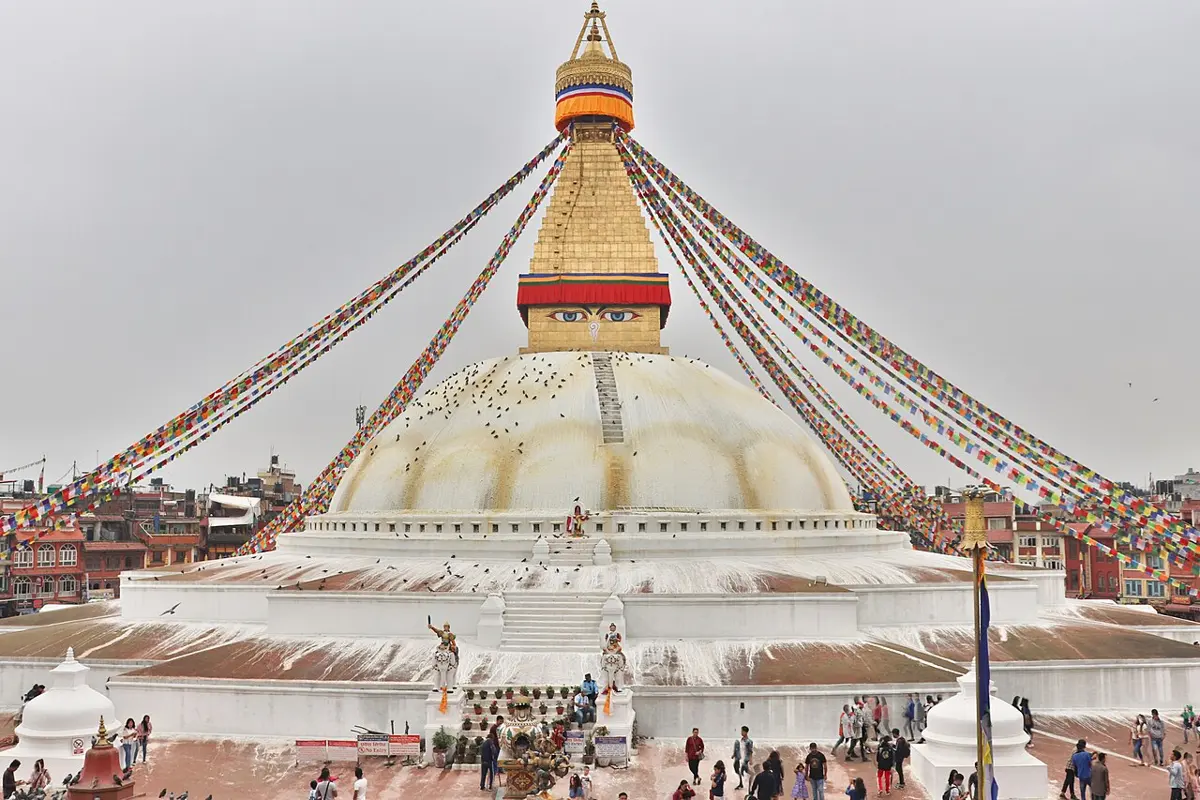
Which city is shown in the pictures?
Answer
What things is it famous for?
Answer
The text, part by part
Where and when. Kathmandu is the capital of Nepal. It lies in a valley among hills, about 1,324 meters (4,344 feet) above the sea. The text says King Gunakamadeva founded it in 723.
Its name. The name comes from Kasthamandap, a wooden pavilion in the old city. Kastha means wood and mandap a shelter or pavilion, and the old story says it was built with the wood of one single tree.
Old and new. In the 1970s, new roads and air travel made Kathmandu the hub, the center, of Nepal’s transport. Its modern streets are very different from the old parts, with narrow lanes and brick houses with carved wooden doors and windows. The great earthquake of 1934 knocked down many old buildings, so new, modern ones were built.
The palace. The most famous building is the old palace of the Malla kings, with the Taleju temple, built by King Mahendra Malla. A statue of Hanuman guards the palace’s main gate, which is why the palace is called Hanuman Dhoka (dhoka means gate).
Around the center. To the east is Tundikhel, the big parade ground, where the government’s pronouncements were once read out first to the army. Nearby stands the tall tower built by the prime minister Bhimsen Thapa, known as Dharahara. On the outskirts are palaces built by the Rana family, among them Singha Durbar, once the home of the Rana prime ministers and now the government’s main office. About 3 miles (5 km) northeast is the huge white dome of Boudhanath, a stupa that Tibetan Buddhists hold sacred.
World Heritage. In 1979, UNESCO listed the Kathmandu Valley as a World Heritage Site for its history and culture. Because the city was spreading fast and without a plan (urban sprawl), it was put on the list of World Heritage in Danger in 2003, and taken off again in 2007 after the government worked to protect it.
2015. On 25 April 2015, an earthquake of magnitude 7.8 struck central Nepal, about 50 miles (80 km) northwest of Kathmandu. About 9,000 people died across Nepal and about 16,800 were injured. Kathmandu’s old center was badly damaged, and tens of thousands lost their homes.
A. Match the words
Match the words with their meanings.
- a.hub
- b.carved
- c.adjoining
- d.pronouncements
- e.outskirts
- f.dome
- g.vulnerable
- h.sprawl
- i.next to or joined to something
- ii.the parts of a city that are furthest from the center
- iii.a spherical roof with a circular base
- iv.weak or easily hurt
- v.construction spreading in an ugly way
- vi.a central point
- vii.formal public statements
- viii.having the patterns on something made by cutting
Answer
B. Complete the sentences
Complete the sentences with the words from above.
- a.The government made some ……… on changes in its policy.
- b.They live on the ……… of Kathmandu.
- c.The roof of the stadium looks like a ……… .
- d.Old people are highly ……… to the flu.
- e.The airport has become an international ……… .
- f.The ……… door of the temple looks nice.
- g.They live in ……… rooms.
Answer
C. Answer the questions
What does Kasthamandap mean?
Answer
What prompted the construction of modern style buildings in Kathmandu?
Answer
Who built Taleju temple?
Answer
What is meant by Tundikhel?
Answer
Where is Boudhanath located?
Answer
Why did UNESCO list various sites of Kathmandu in the World Heritage List?
Answer
What was the impact of 2015 earthquake on Kathmandu?
Answer
Why was the Kathmandu Valley put on the list of World Heritage in Danger in 2003?
Pick an answer to see why.
D. Describe your place
Suppose you are talking to a foreigner who doesn’t know anything about the place where you live. Describe it to him/her.
A model answer
Grammar II: questions for an answer
A. Study the questions
Every question word asks for a different kind of answer:
| Question word | Asks for | Example |
|---|---|---|
| what | a thing, a name | What is your name? — My name is Ram Karki. |
| where | a place | Where are you from? — I’m from Dhading. |
| why | a reason | Why is she sad? — Because she’s lost the match. |
| who | a person | Who’s she? — She is my sister. |
| when / what time | a time | When do banks open? — At 10 o’clock. |
| whose | the owner | Whose book is this? — It’s mine. |
| how | the way, or what it was like | How does he run? — Fast. |
| how many | a number | How many students are there? — Twenty. |
| what kind of | a type | What kind of music do you like? — Pop music. |
To make a question for a given answer:
- Find the question word that asks for that part.
- Put the helping verb (is, are, can, will…) before the subject. With no helping verb, add do, does or did, and the main verb goes back to its plain form.
- Leave the answer part out: the question word has taken its place.
They went to Spain. → Where + did + they + go? → Where did they go?
B. Make the questions
Make questions for these statements so that the answers will be the words in bold.
- a.They went to Spain.
- b.He writes novels.
- c.The girls watched a movie.
- d.He discovered the truth.
- e.I am leaving at 7:00 a.m.
- f.This is my book.
- g.He runs fast.
- h.I like pop music.
- i.There are twenty students.
- j.The film was interesting.
Answer
Writing II: my village or town
Use the book’s clues as the order of your paragraph: name → location → area → where the name comes from → special features → your likes and dislikes. A good description uses a few exact facts (numbers, directions) and a few words that help the reader see and hear the place.
Write a short paragraph describing your village/town. Use the given clues: name, location, area covered, where does the name come from, special features, your likes and dislikes about your town/village.
A model answer
Project work: a famous person
Extra bit: adjective or adverb?
An adjective describes a noun: a clear voice, an easy question. An adverb describes a verb, saying how something is done: speak clearly, answer easily. Most adverbs are the adjective + -ly. The odd one is good: its adverb is well.
Choose the correct words from the brackets to complete the sentences.
- a.Mary pronounces every word ……… . (clear/clearly)
- b.We like to go sailing in ……… weather. (clear/clearly)
- c.The teacher asked us an ……… question. (easy/easily)
- d.I answered the teacher’s question ……… . (easy/easily)
- e.You speak English very ……… . (good/well)
- f.Your English is very ……… . (good/well)
Answer
Exercise
Practice the whole unit. Try each one, then open the answer.
Join with who, which or where.
- a.Lumbini is the place. The Buddha was born there.
- b.I met a woman. She climbed Everest twice.
- c.Have you seen the book? I left it on the table.
Answer
Make questions for the words in bold.
- a.Tilganga opened in 1994.
- b.Fred Hollows was an Australian surgeon.
- c.Ruit studied in Lucknow.
Answer
Correct the mistakes.
- a.This is the temple which I visited it last year.
- b.He is the man which sells vegetables.
- c.She sings very good.
Answer
Describe one object in your bag with three sentences: what it is made of, what it looks like, and what it is used for.
A model answer
Which word fits? hub, outskirts, tribute, mission, restore
- a.The new hospital will ……… sight to many patients.
- b.The concert was a ……… to the famous singer.
- c.Our school is on the ……… of the town, near the fields.
Answer
Printable PDFs
- Study notes 2 pages
- Harder practice questions 2 pages Answer key
Practice every question in the book, and keep track of the ones you miss →
A companion to your textbook, not a replacement for it: study from the book your school uses, and where the two differ, follow your teacher. Found a mistake? Please tell us.