
Which is higher, Makalu or Dhaulagiri? Who is more likely to own a smartphone, a grandmother or her grandson? Is a bullet train as fast as an airplane? Every day we compare things, and English has a neat set of tools for it: -er and more for two things (higher, more expensive), -est and most for three or more (the highest, the most popular), and as … as for things that are equal (as tall as).
This unit is about comparison and contrast. You will read two charts about smartphones, hear someone compare their parents and two cities, compare animals, fruit and subjects, and meet a bird that eats its breakfast without knowing it is being watched.
Getting started
A. Higher, harder, cheaper
The pictures show three pairs: two mountains with their heights, Makalu (8,463 m) and Dhaulagiri (8,167 m); a pen and a pencil; and hard, heavy gray lumps of metal or rock beside soft white cotton.
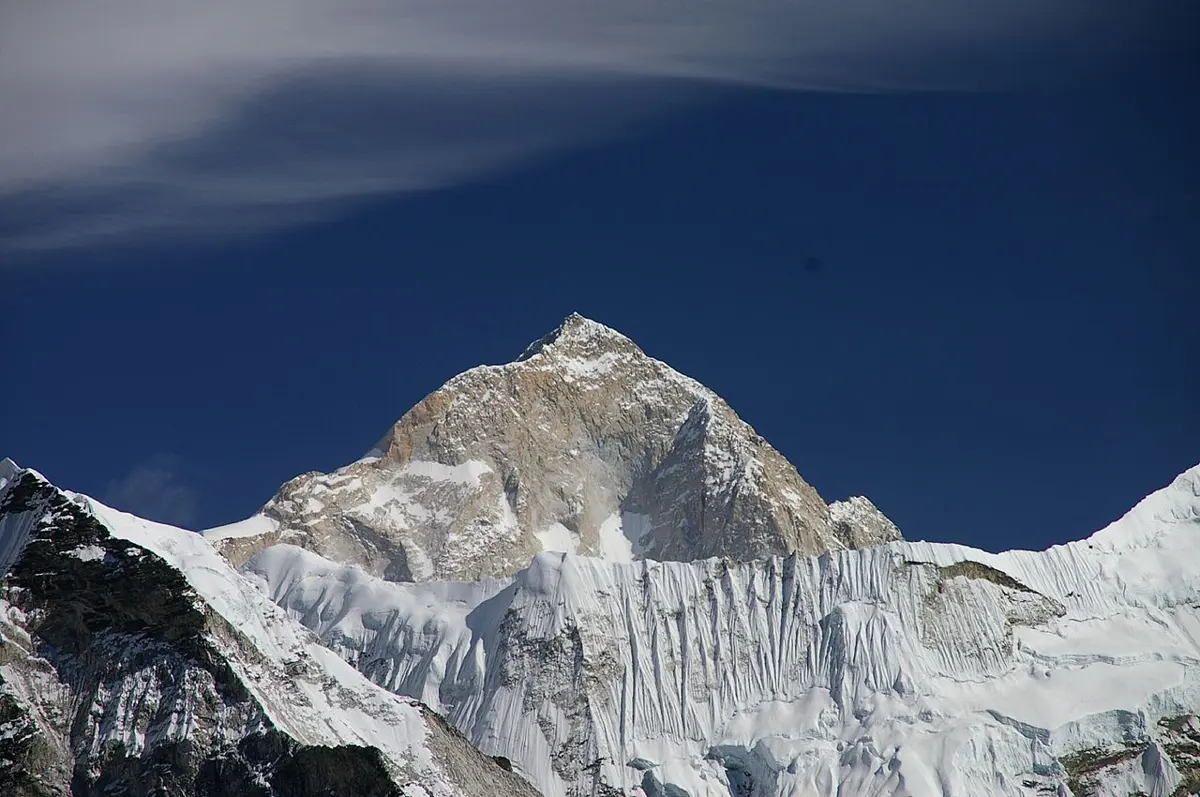
Look at the pictures. Take turns to ask and answer questions as in the example. Example: Which is higher: Mt. Makalu or Mt. Dhaulagiri? Mt. Makalu is higher than Mt. Dhaulagiri./Mt. Dhaulagiri is shorter than Mt. Makalu.
Model dialogues
B. Listen and sing
The song is Stronger (What Doesn’t Kill You), sung by the American singer Kelly Clarkson in 2011. Its idea is an old proverb: a hard time that doesn’t destroy you makes you stronger. The singer has been left by someone, and she says she isn’t lonely now: she stands taller and walks more lightly than before. The song is full of -er words.
What are the ‘…er’ words of these words? strong, tall, light
Answer
Reading I: Smartphone ownership
Before you read
There are two charts. Chart I is a line chart: one line, rising from left to right, one point a year from 2011 to 2016. Chart II is a bar chart: a bar for each age group, first for 2011, then for 2016.
Why do you think the charts are different?
Answer
What do the charts show?
Answer
The charts, redrawn
Here are the book’s two charts with its own numbers, redrawn. In the second, we have put each age group’s 2011 and 2016 bars side by side, so the change is easy to see.
The text, part by part
The text describes the charts in words. That is a skill you will need again and again: in exams, in science and in the news.
- What the charts are. The first sentence says what each chart shows: the first, the share of people with a smartphone each year from 2011 to 2016; the second, the same shares broken down (split up) by age, for 2011 and 2016.
- The big picture. Over the six years, ownership went up. And mostly, the younger the people, the more likely they were to own one.
- The biggest rise. The text says the biggest increase came from people aged 45 to 54, from 46% to 84%.
- The line chart. Ownership rose steadily, from about 35% in 2011 to about 77% in 2016.
- Young and old. People aged 16 to 24 had the highest ownership in both years. Almost nobody aged 75 or over had a smartphone in 2011, but 15% of them did in 2016. The writer guesses they have become more interested in new technology.
Words from the text
| Word | Meaning |
|---|---|
| illustrate | to show, or to explain with a picture or example |
| ownership | owning something |
| significant | important; big enough to notice |
| steadily | bit by bit, in an even, regular way |
| represent | to stand for; to be a sign or symbol of something |
| break down | to split into parts |
A. Match the words
Match the words with their meanings.
- a.illustrates
- b.ownership
- c.significant
- d.steadily
- e.represent
- i.important
- ii.be a symbol of something
- iii.the fact of owning something
- iv.shows
- v.gradually and in an even and regular way
Answer
B. Answer the questions
What does the second chart show?
Answer
By what percentage have the smartphone owners increased in the period between 2011 and 2016?
Answer
In which age group are smartphones the most popular in 2016?
Answer
What is interesting about the 75+ age group?
Answer
Which age group’s ownership rose by the most from 2011 to 2016?
Pick an answer to see why.
C. Ask comparative questions
Look at the charts and the descriptions again and ask and answer comparative questions in pairs.
Model questions and answers
Pronunciation: -er words
In all these words the -er at the end is a short, weak sound, /ə/, like the a in about. The stress is on the first part of the word, never on the -er.
Learn the pronunciation of ‘…er’ words. higher, younger, heavier, bigger, wiser, taller, smarter, clearer
Answer
Grammar I: comparing with adjectives
A. Study the sentences
An adjective has three forms, called degrees:
| Degree | Used for | Example |
|---|---|---|
| positive (plain) | one thing, or two that are equal | Nitu is old. Nitu is as old as Nima. |
| comparative | two things | Is Nitu older than Nima? |
| superlative | one out of three or more | Who is the most powerful person in your village? |
How the forms are made:
| The adjective | Comparative | Superlative |
|---|---|---|
| one syllable: add -er, -est | old → older | the oldest |
| ends in e: add -r, -st | nice → nicer | the nicest |
| one vowel + one consonant: double it | wet → wetter | the wettest |
| ends in consonant + y: y → i | funny → funnier | the funniest |
| two syllables or more: more, most | intelligent → more intelligent | the most intelligent |
| irregular: new words | good → better, bad → worse, far → farther | the best, the worst, the farthest |
- The comparative goes with than: Films are better than books.
- The superlative goes with the, and often with in (a place or group) or I’ve ever (in your life): the wettest month of the year, the nicest person I know, the worst film I’ve ever seen.
B. The missing forms
Fill in the missing forms of the given adjectives. (intelligent, more intelligent, most intelligent; …, …, worst; …, …, wettest; …, better, …; …, …, most powerful; …, funnier, …; …, older, …; …, …, nicest)
Answer
C. Complete the sentences
Complete the following sentences to make comparison with correct forms of the adjectives from the brackets.
- a.The clothes here are ……… (good) than the ones in my town.
- b.It’s ……… (far) than I thought – I think we’re lost.
- c.That’s the ……… (disgusting) meal I’ve ever had!
- d.I hope your team’s ……… (lucky) today than last week.
- e.They’re ……… (happy) in their new school than in their old one.
- f.Your tomato sauce is ……… (tasty) than my mum’s.
- g.Is this flower ……… (beautiful) than that one?
- h.This is the ……… (interesting) book I have ever read.
- i.Non-smokers usually live ……… (long) than smokers.
- j.What is the ……… (dangerous) animal in the world?
Answer
Listening: comparing people and places
A. Before you listen
The picture shows a family: a tall man with glasses and a mustache, a woman a little shorter than him, two young girls in front of them and a small brown dog.
Who do you think they are?
Answer
Who is taller: the man or the woman?
Answer
You will hear someone compare their mother and father, then two cities in California, Los Angeles and San Francisco. Read B and C first.
B. Mother or father?
Listen to the first part of the audio and complete the table. Place a tick in the correct box. (older, more active, more talkative, taller)
Answer
C. Two cities
Listen to the second part of the audio and complete the sentences with not more than two words.
- a.Los Angeles and San Francisco are ……… in California.
- b.San Francisco is ……… than Los Angeles.
- c.Los Angeles is ……… than San Francisco.
- d.San Francisco is ……… than Los Angeles.
- e.The speaker says San Francisco is a ……… place to live.
Answer
D. Adjectives from the audio
Work in small groups (maximum five). In two minutes, write as many adjectives as you can from the audio.
Answer
Speaking: animals and things
A. Compare the animals
The twelve pictures are animals: a bear, a wolf, a tiger, an elephant, a monkey, a dolphin, a rhino, a lion, a horse, a zebra, a cobra and a snail.
Observe the pictures. Use the adjectives to make comparisons. tall, intelligent, heavy, fast, strong, dangerous, slow Example: A lion is more dangerous than a snail. An elephant is the largest land animal.
Model sentences
B. As … as
As + adjective + as says two things are equal: English is as interesting as Nepali. Not as … as says the first has less of it: A bicycle is not as fast as a motorcycle.
Look at the following clues (a-e) and make a comparison as in the example. Example: English/interesting/Nepali. → English is as interesting as Nepali.
- a.apple/sweet/orange
- b.bullet train/fast/airplane
- c.algebra/difficult/geometry
- d.grammar/easy/spelling
- e.morning/warm/afternoon
Answer
Writing I: Nepal’s age groups
To describe a table: first say what it shows; then the big picture (the largest group, what is rising, what is falling); then the details, with numbers; and end with a sentence that sums it up.
The table below shows the age-wise population percentage of Nepal over three years. Interpret the table in your own words.
| Age group | 2017 | 2018 | 2019 |
|---|---|---|---|
| 0–14 | 31.34% | 30.41% | 29.57% |
| 15–64 | 63% | 63.86% | 64.65% |
| 65+ | 5.66% | 5.73% | 5.78% |
A model paragraph
Reading II: A Bird came down the Walk
Before you read
The picture shows a black crow with a worm hanging from its beak.
Name the bird in the picture.
Answer
Which is stronger: a crow or a worm? Why?
Answer
The poem, part by part
The poem is by Emily Dickinson (1830–1886), an American poet who spent most of her life in her family’s house and garden in Amherst, Massachusetts. She wrote nearly 1,800 short poems, but only about ten were printed while she lived. She often watched small things closely: a bird, a bee, a fly. Her poems use dashes and capital letters in unusual places, and they rhyme loosely.
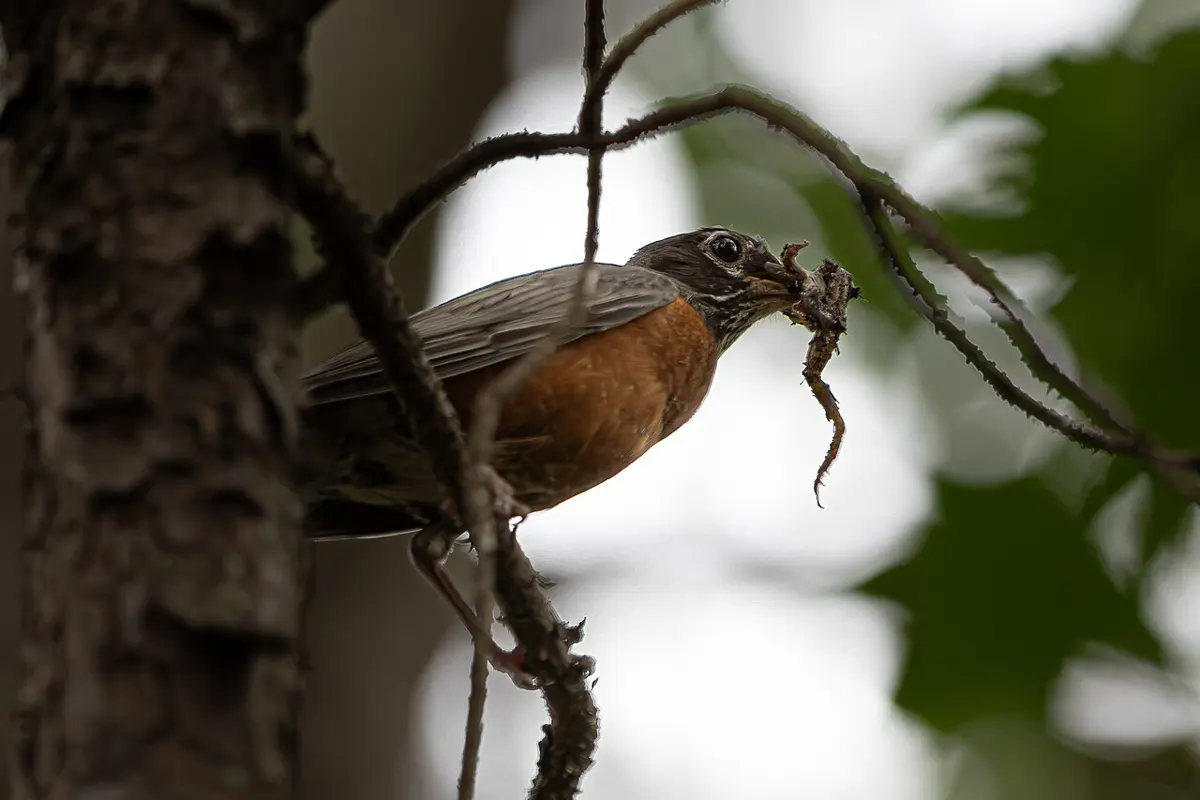
- Breakfast. A bird comes down the garden path. It doesn’t know the poet is watching. It bites a worm in two and eats it raw (uncooked), like any bird would.
- A polite little bird. Then it drinks a drop of dew from a blade of grass, as if from a glass, and hops sideways to the wall to let a beetle pass. The bird that just ate a worm now steps aside politely for a beetle.
- Afraid. Its quick eyes dart all around. The poet thinks they look like frightened beads: small, round, shiny and scared. The bird moves its soft head.
The poem is a small contrast: the bird is a fierce hunter one moment and a gentle, nervous, even polite creature the next. The poet compares it to people (drinking, making way) without saying so.
A. Rhyming words
Write the words that rhyme with these words. saw, grass, abroad
Answer
B. Answer the questions
What did the bird bite?
Answer
Where did the bird drink water from?
Answer
What was his head made of?
Answer
Grammar II: superlatives and adverbs
A. The superlative
Complete the following sentences with the correct superlative forms of the adjectives. high, delicious, smart, cold, boring, lucky, valuable, long, funny Example: He bought the most valuable jewelry for his mother.
- a.Yesterday was the ……… day of the year. I almost froze to death walking home from school!
- b.Please give me your recipe. That is the ……… cake I’ve ever eaten.
- c.Aaradhya is the ……… student in our class. She gets the top grades in every course.
- d.Samjhana told the ……… story last night. I couldn’t stop laughing.
- e.The Nile is the ……… river in the world.
- f.Ramila is the ……… person I know. She has won the lottery four times!
- g.He is the ……… speaker I have ever heard. Half the audience fell asleep during his speech.
- h.Mount Everest is the ……… mountain in the world.
Answer
B. Comparing with adverbs
Adverbs say how something is done (carefully, hard, early), and they compare too:
| The adverb | Comparative | Superlative |
|---|---|---|
| ends in -ly: more, most | carefully → more carefully | the most carefully |
| same as its adjective: -er, -est | hard → harder, fast → faster | the hardest, the fastest |
| early (its -ly is part of the word) | early → earlier | the earliest |
| irregular | well → better, badly → worse | the best, the worst |
Complete the following sentences with the correct form (comparative or superlative) of the adverb provided.
- a.I drive ……… (carefully) than my husband.
- b.Anu works ……… (hard) than I do, but our secretary works ……… (hard) of us all.
- c.Anita sings ……… (beautifully) of all the people in the choir.
- d.Our teacher explains the lessons ……… (clearly) than yours.
- e.Pema arrived at the meeting ……… (early) than Barun did.
- f.Kamal arrived ……… (early) of them all.
Answer
C. Three things
Make comparisons of the following. Use your own ideas. Example: papaya/orange/watermelon → A papaya is bigger than an orange. A papaya isn’t as big as a watermelon. A watermelon is the biggest fruit of the three.
- a.turtle/rabbit/fox
- b.feather/book/television
- c.running shoes/bedroom slippers/high heeled shoes
- d.bicycle/motorcycle/car
- e.teacher/doctor/lawyer
Model answers
Writing II: my friend and I
Write your answers to the questions below. Ask one of your friends the same questions and make notes. Then, write a paragraph about the similarities and differences that you and your friend have. (How old are you? Are you shy? Do you like to watch television? Do you like pets? Do you like mobile phones? Do you like to tell stories or jokes? Do you love to exercise?)
A model table
A model paragraph
Project work: our school in a bar chart
Extra bit: two telephones
The two pictures show an old green telephone with a round dial, and a smartphone whose screen is full of app icons.

Look at the two pictures. Write any five sentences to make comparisons between them.
Model sentences
Exercise
Practice the whole unit. Try each one, then open the answer.
Give the comparative and superlative: thin, happy, careful, bad, near
Answer
Correct the mistakes.
- a.Pokhara is more cleaner than Kathmandu.
- b.She is the most tallest girl in the class.
- c.Rice is as cheap than wheat.
Answer
Look at Chart II. Write two sentences comparing the 25–34 and 65–74 age groups in 2016.
Answer
Complete with the right form of the word in brackets.
- a.Of all my friends, Sumina runs ……… (fast).
- b.Dipesh speaks English ……… (fluently) than his brother.
Answer
Printable PDFs
- Study notes 2 pages
- Harder practice questions 2 pages Answer key
Practice every question in the book, and keep track of the ones you miss →
A companion to your textbook, not a replacement for it: study from the book your school uses, and where the two differ, follow your teacher. Found a mistake? Please tell us.