
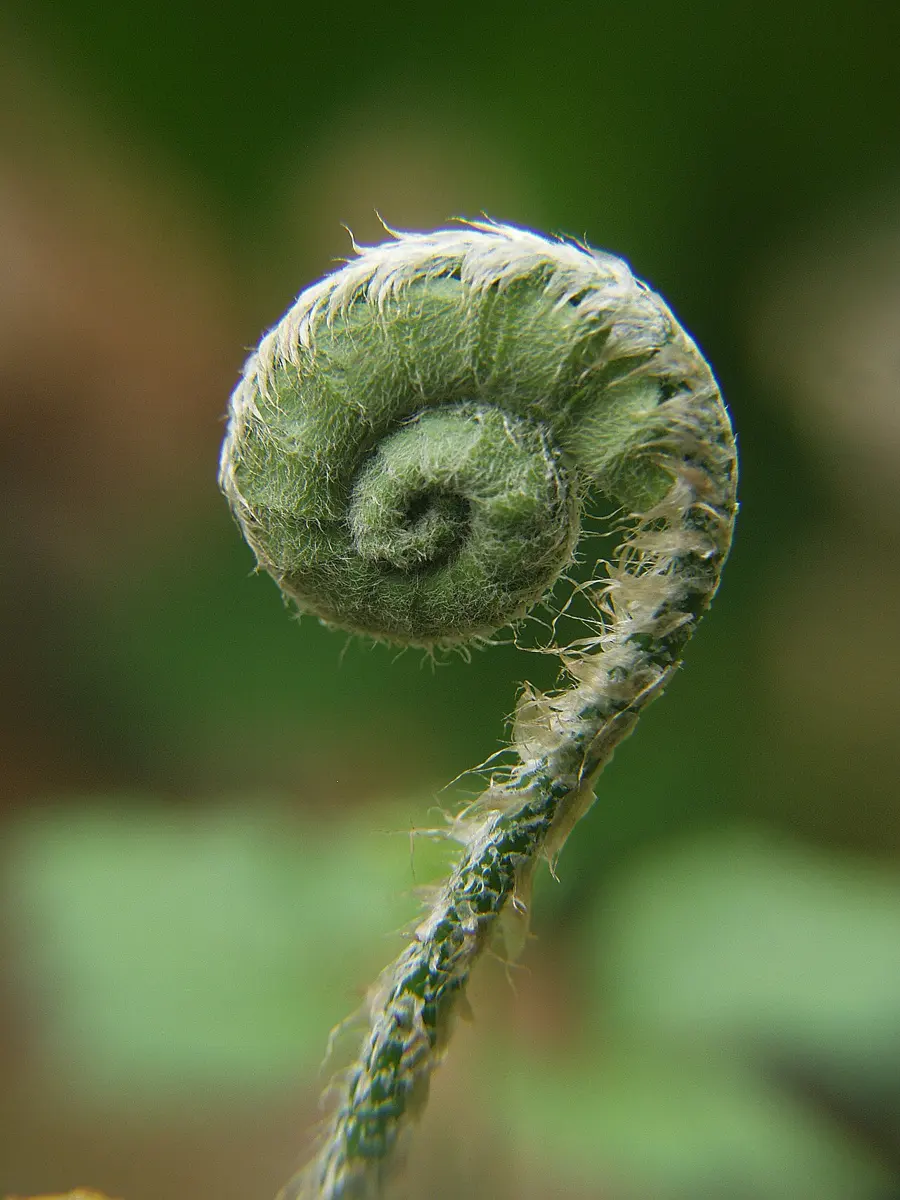
In April, walk up any shady trail in the hills: by the stream, curled green spirals are pushing out of the ground, each like the scroll at the top of a violin. In a few weeks each spiral will unroll into a big feathery leaf. In many homes the spirals never get the chance: picked young, they are निउरो (niuro), fried with garlic and chilli. These plants are ferns, and with their relatives the horsetails and clubmosses they are the pteridophytes: the first plants with real roots, stems and leaves, and with pipes inside them to carry water.
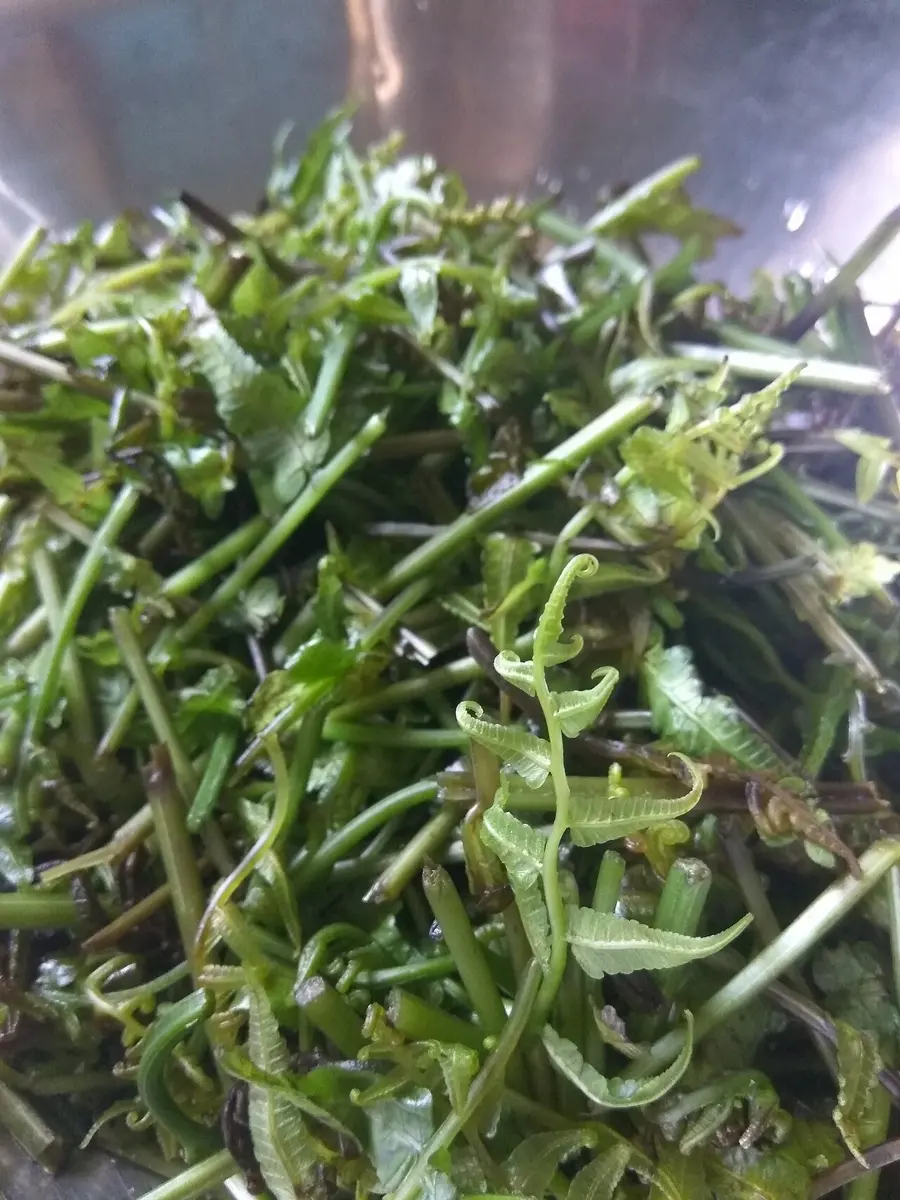
This unit is about what pteridophytes are, what all of them share, the life of one fern, Dryopteris, from the plant you see to the tiny heart-shaped plant you rarely notice, and how ferns and their relatives are useful.
2.6.1 General introduction
Pteridophyta (Greek pteron, feather; phyton, plant) are named after the feather-like leaves of the ferns. Like the algae and bryophytes, they are cryptogams: plants with “hidden” reproduction, which make no flowers or seeds. But they are the first vascular plants: they have xylem and phloem, and true roots, stems and leaves. So they are called vascular cryptogams, and they are the most advanced of the plants without seeds.
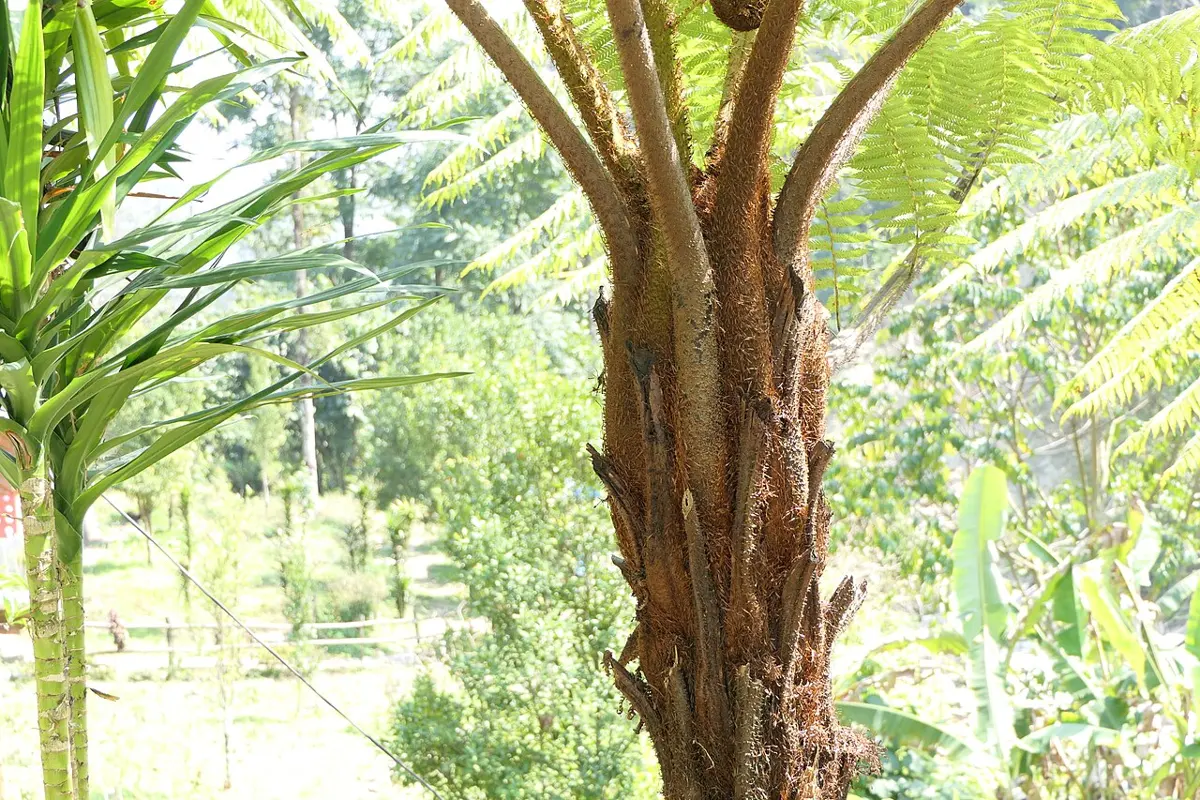
The main plant body is the sporophyte, which makes spores. Most pteridophytes are herbs, but a few tree ferns grow into trees, usually some 9 to 12 m (30 to 40 feet) tall and the tallest about 20 m. The study of pteridophytes is pteridology.
Pteridophytes include:
- the ferns, such as Dryopteris, Pteris, the tree fern Cyathea, and the water ferns Marsilea and Azolla;
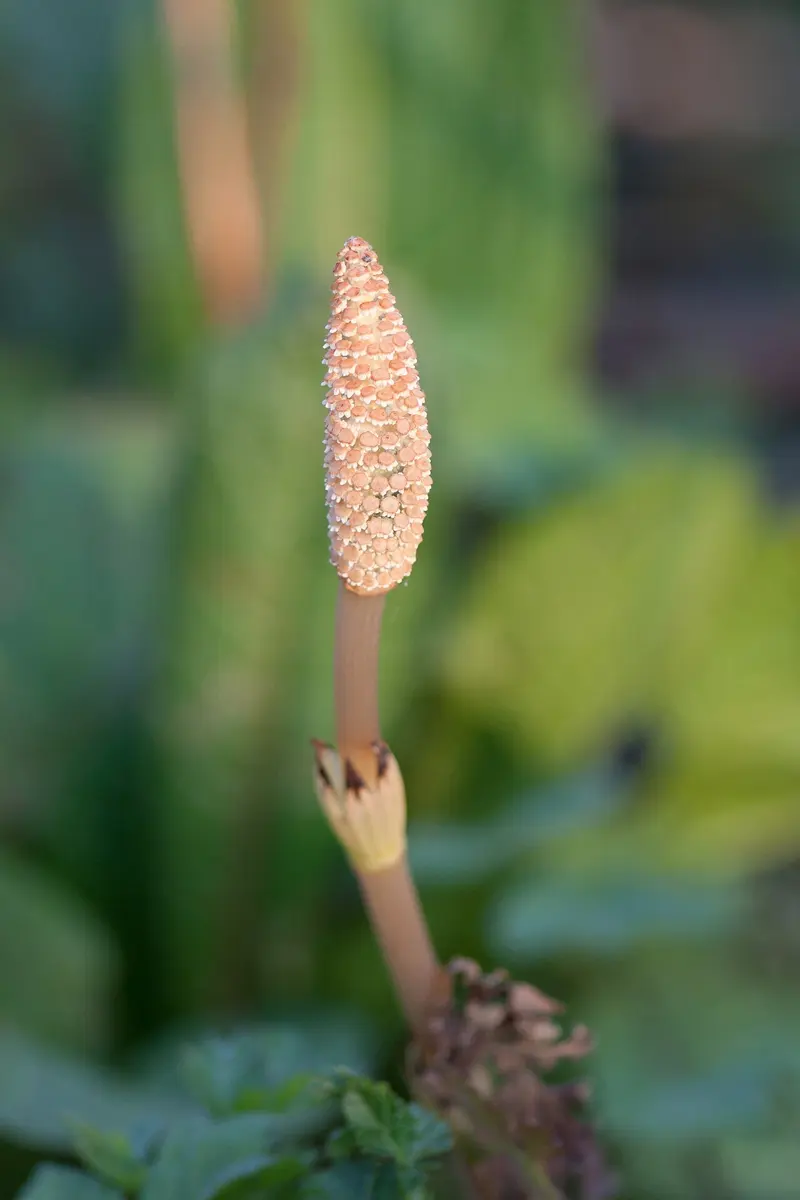
- the horsetails, Equisetum, with jointed, ribbed green stems, tiny leaves in rings and spores in cones at the tips;
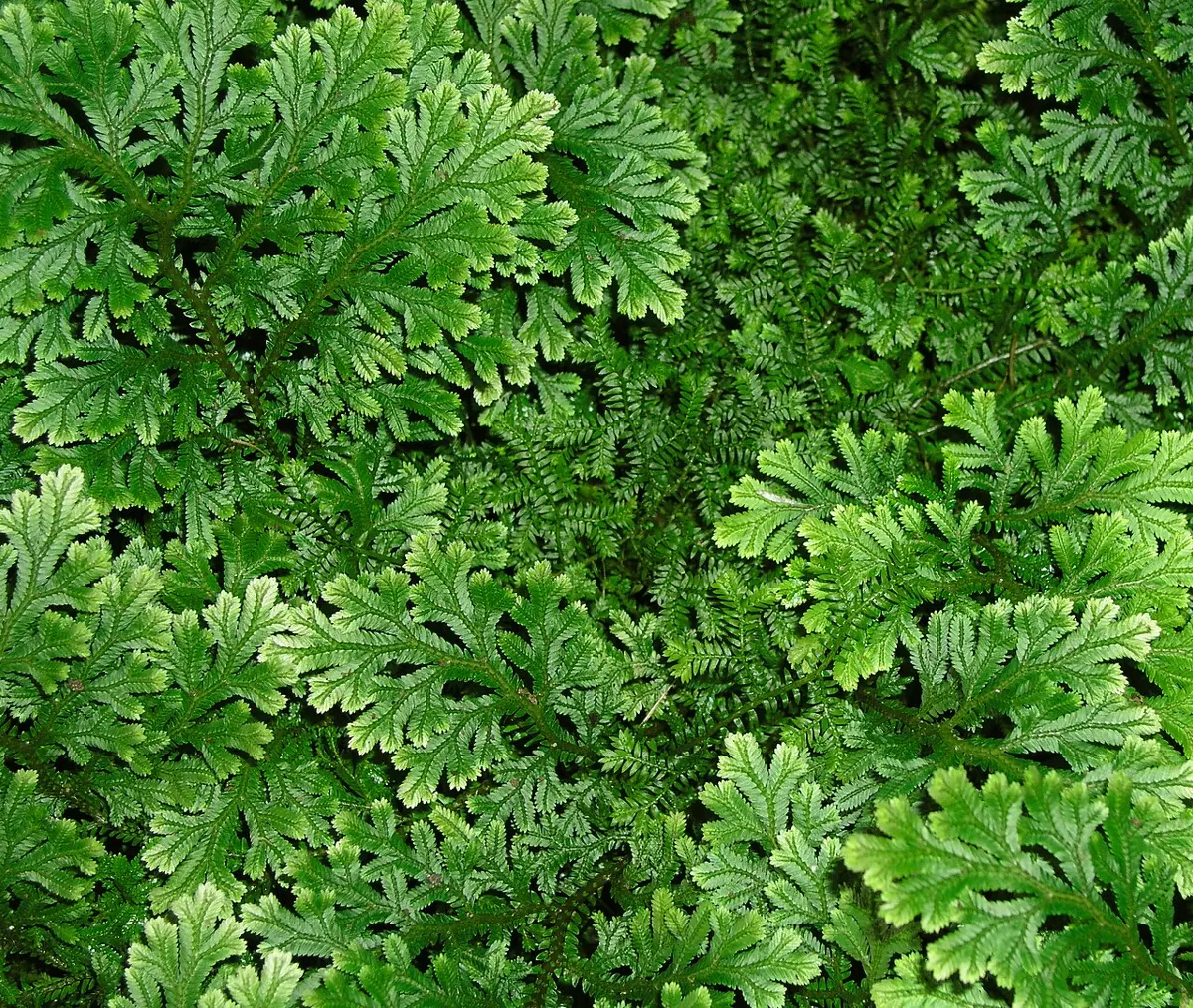
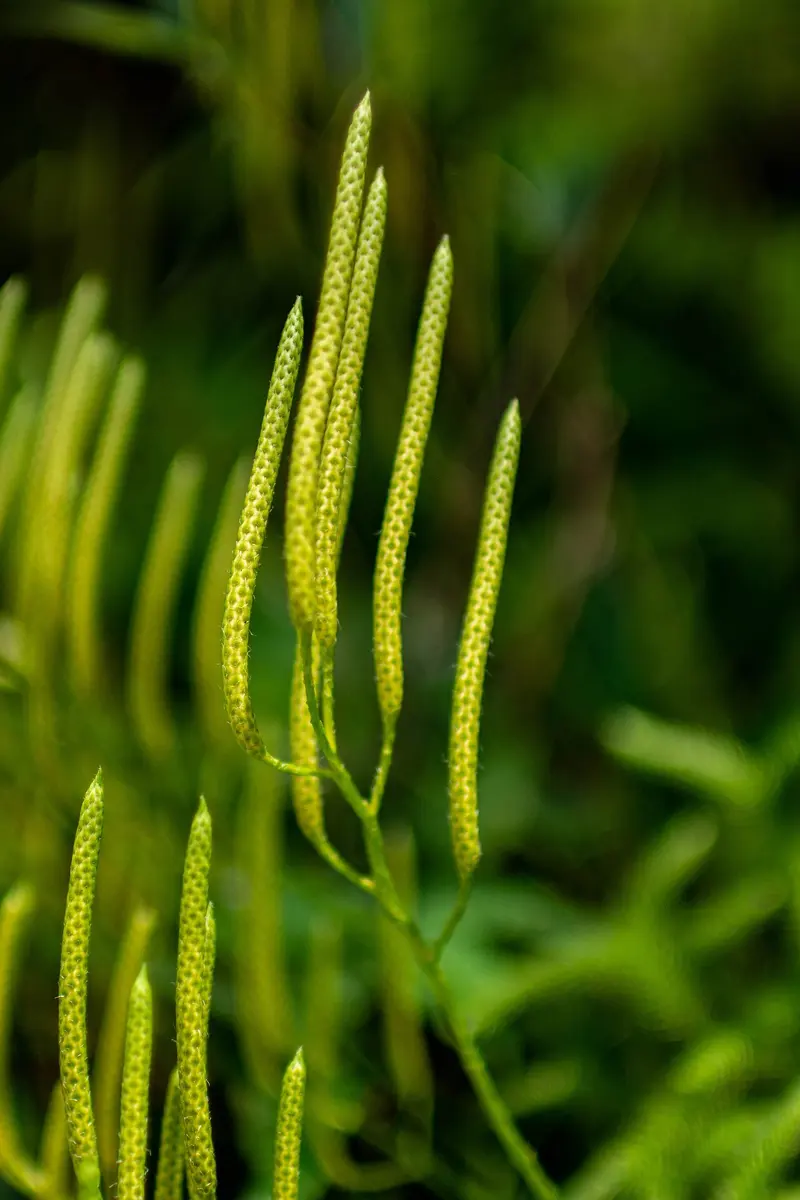
- the clubmosses and their relatives, Lycopodium and Selaginella, with small leaves spiraling round the stem.
2.6.2 Characteristic features of pteridophytes
- Most pteridophytes grow in cool, moist and shady places on land; a few are aquatic (Marsilea, Azolla).
- The adult plant body is the sporophyte (2n), with true roots, stem and leaves.
- They are vascular plants: they have xylem and phloem.
- Leaves may be small, simple and stalkless (sessile), as in Selaginella and Equisetum, or large and stalked (petiolate), as in ferns.
- The primary root lives only a short time and is replaced by adventitious roots growing from the stem.
- The stem is usually herbaceous, often an underground rhizome, branched monopodially or dichotomously.
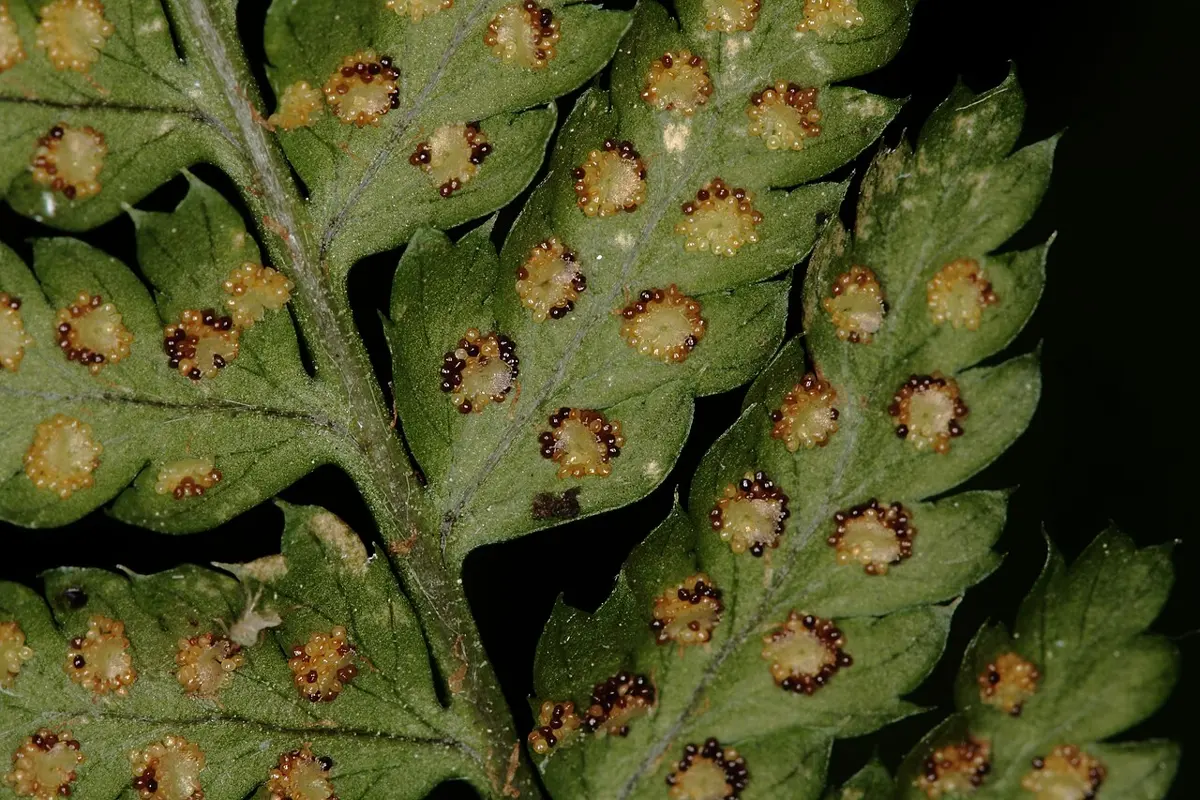
- Reproduction is by spores, formed in sporangia. The sporangia are borne on special structures: in sori on the lower surface of fertile leaves (ferns), in cones or strobili (Equisetum, Lycopodium, Selaginella), or in sporocarps (Marsilea, Azolla).
- Plants are homosporous (all spores alike in size and structure: most ferns, Lycopodium, Equisetum) or heterosporous (two kinds of spore: small microspores and large megaspores: Selaginella, Marsilea, Azolla).
- A spore germinates into a small, many-celled, usually green and independent gametophyte, the prothallus.
- The sex organs, antheridia (male) and archegonia (female), develop on the prothallus.
- The male gamete (antherozoid) swims through water to the egg; they fuse to form a diploid zygote (oospore), which grows into a new sporophyte.
- The life cycle shows alternation of generations, with the sporophyte dominant: the reverse of the bryophytes.
Examples: Dryopteris (a fern), Lycopodium, Selaginella, Equisetum, Marsilea.
A plant makes spores, has no seeds, and has xylem and phloem. To which group does it belong?
Pick an answer to see why.
2.6.3 Dryopteris
Dryopteris (Greek drys, oak; pteris, fern: “oak fern”, since many grow in oak woods) is a large genus of ferns; the male fern, Dryopteris filix-mas, is the one most often studied.
Systematic position
| Rank | Name |
|---|---|
| Kingdom | Plantae |
| Division | Tracheophyta |
| Sub-division | Pteridophyta |
| Class | Pteridopsida |
| Order | Filicales |
| Family | Polypodiaceae |
| Genus | Dryopteris |
(This is the position in most textbooks. In the classification ferns specialists use today, Dryopteris is placed in its own family, Dryopteridaceae, in the order Polypodiales.)
Occurrence
Dryopteris grows in moist and shady places on land, in forests and on stream banks, and is found all over the world. Several species grow in Nepal’s hill and mountain forests.
Plant body
The plant body is the sporophyte: perennial, evergreen, vascular, and divided into root, stem and leaves (Figure 8.5).
- Roots: adventitious, growing from the lower side of the rhizome; they have root hairs and a root cap. They fix the plant and absorb water and minerals.
- Stem: perennial, short, thick and underground: a rhizome. It is covered with brown, papery scales, the ramenta, which protect it and its young leaves.
- Leaves: large, stalked and pinnately compound, growing in a crown from the top of the rhizome. A fern leaf is called a frond. Its stalk, the petiole, continues as the rachis, the axis that bears the leaflets, the pinnae; in many ferns the pinnae are divided again into pinnules. The petiole and rachis are also covered with ramenta.
- Mature leaves are of two kinds by what they do: a fertile leaf bearing sori is a sporophyll; a sterile leaf without sori is a trophophyll (it only makes food). In Dryopteris both look alike.
- A young leaf is rolled up from the tip downwards, with the tip in the center of the coil: it is circinate (the fiddlehead, or niuro). The coil protects the tender tip; as the leaf grows, it unrolls.
Fern: H. A. Köhler, Medizinal-Pflanzen (1887), public domain
Reproduction
Dryopteris reproduces by vegetative, asexual and sexual methods.
1. Vegetative reproduction
By fragmentation: the rhizome branches, and as its older parts die and decay back to a branching point, the branches separate and each grows into a new plant.
2. Asexual reproduction: spores
The fern plant is the sporophyte, and it reproduces asexually by spores. The spores are made in sporangia, which are grouped in sori (singular sorus) on the lower (ventral) surface of the fertile leaves, the sporophylls: in Dryopteris in two rows on each pinna, one each side of its midrib. Each sorus sits over a vein, on a cushion of tissue, the placenta (receptacle), and is covered by a kidney-shaped flap, the indusium, which protects the young sporangia (Figure 8.8). When the sporangia are ripe, the indusium shrivels and lifts.
Sorus: Meyers Konversations-Lexikon (1890), public domain
Each sporangium has a long, many-celled stalk and a flattened, oval capsule with a wall one cell thick (Figure 8.9). The wall has two distinct regions:
- the annulus, a row of about a dozen cells with thick inner and side walls running about three-quarters of the way round the capsule;
- the stomium, a few thin-walled, broad cells where the annulus ends, where the capsule will tear.
Inside, 12 to 16 diploid spore mother cells divide by meiosis, giving 48 to 64 haploid spores. All the spores are alike, so Dryopteris is homosporous.
Sporangium: L. M. Underwood, Our Native Ferns (1881), public domain
How the spores are thrown out. When the sporangium is ripe and the air is dry, water evaporates from the annulus cells. As their thin outer walls are pulled inwards, the annulus straightens: it tears the capsule open at the stomium and bends back, pulling the spores with it. Then, suddenly, the water left in the cells turns to vapor, and the annulus springs back towards its first shape almost at once, flinging the spores out like a catapult, clear of the leaf and into the moving air.
3. Sexual reproduction: the prothallus
A spore that lands on damp, shady soil germinates into a small green thread and then into the gametophyte, the prothallus (Figure 8.10):
- haploid, flat (dorsiventral), many-celled, green and heart-shaped, only about 5 mm across;
- with an apical notch at its broad, front end, where its growing point is;
- with rhizoids on its lower (ventral) surface, near the pointed back end, which fix it and absorb water and minerals;
- independent and autotrophic: it makes its own food;
- monoecious: the same prothallus bears both male and female sex organs, on its lower surface, the archegonia near the notch and the antheridia towards the back, among the rhizoids.
Prothallus: Strasburger, in the Encyclopaedia Britannica (1911), public domain
Antheridium. An antheridium is a small, rounded, many-celled structure without a stalk, bulging out of the prothallus. Inside, androcytes change into antherozoids (spermatozoids): coiled cells with many flagella (multiflagellate). When water covers the prothallus, the antheridium’s wall absorbs water and bursts, and the antherozoids swim out.
Archegonium. An archegonium is flask-shaped (Figure 8.11). Its swollen base, the venter, sunk in the prothallus, holds a large egg and a small venter canal cell above it. Its short neck, standing out of the prothallus, holds a single neck canal cell with two nuclei (binucleate).
Archegonium: Strasburger, in the Encyclopaedia Britannica (1911), public domain
Fertilization. When the archegonium is ripe, its neck canal cell and venter canal cell break down into mucilage containing malic acid, which swells, opens the neck and fills the passage to the egg. Fertilization needs water: in a film of dew or rain under the prothallus, the antherozoids swim towards the malic acid oozing from the neck (chemotaxis). Many enter the passage, but only one fuses with the egg, forming a diploid zygote (oospore). There are several archegonia on a prothallus, but usually only one is fertilized.
The new sporophyte. The zygote is the first cell of the new sporophyte. It divides by mitosis into an embryo, which grows a foot (sunk in the prothallus, taking food from it), a first root, a first leaf and a stem tip. At first the young sporophyte depends completely on the prothallus. Once its root reaches the soil and its leaf makes food, it becomes independent, and the prothallus withers and dies.
Life cycle of Dryopteris
The life cycle shows clear alternation of generations: the large, long-lived, independent sporophyte (2n, the fern plant) makes spores by meiosis; a spore grows into the small, short-lived but also independent gametophyte (n, the prothallus), which makes gametes; fertilization makes the zygote, which grows into a new sporophyte. In ferns the sporophyte is dominant, the reverse of the bryophytes.
In a fern, which of these is haploid?
Pick an answer to see why.
2.6.4 Economic importance of pteridophytes
1. Ornamental value. Many ferns, such as the Boston fern, maidenhair (Adiantum) and Selaginella, are grown in gardens, pots and hanging baskets for their graceful leaves; fern fronds are used in garlands and flower arrangements.
2. Food. The young circinate leaves of several ferns are eaten as a vegetable: in Nepal, the niuro of Diplazium esculentum and related ferns is one of the most loved green vegetables of the early monsoon. The rhizomes of some ferns are rich in starch and have been eaten in hard times, and some ferns are grazed by animals. (Raw or large amounts of bracken, Pteridium, are harmful: it contains a poison linked to stomach cancer.)
3. Soil binding. The tangled rhizomes and roots of ferns bind the soil, even on steep hill slopes, and ferns are often the first plants to cover a landslide scar. Many are used in soil conservation.
4. Medicine. The spores of Lycopodium (clubmoss) have long been used in pharmacy as a dusting powder; its plant has been made into tinctures and powders used as a stomachic and diuretic; and several pteridophytes are used in traditional medicine for asthma, fever and wounds. The rhizome of the male fern, Dryopteris filix-mas, was once the standard medicine against tapeworms (it is poisonous in larger doses and is no longer used).
5. Fossil fuels. Giant clubmosses, horsetails and tree ferns of the Carboniferous swamps, with the early seed plants, were buried and changed into the coal we mine today (see the story above).
6. Forensic and other uses. The spores of Lycopodium are a fine, oily, yellow powder, lycopodium powder. It has been used to dust for fingerprints, and because a cloud of it burns in a bright flash, as flash powder in early photography and in theaters. (They are sometimes called “moss spores”: Lycopodium is called a clubmoss, but it is a pteridophyte, not a moss.)
7. Shelter for living things. Ferns give homes to small animals (millipedes, insects and their larvae, spiders), and to bacteria and cyanobacteria. Water ferns shelter fish and frogs’ eggs.
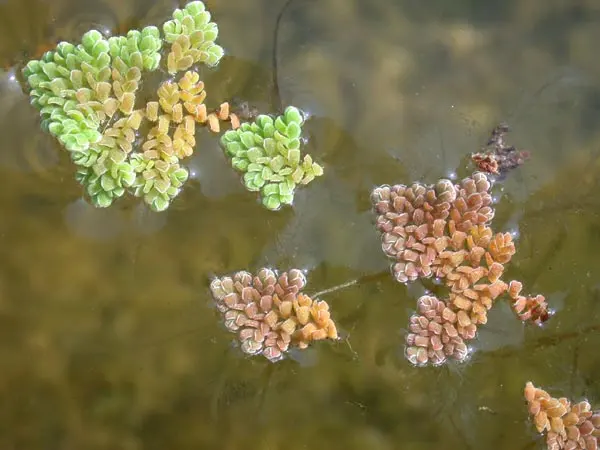
8. Nitrogen fixation. The tiny water fern Azolla has cavities in its leaves in which a nitrogen-fixing cyanobacterium, Anabaena azollae, lives. Grown on the water of rice fields, Azolla adds nitrogen to the field and is used as a biofertilizer; it is also fed to ducks, fish and cattle.
Which pteridophyte is used as a biofertilizer in rice fields, and why?
Pick an answer to see why.
Exercise
A. Choose the correct option
- Which statement describes a key difference between the life cycles of pteridophytes and bryophytes?
Pick an answer to see why.
- In which group would you place a plant that produces spores, lacks seeds and has vascular tissue?
Pick an answer to see why.
- What characterizes heterosporous plants?
Pick an answer to see why.
- The rhizome of a plant specimen is covered with a protective layer. What structures would you expect to cover the rhizome of Dryopteris?
Pick an answer to see why.
- In a fern, which cell is binucleate?
Pick an answer to see why.
Sporangium: L. M. Underwood, Our Native Ferns (1881), public domain
- Which part of the sporangium in Figure 8.14 breaks open when the spores are dispersed?
Pick an answer to see why.
- Which term describes having both male and female sex organs on the same prothallus?
Pick an answer to see why.
B. Answer the following questions
Define the following:
- a.frond
- b.sporangium
- c.prothallus
- d.ramenta
Answer
Differentiate between bryophytes and pteridophytes.
Answer
What is alternation of generations?
Answer
Explain why ferns are called vascular cryptogams, with examples of their vascular features and cryptogamic characteristics.
Answer
List the characteristic features of pteridophytes.
Answer
Fern: H. A. Köhler, Medizinal-Pflanzen (1887), public domain
Study the fern in Figure 8.15 and answer:
- a.Label A, C, D and E.
- b.Identify the structure marked B and give its function.
- c.Write any two characteristics of a fern leaf.
- d.Name the structure that forms a protective cover on D.
Answer
Explain the economic importance of pteridophytes.
Answer
Explain the structure and function of the prothallus of a fern, with a diagram.
Answer
Describe reproduction in Dryopteris, with diagrams.
Answer
Printable PDFs
- Study notes 3 pages
- Worksheet 4 pages Answer key
Quiz yourself: Classification of Living Beings, Grades 5–12 →
Practice every question in the book, and keep track of the ones you miss →
A companion to your textbook, not a replacement for it: study from the book your school uses, and where the two differ, follow your teacher. Found a mistake? Please tell us.