
Drive up from the Tarai into the hills and somewhere around 1,000 m the forest changes: tall, straight trees with long, drooping needles and a carpet of brown needles underneath, smelling of resin in the sun. This is chir pine (खोटे सल्लो), Pinus roxburghii. Its cones hang woody and brown on the branches; pull one apart and between its scales you may still find a seed with a papery wing. Pines have no flowers and no fruits, yet they make seeds, and those seeds lie open on the cone’s scales. Plants like this are the gymnosperms, the “naked-seeded” plants.
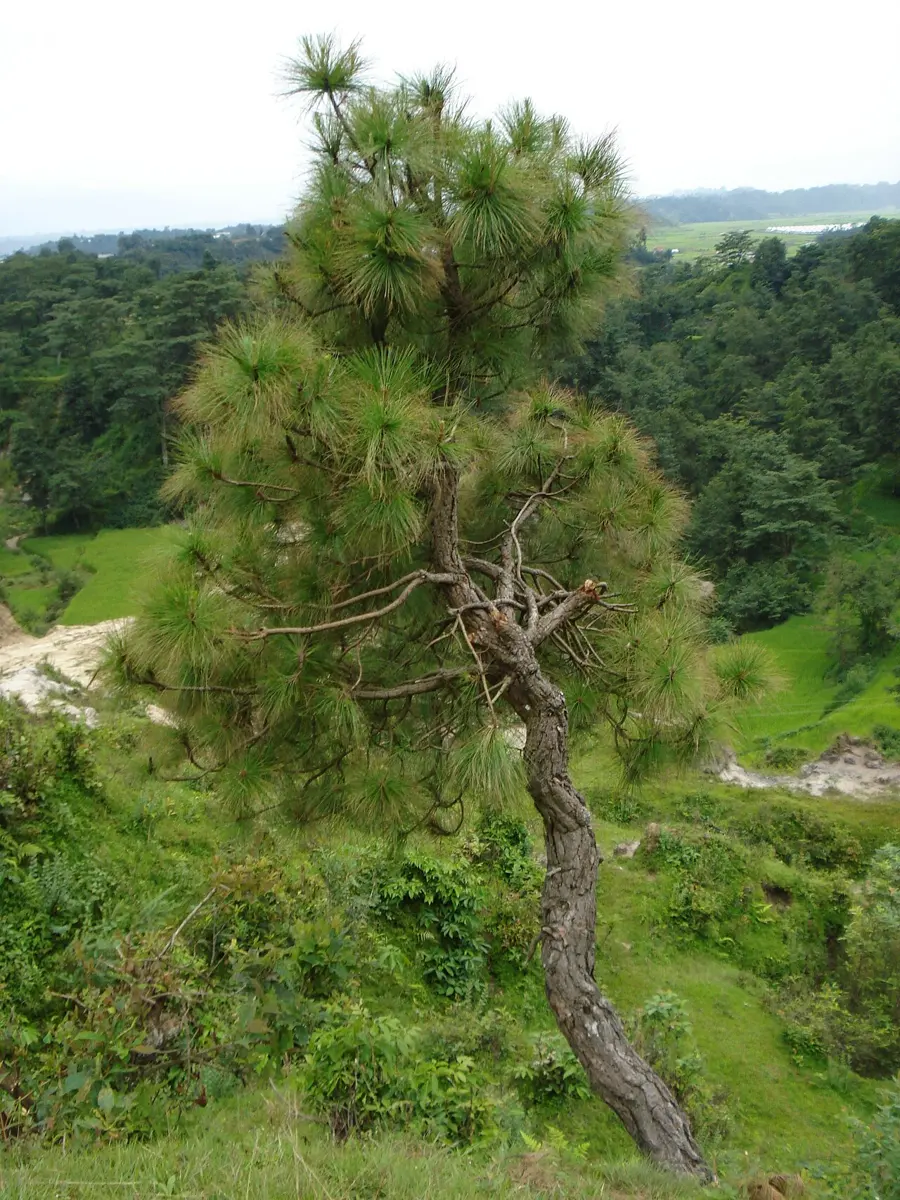
This unit is about what gymnosperms are and what they share, the life of one, Pinus, from the needle to the winged seed, and why these trees matter so much to people.
2.7.1 General introduction
Gymnosperms (Greek gymnos, naked; sperma, seed) are seed plants whose seeds are naked: the ovules, and the seeds they become, sit exposed on the surface of a scale or leaf. They are not enclosed in an ovary, so no fruit is formed. (The word goes back to Theophrastus, the Greek botanist of about 300 BCE, who used gymnospermos for seeds not covered by a husk.)
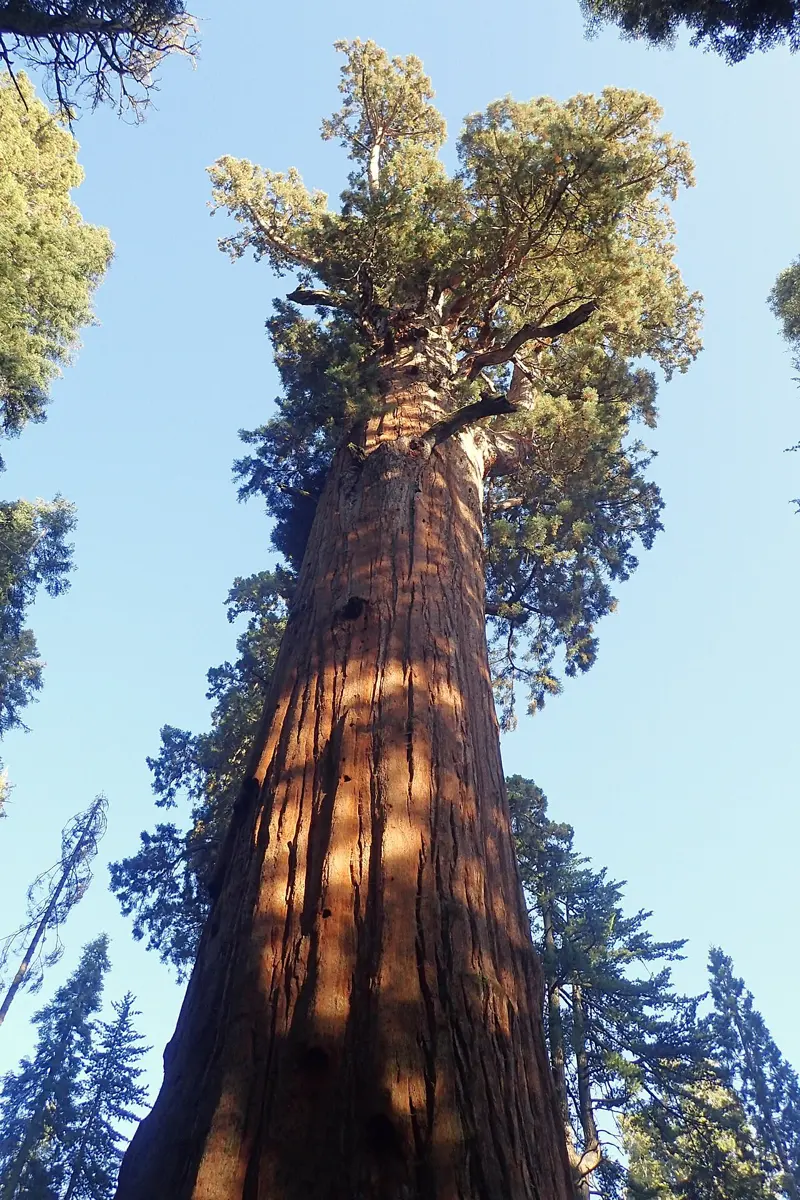
Gymnosperms are older than the flowering plants. The first seed plants appeared about 360 million years ago, and the gymnosperms were the dominant land plants through the Mesozoic era, especially the Jurassic and Cretaceous periods: the forests the dinosaurs walked through were forests of conifers, cycads and ginkgos. Many groups have since died out, and today there are only about 1,000 kinds, against about 300,000 kinds of flowering plant.
They grow in temperate and tropical regions all over the world, and they are most widespread in cold climates, where much of the water comes as snow: the great conifer forests (the taiga) of Siberia, Scandinavia and Canada, and the high forests of the Himalaya. They are mostly perennial, evergreen woody trees and shrubs, a few are climbers (Gnetum), and many show xerophytic adaptations (needle-like leaves with a thick cuticle and sunken stomata). There are no herbs and no aquatic gymnosperms.
2.7.2 Characteristic features of gymnosperms
- Gymnosperms are evergreen woody trees or shrubs (a few are deciduous, such as Ginkgo and the larch).
- They are perennial, and many show xerophytic adaptations.
- The plant body is the sporophyte, with root, stem and leaves.
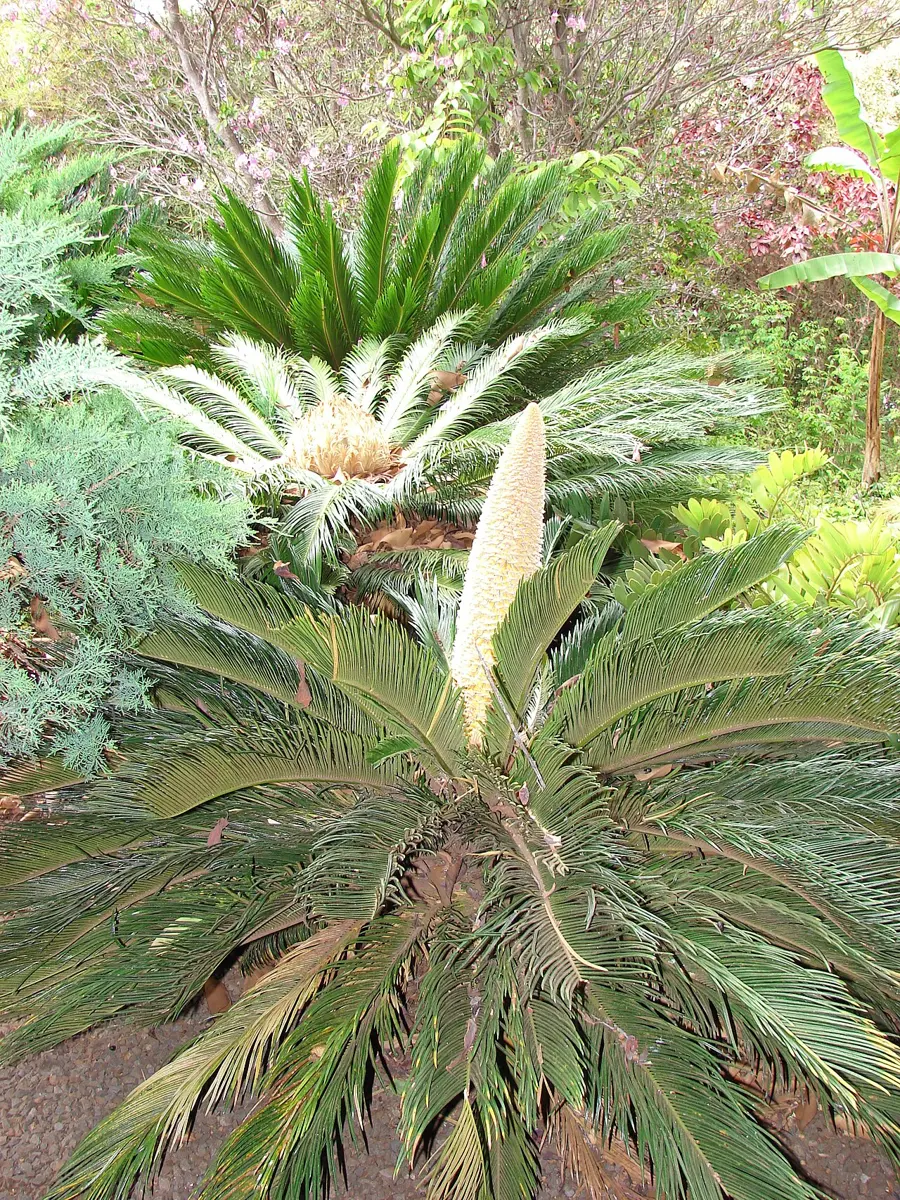
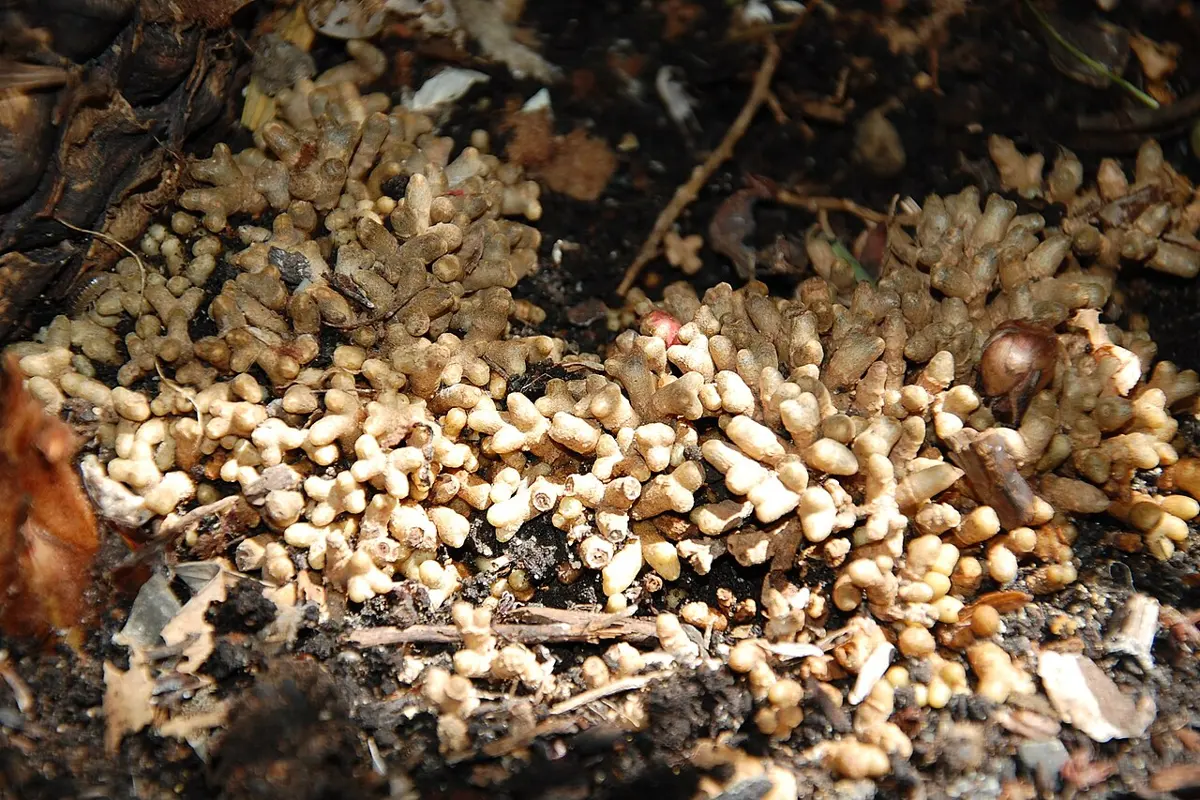
- They have a well-developed tap root system. In some the roots live with other organisms: the coralloid roots of Cycas hold nitrogen-fixing cyanobacteria (once called blue-green algae), and the mycorrhizal roots of Pinus live with a fungus.
- The stem is tall, upright, woody, branched and covered with a scaly bark (unbranched in Cycas).
- In the conifers (pines and their relatives) the branches are of two kinds: long shoots, of unlimited growth, and dwarf shoots, of limited growth.
- Leaves are usually of two kinds (dimorphic): green foliage leaves and small, brown scale leaves.
- Secondary growth takes place in the stem and root by the activity of the cambium; in most gymnosperms the annual rings are distinct. The xylem has tracheids but no vessels (except in Gnetum and Ephedra), and the phloem has no companion cells.
- They are heterosporous: they produce two kinds of spore, microspores and megaspores, inside sporangia.
- The sporangia are borne on special leaf-like structures, the sporophylls: microsporophylls carry microsporangia (pollen sacs), and megasporophylls (or ovuliferous scales) carry the ovules.
- The sporophylls are grouped in cones (strobili). Cones are usually unisexual: male cones and female cones.
- Pollination is mostly by wind (anemophilous); a few, such as some cycads and Ephedra, are also visited and pollinated by insects.
- The male gametophyte grows a pollen tube, so fertilization doesn’t need water; but double fertilization is absent.
- The ovules are naked, and no fruit is formed. The food store in the seed is the female gametophyte, which is haploid.
- The life cycle shows alternation of generations, with the sporophyte dominant; the gametophytes are tiny and live inside the sporophyte’s tissues.
Examples: Pinus, Cycas, Ginkgo, Taxus, Ephedra, Juniperus.
Which feature do gymnosperms share with flowering plants but not with ferns?
Pick an answer to see why.
2.7.3 Structure and reproduction in Pinus
Structure
Pinus (pine) is a tall, perennial, evergreen tree, found all over the world but mostly in the northern hemisphere, in temperate regions and on mountains. Nepal has two common native pines:
- chir pine (खोटे सल्लो), Pinus roxburghii, in the subtropical hills from about 500 to 2,000 m; its needles are very long and slender, 20–35 cm, three to a spur; it is tapped for resin;
- blue pine (गोब्रेसल्लो), Pinus wallichiana, in the temperate mountains higher up; its needles are soft and blue-green, five to a spur.
The plant body is the sporophyte (2n). Young trees grow longer branches near the base and shorter ones towards the top, so the tree has a pyramid-like (conical) outline; old trees often lose their lower branches.
Root. A tap root with well-developed lateral roots that spread over a large area. On the older lateral roots, root hairs are replaced by mycorrhizal roots, short, branched roots covered with a fungus, which live in a symbiotic association (both partners gain). The roots fix the tree and absorb water and minerals.
Stem. Cylindrical, upright and woody, covered with a thick, scaly bark. The main trunk is unbranched below and carries its branches in whorls. The branches are of two kinds (dimorphic):
- long shoots (branches of unlimited growth), with a bud at the tip, which grow on year after year;
- dwarf shoots (branches of limited growth), only a few millimeters long, with no growing bud at the tip, which grow on the long shoots in the axils of scale leaves.
Leaves. Also of two kinds:
- scale leaves: small, thin, brown and papery; they protect the buds and young shoots and are found on both long and dwarf shoots;
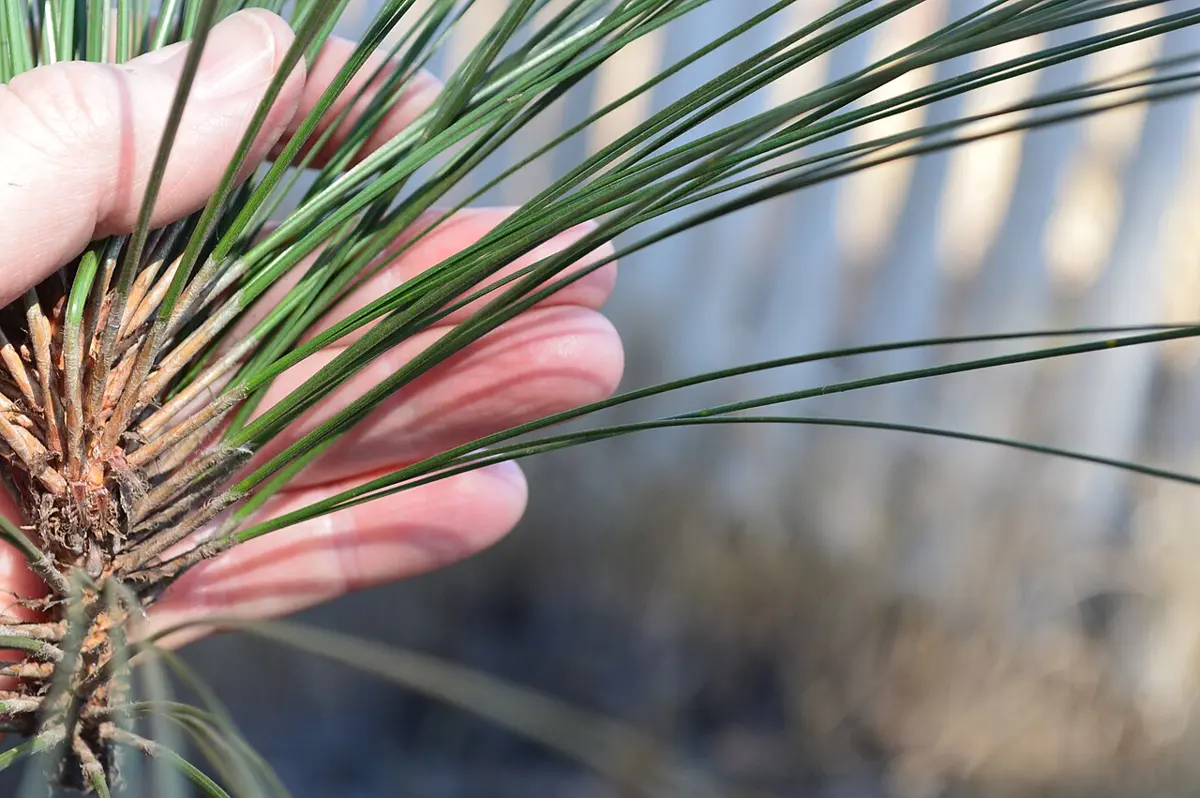
- foliage leaves: the green needles, found only on the dwarf shoots, which make the tree’s food by photosynthesis. Each dwarf shoot with its cluster of needles is a spur (or fascicle). The number of needles in a spur is fixed for each species: two in the Scots pine, three in chir pine, five in blue pine.
A needle is built to save water: it is long and narrow, with a thick cuticle, its stomata sunk in pits, and resin canals inside. So the tree can keep its leaves through cold, dry winters, when water in frozen soil can’t be absorbed.
Reproduction
Pinus is monoecious: both male and female reproductive organs grow on the same tree, but in separate cones on different branches. The cones (strobili) are the pine’s reproductive structures.
Male cone
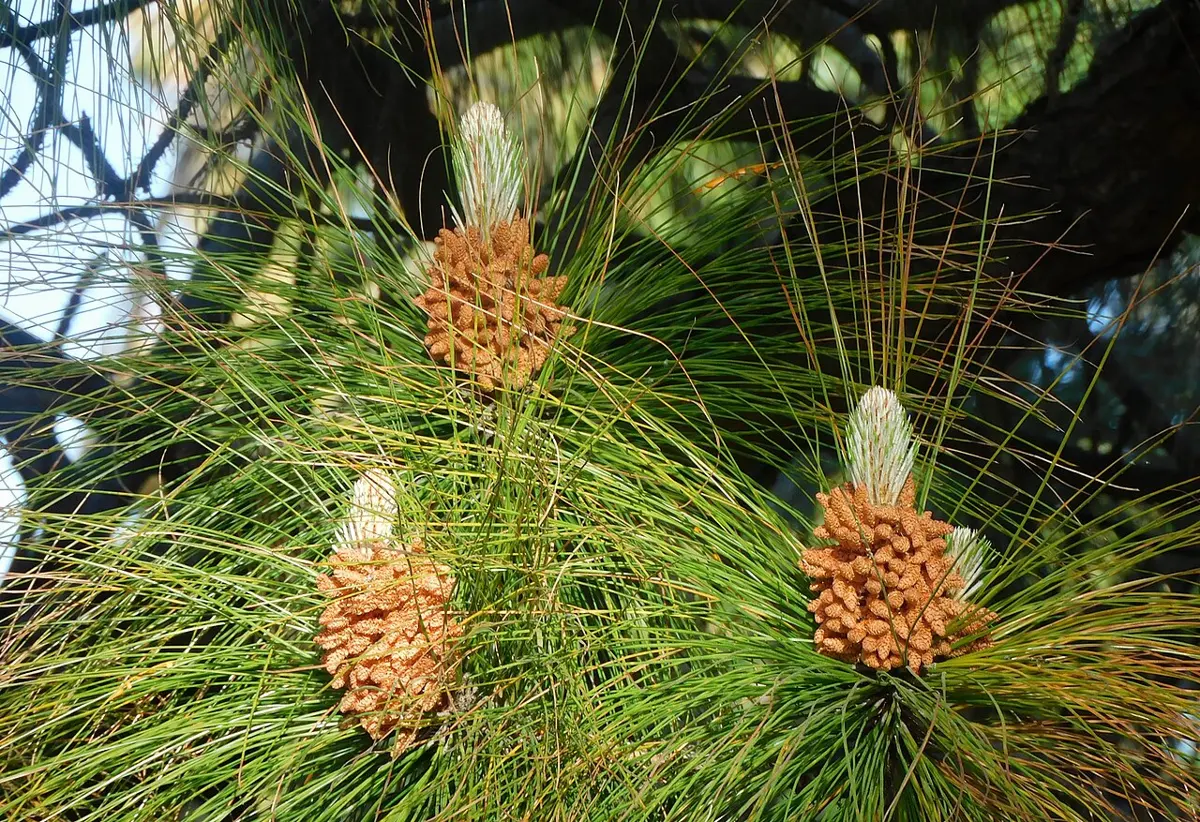
The male cones are small, about 1.5–2.5 cm long, and grow in clusters at the base of the young long shoots, mostly on the lower branches, in place of dwarf shoots. Each is oval and made of many microsporophylls (equivalent to stamens) arranged spirally round a central cone axis (Figure 9.6).
Each microsporophyll is a small scale with an upturned tip and two sac-like microsporangia (pollen sacs) on its lower side. Inside the microsporangia, microspore mother cells divide by meiosis into a great many microspores, the pollen grains. Each pollen grain is a light, yellow, uninucleate cell when it is formed, with two walls (an inner intine and an outer exine), and two balloon-like wings, air sacs formed where the exine separates from the intine. The wings make it light and help the wind carry it.
Pinus: O. W. Thomé, Flora von Deutschland (1885), public domain
Female cone
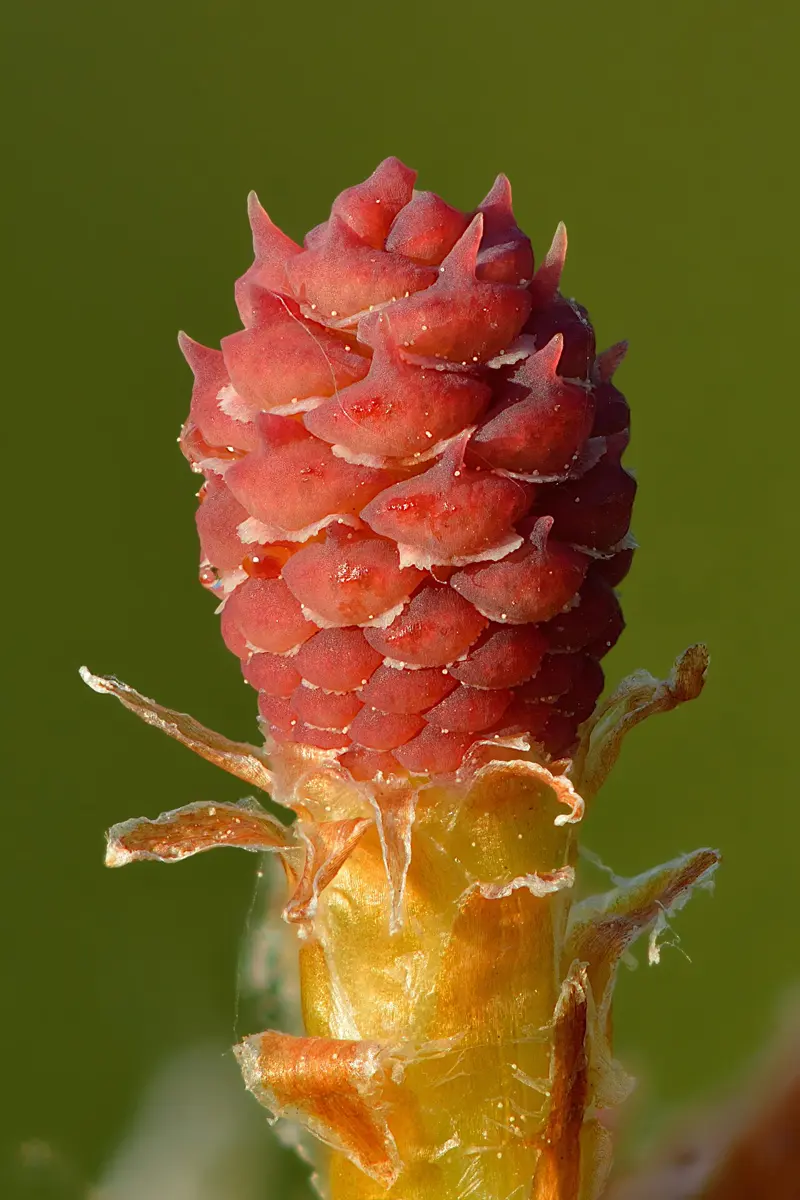
The female cones grow singly or in groups of one to four near the tips of young long shoots, mostly on the upper branches of the tree, above the male cones (so a tree’s own pollen usually blows past its own female cones). A young female cone is small, upright and often reddish (Figure 9.8).
Each female cone has a central axis with many scales arranged spirally round it. The scales are of two kinds:
- bract scales: thin, membranous, attached directly to the axis;
- ovuliferous scales (seed scales): thick, woody later, each borne on the upper side of a bract scale, partly joined to it.
Each ovuliferous scale carries two ovules side by side on its upper surface, near its base. The ovule (the megasporangium) is a mass of tissue, the nucellus, surrounded by one integument with an opening, the micropyle. The ovules are inverted: each points inwards on the scale, its micropyle facing the cone’s axis, the opposite way from the scale’s tip.
Inside the nucellus a diploid megaspore mother cell divides by meiosis into a linear tetrad (a row) of four megaspores. The upper three degenerate; the lowest becomes the functional megaspore. It grows to fill most of the nucellus and develops into the female gametophyte: a mass of haploid tissue (also called the endosperm of the pine).
Pinus: O. W. Thomé, Flora von Deutschland (1885), public domain
Pollination and fertilization
The male gametophyte. The microspore is the first cell of the male gametophyte. It starts dividing while still inside the microsporangium, and when it is shed the pollen grain has four cells: two prothallial cells (which soon shrivel), one antheridial (generative) cell and one tube cell.
Pollination. Pollination is by wind (anemophilous). At the time of pollination the scales of the young female cone part a little, and each ovule gives out a drop of sticky fluid, the pollination drop, from its micropyle. Pollen grains landing on it are caught and, as the drop dries and is drawn back in, are pulled through the micropyle into the pollen chamber at the top of the nucellus. The scales then close tight, and the pollen lies inactive for months.
The pollen tube. Growth starts again the next spring. The tube cell grows out into a pollen tube, which digests its way slowly through the nucellus towards the egg. The antheridial cell divides into a stalk cell and a body cell, and the body cell divides into two male gametes, two unequal nuclei. They cannot swim: they are non-motile and are carried to the egg by the pollen tube. (Among living gymnosperms only Cycas and Ginkgo still have swimming sperm, which swim a short way inside the ovule.)
The archegonia. The functional megaspore is the first cell of the female gametophyte. At its micropylar end, two to four of its cells become archegonial initials and form two to four flask-shaped archegonia. Each has a large venter with a very large egg (oosphere) and a small venter canal cell, and a short neck with no neck canal cells.
Fertilization. Fertilization takes place about a year after pollination. The pollen tube, with its two male nuclei, reaches an archegonium through the neck and releases them near the egg. One male nucleus fuses with the egg, forming the diploid zygote (oospore); the other degenerates. The zygote is the first cell of the sporophyte. Since each archegonium can be fertilized by a different pollen tube, one ovule may start several embryos (polyembryony), but usually only one survives in the ripe seed.
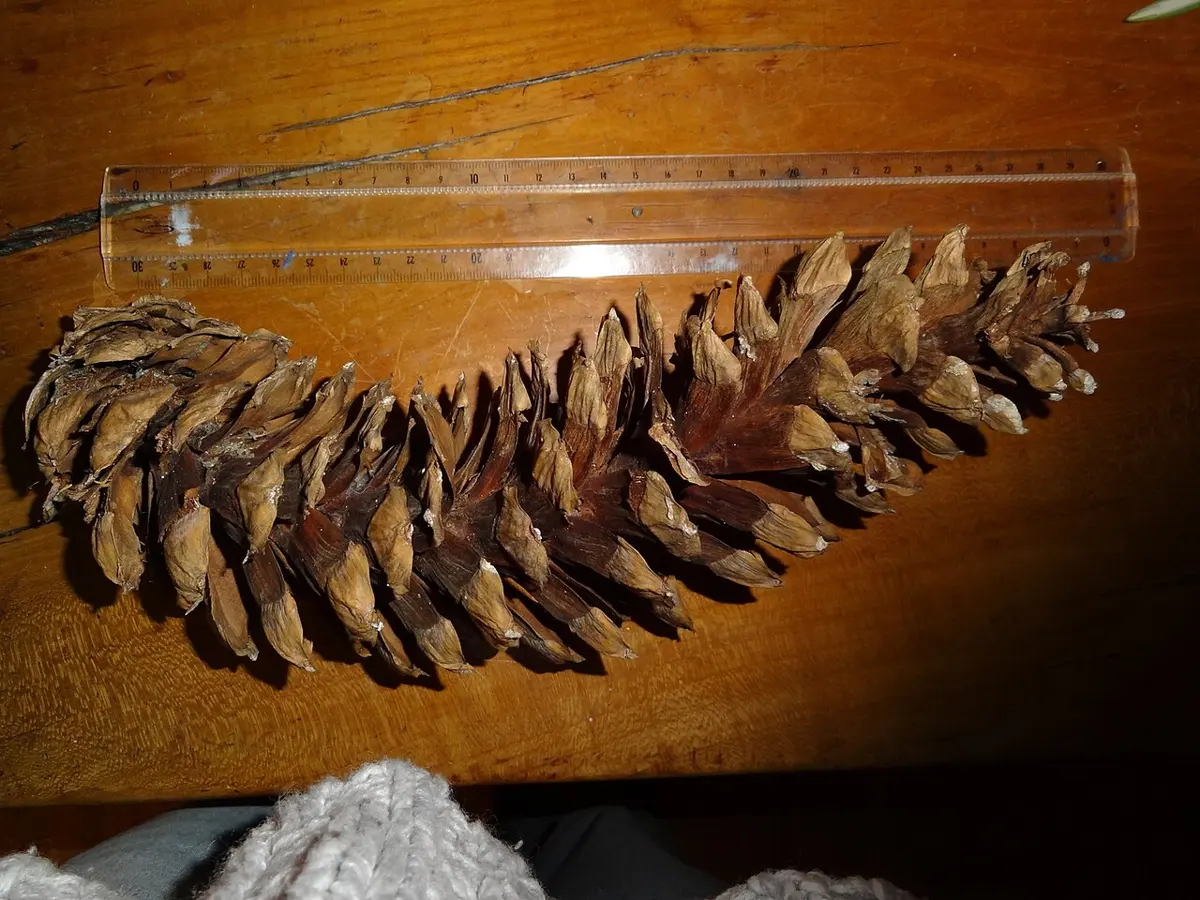
The seed. The zygote divides by mitosis to form an embryo, which is pushed deep into the female gametophyte and fed by it. The mature embryo has a radicle towards the micropyle, a plumule at the other end, and several cotyledons (their number depends on the species) around the plumule. After fertilization the integument becomes the seed coat, and the whole ovule (megasporangium with its contents) becomes the seed; the female gametophyte stays round the embryo as its food store. A thin layer of the ovuliferous scale comes away with each seed as a papery wing, which helps the wind carry it (Figure 9.10). From pollination to the ripe seed takes about two years; then the dry woody cone opens and the winged seeds spin away. Under favorable conditions a seed germinates into a new sporophyte, a seedling pine.
Pinus: O. W. Thomé, Flora von Deutschland (1885), public domain
Life cycle of Pinus
The life cycle shows alternation of generations: the pine tree is the sporophyte (2n) and is dominant. It produces two kinds of spore by meiosis: microspores in the male cones and megaspores in the ovules. These grow into tiny gametophytes that never live independently: the male gametophyte is the pollen grain and its tube (a few cells), and the female gametophyte lives inside the ovule on the tree. Fertilization needs no water: the pollen tube carries the male gametes to the egg. The zygote grows into an embryo inside a seed, which carries the next sporophyte away.
In Pinus, which part of the seed is haploid?
Pick an answer to see why.
2.7.4 Economic importance of gymnosperms
Gymnosperms are among the most useful plants to people.
1. Ornamental. Cycas, Araucaria (the monkey-puzzle and Norfolk Island pine), Thuja, junipers and cypresses are grown in gardens and parks, and many conifers as Christmas trees and hedges.
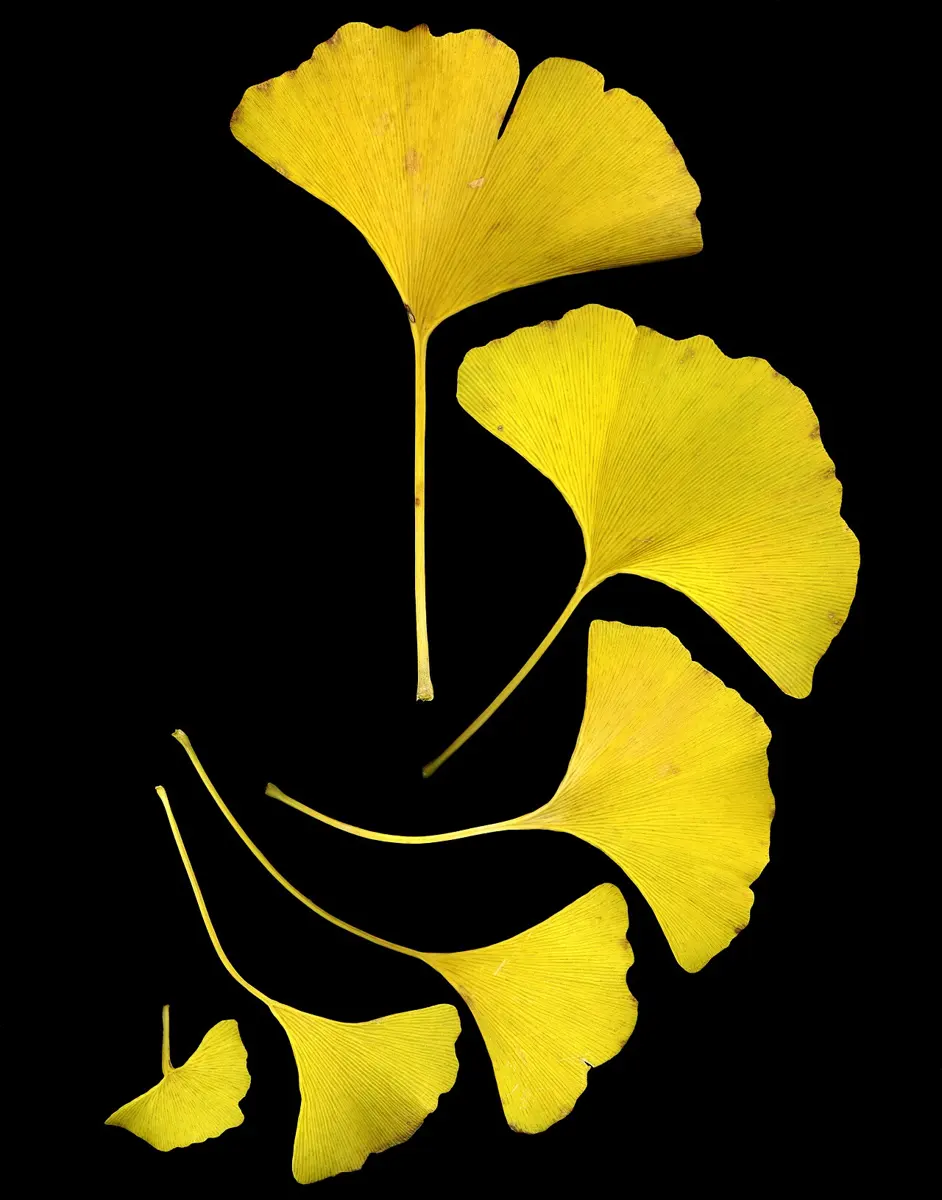
2. Food. In many parts of the world the starch in the stems and seeds of cycads is eaten, as sago (the seeds must be soaked and washed first, as they are poisonous). The seeds of the chilgoza pine, Pinus gerardiana, of the western Himalaya and Afghanistan, are eaten as nuts, as are pine nuts of other species. The seeds of Ginkgo are eaten in China and Japan.
3. Wood. Conifer wood is pale, straight-grained, light and soft (softwood), easy to saw and nail. It is used for building, furniture, packing cases, matchsticks, pencils (cedar), railway sleepers and fuel, and as pulp for paper. In Nepal, salla (pine) and deodar timber are used for doors, windows and beams.
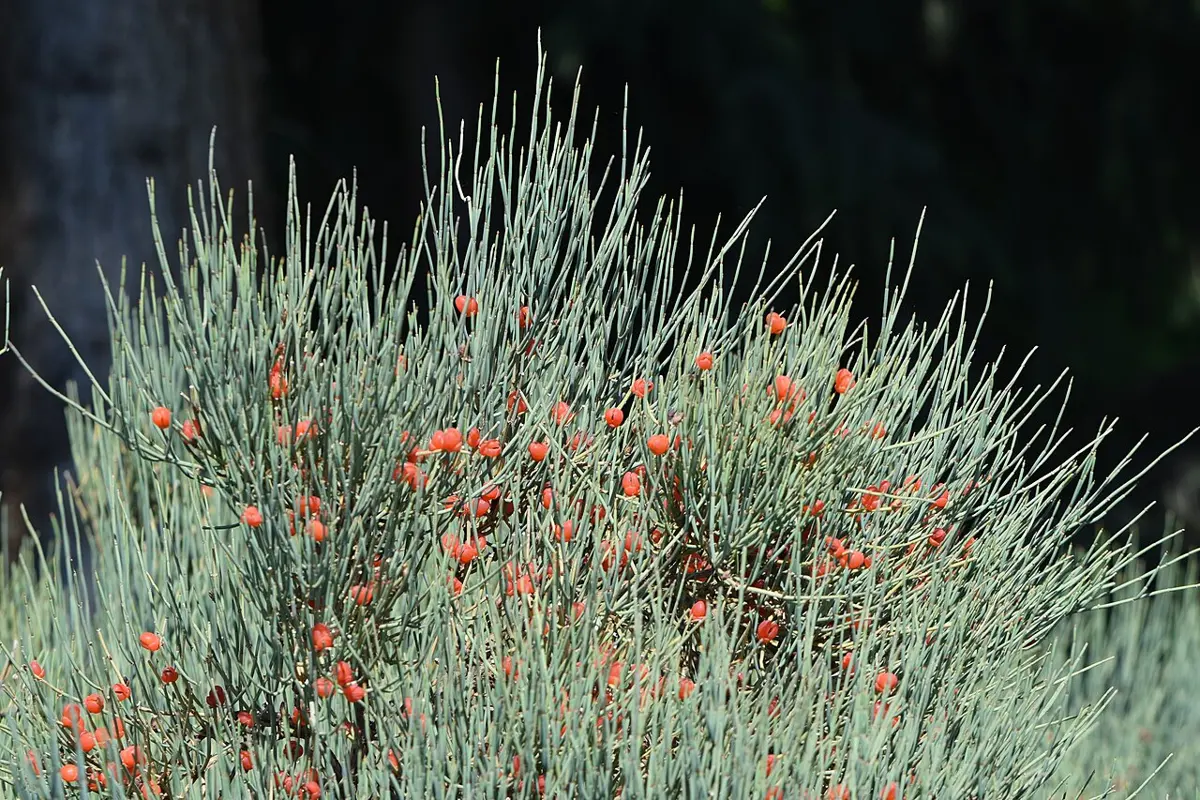
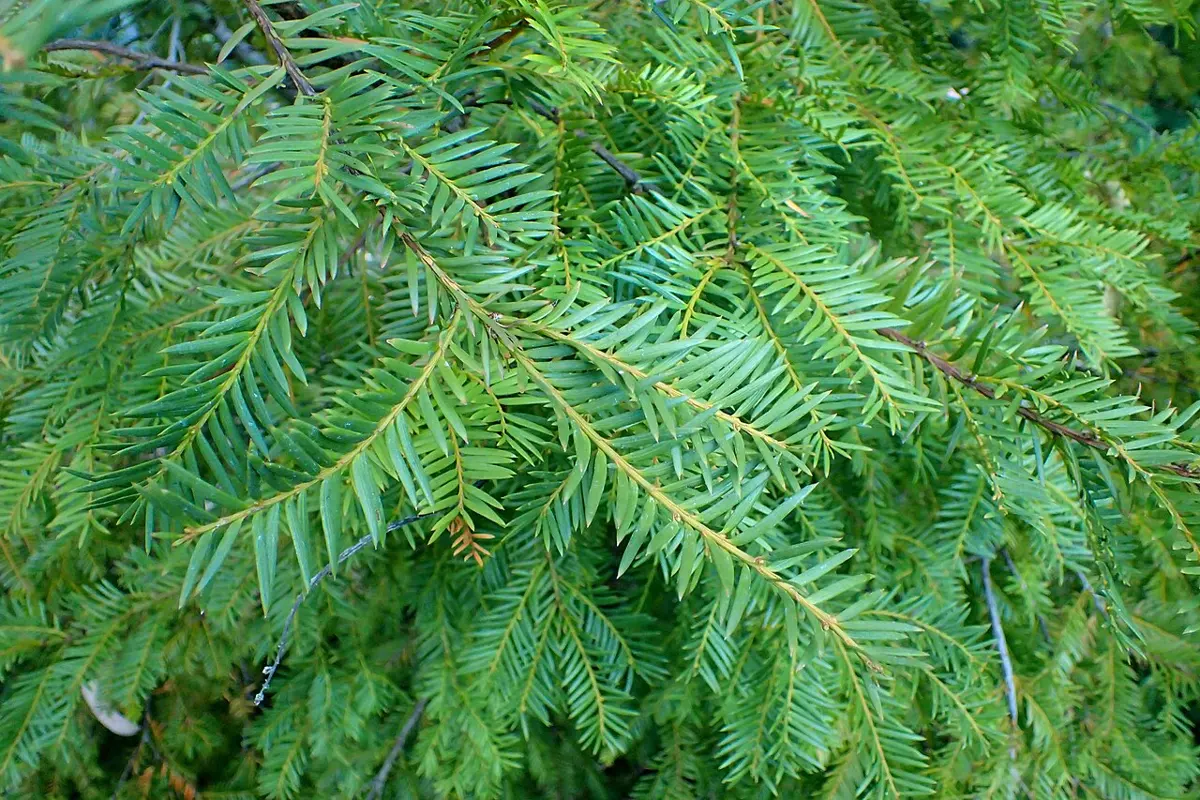
4. Medicine. Species of Ephedra yield the alkaloid ephedrine, which opens the airways and is used against asthma, coughs, colds and bronchitis; Ephedra gerardiana grows wild in the Himalaya, Nepal’s included. The anti-cancer drug taxol (paclitaxel) was first found in the bark of the Pacific yew, Taxus brevifolia, and is made from yews today. The Himalayan yew, Taxus wallichiana (lauth salla in Nepali), has been cut so heavily for its leaves and bark that its numbers in India and Nepal have fallen by up to 90%, and it is now listed as endangered by the IUCN.
5. Industry. Gums from Cycas are used as an adhesive. Tannin from the bark of Araucaria is used in tanning leather. The leaves of cycads are made into baskets, mats, hats and brooms. Plywood is made from Podocarpus. Resin tapped from conifers, chir pine above all, is distilled into turpentine (an oil, about a fifth) and rosin (a solid, about three-quarters), used in paints and varnishes, waterproofing, sealing wax, soap, printing ink and the rosin violin players rub on their bows.
Which product of a gymnosperm is used against asthma?
Pick an answer to see why.
Exercise
A. Choose the correct option
- Gymnosperms show heterospory. What does this mean?
Pick an answer to see why.
- Which is the tallest known gymnosperm?
Pick an answer to see why.
- What is the dominant generation in the life cycle of gymnosperms?
Pick an answer to see why.
- In gymnosperms, which structure does the term “megasporophyll” correspond to?
Pick an answer to see why.
- What is the main mode of pollination in Pinus?
Pick an answer to see why.
- In which plant are coralloid roots, with a symbiotic association with cyanobacteria (blue-green algae), typically found?
Pick an answer to see why.
- Ephedrine, a drug from Ephedra, is mainly used to treat which condition?
Pick an answer to see why.
- What is the first cell of the sporophyte generation in gymnosperms?
Pick an answer to see why.
- After fertilization, what do the integument and the megasporangium (ovule) become?
Pick an answer to see why.
B. Answer the following questions
Differentiate between:
- a.mycorrhizal and coralloid roots
- b.long shoots and dwarf shoots
Answer
Describe briefly the general characteristics of gymnosperms.
Answer
Discuss the structural and functional differences between the two types of leaves in Pinus.
Answer
How does the symbiosis between plants and mycorrhizal fungi improve nutrient uptake and plant growth in different ecosystems?
Answer
Compare the structure and reproductive functions of the male and female cones of Pinus.
Answer
Explain the economic importance of gymnosperms.
Answer
Describe reproduction in Pinus, with diagrams.
Answer
Printable PDFs
- Study notes 3 pages
- Worksheet 4 pages Answer key
Quiz yourself: Classification of Living Beings, Grades 5–12 →
Practice every question in the book, and keep track of the ones you miss →
A companion to your textbook, not a replacement for it: study from the book your school uses, and where the two differ, follow your teacher. Found a mistake? Please tell us.