
A blue whale breathes air like you, yet it spends its life in the open ocean and can stay under for half an hour. A mole spends its life in the dark, digging tunnels with hands like shovels. A gecko walks upside down across a ceiling, and a bar-headed goose flies over the Himalaya. Each of them would be helpless in the others’ homes. What is it about each body that fits it so exactly to where it lives?
This unit is about animal adaptation: the features that let animals live in water, run on open ground, dig under it, climb trees and walls, and fly or glide through the air. It is the animal side of what Unit 14 did for plants.
9.1.1 General introduction
Every habitat sets its own problems. Water is about 800 times denser than air and holds little oxygen; open grassland gives prey nowhere to hide, so predator and prey must run; underground there is no light and the soil must be pushed aside; a tree means falling is always one slip away; and the air holds nothing up but what flies. Animals that live in each place have bodies and habits that answer its problems.
The fitting of an organism to its habitat, by which it survives and reproduces there, is called adaptation. The word means both the process (adapting, over many generations) and the features it produces (a fin, a flipper, a claw).
An adaptation is inherited. It is not something one animal works out in its lifetime: a mole is born with its shovel hands. Adaptations arise over many generations by natural selection: in every generation the individuals whose features happen to suit the habitat a little better survive and leave more young, which inherit those features Grade 11: Unit 20. That is why the survival of animals in a particular region is possible: they are adapted to it.
Adaptations are of three kinds:
- Structural (morphological): body parts and their shapes: fins and gills in fish, flippers in a dolphin, wings in birds, long strong limbs in running animals, the patagia (skin flaps for flying) of bats, webbed feet in ducks.
- Behavioral: what the animal does: hibernation in winter, migration, communication, hunting in a pack (Unit 28).
- Physiological: how the body works inside: keeping the body temperature steady, osmoregulation (keeping the right balance of water and salts), a diving seal slowing its heart.
By where animals live, adaptations are first divided into aquatic (in water) and terrestrial (on land), and those of animals that fly are usually counted separately as aerial or volant.
A desert kangaroo rat never drinks; its kidneys make urine so concentrated that it gets all the water it needs from its food. Which kind of adaptation is this?
Pick an answer to see why.
Which of these is an adaptation, in the biologist’s sense?
Pick an answer to see why.
9.1.2 Aquatic adaptation
Animals that live in water are aquatic animals, and the special features that suit them to life in water are aquatic adaptations. Water is dense and resists anything that moves through it, it holds the body up, it holds only about a thirtieth as much oxygen as the same volume of air, and it is fresh or salty. Aquatic animals are of two kinds, by where their ancestors lived.
1. Primary aquatic adaptation
Primary aquatic animals are animals whose ancestors always lived in water: life began in water, and their line never left it. They are the fishes, which breathe with gills. Their adaptations, primary aquatic adaptations, are:
- i.Streamlined body. The body is spindle-shaped (narrow at both ends) and, in most fishes, flattened from side to side (laterally compressed). The head joins the body with no neck. This shape reduces the drag of water and lets the fish move fast.
- ii.Fins. Fishes swim by fins, paired (pectoral and pelvic) and unpaired (dorsal, anal and caudal). The caudal fin (tail fin) with the tail’s muscles drives the fish forward and helps it steer like a rudder; the paired fins balance it, brake and turn; the dorsal and anal fins keep it from rolling.
- iii.Gills. Fishes breathe by gills, which take oxygen from the water flowing over them. In bony fishes the gills are covered by a gill cover (operculum); sharks and rays have no gill cover, only open gill slits. Some fishes that live in water poor in oxygen have accessory air-breathing organs and gulp air at the surface: the climbing perch (Anabas), the walking catfish (Clarias, magur) and the singhi (Heteropneustes).
- iv.Scales. The body is covered by overlapping scales that protect it: placoid scales (tooth-like, in sharks and rays), and thin, bony cycloid (smooth-edged, as in carps) and ctenoid (comb-edged, as in perches) scales in bony fishes.
- v.Mucus. Mucous glands in the skin cover the body with slippery mucus, which cuts friction as the fish swims and guards the skin against bacteria and fungi.
- vi.Swim bladder. Most bony fishes have a swim bladder, a gas-filled sac that grows out of the gut during development and lies above it. By changing the amount of gas in it, the fish matches its density to the water’s, so it floats at any depth without swimming (it is neutrally buoyant). Going down, the water’s pressure squeezes the bladder, so the fish adds gas to keep its volume; going up, the gas expands, so it lets gas out. (Sharks have no swim bladder; a large oily liver helps them float.)
- vii.Lateral line. Along each side runs a lateral line, a canal with rows of sense organs called neuromasts. Each has tiny hairs that bend when the water moves, so the fish feels currents, vibrations and changes of water pressure around it: a predator approaching, a wall in the dark, the other fishes in its school.
- viii.Eyes. A fish’s eyes have no eyelids: the water keeps them moist and clean. Some sharks have a movable nictitating membrane (a third eyelid) that closes over the eye when they bite.
- ix.Osmoregulation. Fishes keep the salt and water in their bodies balanced. A freshwater fish’s body is saltier than the water, so water keeps soaking in: it hardly drinks, makes a lot of watery urine and takes salts in through special cells of the gills (chloride cells, also called ionocytes). A marine fish’s body is less salty than seawater, so it keeps losing water: it drinks seawater, makes little urine, and its chloride cells pump the extra salt out through the gills.
DataBase Center for Life Science (DBCLS), CC BY 4.0, via Wikimedia Commons
A fish is resting, not swimming, in the middle of a pond, neither rising nor sinking. Which organ makes this possible?
Pick an answer to see why.
A shark has no gill cover. What covers its gills?
Pick an answer to see why.
2. Secondary aquatic adaptation
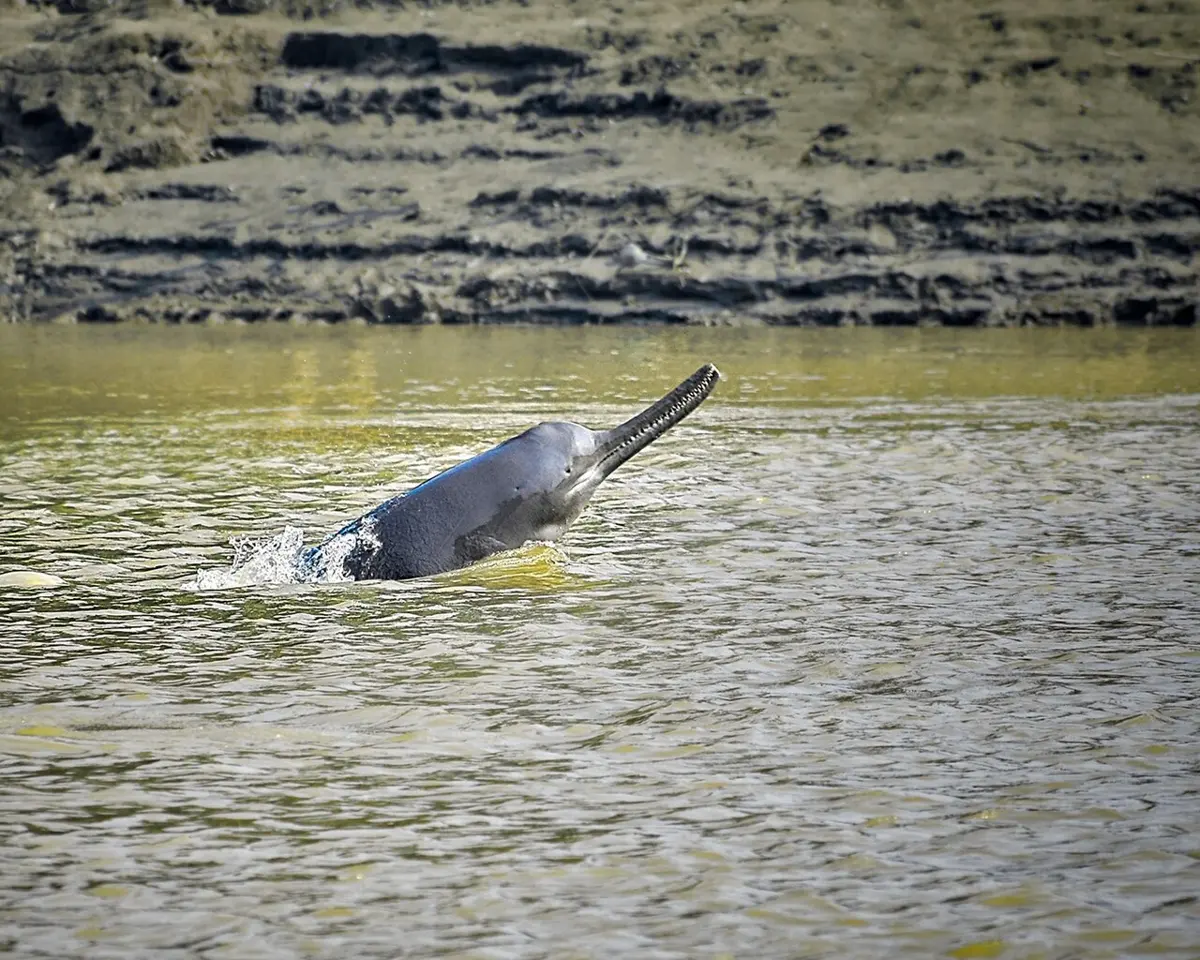
Secondary aquatic animals are animals that live in water now but whose ancestors lived on land: their line went back to the water. Whales and dolphins evolved from land mammals about 50 million years ago (their closest living relatives are the hippos), seals and sea lions from land carnivores, sea turtles and crocodiles from land reptiles, penguins from flying birds. They still breathe air with lungs and come to the surface to breathe. Some (whales, dolphins, dugongs) never come on land at all; others (seals, turtles, crocodiles, penguins) come out to rest or breed.
Their features fit them for water again, often by changing what their land-living ancestors had:
- i.Shape. The body is streamlined, like a fish’s; the neck is short or can’t be seen, and the head is drawn out into a snout (rostrum), as in dolphins.
- ii.Limbs. The forelimbs are broad, flat paddles or flippers, as in whales, dolphins, dugongs (sea cows) and turtles; inside, they still have the arm and finger bones of a land mammal’s forelimb. The hindlimbs are lost in whales and dolphins (only small bones remain inside). Animals that swim near the surface or the shore, such as ducks, frogs and crocodiles, have webbed toes.
- iii.Tail. In whales, dolphins and dugongs the tail ends in a broad, flat tail fluke, which beats up and down (a fish’s tail beats from side to side). In some, such as seals and turtles, the tail is short or small.
- iv.Blubber instead of hair. Water draws heat from the body about 25 times faster than air. Whales and dolphins have almost no hair and no sweat or oil glands; instead a thick layer of fat under the skin, blubber, keeps them warm (it also stores food and helps them float). Seals have blubber as well as short hair; penguins have blubber-like fat under dense, waterproof feathers.
- v.Nostrils on top. The nostrils open high on the head, so the animal breathes with only its head (or, in whales, only a blowhole) out of the water. They are closed by muscular valves when it dives.
- vi.Lungs and diving. They breathe with lungs. The lungs of whales are very elastic, with airways stiffened by cartilage, and not divided into lobes. A deep-diving whale or seal stores most of its oxygen not in its lungs but in its blood and muscles (rich in the red protein myoglobin); its lungs collapse as it goes down, and its heart slows. Frogs and newts breathe partly through their moist skin, and some larvae and a few adult amphibians (such as the axolotl) keep external gills.
- vii.Eyes. The eyes are small, set high on the head, and guarded by a thick, tough coat (sclera). In whales, the Harderian gland bathes the eye in an oily fluid that protects it from salt water.
- viii.Ears. The ear openings are small and, in whales, dolphins and walruses, have no outer ear (pinna); sea lions have small pinnae.
- ix.Body openings and young. The testes of whales and dolphins are inside the abdomen, not in a scrotum, keeping the body smooth. The mammary glands lie in slits, and the mother squirts thick, fat-rich milk quickly into the calf’s mouth under water.
Why is a whale counted as a secondary aquatic animal?
Pick an answer to see why.
A dolphin and a fish both swim with their tails. What is the difference?
Pick an answer to see why.
9.1.3 Terrestrial adaptation
Animals suited to living on land are terrestrial animals. Land holds the body up less than water and dries it out, but air is easy to move through and full of oxygen. Land animals have adapted in four main ways: for running (cursorial), digging (fossorial), climbing (arboreal) and flying or gliding (volant).
a. Cursorial adaptation
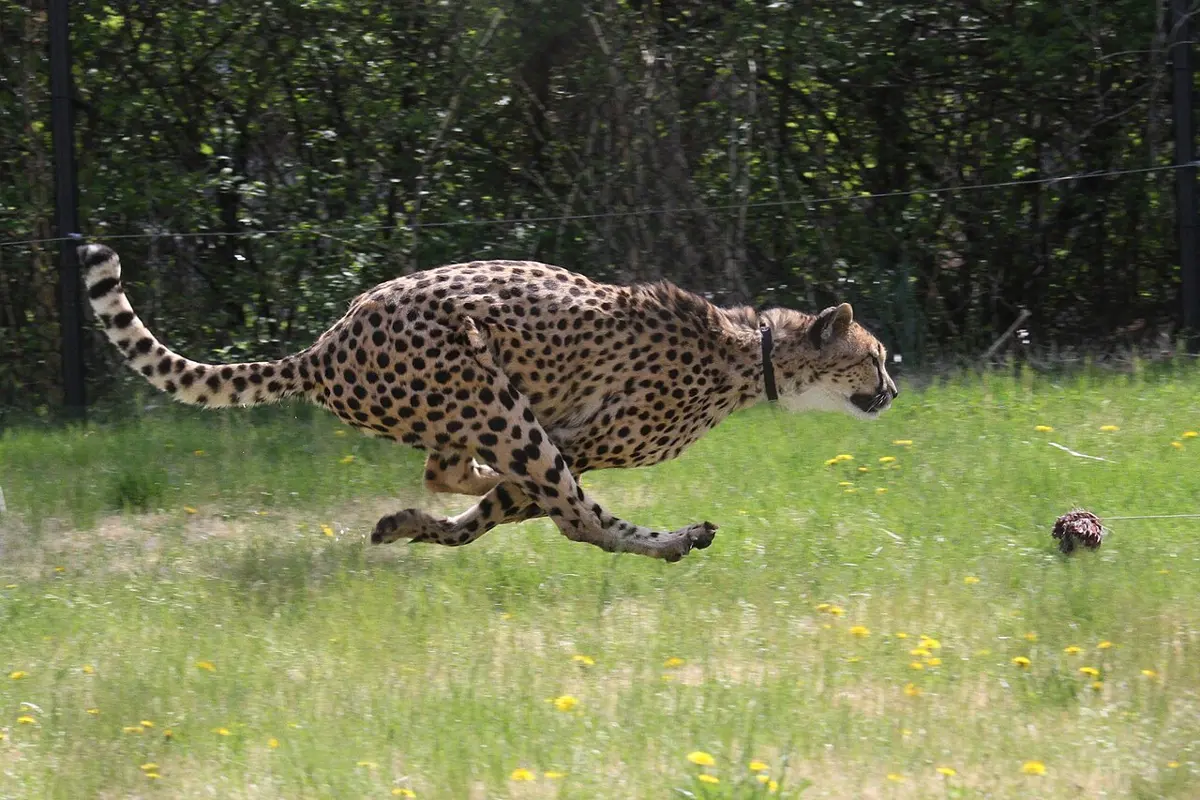
Animals adapted for running fast on the ground are cursorial animals (Latin cursor, runner), and their adaptations are cursorial adaptations. They run to catch prey, to escape predators and to travel to food, water and mates. Examples: the cheetah, tiger, lion, horse, deer, blackbuck, dog, ostrich, and some lizards.
- i.Shape. The body is spindle-shaped and slim, the head and neck stretched forward, the ears laid back while running, so the air slips past.
- ii.Muscles. The body is powerfully muscled, and the big muscles are packed close to the body, on the shoulders and thighs.
- iii.Long legs, long at the far end. The legs are long. The bones near the body (the humerus and femur) are comparatively short, and those farther out (the radius-ulna, tibia-fibula and the foot bones) are long. Heavy muscles stay near the body while the light lower leg swings fast, like the long, light end of a whip, so each stride is long and quick.
- iv.Legs as propellers. The legs move only forward and back, in one plane, and push the body forward like propellers.
- v.Front and back. The front legs carry more of the weight (about 60% in a horse), while the hind legs give most of the push.
- vi.Foot posture. How much of the foot touches the ground is called the animal’s foot posture (or its kind of locomotion on the ground). There are three kinds (Figure 27.4):
- Plantigrade: the whole sole, heel included, is put down on the ground. Found in bears, humans and other primates, and rats. It is steady but not fast.
- Digitigrade: the animal walks on its toes (digits), its heel raised high off the ground. The toes have soft, shock-absorbing pads underneath. Found in cats (tiger, leopard), dogs and wolves.
- Unguligrade: the animal stands on the tips of its toes, each covered by a hoof (Latin ungula). Found in horses, cows, goats, deer and pigs. It gives the longest leg and the fastest, most tireless running.
Leg drawing: Antoine Adam, CC0, via Wikimedia Commons
In which group do all the animals walk on their toes, with their heels raised (digitigrade)?
Pick an answer to see why.
b. Fossorial adaptation
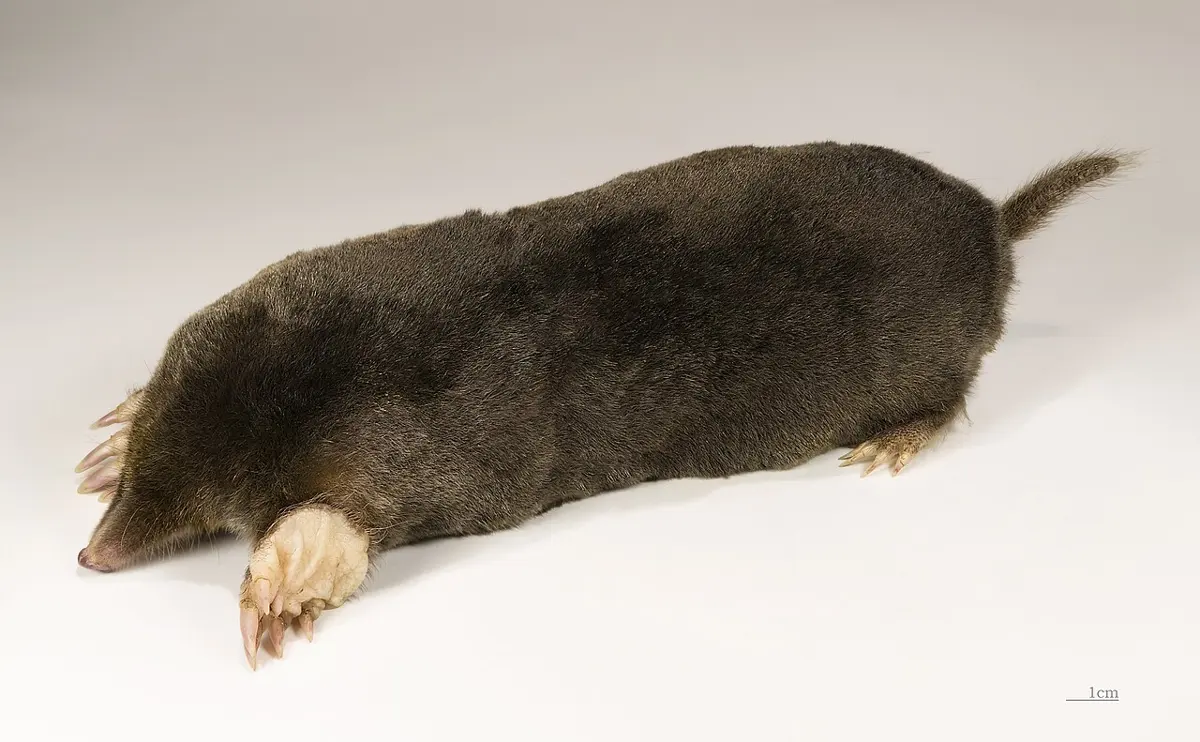
Animals adapted to dig and live underground in burrows are fossorial animals (Latin fossor, digger), and their adaptations fossorial adaptations. Many come out of their burrows mostly at night, to find food. Examples: moles, burrowing owls, many rodents (rats, bandicoots, mole-rats), badgers, pangolins, the spiny anteater (echidna), and earthworms among invertebrates.
- i.Body. Compact, stout and spindle-shaped (cylindrical), with no bulging parts to catch on the tunnel’s walls.
- ii.Snout. The head narrows into a conical, often tough snout that pushes into the soil.
- iii.Shoulders. The shoulder and chest muscles are very strong, and the forelimb bones short and thick, to give force for digging.
- iv.Forelimbs. Short and stout, with long, strong claws. In moles the hands are broad and turned outwards like shovels and push the soil sideways and back.
- v.Tail. The tail is short or absent: it would only get in the way in a tunnel.
- vi.Eyes and ears. The eyes are tiny, or hidden under the skin or fur (some fossorial animals protect them with a nictitating membrane); the outer ears are small or absent (absent in the spiny anteater), so soil can’t pack into them. They find their way by touch and smell instead: a mole’s snout is covered with thousands of tiny touch organs.
- vii.Resting through the cold. Some fossorial animals, such as marmots and ground squirrels, hibernate in their burrows through the winter. (Moles don’t: they stay active and keep stores of worms.)
Which feature would you not expect in a fossorial animal?
Pick an answer to see why.
c. Arboreal adaptation
Animals adapted for climbing, on trees, walls, rocks and even ceilings, are arboreal animals (Latin arbor, tree), and their adaptation is also called scansorial adaptation (Latin scandere, to climb). Climbing brings food (fruit, leaves, insects) and a safe retreat from enemies on the ground. Some arboreal animals spend their whole life in trees, swinging from branch to branch, and eat fruit. They are of three kinds:
- i.Rock and wall climbers: climb on rocks and the walls of buildings. Examples: the wall lizard (house gecko, Hemidactylus) and other geckos.
- ii.Terrestrio-arboreal animals: live partly in trees and partly on the ground. Examples: the sloth bear, the five-striped palm squirrel, the rhesus monkey.
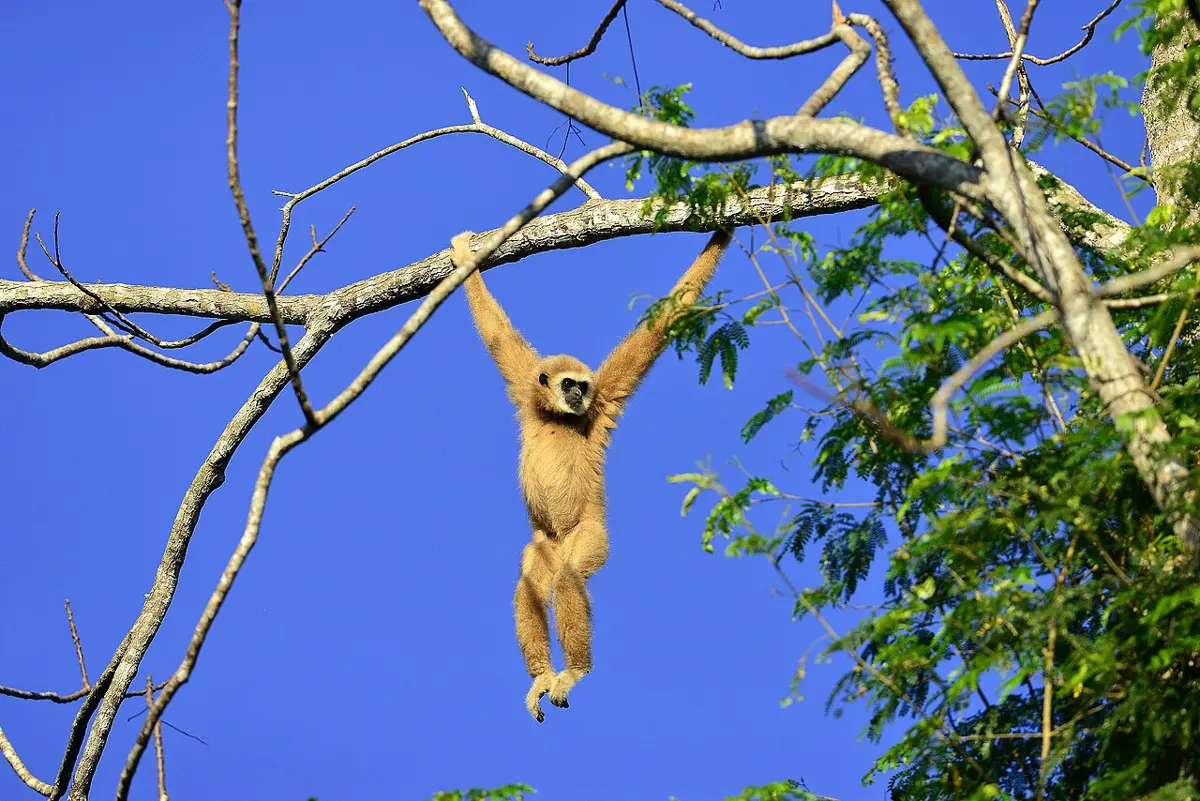
- iii.Fully arboreal animals: live completely in trees. Examples: lemurs, gibbons, sloths, the slow loris.
Their adaptations:
- i.Body. Small, slender and light (or, in large climbers like the orangutan, with very long, strong arms).
- ii.Neck. A movable neck turns the head to judge distances to the next branch.
- iii.Skin. In climbing lizards the body is covered by dry, horny scales, which protect it and stop it drying out.
- iv.Tongue. In chameleons and many lizards the tongue is long, sticky and shoots out to catch insects.
- v.Chest. The ribs are curved, giving the chest a rounded shape.
- vi.Girdles. The shoulder (pectoral) and hip (pelvic) girdles are strong, to hold the body’s weight hanging from the limbs.
- vii.Grip. The digits end in sharp, long, curved claws (squirrels, sloths); in primates the thumb (and in apes like the gibbon and orangutan, and in monkeys, the big toe as well) is opposable, able to close against the other fingers and grasp a branch.
- viii.Tail. In many arboreal animals the tail is long, for balance; in some American monkeys it is prehensile, able to wrap round a branch and hold the animal’s weight like a fifth hand. Squirrels’ tails are not prehensile: they balance them. The scaly-tailed flying squirrels of Africa have rows of pointed scales under the base of the tail, which grip the bark and stop them slipping when they land on a trunk.
- ix.Gecko feet and autotomy. Under a gecko’s toes are rows of plates (lamellae) covered with millions of microscopic hairs (setae), each split into hundreds of tiny tips. The tips touch the surface so closely that weak attractions between molecules (van der Waals forces) hold the gecko on, even upside down on a smooth ceiling. The wall lizard can also break off its own tail when caught (autotomy); the wriggling tail distracts the predator while the lizard escapes, and a new tail grows back (regeneration), though with a rod of cartilage instead of bones.
- x.Adhesive pads. Tree frogs have wide, sticky pads on the tips of their toes, which cling to wet leaves.
Sneha’s cat catches a house lizard by its tail; the tail snaps off and wriggles, and the lizard runs up the wall. What is the breaking off of the tail called?
Pick an answer to see why.
d. Volant (aerial) adaptation
The adaptation of animals to fly or glide through the air is called volant (Latin volare, to fly) or aerial adaptation. Some animals fly for hours; others glide only a short way. None can stay up forever: all must come down to rest, feed and nest. Volant adaptation is of two kinds.
1. Active flight
In active flight (also called true or sustained flight), the animal beats its wings and keeps itself up for a long time. Examples: most birds, bats and insects. True fliers have:
- i.Streamlined body. A boat-shaped body with nothing sticking out to catch the air; the legs are tucked up in flight.
- ii.Wings of skin in bats. A bat’s wing is its forelimb: the bones of four fingers are enormously long and hold a thin, elastic sheet of skin, the patagium, stretched between them and from the arm to the side of the body, the hindleg and, in many bats, the tail. Bats can change the shape of their wings by moving their fingers, which makes them very agile.
- iii.Wings of feathers in birds. A bird’s wing is its forelimb, with powerful flight muscles and stiff flight feathers; the hand bones are reduced and fused into a firm frame.
- iv.Feathers. Contour feathers give the body its smooth shape, flight feathers (quills) of the wings and tail make the surfaces that lift and steer, and soft down feathers underneath keep it warm. Feathers are very light and strong.
- v.Hollow bones. Many bones are hollow, filled with air from the air sacs and braced inside by thin struts: pneumatic bones. They are light but stiff. (A bird’s skeleton is not lighter than a mammal’s of the same size overall; its bones are denser and stiffer, and shaped to save weight where it matters.)
- vi.Lungs and air sacs. A bird’s lungs are joined to air sacs that fill much of its body and even enter its bones. The sacs work as bellows, so fresh air flows through the lungs in one direction, both when the bird breathes in and when it breathes out. This gives the steady, large supply of oxygen that flight needs.
- vii.Keeled breastbone. The breastbone (sternum) has a deep ridge, the keel, where the huge flight muscles (the pectoral muscles, which pull the wing down, and the supracoracoideus, which pulls it up) are attached. In a pigeon the flight muscles are about a third of the body’s weight.
- viii.Perching. When a bird crouches on a branch, its bent legs pull tendons that run down the back of the leg round the ankle to the toes, and the toes close round the branch by themselves; ridges on the tendon lock against its sheath. So a sleeping bird stays on a branch, a wire or a rod without effort: perching.
- ix.Saving weight. A beak instead of heavy jaws and teeth; the bones of the lower back, hip and tail fused into firm plates; in most birds only the left ovary works (the right one never develops); no urinary bladder (urine is passed as a paste of uric acid with the feces); the heavy organs packed close to the middle of the body, under the wings.
2. Passive flight (gliding)
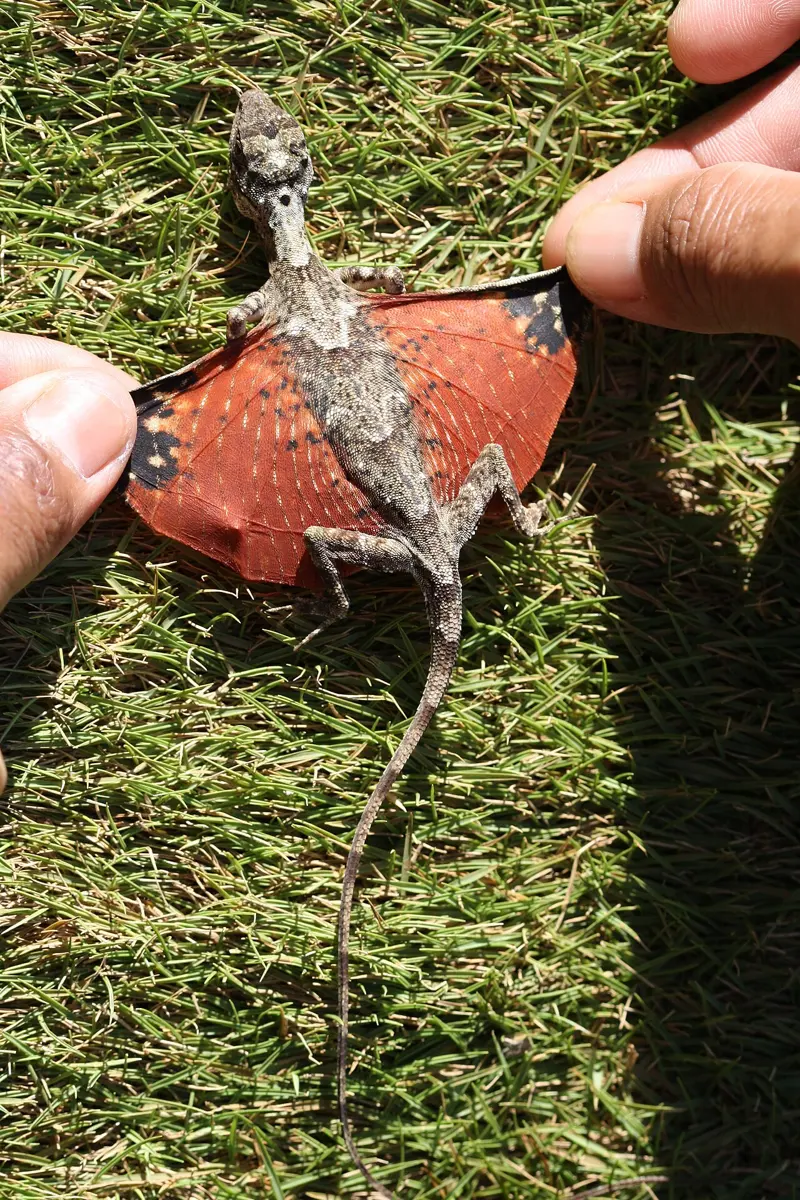
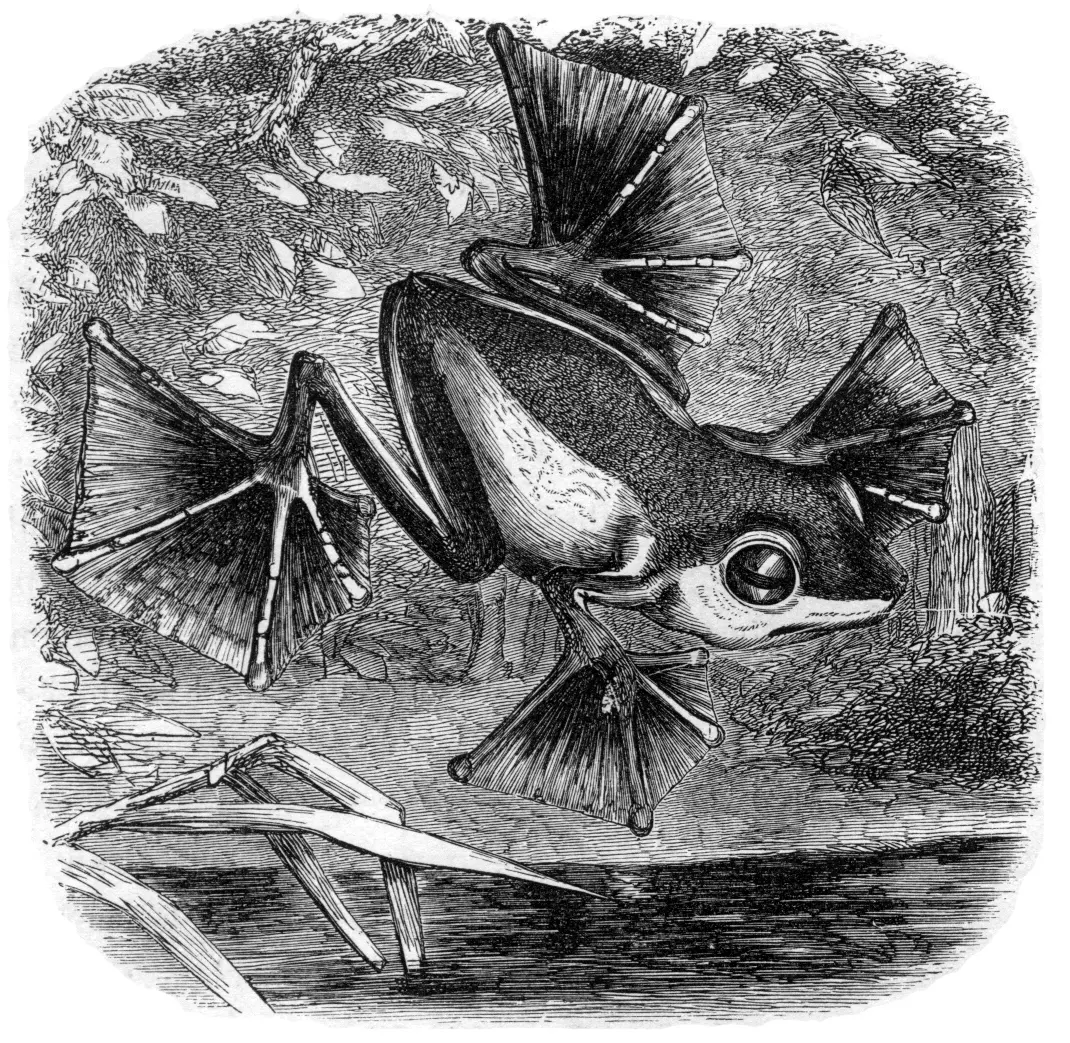
In passive flight, the animal glides: it leaps from a height (a treetop, a cliff, a wave), spreads a flap of skin or fins, and sails down at a slant, covering a few meters to over a hundred meters before it lands. It cannot climb in the air or stay up; gravity pulls it down all the time, and the wing only turns the fall into a long slant. This is gliding adaptation. Examples: the flying fish (Exocoetus), flying frogs (Rhacophorus), the flying lizard (Draco), the flying snake (Chrysopelea), the colugo or “flying lemur” (Cynocephalus, not a true lemur), and flying squirrels.
Their adaptations:
- i.Patagia. A fold of skin (a patagium) is stretched on each side between the body and the limbs (as in flying squirrels and the colugo), or held out on long ribs (in Draco), to act as a wing.
- ii.Flying fish. The pectoral fins are very large and spread out as wings. The tail fin’s lower lobe is longer than the upper (it is hypocercal): the fish beats it in the water while the rest of its body is already in the air, to gain speed before take-off.
- iii.Draco. Five to seven pairs of very long ribs on each side hold out the patagium; at rest they fold back along the body.
- iv.Flying snake. The flying snake spreads its ribs, flattening its body to about twice its width, with the underside hollow like a C, and waves from side to side as it glides.
- v.Flying frogs. Very long, fully webbed toes act as parachutes, and adhesive pads on the toes give a safe landing on a leaf or trunk.
In the flying fish, which fins work as wings for gliding?
Pick an answer to see why.
What is the main difference between active flight and gliding?
Pick an answer to see why.
Exercise
A. Tick the correct alternative
- Which type of adaptation is shown by fishes?
Pick an answer to see why.
- The swim bladder helps certain aquatic animals keep their buoyancy, so they float in water without effort. In which animals is a swim bladder mainly found?
Pick an answer to see why.
- The sense organs in the lateral line system of fishes are:
Pick an answer to see why.
- Which of the following statements is true for a whale?
Pick an answer to see why.
- Cursorial adaptation suits animals for running efficiently on the ground, at high speed. Which group of animals shows cursorial adaptation?
Pick an answer to see why.
- Which type of foot posture is found in animals of the cat family?
Pick an answer to see why.
- A goat stands on the tips of its toes, each covered by a hoof. What is its foot posture?
Pick an answer to see why.
- An animal seen on land has a compact, spindle-shaped body and a conical snout. Its forelimbs are short and strong, with sharp claws and shovel-like palms. What would be its adaptation?
Pick an answer to see why.
- Which of the following is not true for fossorial adaptation?
Pick an answer to see why.
- Animals adapted for climbing are called:
Pick an answer to see why.
- Saumyata saw a lizard climbing the wall of her house. When she tried to catch it, its tail suddenly broke off, but the lizard kept climbing. Her teacher told her the lizard would grow its tail back. What is the breaking off of the tail called?
Pick an answer to see why.
- Which type of adaptation is shown by the gibbon?
Pick an answer to see why.
- Bats have special features that let them keep up their flight and find their way in the air. Which of these mainly keeps a bat up in flight?
Pick an answer to see why.
- The gripping of objects such as a branch, a wire or a rope by a bird’s hind limbs, without any risk of falling, is called:
Pick an answer to see why.
- In the flying fish, which fins are modified as wings (patagia)?
Pick an answer to see why.
B. Answer the following questions
What do you mean by secondary aquatic adaptation? List the various adaptive features of secondary aquatic animals, with examples.
Answer
Rahu is a freshwater animal. What type of adaptation does it show, and what features are found in its body?
Answer
What are arboreal animals? How are they suited to survive in their habitat?
Answer
List the adaptive features of animals showing cursorial adaptation.
Answer
Compare and contrast primary aquatic animals and secondary aquatic animals.
Answer
Compare and contrast volant animals with cursorial animals.
Answer
Which type of adaptation is found in bats and birds? How are they modified for flying in the air?
Answer
What do you mean by gliding adaptation? Write any four examples of animals showing gliding adaptation, and mention their adaptive features.
Answer
List the various adaptive features that help the wall lizard survive in its habitat.
Answer
Printable PDFs
- Study notes 3 pages
- Worksheet 5 pages Answer key
Quiz yourself: Environment and Biodiversity, Grades 5–12 →
Practice every question in the book, and keep track of the ones you miss →
A companion to your textbook, not a replacement for it: study from the book your school uses, and where the two differ, follow your teacher. Found a mistake? Please tell us.