
A Nepali working abroad sends home $500 every month. In October 2016 the family’s bank turned it into about Rs 53,300. In October 2026 the very same $500 became about Rs 76,000. Nobody abroad paid more: each rupee had simply become worth less against the dollar.
So who gains when the rate changes? This family does. But a student who must pay $10,000 of college fees abroad needed about Rs 10.7 lakh in 2016 and about Rs 15.3 lakh in 2026. By the end of this unit you will change any currency into any other, see what a bank keeps between its two rates, and work out who gains, and by how much, when a rate moves.
Figures: Nepal Rastra Bank’s rates for the US dollar, 28 October 2016 and 29 October 2026.
4.0 Review: money from other countries
Wherever we travel or trade, we pay in the money of that country, and money sent home from any country reaches the family as Nepali rupees. A country’s money is its currency: the Nepali rupee (Rs), the US dollar ($), the Indian rupee (₹), the Qatari riyal. Changing one currency for another is money exchange (in Nepali, सटही).
4.1 Currency and exchange rate
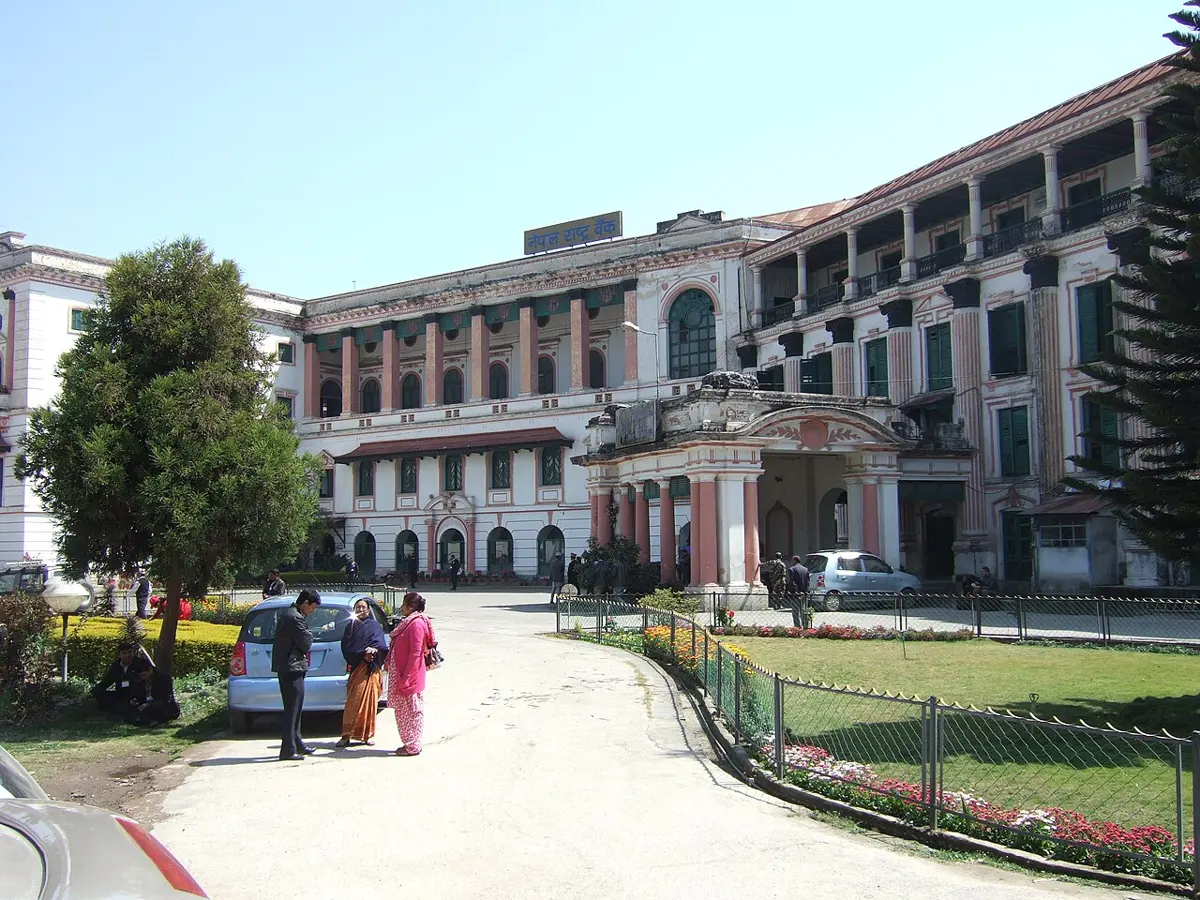
The price of one currency in another is the exchange rate (for another country’s money, the foreign exchange rate). In Nepal, Nepal Rastra Bank decides it. It fixes the rate for the Indian rupee: ₹100 = Rs 160, the same every day for over thirty years. The rates of the other currencies change with the world’s markets, and Nepal Rastra Bank publishes them each morning; banks and money changers may quote rates a little different from its own.
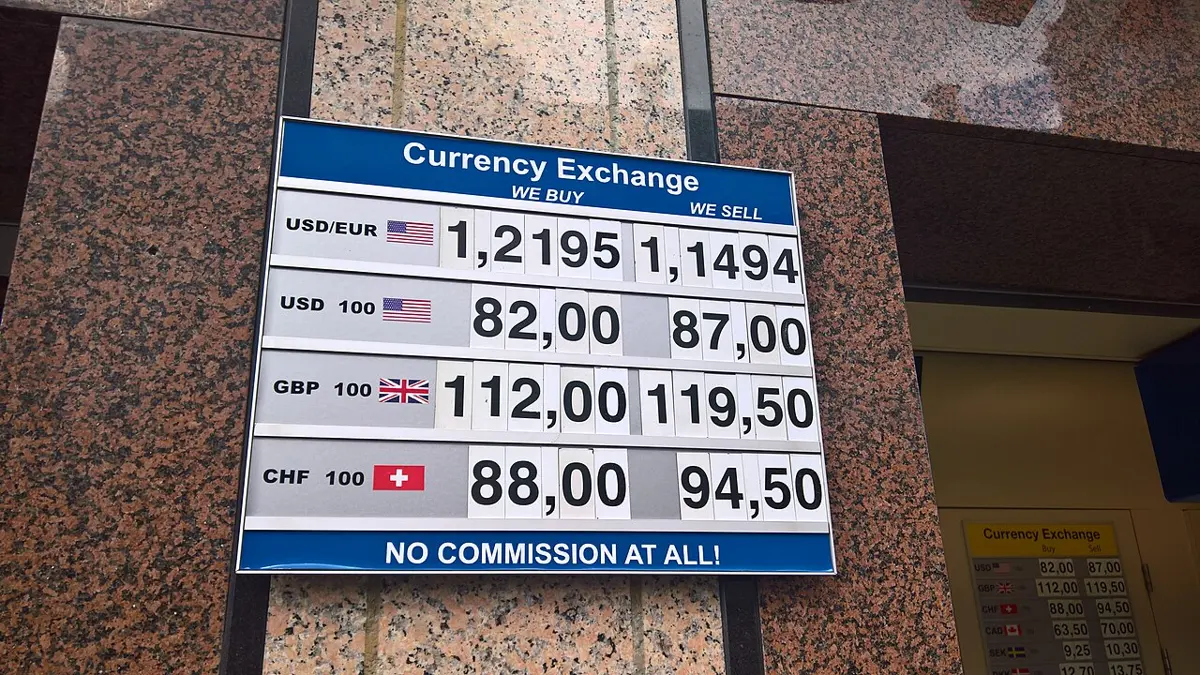
Every rate is given twice, and both are from the bank’s side of the counter:
- the buying rate is what the bank pays when it buys foreign money from you: you bring dollars, you get rupees;
- the selling rate is what the bank charges when it sells foreign money to you: you bring rupees, you get dollars.
So a family receiving dollars from abroad is paid at the buying rate, and a student going to study in America buys dollars at the selling rate. Either way the bank does better than you would on a rate halfway between: that is fair, since it does the work, but it means changing money and changing it straight back always loses a little.
Hari comes home from Qatar with 2,000 riyals and changes them into rupees. Which rate does the bank use?
Pick an answer to see why.
On this table, how many rupees do 10 Japanese yen cost at the bank?
Pick an answer to see why.
Try a round trip yourself: change rupees into a currency and straight back, and see what the two rates cost you.
Worked examples: changing money
Every change of money is one of two moves: foreign money into rupees (the bank buys), or rupees into foreign money (the bank sells).
When a question gives a single rate (“$1 = Rs 126.35”), use that one for both. Round rupees and foreign money to two decimal places at the end.
From one foreign currency to another
Banks in Nepal deal in rupees. To change Canadian dollars into Japanese yen at a bank here, you sell the Canadian dollars for rupees (at the buying rate), then buy yen with those rupees (at the selling rate). There are two ways to set out the working.
The chain rule
The second way is a shortcut for the same thing, the chain rule. Write a chain of equal amounts, each line starting with the currency the line before ended with, until the chain comes back to where it started. Then the product of the left-hand numbers equals the product of the right-hand numbers.
Why does it work? Each line says “these two amounts are worth the same”, so its two sides could be swapped for each other. Multiply the three left-hand amounts and the three right-hand ones: every currency appears once on each side, so the units cancel and what is left is an equation in numbers. For Example 3a:
the same ¥104.67. For 3b: AUD 250 = CHF x; CHF 1 = Rs 133.76; Rs 87.82 = AUD 1, so 250 × 1 × 87.82 = x × 133.76 × 1 and x = 164.14.
In general: if a of one currency = b of a second, c of the second = d of a third, and e of the third = f of the first, then a × c × e = b × d × f. The chain may have as many links as needed.
A bank buys yuan at Rs 18.70 and sells dollars at Rs 127.95. How many dollars does it give for 1 yuan?
Pick an answer to see why.
When the rate changes: devaluation and revaluation
Rates change. When a dollar costs more rupees than before, the rupee has lost value against it: the rupee has been devalued (अवमूल्यन). When a dollar costs fewer rupees, the rupee has gained value: it has been revalued (अधिमूल्यन). Newspapers say the rupee has weakened or strengthened.
Exam questions give the change as a percentage of the rate. If the rupee is devalued by R%, a dollar costs R% more rupees:
If the rupee is revalued by R%, a dollar costs R% fewer rupees:
This is Unit 3’s growth and depreciation, applied to the price of a dollar. If $1 = Rs 150 and the rupee is devalued by 10%, then $1 = 150 × 1.1 = Rs 165.
Back to the opening
When the rupee loses value, whoever is paid in foreign money and spends in rupees gains; whoever earns rupees and pays in foreign money loses.
The family receiving $500 gains: the same dollars buy more rupees. The student paying fees abroad loses, and so does anyone buying goods from outside India: a phone, a laptop, fuel, a plane ticket priced in dollars cost more rupees. So part of the family’s gain is eaten up by higher prices in the shops. And because the Indian rupee’s rate is fixed, everything Nepal buys from India costs the same in rupees as before, however the dollar moves.
Rina received $1,000 when $1 = Rs 150 and kept it. Then the rupee was devalued by 4%. What are her dollars worth now?
Pick an answer to see why.
Buying, selling and profit across borders
Real trade mixes this unit with profit and loss, taxes and Unit 3’s percentages. Work in one currency all the way, then change once at the end (or change first, then work).
How the SEE asks it
In the SEE’s Compulsory Mathematics paper, Arithmetic carries 13 marks in three questions (compound interest; growth and depreciation; currency and exchange), with knowledge, understanding, application and higher-ability parts spread among them (CDC’s specification grid). In CDC’s model paper the currency question looks like this:
| Part | Level | Marks | What it asks |
|---|---|---|---|
| a. | application | 2 | rupees into a foreign currency at the right rate |
| b. | application | 1 | the foreign money changed back |
| c. | higher ability | 1 | the profit or loss, with the reason |
Here is a question in that shape, and a longer one to practice with.
Exercise 4
Question 1
What is meant by money exchange?
Answer
A Nepali student going to study in America changes Nepali rupees into US dollars. Does the bank use its buying rate or its selling rate?
Answer
Define the buying rate and the selling rate.
Answer
Question 2
Using the buying rates in the table of Activity 1, change these into Nepali rupees.
Indian rupees 1,425
Answer
US dollars 2,000
Answer
Pounds sterling 4,672
Answer
Australian dollars 672
Answer
Saudi riyals 1,851
Answer
Qatari riyals 2,225
Answer
South Korean won 58,230
Answer
Hong Kong dollars 4,512
Answer
Malaysian ringgits 6,725
Answer
Chinese yuan 3,450
Answer
Question 3
Using the selling rates in the table, change Rs 2,00,000 into these currencies.
Australian dollars
Answer
US dollars
Answer
Euros
Answer
UAE dirhams
Answer
Question 4
On a certain day Nepal Rastra Bank’s buying and selling rates for $1 are Rs 127.50 and Rs 128.
How many US dollars can be bought for Rs 81,280?
Answer
How many Nepali rupees do you get for $600?
Answer
Question 5
On 23 August 2022 Nepal Rastra Bank’s buying and selling rates for 1 Chinese yuan were Rs 18.64 and Rs 18.73.
How many Chinese yuan could be bought for Rs 37,460?
Answer
How many Nepali rupees did CNY 5,000 bring?
Answer
Question 6
Using the rates in the table of Activity 1, answer these.
How many UAE dirhams equal 1 euro?
Answer
How many Malaysian ringgits equal 1 Qatari riyal?
Answer
How many Canadian dollars equal 200 US dollars?
Answer
How many Thai baht equal 200 pounds sterling?
Answer
Question 7
Sobita went from Nepal to Australia for higher studies. Now she works there as a secondary-school teacher, earning 37 Australian dollars an hour. She teaches 5 hours a day, every day except Saturday. Take AUD 1 = Rs 90.
What is her salary for a week, in Nepali rupees?
Answer
What is her salary for a month of 30 days with 4 Saturdays, in Nepali rupees?
Answer
Question 8
A businessman changed Rs 12,40,000 into US dollars at $1 = Rs 124. A week later the Nepali rupee was devalued by 10%, and he changed the dollars back into rupees. Find his profit or loss.
Answer
A businessman who buys goods from Thailand changed Rs 7,20,000 into Thai baht at ฿1 = Rs 3.60. A day later the Nepali rupee was revalued by 5%. Because of a difficult situation at home he decided not to buy the goods, and changed the baht back into rupees at the new rate. Find his profit or loss.
Answer
Question 9
A Nepali visiting the UAE bought a 75-inch television for AED 10,000, when AED 1 = Rs 34.50. Bringing it home he paid 20% customs duty and then 13% VAT. A relative wants to buy it from him. At what price should he sell it to make neither profit nor loss?
Answer
Selling an item for ₹21,600 gives a profit of 20%. For how many Nepali rupees should it be sold to make a profit of 25%? (₹100 = Rs 160)
Answer
Question 10
A Nepali who does business in Australia came home on family work and decided to take 500 pashmina shawls back with him. He bought them at Rs 3,500 each, paid 5% export tax, and paid 30 Australian dollars to carry them from the airport to where he lives. He sold the shawls for 80 Australian dollars each. Find his profit or loss percent. (AUD 1 = Rs 88.50)
Answer
A Nepal Airlines ticket from Kathmandu to Bangkok costs Rs 28,000 when bought in Nepal. Booked from Thailand, the same ticket costs ฿8,600. Where is it cheaper to buy, and by what percent? (฿1 = Rs 3.50)
Answer
Question 11
If $176 = £100 and £1 = Rs 151, how many Nepali rupees are $132 worth?
Answer
If ₹100 = Rs 160 and $1 = Rs 120, how many US dollars equal ₹7,500?
Answer
If CNY 1 = Rs 18.70 and SAR 1 = Rs 33.91, change CNY 5,612 into Saudi riyals.
Answer
Question to discuss
Why are the buying rate and the selling rate different when money is exchanged?
Answer
Mixed exercise
These questions mix Unit 2 (compound interest), Unit 3 (growth and depreciation) and this unit, as the SEE’s Arithmetic questions do.
Question 1
A family wants to deposit Rs 4,00,000 in the name of their child, 17 years old and just starting Grade 11, for the child’s studies. The money, with interest, will be taken out when the child has passed Grade 12, at 19. A development bank offers three choices: first, 19% a year compound interest, compounded yearly; second, 18% a year compounded half-yearly; third, 20% a year simple interest.
In 2 years, how many times is interest added under half-yearly compounding?
Answer
Which choice would you advise your parents to take, and why? Show your calculation.
Answer
Question 2
A sum of money grows to Rs 12,000 in 2 years and to Rs 13,200 in 3 years at compound interest, compounded yearly.
Write the formula for compound interest.
Answer
What is the rate of interest?
Answer
What is the principal?
Answer
Question 3
A man bought land for Rs 80,00,000 on Baisakh 25, 2075 BS and began building a house on it the same day; the house cost Rs 2,70,00,000. The land’s price rises by 20% a year, and the house’s value falls by 20% a year.
In , the price after T years, what does R stand for?
Answer
What will the land be worth after 2 years?
Answer
What will the house be worth after 2 years?
Answer
Will the land and the house be worth the same after 2 years? If not, after how many years will they be?
Answer
Question 4
Ram changed some Nepali rupees into US dollars at $1 = Rs 110. Five days later the Nepali rupee was devalued by 10% against the dollar, and by changing the same dollars back into rupees he made a profit of Rs 33,000.
What is meant by the exchange rate of a currency?
Answer
After the devaluation, how many Nepali rupees equal $1?
Answer
How many rupees did Ram change into dollars at first?
Answer
How much profit or loss would he have made if the rupee had been revalued by 10% instead?
Answer
Question 5
Nepal Bank Limited’s management committee decided on these rates for fixed deposits, compounded half-yearly:
| Deposit period | Rate of interest (a year) | Least deposit |
|---|---|---|
| up to 6 months | 6.75% | Rs 50,000 |
| 6 months to 1 year | 7.25% | Rs 50,000 |
| 1 year to 6 years | 7.5% | Rs 75,000 |
Sujit Thakur borrowed Rs 2,00,000 from a cooperative, to be paid back in 2 years at 5% a year simple interest. At once he put the same sum in a fixed deposit at Nepal Bank for the same 2 years.
At which rate is his deposit made?
Answer
What amount will his deposit give him after 2 years?
Answer
How much must he pay the cooperative after 2 years?
Answer
How much did he gain in 2 years?
Answer
Question 6
Anish came home from 5 years’ work in the United Arab Emirates with AED 60,000, and changed it all into rupees at AED 1 = Rs 34.83. He put the money in a fixed deposit at Nepal Bank for 1 year, with interest compounded half-yearly at these rates:
| Deposit period | Rate of interest (a year) | Least deposit |
|---|---|---|
| up to 6 months | 9% | Rs 50,000 |
| 6 months to 1 year | 10% | Rs 50,000 |
| 1 year to 5 years | 12% | Rs 75,000 |
Which body decides the exchange rate of currencies in our country?
Answer
How many rupees did Anish get for AED 60,000?
Answer
Which of the bank’s rates applies to Anish? Give the reason.
Answer
How much will Anish receive from the bank after 1 year?
Answer
Question 7
At the end of 2020 AD a 4-aana plot of land in Kathmandu was priced at Rs 60,00,000. At the start of 2021 its price rose by 10% as many people wanted to buy land, but at the end of 2022 it fell by 4% in an economic slowdown.
In the usual notation, what does stand for?
Answer
What was the plot’s price at the end of 2022?
Answer
How much more would the owner have lost if the price had fallen by 5% instead of 4% in 2022?
Answer
Question 8
To go abroad for work, Kul Bahadur borrowed Rs 2,50,000 from a cooperative for 2 years at 15% a year, compounded yearly. After 1 year he sent home MYR 7,000 from his savings; his wife changed it at MYR 1 = Rs 28.58 and paid it off the loan. She will pay the rest, with interest at the same rate, a year later.
Write the formula for the compound amount.
Answer
How much was owed after 1 year?
Answer
How many rupees is MYR 7,000?
Answer
How much must be paid at the end to clear the loan?
Answer
Question 9
A person borrowed Rs 1,50,000 for 2 years at 10% a year, compounded yearly, and paid back Rs 85,000 at the end of the first year.
How much must he pay at the end of the second year to clear the loan?
Answer
How much interest did he pay in the two years?
Answer
Had he paid nothing until the end of 2 years, how much more or less interest would he have paid?
Answer
Practice every question in the book, and keep track of the ones you miss →
Where these facts come from
- Nepal Rastra Bank’s exchange rates for 21 August 2022 (Activity 1), 23 August 2022 (Exercise 4, Question 5), October of each year 2012–2026 (the opening, the RupeeYears widget), 20 October 2026 (the SEE-style question) and 29 October 2026 (the opening, the ringgit and dirham questions); the Indian rupee “fixed by Nepal Rastra Bank”, the others “open market exchange rates … quoted by different banks may differ”: Nepal Rastra Bank, “Foreign Exchange Rates”, read 29 October 2026, and its rates service (nrb.org.np/api/forex/v1/rates).
- The Nepali rupee pegged at Rs 1.60 to the Indian rupee since 1993–94: Wikipedia, “Nepalese rupee”, read October 2026.
- Remittances of Rs 1,723 billion in 2024/25 (When the rate changes): B360, “Remittance inflows rise 19.2 pc to over Rs 1,723bn in FY 2024/25”, 25 August 2025, reporting Nepal Rastra Bank.
- The highest fixed-deposit rate of about 4.55% a year, July 2026 (Mixed exercise, Question 1): ShareSansar, “Shrawan Interest Rate Update”, 16 July 2026.
A companion to your textbook, not a replacement for it: study from the book your school uses, and where the two differ, follow your teacher. Found a mistake? Please tell us.