
Picture a lane of twelve houses in a bazaar town, made up, but like a thousand real ones. Its one streetlight has burned out. A new lamp and a pole cost Rs. 6,000, and the man at the corner house goes door to door asking each family for Rs. 500. Most pay. Two don’t. One says she never goes out after dark, and the other says he is a little short this month. Both know something the man at the corner also knows: if the light goes up, it will shine on their doors as brightly as on anyone’s. Nobody can light the lane for ten houses and leave two in the dark.
If enough families think the same way, the light never goes up, and the whole lane walks home in the dark, though every family would gladly have paid its share to have it. Each simply saw that their Rs. 500 made little difference to whether the lamp was bought, and a lot of difference to their own pocket.
This chapter is about such shared things: a light that nobody can sell, a forest that anybody can use up, and the people who found out how villages keep them. It ends with a different kind of trouble, when one side of a deal knows something the other doesn’t.
Light nobody can sell
Chapter 3 drew the line between a private good, like a samosa, and a public good, सार्वजनिक वस्तु, like the streetlight. Two things make the streetlight public. One person’s use of it doesn’t leave less for the next; economists say it is non-rival. And nobody can be kept from using it once it is there; it is non-excludable. The family that won’t pay gets the light anyway. Economists call such a person a free rider, someone who enjoys a good without paying for it, and a good that anyone can ride free on is one that no shop can make a living selling.
That is why so many public goods are paid for together, by tax. Chapter 18 listed some: roads, courts, an army at the border, a vaccination campaign. A country’s defense is the clearest case. It protects everyone in the country, whether they paid or not. Weather forecasts are public goods too, and so is most knowledge: the rule that boiled water is safe to drink is no less useful to you because a million others also know it.
It is easy, though, to push the idea too far. For more than a century, economists used the lighthouse as the perfect example: every ship sees its light, no ship can be stopped from seeing it, so only a government could build one. In 1974 the British economist Ronald Coase looked up how Britain’s lighthouses had actually been built. Of the 46 lighthouses standing in 1820, 34 had been put up by private people, who were paid by light dues collected from ships when they came into port. A ship couldn’t avoid seeing the light, but it couldn’t avoid the port either. Only in 1836 did Parliament give all of England’s lighthouses to Trinity House, the body that already ran most of them, and the last private ones were bought out by 1842. The lesson is not that the economists were all wrong, but that how hard it is to charge for a thing depends on the rules and habits around it, not only on the thing itself.
Elinor Ostrom, whom we will meet in a moment, sorted goods by asking the two questions separately. How hard is it to keep people out? And does one person’s use leave less for others? Two answers each make four kinds of goods. A samosa is easy to fence off and gets used up: a private good. A streetlight is hard to fence off and doesn’t get used up: a public good. A cable television channel is easy to fence off (no payment, no signal) but one more viewer doesn’t take anything from the others: economists call that a toll good, or a club good. The fourth kind is the one this chapter is mostly about. It is hard to keep people out of, like a public good, but whatever one person takes is gone for everyone else, like a private good. Forests, pastures, fishing grounds and irrigation canals are all like this. They are called common-pool resources, or, more simply, commons.
A pasture open to all
In December 1968 the American biologist Garrett Hardin published an essay called “The Tragedy of the Commons”. He was writing about the world’s growing population, but the part everyone remembers is a story about grass. “Picture a pasture open to all,” he wrote. Each herdsman keeps cattle on it. When he adds one more animal, he gets the whole of the gain, the price of the animal when it is sold. The cost, a little less grass, is shared by every herdsman on the pasture, so he bears only a small part of it. Adding the animal pays, and so does the next one, and the next. Every other herdsman works out the same sum.
“Therein is the tragedy,” Hardin wrote. “Each man is locked into a system that compels him to increase his herd without limit—in a world that is limited.” His conclusion was blunt: “Freedom in a commons brings ruin to all.” There were only two ways out, he thought. Sell the commons off as private property, so each owner bears the cost of his own grazing, or keep it public and have the state decide who may use it and how much. He called the answer “mutual coercion, mutually agreed upon”.
The argument has the same shape as the two momo shops of Chapter 11, each better off cutting its price whatever the other does, and both worse off when both cut. Here there are many players instead of two, and the thing they wear down is not a profit but a forest or a field that may not come back. Try it.
With no rule, it hardly matters what you do. The forest is already half cut, and together the five families take more than it can grow back in a year, so it is gone within four years whatever you choose. The wood you leave standing doesn’t save the forest; your neighbors take it. Cutting four loads a year gets your family about 12 loads before the end, and cutting one gets you about 4, so holding back only makes you poorer. Under a rule the village agrees on, the forest grows instead of dying. If every family keeps to two loads, yours gets 20 over the ten years, and the village as a whole 100, against at most 75 with no rule, however you play. Rest years, with the forest left alone every second year, can do as well: 20 loads for you if you cut four in the open years. Either rule leaves even the greediest player better off, and the forest is still standing at the end.
The game’s numbers are made up: a forest that holds 100 loads, regrows fastest when about half is left, and neighbors who each need 3 to 5 loads a year. What isn’t made up is the shape. A commons with no rules is a race, and a race nobody can afford to lose.
Nepal ran this experiment for real. In 1957 the state took over the country’s forests, by a law to nationalize private forests. Its stated aim was to “protect, manage, and conserve the forest for the benefit of the entire country”. What it did, in many villages that had long looked after their own forest, was break their control, and the new forest department wasn’t ready to take it over. A researcher writing in 1986 described what followed: villagers “began free riding—systematically overexploiting their forest resources on a large scale.” They felt they had lost their forests, and they didn’t trust the government that had taken them. Forests that had been managed became open to all, which was the outcome Hardin feared, brought about by the remedy he proposed.
What the villagers knew
Elinor Ostrom studied political science, not economics, and worked at Indiana University in the United States. In 2009 she became the first woman to receive the Nobel Prize in economics, “for her analysis of economic governance, especially the commons”. Her work showed that Hardin’s story, true as far as it went, left out the most important thing: people talk to each other.
She and her colleagues tested it in the laboratory. Put people in a game where each takes what they like from a shared pool, without knowing who the others are, and they take too much, just as Hardin said. Let them talk, even with no way of enforcing what they promise, and they take a good deal less.
Then she gathered what researchers had found in the field. One of the cases she drew on was Törbel, a village of about 600 people high in the Swiss Alps, whose written records go back to 1224. Its families farm their own plots, but the summer pastures, the forests, the irrigation channels and the paths have been held in common for centuries. A rule written in 1517 said that no family could send more cows to the summer pasture than it could feed through the winter. A local official checked the herds, fined anyone who broke the rule, and kept half of each fine himself. The anthropologist who studied Törbel in the 1970s found the rule still enforced. Ostrom found the same kind of thing, in other researchers’ studies, in three Japanese mountain villages and in the irrigation communities of Spain’s huertas and the Philippines’ zanjeras.
What did the commons that lasted have in common? In 1990 Ostrom set out a list, revised a little since, which she later said she might better have called best practices than design principles. It is clear who may use the commons and where its edges are. Its rules fit the place, and what a family must give, in labor or money, matches what it takes. The people who use it make its rules, and can change them. Someone watches, usually users themselves or people answerable to them, so that cheating is noticed. Punishment starts small, a fine for a first slip, and grows only for those who keep breaking the rules. Quarrels are settled quickly and cheaply, close to home. The government recognizes the users’ right to make their own rules. And a large commons is run in layers, with small groups inside bigger ones.
None of this says that private property and government never work. They often do. What Ostrom showed is that there is a third way, and that it has been working in villages for centuries while economists were writing that it couldn’t.
Canals and forests
Ostrom visited Nepal in 1988, and the country gave her some of her strongest evidence. Much of Nepal’s irrigation was never built by any government. In the 1980s farmers’ own systems watered about 400,000 of the country’s 650,000 irrigated hectares. With colleagues in Nepal and Indiana she coded the written studies of more than a hundred systems, later over two hundred, from farmers’ कुलो (kulo) to big government canals, into a database, and began to compare them.
The farmers did better. Among the systems with yields recorded by 1993, those run by farmers grew on average about 6 tonnes of crops on a hectare in a year, and those run by government agencies about 5. It showed at the far end of the canal, where the water runs out first. In the dry spring, about one farmer-run system in four got enough water to its tail-end fields, against one in twelve of the agency systems. Farmers on a farmer-run canal meet at least once a year, agree on how the water will be shared and who will clean the channel, choose people to watch, and fine those who take more than their turn. In Marpha, in Mustang, the rules even changed with the crop: barley was watered from the top fields down, buckwheat from the bottom fields up.
One early result, which the authors called tentative, was especially telling. A permanent dam at the canal’s head, the mark of a modern system, went with more unequal sharing between the head and the tail, not less. Ostrom and her colleague Roy Gardner suggested why. Most farmer-run canals need many hands to keep them working, so the farmers at the head need the labor of those at the tail, and must let the water reach them. A permanent dam strengthens the head’s hand. In her Nobel lecture she summed up what the database showed, a finding that held when it had grown to 229 systems: farmer-run systems “are likely to grow more rice, distribute water more equitably, and keep their systems in better repair than government systems.”
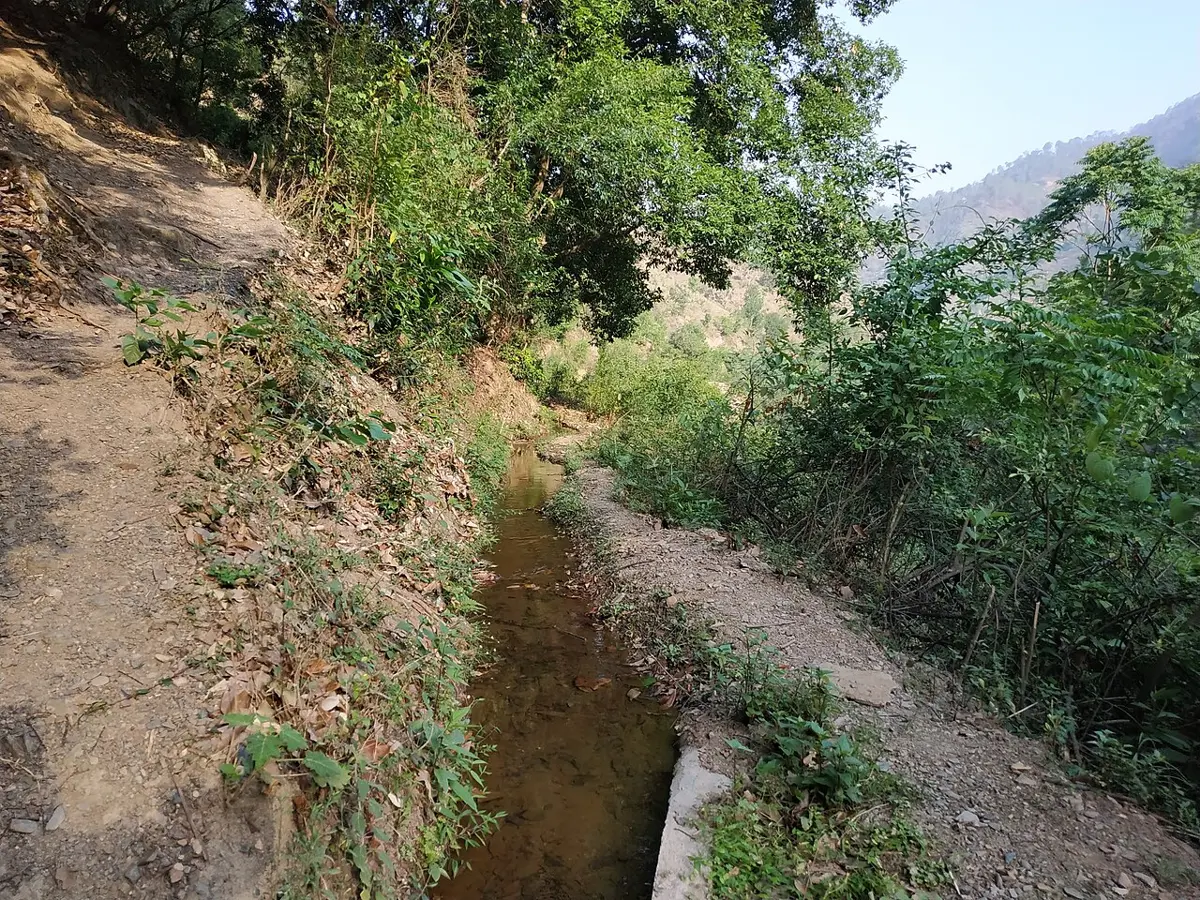
The forests came back the same way. In 1978 the government began handing forests back to village bodies, and the Forest Act of 1993 let groups of local users, वन उपभोक्ता समूह, take over patches of the national forest as community forests, सामुदायिक वन. Today the Forest Act 2076 sets the terms. A group of users registers itself and draws up a work plan, and the Division Forest Office hands the forest over to them (section 18). The group then decides how much may be cut and when, sets its own prices and sells what it cuts. It may fine a member who breaks the plan (section 21). At least a quarter of what it earns must go back into the forest, and at least half of the rest into fighting poverty, giving women a stronger hand and starting enterprises (section 22). The forest remains the nation’s: if a group breaks its plan, the state can take it back (section 19). By mid-March 2026 there were, by the government’s Economic Survey, 23,162 community forest user groups, managing about 2.5 million hectares.
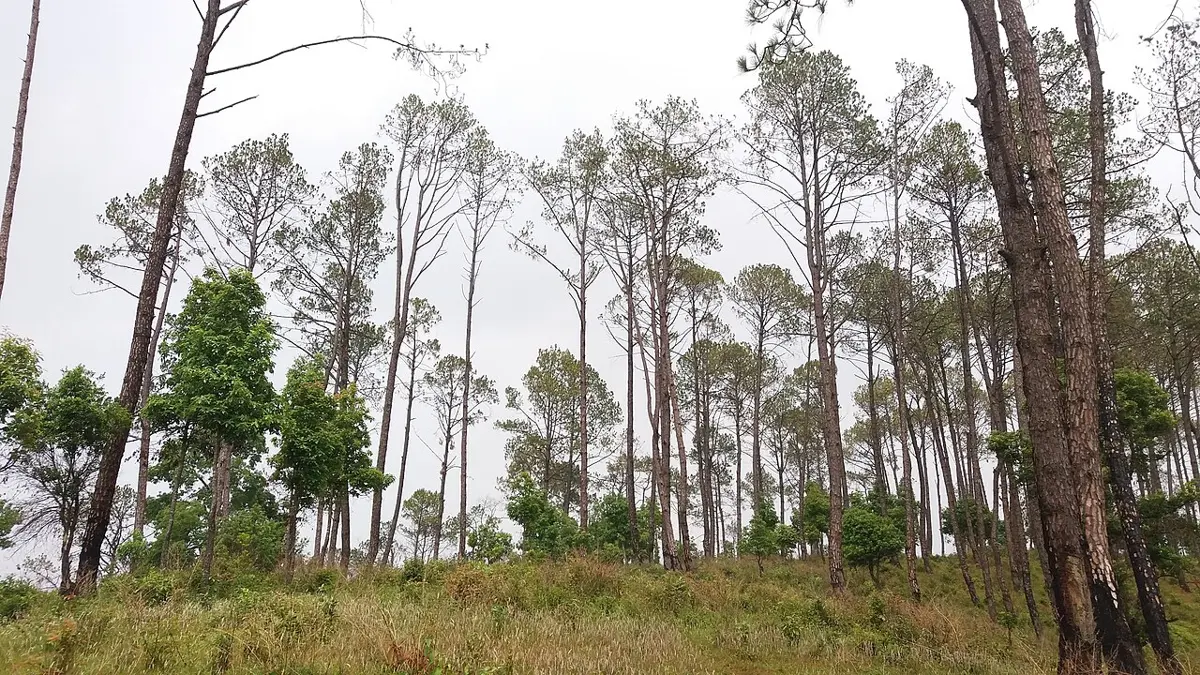
Whether it worked is harder to measure. Forest cover has grown, by the government’s figures, from about 40% of the land in the 1990s to about 46% in 2024 (counting shrubland), though not all of that is the community forests’ doing. A study in 2019 that compared small areas across Nepal, with community forests and without, found that between 2000 and 2012 community forests, on average, cut the loss of forest by about 37% compared with similar places without them, and cut poverty a little too, about 4%. They worked best where they were larger and older, and less well in the poorest places. But a forest open to all, which Hardin thought could only be ruined, has turned out to be something its users can save.
Hardin gave ground, in his way. Thirty years after his essay he wrote that his “weightiest mistake” had been to leave out one word: he should have written about the tragedy of the unmanaged commons. A managed commons, he went on, meant either socialism or private enterprise: “Either one may work; either one may fail.” He still saw only two ways to manage one. Ostrom had found a third.
When one side knows more
Shared things are one way a market can let people down. Economists call every such case a market failure, a market left to itself making too much of some things or too little of others. Chapter 11 showed one, a seller with too much power, and Chapter 25 another, the cost that falls on people outside the deal. There is one more, of a different kind: what happens when one side of a deal knows much more than the other.
In 1970 the American economist George Akerlof wrote a short paper about used cars. A car that turns out to be faulty is called a lemon in America, and the seller knows whether his car is one, while the buyer doesn’t. Buyers know that, so they will pay only the price of an average car. At that price the owners of good cars won’t sell, so the cars left for sale are worse than average, so buyers offer less again. At the end, Akerlof showed, only lemons may be left, or the market may disappear altogether, though there were good cars to sell and buyers who would have paid for them.
Anyone who has bought a second-hand motorbike in Nepal knows the problem. The seller knows whether it has been in an accident and how hard it has been ridden; the buyer sees only that it is clean. So buyers bring a mechanic, ask around for the seller’s reputation, and pay more at a shop that gives a guarantee. Akerlof saw these as the market’s own answers. A guarantee, a well-known brand, a shop that will still be there next year: each lets the side that knows more prove it, by promising to pay if it was wrong. Michael Spence, who shared the Nobel Prize with Akerlof in 2001, added that people do the same with themselves. An employer can’t see how capable a young worker is, but a degree is costly to get, so having one says something.
Insurance has the problem from both sides. A family knows more about its own health than any insurer, so a scheme anyone may join tends to attract the people most likely to fall ill. Economists call this adverse selection. In 2017 joining Nepal’s national health insurance was voluntary, and a family of up to five paid Rs. 2,500 a year. A study in Ilam district that year found that households with someone chronically ill were clearly more likely to have joined, which, the authors wrote, points to the possibility of adverse selection. Insurers answer by offering a choice: a lower premium for those who agree to pay more of any claim themselves, a choice that people who expect to claim seldom are glad to take. There is a second problem too. Once someone is insured, they may take a little less care, since the cost of a mistake now falls on others. That is called moral hazard, the same trouble a landowner has with a tenant whose work he can’t watch.
None of these problems has a single cure. A forest needs a rule that the users keep, a streetlight needs a way of making everyone pay their share, and a market with a hidden lemon needs a way for the truth to come out. Hardin was right that people left alone will often wear down a thing they share. Ostrom was right that they are seldom left alone: they talk, make rules, watch each other and fine the ones who cheat, and Nepal’s farmers and forest users have shown it as well as anyone. The question for any shared thing is not whether people are selfish, but whether the rules around it let them do better together than each could alone.
Found a mistake? Please tell us.