
In the year that ended in mid-July 2026, Nepal sold Rs. 315 billion of goods to the rest of the world. That was everything: the cardamom, the noodles, the jute, the carpets, the oil. In the same year, Nepalis working abroad sent home Rs. 2,363 billion, about seven and a half times as much. It was more than the government spent. It was more than the whole country paid for all the goods it bought from abroad.
Money sent home like this is called a remittance, विप्रेषण. That year the government approved about 2,170 people a day for work abroad, some leaving for the first time and some renewing, and about Rs. 6.5 billion arrived every day. Not much else in Nepal’s economy works so steadily, or rests on so many separate decisions, each made by one family.
Why they go, and what it does
People leave for a wage. There isn’t enough paid work at home: in 2022/23 more than one young person in five who wanted a job couldn’t find one, and about two in three people in wage work were paid by the day, for an average of 72 days in the year. On average a worker earns about three times as much abroad, and employers in the Gulf and Malaysia keep hiring. So a young man borrows to pay an agent, goes for two years, and sends money home every month.
The money feeds the family first, then pays off the loan, then goes to school fees and doctors. Added up across the country, that is a big reason poverty has fallen, and it pays for the country’s imports too.
What it hasn’t done is turn into many jobs. Most of it is spent, not invested, and a lot of what it buys comes from abroad. So the reason he left is often still there when he comes back.
Those are the steps: few wages at home, about three times the pay abroad, a loan to get there, money home every month. It lifts families. On its own, it hasn’t built what would let them stay.
This is new. In 2000 remittances came to about 2% of GDP, and in 2025 to about 32%. Few countries depend on them so heavily, and in South Asia none comes close. The census of 2021 counted 2.19 million people away, 7.5% of the population, with at least one person gone from nearly one household in four. Many think that count is low. More than one man in four between 15 and 34 was abroad. Over 80% of those away were men, though the share of women had risen from 12% to 18% in ten years. For many, a job abroad was the first job they ever had.
Going costs money, and that decides who goes where. The poorest usually cross to India, which is cheap and pays least. Families in the middle send someone to the Gulf or Malaysia. Japan, Korea, Australia and the West cost the most and pay the most, and mostly the better-off get there. In 2025/26 the most approvals went for the United Arab Emirates, then Malaysia, Qatar and Saudi Arabia, with Romania a long way behind.
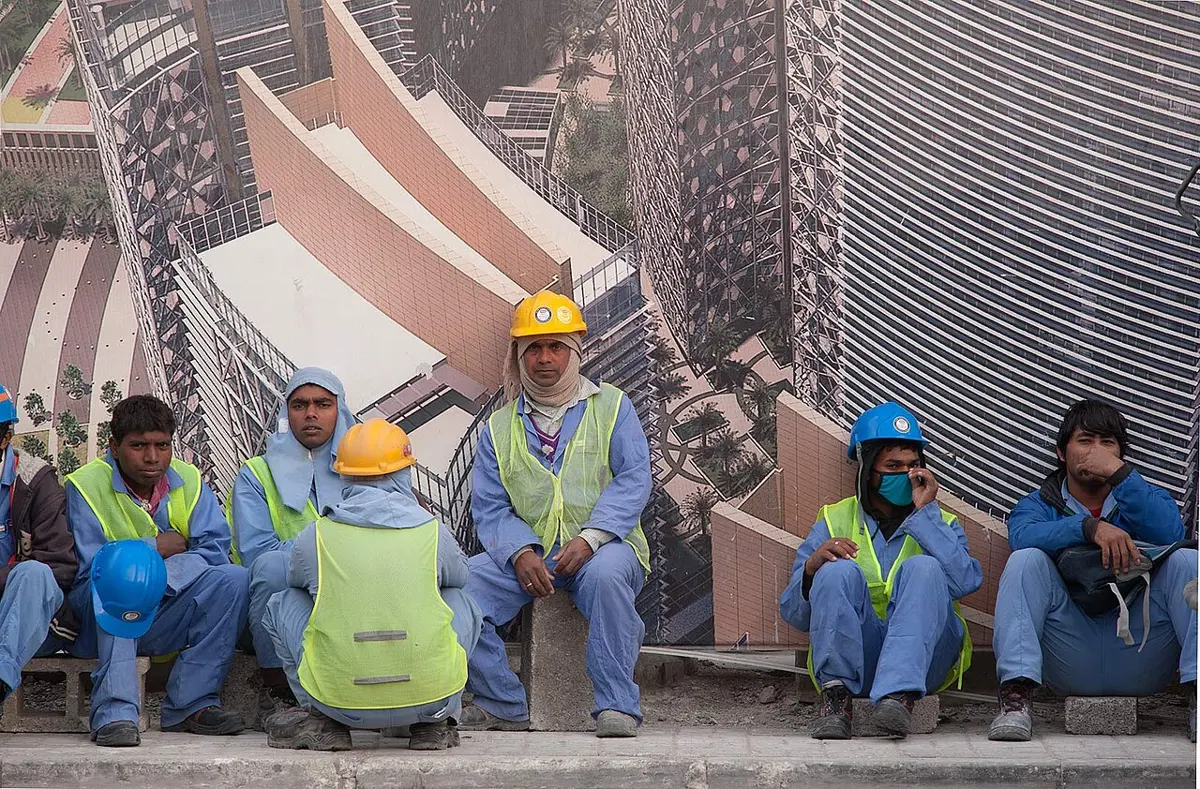
Aman’s sums
Aman is the brother of Anshu, who runs the tea shop in this book. Both are made up. His bill and his pay aren’t: they’re the middle of what real workers reported.
Aman wants to go to Qatar. On paper this should cost him almost nothing. Since 2015 Nepal’s “free visa, free ticket” rule has let agents charge Rs. 10,000 at most for the Gulf and Malaysia. In a national survey of returned workers, about a third, counting every destination, did say they had paid nothing. But for those who went to Qatar the middle cost was Rs. 215,000, so that’s Aman’s bill.
He doesn’t have it. Most workers don’t, and borrow, often from moneylenders: in one survey the loans cost about 27% a year on average, and moneylenders’ more. The middle pay in a first job in Qatar, benefits included, was about Rs. 50,000 a month. By law his employer must house and feed him or pay him extra to cover both. Say he keeps Rs. 10,000 and sends Rs. 40,000 home.
The first six months go to the lender. They pay back Rs. 215,000 and about Rs. 17,000 of interest, and only then does he start earning for his family. Over two years he sends Rs. 960,000 and about Rs. 728,000 of it stays with them. At home, on a third of that pay, he’d have earned about Rs. 400,000 in the same time, and paid for his own food and bed out of it. That’s why the sum so often comes out the same way, and why many who know the risks still go.
The risks are real, and they aren’t in the sum. If Aman could send only half as much, the loan would take 13 months, not six. Some workers find the job isn’t the one they were promised, or the contract is false, or their passport has been taken and held. More than 1,000 Nepali workers die abroad every year: the government’s board counted 1,517 in 2024/25, and it counts only those who went with valid permits. At home, the women left behind can end up with more of the farm and the unpaid family work, and many children spend years of their childhood with a parent away, which can be hard on them. Many families know all this, and weigh it against the rest.
What the money does
Most of it goes to daily life: seven workers in ten send money mainly for that, and almost one in five mainly to pay off loans. It’s easy to read that as a waste. It isn’t, for a family that was short of rice.
In 1995/96, about 42% of Nepalis lived below the poverty line. By 2011 it was 25%, and in 2022/23 it was 20%, measured against a line set higher than before. Remittances weren’t the only cause, but they’re counted the biggest: one count puts more than 30% of the fall from 2011 to 2023 down to them directly. For the decade before, migration to the Gulf and Malaysia alone has been credited with 40%.
The effects reach past food. Children in families with someone in the Gulf or Malaysia are more likely to stay in school, and in the years up to 2011 nearly all the gain was among girls. Even neighbors with nobody abroad can gain. When many men leave a place, fewer are left to hire, and pay goes up: daily wages are about 20% higher where many have left than where few have. For women the gap is wider still.
For the country, the money does a second job. Aman’s riyals reach a bank, which pays his family in rupees and keeps the foreign money. His family buys rice, a phone, some cooking gas. Much of that came from abroad, and the shop’s supplier pays for it with that same foreign money. That’s how a country can buy more than six times what it sells and still not run out. In 2025/26 the gap in goods was Rs. 1,781 billion, and remittances filled it with plenty left over. The foreign money in Nepal’s banks reached enough to pay for 23 months of goods from abroad.
That year’s jump is a small puzzle of its own. Remittances rose 37% while first-time approvals fell, from about 506,000 to about 406,000. Fewer people left, and much more money came. Part of the answer is that the rupee weakened through the year, from about 137 to about 154 to the dollar, so each dollar counted for more. In dollars, the rise was 28%. Part may be more workers in richer countries, and part may be money that used to come through हुन्डी, informal private transfers that no record counts, now coming through banks. If so, some of it isn’t new money, only newly seen. Nobody knows how much.
What the money doesn’t do
Making things has become a smaller part of Nepal’s economy. Manufacturing fell from about 7.3% of the economy during the conflict years to about 5.7% in the years up to 2023, and sales of goods and services abroad have stayed near 7%. That’s the worry, and here economists disagree.
One side says the money itself is part of the cause. The idea has a Dutch name. After the Netherlands found a huge gas field in 1959, its factories struggled, and in 1977 The Economist called this the Dutch disease. Nepal’s version would run like this. Families spend, so anything that can’t be shipped in, such as land, rent, a builder’s day, gets dearer. A factory has to pay those higher prices. But its rupee is pegged to India’s, and the Indian goods it competes with don’t get dearer the same way. So a Nepali factory falls behind without having done anything wrong. The case has numbers behind it. Nepal’s prices have risen about 35% against its trading partners’ since 1993, remittances could account for about half of that, and the rise has cost about 10% of goods exports.
The other side says the factories were never held back by that. Nepal has no sea and hard roads, and taxes on imported materials have cost it about as much in exports as the prices have. One small study of Nepal’s exports from 1994 to 2024 found no clear harm from remittances. In this view the trouble isn’t that the money hurts exporters. It’s that it is spent and doesn’t turn into anything that could export. And the arrow may point the other way: people left because the factories weren’t there.
Both sides agree on what they see and differ on which came first. A fair test would need a second Nepal with the same mountains and no Gulf, and nobody has one.
There’s a second disagreement, about whether this can last. To some it’s a trap, because a country’s income rests on decisions made elsewhere. About 60% of Nepali migrant workers are in the Gulf. Qatar was taking up to 30,000 foreign workers a month before the 2022 World Cup and more recently 2,000 to 3,000, and when war came to West Asia in 2026 Nepal stopped approvals there for seven weeks. To others it’s a bridge, and they point to how well it has held up. Remittances barely dipped in 2020, when the whole world shut down, and a family that gets through a bad year has something to build on the next. Nobody knows yet which it will turn out to be.
Coming back
Most of this leaving is for a time. From the Gulf and Malaysia people have to return, because those countries offer no way to settle. Contracts run about two years, but workers usually stay at least four. In one survey of 2,000 returned workers, four in ten had gone more than once, and pay tends to rise about 12% with each renewal, so it makes sense to keep at it.
Home is harder than it sounds. In the Labour Force Survey of 2017/18, 14% of returnees were out of work and looking, and another 42% weren’t looking at all. Some of them may simply have been resting after years of work; the survey can’t say. Of those with jobs, over three in four were in informal work, and only about 15% of returnees were doing the kind of work they’d done abroad. What a person learned to do in Doha often isn’t what anyone is hiring for at home. Returnees also tend to earn less than people who never left, at least at first.
So Aman lands in Kathmandu with some savings, a paid-off loan and two years’ experience, and the wage at home is still about a third of the wage abroad. Whether he goes again is his sum to do. What Nepal might do about that sum is a question this book comes back to at the end. First there’s the other half of the story: how all those riyals and dollars turn into rupees, and what that does to a country that lives next to India.
Found a mistake? Please tell us.