
In December 2016 a software company paid $27.0 billion for a website. It was a professional network, the kind where people post where they have worked and what they can do, and where employers go looking for them. When the buyer came to put the purchase into its books, it couldn’t simply write “one website, $27.0 billion”. The rules for a purchase like this make the buyer say what the money bought, piece by piece, at what each piece was worth on the day.
Some of it was easy. The website came with cash in the bank and money lent out for short periods, with offices and computers, and with debts and taxes it owed; all together, what it had less what it owed came to about $2.3 billion. Then came things that had names and could be valued, though no bill had ever been paid for most of them: the relationships with the businesses that paid for the site’s services, put at $3.6 billion; the site’s name and its other trade names, $2.1 billion; its technology and a few contracts, another $2.1 billion. After all that, $16.8 billion of the price was still left over, attached to nothing in particular. The buyer’s accountants wrote it down as goodwill.
So nearly two-thirds of the price was paid for something the accounts can describe only as what was left over. The website hadn’t changed overnight. Its users, its name and its engineers were the same the day after the sale as the day before. What changed was that someone had paid for them, and a price paid is the thing accounts know how to count.
That is the question this last chapter is about: what accounts leave out, and why.
Old prices
The first thing the books leave out is the present. Everything goes in at what it cost on the day it was bought, and stays there, as Chapter 5 explained. The rule has a lean to it, though, which is worth seeing on its own.
At the stock count at the end of the shop’s second year, Anisha found twelve tins of a shade the maker no longer made, counted at Rs. 900 each and now worth Rs. 450 at best, and the difference came off the books at once: Rs. 5,400 less stock, Rs. 5,400 less profit. A fall in value is counted the moment it is seen. A rise isn’t. In the third year the white base Yasmin buys went from Rs. 540 a tin to Rs. 560 and then Rs. 580. A tin bought at 540 and still on the rack is worth more now, since replacing it would cost more, but it stays in the books at 540 until it is sold, and only then does the gain show, as a bigger profit on that sale. Caution has the last word: a loss is taken when it is likely, a gain only when it is earned.
Where the standards do let a business count a rise, on land and buildings kept at a valuer’s figure, they keep the rise out of the year’s profit. Under the international standard for property and equipment, a rise in value doesn’t go into the year’s profit, unless it only makes up for an earlier fall. It goes straight into the owners’ side of the balance sheet, into a reserve called the revaluation surplus. A fall goes the other way, into the year’s profit or loss, unless it only undoes an earlier rise. A valuer’s opinion can make the owners look richer, but it can’t make the year look more profitable.
The result is a balance sheet that is a list of prices paid on many different days, added up as if a rupee spent on shelves in the first year were the same as a rupee spent on paint in the third. Usually that does little harm in a shop, where most of what it owns is stock that turns over every few weeks. In a firm that has owned the same land for forty years, it can make the sum almost meaningless. The figures are all true. They just don’t answer the question an owner most wants to ask, which is what the business is worth now.
A good name and a good team
The website’s goodwill was counted because it was bought. If the same site had simply grown its users, its name and its loyal customers by itself, year after year, none of it would have been in its own books. The international standard on such things is blunt: “Internally generated goodwill shall not be recognised as an asset.” It explains why in a sentence. Goodwill a business builds for itself is not a separate thing it controls and can measure at a cost; nobody can say which of the year’s expenses built the good name and which merely kept the shop running. The same goes for a name, a list of customers or a newspaper’s title built at home. Their cost can’t be told apart from the cost of running the business, so they stay out.
When a business is bought, the difficulty goes away, because now there is a price. The buyer pays a figure for the whole business, values everything in it that can be named and separated, and calls the rest goodwill. The international standard on buying businesses defines it as the benefits that come from the other things bought that can’t be named one by one and counted on their own. It is a remainder, a measured gap, and the accounts then watch it. Each year the buyer must check whether it is still worth what was paid, and write it down when it isn’t. The same software company once wrote off goodwill of $5.1 billion on a phone business it had bought, which had turned out to be worth much less.
Yasmin’s shop has goodwill too. There is the crowd that waits at the bus stop outside her door, which she doesn’t control and couldn’t sell. There are the customers who come back because she gets the color right. And there was Gaurav, who before he was her partner bought his paint from her all year and sent her half his customers. When he joined, the two of them took the shop at its book figures, and Yasmin didn’t ask him to pay anything for its good name. If she had, and he had paid, that price would have been in the books. Since nobody paid, the shop’s balance sheet shows its shelves and tins and its debts, and nothing at all for the reason people walk in.
A skilled worker is left out for a similar reason. Yasmin’s helper, who knows every customer by name and which shade they chose for the front of the house, appears in the books only as wages, an expense each month. A tinting machine bought for the mixing corner is an asset, written down a little each year as it is used. A person who knows the trade isn’t. The standard says so in as many words: a business “usually has insufficient control” over what it gets from “a team of skilled staff and from training” for them to count as an asset. A machine stays where it is bolted. A person can leave on Friday for a better offer, and the business can’t stop them. Training is the same: what Yasmin spends teaching the helper to mix colors is an expense in the year she spends it, even though it pays her back for years.
Even a buyer can’t count a team separately. When a business is bought with its people, the standard says, the value of the trained workers who come with it goes into the goodwill. It is part of the remainder, the part nobody can name.
Measured another way, people are most of what anyone owns. The World Bank, which tries to add up the wealth of whole countries, counts the people of a country at what they can be expected to earn over their working lives. Counted like that, people make up about 64 percent of all the world’s wealth in its latest count, more than its land, forests, minerals, buildings and machines put together. None of it is on a company’s balance sheet, and the rules say it shouldn’t be.
The river
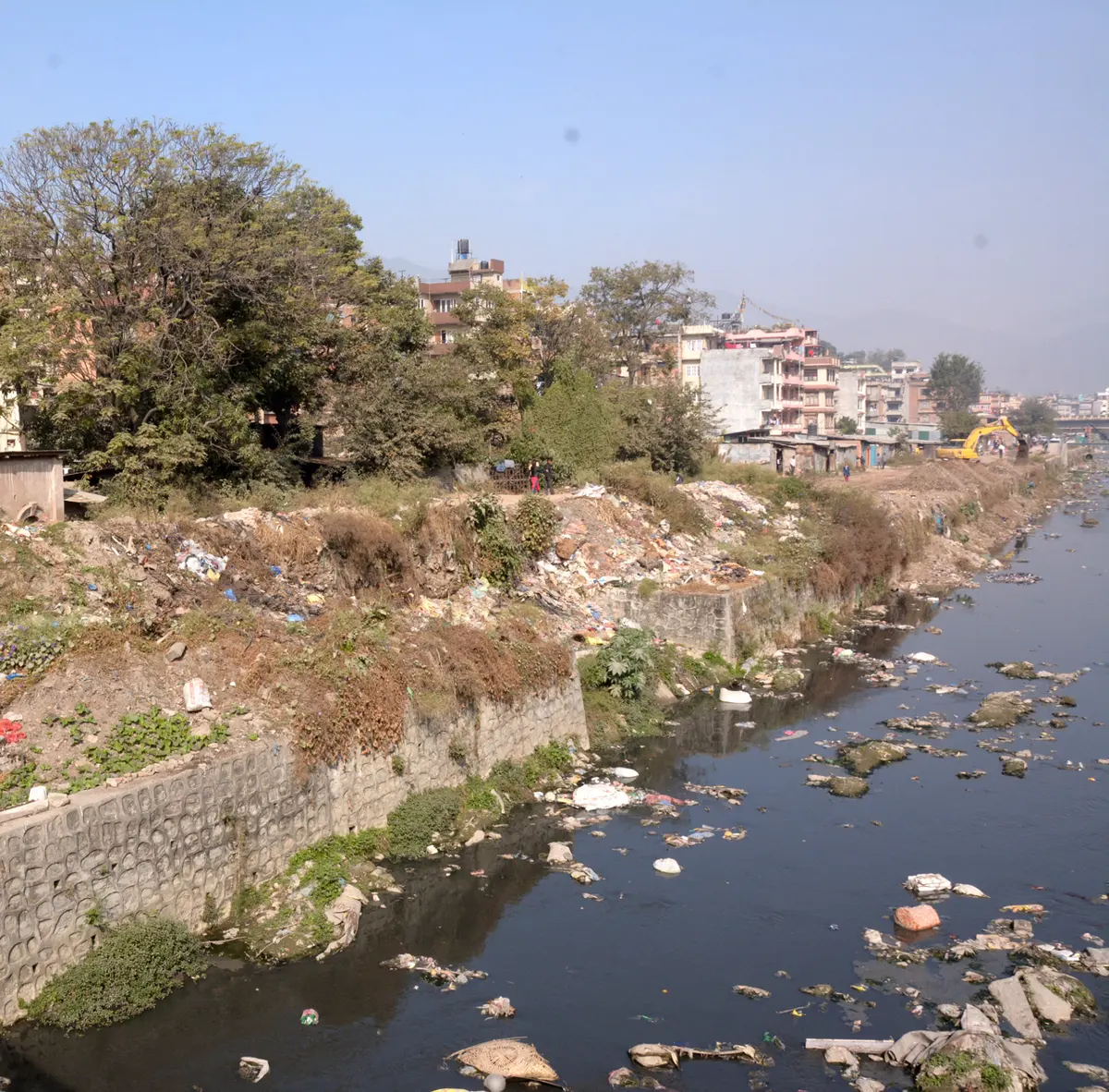
Suppose a dye works upstream lets its waste run into a river. Its accounts record what it paid for the dye, the water, the wages and the electricity. They record nothing for the fish that die, the farmers downstream whose fields now flood with bad water, or the families who can no longer wash in it. Those are real costs, but the dye works doesn’t pay them, and accounts record what a business pays. Why such costs fall on other people, and what a country can do about it, is a question for economists, and Economics, for the Curious takes it up in Costs Nobody Pays. The accountant’s part is narrower: when does the damage become the business’s own?
The answer in the international standard on provisions is that it becomes the business’s when the business is bound to pay for it. A fine for breaking the law, or the cost of a clean-up the law already demands, is a liability, and has to be shown. But the standard is frank that causing damage is not enough on its own: there may be no obligation to put it right. It becomes one when a new law requires the damage to be repaired, or when the business publicly accepts that it is responsible. Until then the river’s loss is in nobody’s books at all.
Countries have tried to keep the books the businesses don’t. The United Nations’ statistics commission adopted a system for it, the System of Environmental-Economic Accounting, as the first international standard of its kind, and later added accounts for whole ecosystems: forests, wetlands, rivers and what they give people. It doesn’t value the river for anyone’s balance sheet. It counts what a country has, in tonnes and hectares and cubic meters and sometimes in money, and how it changes, in the same orderly way national accounts count what the economy produces. More than thirty countries use the ecosystem accounts in making policy.
Nepal has begun. Its statistics office, called the Central Bureau of Statistics until it became the National Statistics Office, has published accounts of the solid waste the country’s municipalities produce, made by the UN system’s rules, covering the towns but not yet the rural municipalities. An account of the country’s forests was planned next. We found none yet for its rivers. The office’s own list of difficulties is short and familiar: too little priority, too few trained people, offices that don’t work together well, and data that is missing or poor.
Businesses are being asked to say more, too. The foundation behind the international accounting standards set up a second board beside the one that writes them, the International Sustainability Standards Board, whose first two standards ask companies to report, beside their accounts, the sustainability risks and opportunities, climate above all, that could affect their cash, their borrowing or what their money costs them. Nepal’s Accounting Standards Board has put out drafts of the same two standards, with the date they take effect left blank. And Nepal Rastra Bank now tells the country’s banks to look at a borrower’s environmental and social risks before they lend: a factory that pours waste into a river is a risk to the bank, because it may be fined, shut or sued.
Look closely and each of these counts the risk to the company, or to the bank, not the harm to the river. A factory that pollutes and is never likely to be fined may have little to report. That isn’t a flaw in the drafting. Accounts are written for the people who put money into a business, and they report what matters to that money. The river is a different question, and the books of a dye works were never meant to answer it.
So the limits of accounts come down to three. They keep old prices. They can count only what fits their definitions, so a good name, a loyal customer and a skilled team stay out unless someone buys them. And they leave out everything that isn’t money: the river, the town, how the workers are treated, what the shop means to the street.
The day Anisha signed
Early in the shop’s third year, with the mixing corner already busy, Anisha brought her report on the second year to the counter. It was addressed to the two partners. Under the heading Opinion, it said that the accounts presented fairly, in all material respects, the shop’s position and its year. Yasmin read it twice. Then she put it in the file with everything else.
The file held the whole of it. There was the first morning, when the shop had Rs. 500,000 in cash, Rs. 300,000 of it her own and Rs. 200,000 the bank’s, and she wrote both down and the two sides were equal. There was the first week, and its profit of Rs. 3,000. There was the evening in कात्तिक when the cash book said one thing and the bank another, Rs. 44,850 apart, and she found where every rupee of the difference had gone. There was Abinash, whose cheque came back and whose Rs. 15,600 she finally wrote off. There was the end of the first year, a profit of Rs. 181,000 and only Rs. 63,200 in cash, which taught her the difference between earning money and having it. There was Gaurav’s Rs. 240,000 and the agreement on how to share. And there was Anisha herself, counting tins on असार 31, finding the twelve of a shade nobody made any more, and finding among a sample of forty-one vouchers one bill of Rs. 3,780 entered as Rs. 3,870, out by Rs. 90.
What did the two columns do for her? They remembered, so that she didn’t have to. They let her check, so that a gap in the bank or a missing tin was found the same month and not a year later. They helped her decide: whether to sell on credit, when to order, whether a mixing corner would pay. And they showed someone else, the bank, Gaurav, Anisha, what had happened, in a form a stranger could test. They are the four jobs accounts have done since the first clay tablets, and they were done every day in a paint shop by one person at a counter.
The file didn’t hold the crowd at the bus stop. It didn’t hold the helper who knew which shade the doctor’s family had chosen, or the painters Gaurav sent through the door, or the trust that let Sujan deliver on credit. It couldn’t say whether to give the next stranger a month to pay. It couldn’t value the shop’s name, and it would have been wrong to try. Every one of those mattered, and Yasmin knew them better than any account could.
That is the division the two columns have always made. Every page of the books asks the question Yasmin first asked on the first morning: what changed, and what changed with it? Accounts answer it exactly, in money, and in the five centuries since Pacioli wrote down the method of Venice, nothing has replaced it. The rest is left to the person behind the counter. The books don’t tell her what to do. They tell her, to the rupee, where she stands, so that what she does next is a choice and not a guess.
Accounts are built from prices paid, so they keep what things cost rather than what they are worth, count a fall in value before a rise, and can count a good name or a loyal customer only when someone buys them, as goodwill. A skilled worker, the people a country has, and a river are all left out, for reasons that are sound for the people who put money into a business, and countries and regulators are now building other accounts beside them. What remains is what accounts were always for: to say exactly what happened in money, so that the judgment they can’t make is made with open eyes.
Found a mistake? Please tell us.