
In 1875 a company opened horse-drawn trams in Hull, a port town in the north of England. Over the years more than £100,000 was put into it. In all that time it set aside less than £4,000 for the wearing out of what that money had bought. Even that was eaten up by losses, and in 1889 the company was wound up. The town bought the tramway in the end for £12,500, plus something for the horses and cars. The shareholders got nothing back, and the lenders less than they were owed. The historian who told the story called it a hard case, but said that setting so little aside for wear was probably quite typical of its time.
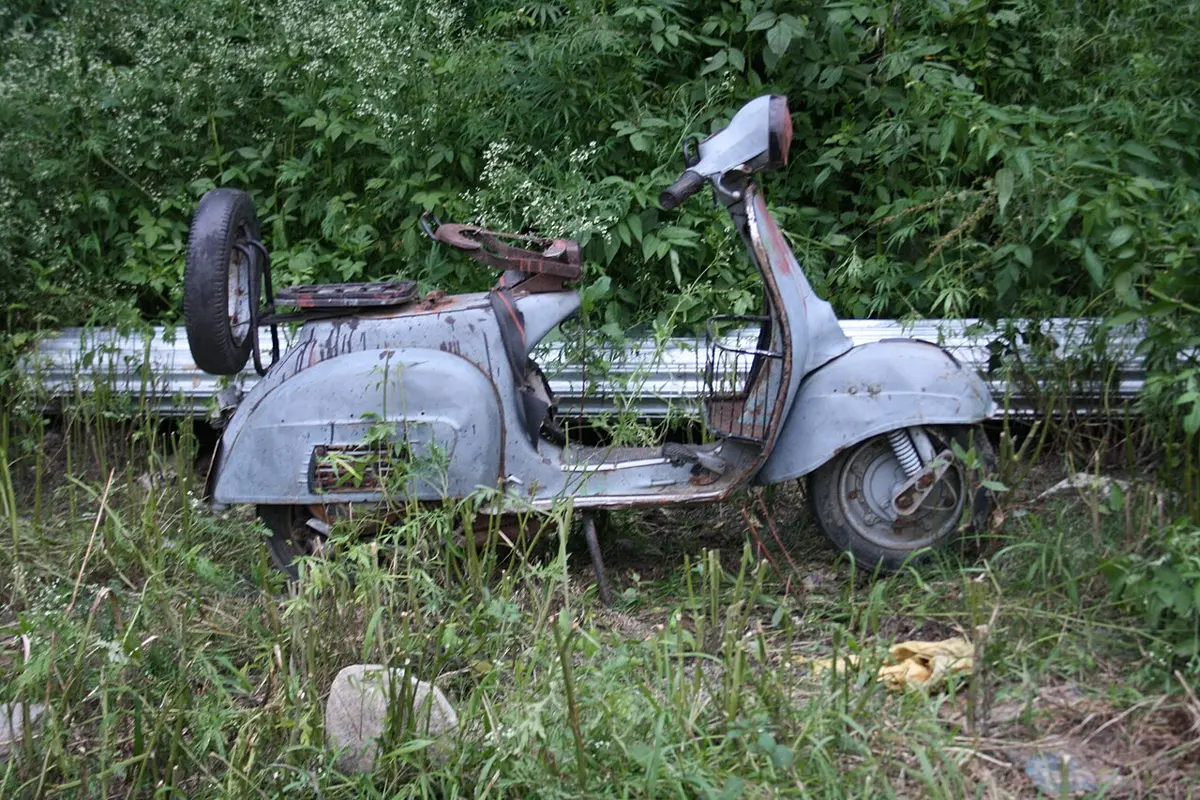
Yasmin’s delivery scooter is a smaller version of the same problem. She paid Rs. 240,000 for it on मङ्सिर 10. It will carry paint to building sites for years, and then it will be sold for much less, or scrapped. Somewhere in between, Rs. 240,000 of value is used up. The question is how much of it to count against each year’s profit.
Spreading the cost
The answer accountants give is depreciation, मूल्यह्रास: a fixed asset’s cost, less whatever it is expected to fetch at the end, spread as a cost over the years that use it. It isn’t an attempt to say what the scooter would sell for on any given day. A dealer might have offered Rs. 170,000 for it the day after she bought it, and nobody expects her to count Rs. 70,000 of cost on the first morning. The shop bought the scooter to use, not to sell, so the books follow its use. Depreciation is the share of the cost that each year’s use takes up, so that each year’s profit carries its own share and no more.
To work out that share Yasmin needs three numbers. The first is the cost, Rs. 240,000 with its registration and number plate. The second is how long the shop expects to use it, its useful life, उपयोगी आयु. Say five years, which is a guess about how hard it will be driven and how soon a newer model will make it look old. The third is what it should fetch at the end of those five years, its residual value, अवशेष मूल्य, the scrap or resale value. Say Rs. 60,000. What is left, Rs. 180,000, is the amount to spread.
The simplest way to spread it is evenly. Rs. 180,000 over five years is Rs. 36,000 a year:
This is the straight line method, सिधा रेखा विधि, called that because the scooter’s value in the books falls by the same amount every year and draws a straight line on a graph. It is also called the fixed installment method or the original cost method, since every year’s charge is worked out from the original cost. Depreciation begins when an asset is ready to be used. Yasmin’s first year ran from साउन, and the scooter arrived on मङ्सिर 10, so that year it was in use for most of eight months, मङ्सिर to असार. Counting the month it arrived as a whole one, which keeps the sums simple, the shop charges for eight months, 36,000 × 8 ÷ 12 = Rs. 24,000. After that come four full years of Rs. 36,000, and the last four months, Rs. 12,000, bring the scooter down to Rs. 60,000 just as its five years end.
What the books show for the scooter at any moment, its cost less all the depreciation charged so far, is its book value, किताबी मूल्य. It is not a price. At the end of the first year the book value is Rs. 216,000, while a dealer might offer more or less. The figure is only the part of the cost not yet counted as an expense.
The straight line also says something about how the scooter is used: as much in its fifth year as in its first. The racks the shop bought in साउन, Rs. 70,000, fit that picture well. They hold paint in the same way every year until they wobble. Over ten years, with nothing to be had for them at the end, they come to Rs. 7,000 a year.
Why do things lose value at all? Wear and tear is the plainest: tyres, brakes and engines wear with every kilometer. Time alone wears some things, rusting a roof or aging a battery whether it is used or not, and an accident or a flood can do in a day what years would. A machine can also become obsolete, अप्रचलित, still working but outdone by newer ones that are cheaper to run. Some assets are used up, as a quarry is emptied or a mine runs out, and that is called depletion. Some have a life fixed by law or by a contract, a lease that ends in ten years, or a rule that keeps vehicles off the road past a certain age. And a machine can lose value because nobody wants what it makes any more.
How much to charge in a year depends on the asset’s cost, its expected life and its residual value, which are the three numbers above, and on how it is used and looked after, how quickly the technology moves, the weather it works in, and the business’s own policy. A shop should also look again at the life and the residual value at the end of every year. If the scooter is clearly going to last seven years and not five, the charge changes from then on.
The reasons for doing all this are mostly about honesty. Without depreciation, the scooter would cost nothing in any year it worked, so Yasmin’s profit would be too high every year, and her balance sheet would go on showing Rs. 240,000 for a scooter with fifty thousand kilometers on it. Counting the whole price in the year she bought it would make that one year look poor and the rest too good. With it, the profit is fairer and the assets are shown nearer what they are worth to the shop. Profit paid out to the owner is profit that can’t buy the next scooter, so a fair charge also keeps money in the business for the day the old scooter has to be replaced. The Hull tramway company kept back almost nothing, and when it failed there was nothing put by. And because depreciation is an expense, it lowers the profit the tax is worked out on, a point the law has its own view of, and the last part of this chapter comes back to it.
A falling balance
A scooter, though, doesn’t lose its value evenly. It loses most in its first years, and a five-year-old scooter loses less in a year than a new one. It also needs more repairs as it gets older. Charging more depreciation early and less later lets the total of depreciation and repairs stay more even from year to year.
The diminishing balance method, घट्दो मौज्दात विधि, does that. Instead of a fixed amount each year, it takes a fixed percentage of whatever book value is left. Suppose Yasmin chooses 25 percent. In the first year, for eight months, the charge is 240,000 × 25% × 8 ÷ 12 = Rs. 40,000, leaving Rs. 200,000. The next year 25 percent of Rs. 200,000 is Rs. 50,000, leaving Rs. 150,000. Then Rs. 37,500, then Rs. 28,125, each charge smaller than the one before because it is taken from a smaller balance. It is also called the reducing balance method, or the written down value method, after the book value it works from.
| End of the shop’s year | Straight line: charge | Book value | Falling balance (25%): charge | Book value |
|---|---|---|---|---|
| Year 1 (8 months) | 24,000 | 216,000 | 40,000 | 200,000 |
| Year 2 | 36,000 | 180,000 | 50,000 | 150,000 |
| Year 3 | 36,000 | 144,000 | 37,500 | 112,500 |
| Year 4 | 36,000 | 108,000 | 28,125 | 84,375 |
| Year 5 | 36,000 | 72,000 | 21,094 | 63,281 |
| Year 6 (4 months) | 12,000 | 60,000 | 5,273 | 58,008 |
Because the method takes a share of what is left, the balance never reaches zero, which suits an asset that will always fetch something. To make the balance land on the residual value after a given number of years, the rate has to be worked out:
where n is the life in years. For the scooter, 60,000 ÷ 240,000 is a quarter, and the fifth root of a quarter is about 0.758, so the rate is about 24.2 percent. Yasmin’s 25 percent is a round number near it, and it brings the scooter a little under Rs. 60,000 at the end. The same multiplying, a fixed percentage taken off year after year, is what Math, Explained calls depreciation in Grade 10, where a car loses value at a given rate.
Neither method is the true one. They are two rules for spreading the same Rs. 180,000. The international standard asks only that the method fit the way the asset’s benefits are used up, and that it be kept from year to year unless that way changes. A shop that changed its method whenever a year looked poor could move profit between years at will, which is the consistency rule of Chapter 5 at work. There are other methods too, one charging by the hours a machine runs or the kilometers a scooter travels, so that an idle month costs nothing. Another is revaluation, in which the asset is valued again at the end of each year and the fall in its value is that year’s depreciation.
In the books
At the end of the year, the depreciation goes into the journal like any other entry. The way Nepal’s school books teach takes it straight off the asset’s account:
| Date | Particulars | L.F. | Debit Rs. | Credit Rs. |
|---|---|---|---|---|
| Year’s end | Depreciation a/c Dr. | 24,000 | ||
| To Delivery scooter a/c | 24,000 | |||
| (Being depreciation on the delivery scooter for 8 months at Rs. 36,000 a year) | ||||
| Year’s end | Profit and loss a/c Dr. | 24,000 | ||
| To Depreciation a/c | 24,000 | |||
| (Being depreciation transferred to profit and loss account) |
The first entry is the same rule as ever: an expense, which lowers the owner’s capital, is a debit, and the asset’s account is credited because the asset is now worth less in the books. The second closes the depreciation account into the year’s profit and loss account, where it sits among the expenses with the rent and the wages. The year’s accounts, and that account, get chapters of their own soon. No money moves in either entry. Depreciation is an expense that is never paid to anyone. The cash went out on मङ्सिर 10, and these entries only decide which years count it.
The scooter’s ledger account then begins the next year with a balance of Rs. 216,000. That is tidy, but it hides the cost. Someone reading the balance sheet can’t tell a Rs. 216,000 scooter bought this year from a Rs. 400,000 truck nearly worn out. So the other common way, the one IGCSE teaches and the one company accounts use, leaves the asset at its cost and collects the depreciation in a separate account, provision for depreciation, also called accumulated depreciation, in Nepali मूल्यह्रासका लागि व्यवस्था. The entry becomes “Depreciation a/c Dr. 24,000 / To Provision for depreciation a/c 24,000”, and the balance sheet shows both: the scooter at its cost of Rs. 240,000, less depreciation so far of Rs. 24,000, Rs. 216,000. The book value is the same either way. Only the showing differs.
A business with several fixed assets keeps a register of them, a list with each asset’s date of purchase, cost, method and rate, and its depreciation and book value year by year. If Yasmin buys a second scooter later, it gets its own line, depreciated from its own date. Taking the depreciation of one with the other’s dates is a mistake easy to make in a single account and hard to make in a register. Most shops keep it in a spreadsheet.
Selling, and changing course
Suppose that at the end of the third year, with deliveries growing, Yasmin sells the scooter for Rs. 130,000, meaning to buy a small pickup in the new year. By then the straight line has charged 24,000 + 36,000 + 36,000 = Rs. 96,000, so the scooter’s book value is Rs. 144,000. She gets Rs. 14,000 less than that. The entries take the scooter out of the books:
| Date | Particulars | L.F. | Debit Rs. | Credit Rs. |
|---|---|---|---|---|
| Year’s end | Bank a/c Dr. | 130,000 | ||
| To Delivery scooter a/c | 130,000 | |||
| (Being the delivery scooter sold, payment received by cheque) | ||||
| Year’s end | Profit and loss a/c Dr. | 14,000 | ||
| To Delivery scooter a/c | 14,000 | |||
| (Being loss on sale of the delivery scooter transferred) |
The scooter account, which stood at Rs. 144,000, is now empty. The Rs. 14,000 is a capital loss, shown in the year’s profit but apart from the shop’s trading. Had she sold for Rs. 150,000, the Rs. 6,000 over the book value would have been a gain, credited to profit and loss. IGCSE does the same work through a disposal account, which collects the asset’s cost, its accumulated depreciation and the price received, so that the gain or loss is the figure left over.
A loss on sale has a plain meaning. The depreciation charged was too little: the scooter wore out faster than the guess allowed, and Rs. 14,000 of cost that belonged to the three years of use turns up at the end in one lump. A gain means the charge was too much. Over the scooter’s life in the shop, the depreciation and the loss together come to exactly what it cost, less what it fetched: 96,000 + 14,000 = 110,000, and 240,000 − 130,000 = 110,000. The methods only decide which years carry it.
Sometimes a business decides that its method no longer fits, and changes it. There are two ways of making the change. Say that after two years Yasmin decides the falling balance at 25 percent suits the scooter better. Done prospectively, अग्रगामी, the change starts from where the books are: the book value of Rs. 180,000 is carried forward and the new rate applies from the third year, Rs. 45,000 that year. Done retrospectively, पश्चगामी, the books are worked out again as if the new method had been used from the start. The falling balance would have charged 40,000 + 50,000 = Rs. 90,000 in two years against the straight line’s Rs. 60,000, so a further Rs. 30,000 is charged at once to bring the book value down to Rs. 150,000, and the new method goes on from there. Today’s international standard, IAS 16, treats a change of method as a change in an estimate, so it asks for the first way, from now on, without going back over the past.
What the tax law allows
The tax office has its own idea of depreciation. As a sole trader, Yasmin pays income tax as an individual on her shop’s profit, unless her shop is small enough for one of the Act’s simpler taxes, a fixed sum or a share of her sales, where depreciation doesn’t come in. In working out a taxable profit, Nepal’s Income Tax Act 2058 (section 19 and its second schedule) doesn’t accept whatever life and residual value the shop chooses. It puts every depreciable asset into a class with a fixed rate, and depreciates each class together, as a pool, समूह, on a falling balance. In the Act as it stands after the Finance Act 2083, which didn’t change these rules, the classes are:
| Class | What goes in it | Rate a year |
|---|---|---|
| क | Buildings and similar permanent structures | 5% |
| ख | Computers, furniture, fixtures and office equipment | 25% |
| ग | Automobiles, buses and minibuses | 20% |
| घ | Construction and digging machinery, and anything not in another class | 15% |
| ङ | Things that can’t be touched, such as software or a license | spread over its useful life |
The rates are set by Parliament and can change; the Inland Revenue Department publishes the current Act. Some kinds of business, such as certain industries and projects, get a third more on the rate.
The Act doesn’t name scooters. Taking this one as an automobile, it goes into pool ग, and a pool counts what is added to it by when in the year it was bought. Something bought between the start of the year and the end of पुस adds its whole cost that year; between माघ and चैत, two thirds of it (the rest the next year); from वैशाख to the year’s end, one third. The scooter came in मङ्सिर, so the whole Rs. 240,000 joins the pool, and the first year’s tax depreciation is 20 percent of it, Rs. 48,000, for a scooter the shop used for eight months. The next year it is 20 percent of the Rs. 192,000 left, Rs. 38,400, and so on. The racks join pool ख, all Rs. 70,000 of them since साउन is early in the year, and they are depreciated at 25 percent, Rs. 17,500 in the first year against the accounts’ Rs. 7,000. When the pool’s balance falls below Rs. 2,000, the remainder is deducted all at once.
So in its first year the scooter costs Rs. 24,000 in Yasmin’s accounts and Rs. 48,000 in her tax return. The two figures answer different questions. The accounts try to say what the year’s use really cost. The tax law wants simple rules that anyone can check, with nothing left to the taxpayer’s guess. Neither is wrong, and a business keeps both sets of figures, one for its accounts and one for its tax return.
Over time the two meet. If Yasmin sells the scooter for Rs. 130,000 at the end of the third year, as above, the price is taken off the pool. By then the pool stood at Rs. 153,600, and if the scooter was the only vehicle in it, the pool is dissolved and the Rs. 23,600 not yet deducted is deducted that year. Over the three years the tax has allowed 48,000 + 38,400 + 23,600 = Rs. 110,000, the same Rs. 110,000 the accounts charged. Only the timing differed. Had the sale fetched more than what was left in the pool, the excess would have been taxed as income.
The Act has one more rule that touches the scooter’s running costs. Repairs and improvements to a pool’s assets are deductible each year up to 7 percent of the pool’s balance, its depreciation base, at the year’s end, and anything over that is added to the pool the next year, to be depreciated like part of an asset. For an old, cheap scooter that needs a lot of work, much of the repair bill then comes back slowly, through the pool, rather than at once.
Depreciation, then, is the rule that keeps a long-lived thing from being counted as a cost all at once. Its cost, less what it will fetch at the end, is spread over the years that use it, evenly by the straight line or more in the early years by a falling balance, and each year’s share goes into the journal as an expense that moves no money. The asset’s account, or a separate account of depreciation so far, carries what is left, the book value, which is the part of the cost not yet used, not a price. Selling it shows how good the guess was, as a gain or a loss. Nepal’s Income Tax Act sets its own fixed rates by class of asset, on pools, so the depreciation in a tax return differs from the depreciation in the accounts, though over the asset’s life the two add up to the same. A business that hardly counts its wearing out can end, as the tramway company in Hull did, with almost nothing put by for what has worn out.
Found a mistake? Please tell us.