
In the early 1900s a disease spread through the poor of the American South that most doctors there had never seen. It began with a rough red rash, then came diarrhea, then confusion, and for some, death. It was called pellagra. Between 1906 and 1940 about three million Americans had it, and about 100,000 died.
Doctors badly wanted to know what caused it, and in 1912 a team called the Thompson-McFadden Pellagra Commission went to look, in the cotton-mill villages around Spartanburg, South Carolina. They did careful work. They mapped where every case lived, and found something striking: new cases appeared almost only in people who lived in the same house as an earlier case, or in the house next door. A disease that moves from house to house, they reasoned, must be passed from person to person. Pellagra, they wrote, could “only” be explained “by assuming that pellagra is an infectious disease.”
They found something else. Pellagra spread most where families used open pit toilets, and least where houses had sewers. So in 1913 and 1914, at a mill community called Spartan Mills, the pit toilets were replaced with a sewer system, as a test. After the summer of 1916 the team reported the result. Among about 2,000 people living on the mill’s land, only one new case had appeared, and it was in a house at the very edge of the sewered area, across the street from an unsewered house where someone already had the disease. Clean the toilets, and pellagra goes away.
Everything they saw was true. The cases really did cluster by house. The sewers really did come before the fall. And they were wrong. Pellagra isn’t infectious at all. It comes from a poor diet.
How can careful people be so wrong when everything they saw was right? Because two things being found together, or one following the other, is a fact about the world, while one causing the other is a guess about why. The guess can be right. Very often it is. But it is never the only guess.
Four ways to be found together
When two things go together, so that where you find more of one you tend to find more of the other, there are four plain explanations, and only the first is the one people jump to.
The first is that X causes Y. Smoking and lung cancer go together because smoking causes lung cancer.
The second is that it runs the other way, and Y causes X. The two still go together, but the arrow points backward.
The third is that something else causes both. X and Y have nothing to do with each other directly; they are both pushed by a third thing that nobody mentioned.
The fourth is chance. Count enough things, and some will line up by luck.
These are easiest to see on one example. Suppose a newspaper reported that students who go to tuition classes score lower in the SEE than students who don’t. (This one is made up, to show the method.) It is tempting to say tuition must be doing harm. But perhaps it runs the other way: students who are struggling are the ones whose parents send them to tuition, so low marks lead to tuition, not tuition to low marks. Or perhaps a third thing is behind both: a school with too few teachers sends many of its students to tuition and also produces low marks. Or perhaps only thirty students were asked, and the gap is luck. Any of these could be the real story, or several at once. The report can’t tell you which; it only tells you that the two went together.
The habit worth building is just this: whenever someone says that one thing causes another because the two go together, stop and offer the other three. It takes a few seconds, and it is surprising how often one of the others fits better.
Which way round
The second explanation, the arrow pointing backward, sounds like a schoolroom trick, but it has misled medicine.
Many studies found that people who drank a little alcohol lived longer, on average, than people who drank none. It looked as if a small drink did the body good. In 1988 three British researchers looked more closely, at 7,735 middle-aged men they had followed for seven and a half years. The non-drinkers did die more often, but the pattern showed up only among men whom a doctor had already found, at the start, to have heart disease or something like it. Men who fall ill often stop drinking. So the group called “non-drinkers” was full of sick men who used to drink, and of course it had more deaths. The illness had caused the not drinking, not the other way round. The highest death rate of all was among men who had given up smoking and didn’t drink. The researchers called the idea that drinking protects people “likely to be ill founded.”
Researchers still argue over the details, but a 2023 review of 107 studies and nearly five million people found that once former drinkers were allowed for, people who drank a little were no less likely to die than people who had never drunk at all, and heavier drinkers were more likely to.
The arrow can be turned round on almost any link. In 2012 a Swiss heart doctor, Franz Messerli, showed that across 23 countries, the more chocolate people ate, the more Nobel Prizes their country had won for its size, and Switzerland, his own country, led on both. He himself raised the reverse explanation: perhaps sharp minds simply eat more chocolate. A likelier suspect is a third thing. Rich countries can afford both a lot of chocolate and a lot of laboratories.
Chance, and what came after
The fourth explanation, chance, is the easiest to forget, because a match feels like it must mean something. Tyler Vigen has made a game of it. His computer holds tens of thousands of sets of numbers, and it compares every one with every other, hundreds of millions of comparisons in all, looking for pairs that rise and fall together. It finds plenty. For ten years, from 2000 to 2009, the amount of margarine Americans ate and the divorce rate in the state of Maine rose and fell together. Nobody thinks margarine breaks up marriages. If you compare enough pairs, some will match by luck, and if you only show the ones that matched, you will always have something to show.
Sanskrit has a name for this kind of luck, and Nepali still uses it: काकताली न्याय (Kākatālī Nyāya), the rule of the crow and the palm. A crow alights, and at that very moment something else happens: a palm fruit falls, or a palm branch breaks. The tellings differ, but they agree that the crow had nothing to do with it. The Nepali dictionary gives the meaning plainly: something that happens, or matches, by chance.
One kind of togetherness is especially convincing: one thing, then another. When something happens right after you did something, it is very hard not to feel that your action caused it. Spartan Mills got its sewers, and pellagra fell. But “after” is only a kind of “together”, spread out in time, and every one of the four explanations still applies. Something else might have changed in those years. The fall might have come anyway.
As it happens, there is a test case. At an orphanage in Columbia, in the same state, pellagra had come back every year since 1907 or 1908. In 1914 the orphanage too replaced its pit toilets with sewers. In 1915 more children fell ill than ever before, over a hundred of them. Why pellagra fell at Spartan Mills, nobody can now say for sure. What the orphanage shows is that sewers alone didn’t make it fall.
Something behind both
The third explanation is the one that turned up in pellagra, and the man who found it was a doctor named Joseph Goldberger.
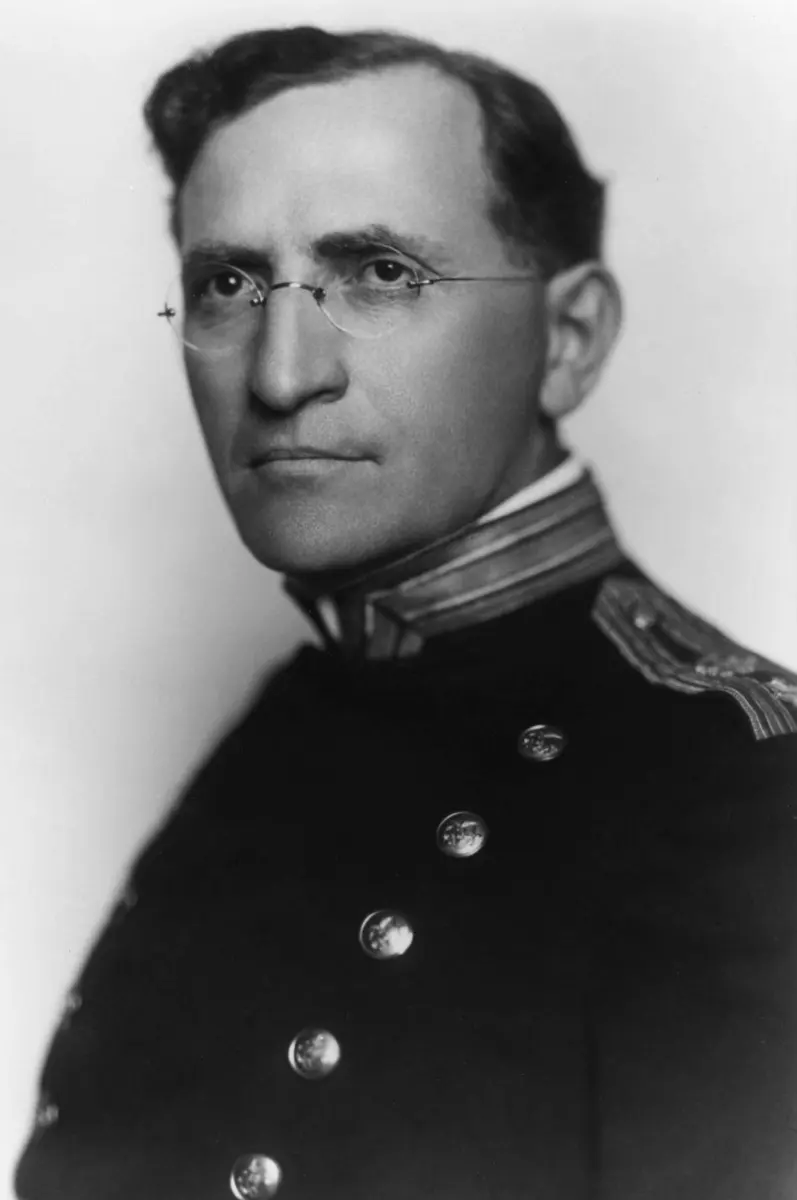
In 1914 the United States Public Health Service put Goldberger in charge of its work on pellagra. In the reports other doctors had written, he noticed a detail that kept coming up and whose meaning, he wrote, seemed “entirely to have escaped attention.” In mental hospitals and orphanages where pellagra was common, the patients got it, sometimes after living there for ten or twenty years, but the nurses and attendants did not. At a hospital in Jackson, Mississippi, 98 patients had died of pellagra in under four years, and as far as he could learn, not one of the 126 nurses and attendants who had worked there had caught it. Many of the nurses lived right on the wards, in the same rooms, breathing the same air. If pellagra passed from person to person, Goldberger wrote, this was “inexplicable.”
What was different about the nurses? They ate better. They might be served the same food, but, as he noticed, they took the best of it, and they could buy more outside. Goldberger also knew what everyone knew, that pellagra was a disease of the poor. Well-off people almost never got it. So he guessed that the poor caught pellagra not from each other but from what they ate, and he suggested more fresh meat, milk and eggs.
Then he tested it. In September 1914, at two orphanages in Jackson where pellagra came every year, his team changed the children’s food: more milk, meat, eggs and beans, less corn. Nothing else changed. Children who had pellagra were even allowed in freely, so if it was catching, it had every chance to spread. Over the next year, of 172 children who had had pellagra, only one had it again, and not one of 168 others caught it. At one of the institutions, when the study ended and the old food came back, about four in ten of those who had been in it came down with pellagra again.
He went further. Eleven prisoners at a Mississippi prison farm volunteered, for the promise of a pardon, to eat the cheap, corn-heavy diet of the Southern poor for six months. Six of them got pellagra. In 1916 Goldberger, his wife Mary and other volunteers swallowed material from pellagra patients and injected themselves with their blood. None of them got it.
But the old clue still needed explaining. Why did pellagra really cluster by house, and why was it really worse where toilets were poor? Goldberger went back to the same mill villages the commission had studied, this time with a statistician, Edgar Sydenstricker, and an engineer who rated each village’s sanitation. In 1917 alone they followed 22,653 people in 24 villages and found 1,147 cases; nearly one household in five had someone ill. Sanitation and pellagra, once they were measured carefully, showed no consistent link at all. Family income did. The less money a family had, the more pellagra it had, and in the one village they followed for nearly six years, the disease rose and fell from year to year with what families earned.
So the third thing was poverty. A poor family ate the cheapest food, and it lived in the cheapest house, with a pit toilet out the back. The toilet didn’t cause the pellagra; the same poverty caused both. The team put it in one careful sentence: any link to sanitation was “to be explained by the intimate relation of the endemic disease to economic status, of which the sanitary condition may be an index.” And the clustering by house, it seems fair to say, needs no germ either: a household eats from one pot.
Goldberger died in 1929 without knowing exactly what in the food mattered. In 1937 Conrad Elvehjem’s team in Wisconsin found it: a B vitamin, nicotinic acid, now called niacin. It cured dogs of a disease like pellagra, and then it cured people.
When the third thing turns it round
A hidden third thing can do more than create a link that isn’t there. It can turn a real result upside down.
In 1973 the University of California at Berkeley looked at who it had admitted to its graduate schools that autumn, and the numbers looked bad. Of 8,442 men who applied, about 44% got in. Of 4,321 women, about 35% did. That is a big gap, far too big to be luck, and, as Bickel later remembered it, an associate dean feared the university might be sued. A statistician, Peter Bickel, and two colleagues set out to find where the unfairness lay.
They looked at each department separately, since each department chooses its own students. And they couldn’t find the culprit. Most departments admitted women at about the same rate as men, and more of the departments with a clear gap favored women than favored men. How could every part look fair, or nearly so, and the whole look unfair?
The answer was where people applied. Some departments are much harder to get into than others, for anyone, and the women had mostly applied to the hard ones. The six biggest departments show it clearly. About half of the men applied to the two easiest, A and B, where nearly two in three applicants were taken. Only 7% of the women applied there. Most of the women applied to departments that turned most people away, man or woman. In department C, 37% of the men got in and 34% of the women; in F, only 6% of the men and 7% of the women. Add the departments up, and the women’s many applications to hard departments drag their total down. Across the whole university, almost two-thirds of those applying to study English were women, but only 2% of those applying to mechanical engineering.
So the third thing was the department, and it turned the result round. Counted properly, the paper found “a small but statistically significant bias in favor of women.” That didn’t settle whether women were treated fairly in education as a whole, and the authors said so. They thought the gap came “from prior screening at earlier levels of the educational system”, from what had steered women toward crowded fields in the first place. But it did show that the admissions committees weren’t the ones to blame. A result that points one way in the groups and the other way when the groups are added together is called Simpson’s paradox. Computing, Reimagined works through a hospital example with real numbers in Data Science.
Pellagra and Berkeley look like opposite cases. In one, a third thing made a link that wasn’t real. In the other, a third thing hid a real pattern and showed the reverse. The lesson is the same: when two things go together, ask what else goes with both of them, and whether splitting the numbers by it changes the story.
None of this means a link is worthless. Two things going together is often the first clue to a real cause, and the commission’s maps were exactly the kind of evidence that should make people look harder. The mistake was stopping at the first explanation. Goldberger’s real strength wasn’t that he guessed better. It was that he kept asking what else could explain the same facts, and then went and changed something himself, to see what happened. That last step, changing one thing and watching, is a powerful way to tell the four explanations apart, though it has traps of its own.
Found a mistake? Please tell us.