
In March 2020 the American billionaire Michael Bloomberg dropped out of the race to be his party’s candidate for president. He had spent about $500 million on advertising. The day before he gave up, a tweet went round: the United States has 327 million people, so for that money “he could have given each American $1 million and still have money left over.” Two nights later it was read out on a late-night news program, and the host called it an incredible way of putting it.
Divide it and see. Five hundred million dollars shared among 327 million people comes to about a dollar and a half each. After a commercial break the host came back and said it plainly: the tweet was wrong. Within hours the program apologized for what it called bad math.
Nobody on that program was bad at sums. Two enormous numbers sat side by side, both sounding like “a lot”, and nobody stopped to divide one by the other. That is what big numbers do. Past a few thousand they stop meaning anything a person can feel. A million and a billion sound like neighbors, though one is a thousand times the other.
So a number on its own rarely tells you whether it is big. What tells you is what it’s compared with. Three habits do most of the work. Share it out: how much is that for each person, or each day? Compare like with like: a total with a total, a rate with a rate. And when you hear a percentage, ask “out of how many?” None of these needs more than division, and most can be done roughly in your head.
Is that a lot?
On 29 May 2026 Nepal’s finance minister, Swarnim Wagle, presented the budget for the year 2083/84: Rs 2,124 arba 34 crore, which some newspapers wrote as 21 kharba 24 arba 34 crore. Said aloud, it sounds like a great deal, and it’s hard to know what else to feel about it.
The first difficulty is the words. Nepali climbs to big numbers in its own steps. A lakh is a hundred thousand, a crore is a hundred lakh, an arba is a hundred crore, and a kharba is a hundred arba. English climbs in thousands: a million, a billion, a trillion. The two ladders meet at an arba, which is exactly a billion, then part again, and the crossing from one to the other is where mistakes creep in. The budget is about 2,124 billion rupees, or 2.1 trillion. At least one English-language report that day called it 21 trillion, ten times too big, because each kharba had been read as a trillion.
The second difficulty is size itself, and here sharing out helps. Nepal is expected to have about 30 million people by the middle of the budget’s year. Divide the budget by them and it comes to about Rs 71,000 for each person in the country, or about Rs 6,000 a month. Nobody gets that money in hand, of course. It pays for schools, roads, salaries and old debts. But a number like Rs 6,000 a month can be set beside things you know, such as a rent, a fee or a wage, and whether the budget is too big or too small is now an argument with something to stand on.
None of this needed a calculator. Round 2,124 billion down to 2,000 billion, and the people to 30 million. Two thousand billion is two million million, and two million million shared among thirty million is two million divided by thirty: about 67,000. That’s not the exact answer, but it is near enough to tell you the size, and the size is usually the question. The tweet could have been caught the same way in five seconds. Five hundred million among three hundred million is less than two each.
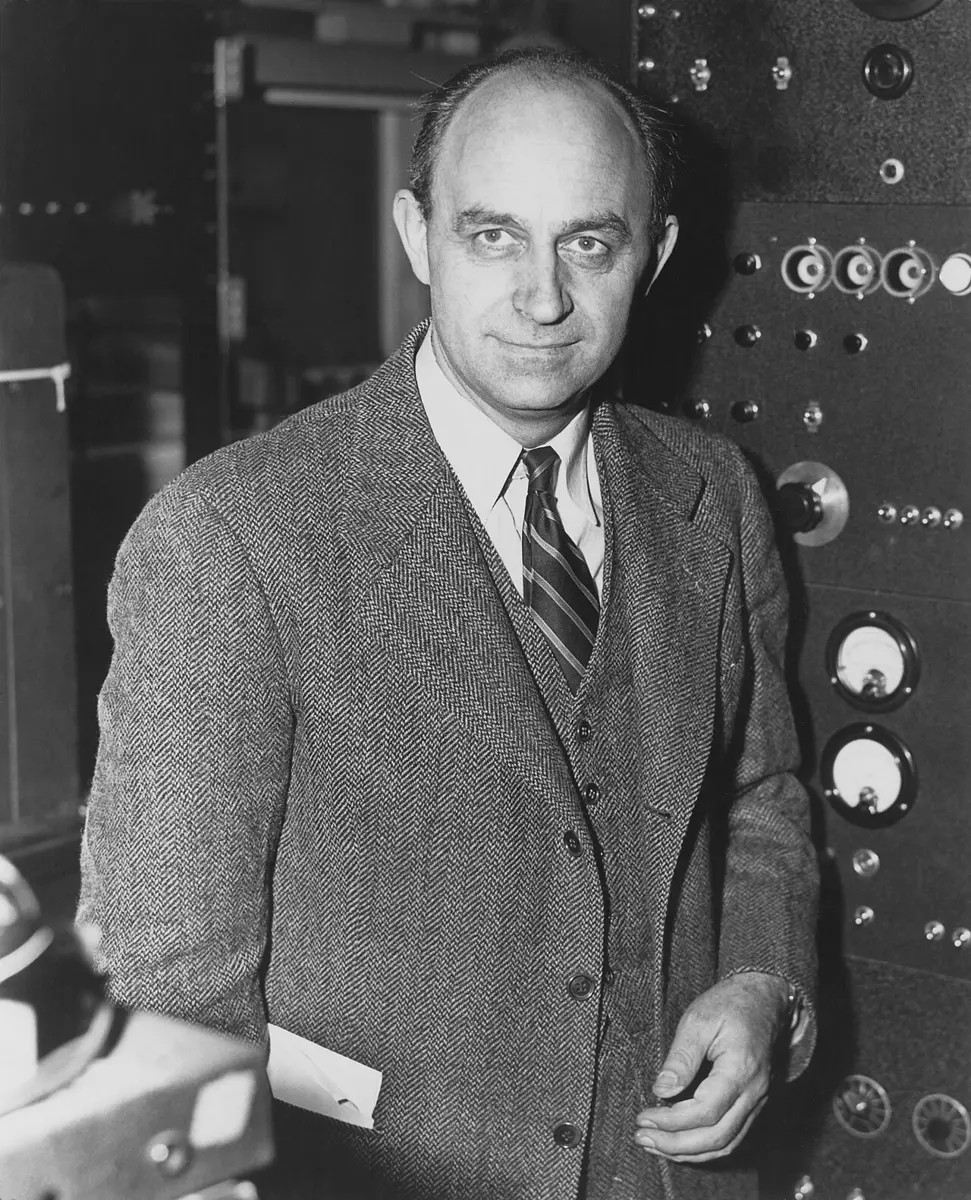
The most famous rough estimate of all was made with scraps of paper. On 16 July 1945, in the desert of New Mexico, the first atomic bomb was tested. The physicist Enrico Fermi was at the base camp, about ten miles away. As the blast wave reached him, he dropped small pieces of paper from about six feet up. The air was still, so he could watch them fall, and the blast carried them about two and a half meters sideways. From that, he worked out that the explosion was about the same as ten thousand tons of TNT. He didn’t write down how he got from the one number to the other, and people still try to work out his steps.
He was low. For decades the official figure was 21,000 tons, and in 2021 scientists at Los Alamos, where the bomb was made, measured its radioactive debris again and put it at about 25,000. So the scraps of paper were off by a factor of two or more. But they got the size right: thousands of tons, not hundreds and not millions. A rough estimate doesn’t try to be exact. It tries to be in the right range, and for deciding whether a number is a lot, the range is nearly everything.
Totals and rates
Ask which country puts the most carbon dioxide into the air from burning coal, oil and gas and making cement, and the answer is China: about 12.3 billion tonnes in 2024, more than the United States and India together. India comes third. Nepal, at about 19 million tonnes, is 92nd of 213 countries and territories.
Now ask how much that is for each person, and the list turns over.
Qatar, a small country on the Gulf with about three million people, comes first, at 41 tonnes a person. Australians and Americans are at about 14 tonnes each, the Chinese at under 9, Indians at 2. Nepalis come to about two-thirds of a tonne, 170th in the world.
Neither list is the true one. They answer different questions. The total says who is adding most to the air, and the air only feels totals. The rate per person says how heavily an ordinary life in that country leans on fuel. India really is the third biggest emitter in the world, and it really is 129th per person. Both facts are true at once, and someone arguing will usually quote the one that suits them. A large country points to its small share per person, and a small, wealthy one to its small total. The fair thing is to say which question you’re asking.
The same thing happens closer to home. A place with many people will have the most of almost everything: births, accidents, thefts, shops and doctors. So “the most cases in the country” can tell you as much about where people live as about danger. Before deciding that a place is risky, divide by how many people live there. And before deciding that a big country’s emissions don’t matter, multiply back up.
Twenty-five percent of what?
In October 1995 Britain’s Committee on Safety of Medicines issued a warning that newer contraceptive pills doubled the risk of dangerous blood clots in the legs or lungs. Letters went to 190,000 doctors, pharmacists and health officials, and the warning was announced to the news as an emergency. Many women stopped taking the pill.
Doubled was true. In the studies behind the warning, about one woman in every 7,000 taking the older pills had such a clot, and with the newer pills it was two. That is a rise of 100%. It is also one more woman in 7,000. In England and Wales the following year there were an estimated 13,000 more abortions, and about as many more births, from pregnancies nobody had planned. Pregnancy itself carries a greater risk of these clots than the newer pills did.
The two ways of saying it have names. A relative change says how much bigger or smaller a risk has become compared with what it was: “twice as likely”, “25% lower”. An absolute change says how many people it makes a difference to: “one more in 7,000”. Both can be true of the same finding, but the relative one on its own hides where the risk started. Doubling a one-in-7,000 chance and doubling a one-in-two chance are both “up 100%”. Relative changes sound big when the starting risk is small, which is often just when they are least worth worrying about.
Doctors are not immune. Screening for breast cancer with X-rays, called mammography, was widely said to cut the risk of dying of breast cancer by 25%. Spread over a thousand women who are screened, that comes to about one fewer death from breast cancer. When the psychologist Gerd Gigerenzer asked a representative sample of 1,000 Germans what the 25% meant for 1,000 women, the commonest answer was 500. Fifteen gynecologists at one Swiss hospital, asked the same thing, gave answers from 1 to 750. In one of his courses, two-thirds of 150 gynecologists picked the right answer from four. None of that says whether screening is worth it, a question that weighs harms as well as benefits. It says only that a percentage without its “out of how many” can mean almost anything to the person hearing it.
Processed meat makes the same point from the other side. The World Health Organization’s cancer agency put processed meat, such as ham, sausages and hot dogs, in its group of things known to cause cancer, which tells you how sure the experts are. How much is a different number. The agency’s own figure is that each 50 grams of processed meat eaten every day raises the risk of bowel cancer by about 18%. Cancer Research UK, a British charity, turned a similar figure into people. Out of 1,000 people in the UK who eat the least processed meat, about 56 would be expected to get bowel cancer at some time in their lives. Out of 1,000 who eat the most, about 66. Ten more in a thousand, as a ball-park figure.
Ten more on top of 56 is about 18% more, close to the percentage they started from. The percentage and the people tell much the same story, one in a way that alarms and the other in a way you can weigh. Ten in a thousand is not nothing. It is also not a cigarette. Worldwide, an estimated 34,000 cancer deaths a year are put down to diets high in processed meat, against about a million from smoking. And where bowel cancer is rarer to begin with, the same 18% adds fewer people still.
All of these come back to one small question. A doubling, a 25% cut, “the most in the country”, five hundred million dollars, twenty-one kharba: each means nothing until it has its other number beside it. Often that other number isn’t given, and noticing it’s missing is half the work. A rough sum will often find it. And sometimes the comparison comes ready-made, as an average or a chart, which can hide as much as it shows.
Found a mistake? Please tell us.