
Two men meet outside a law court in Athens. The older one, Socrates, has just been charged with corrupting the young and with wrong ideas about the gods, a case that will end with his death. The younger one, Euthyphro, is there to bring a charge of his own, and when Socrates asks against whom, the answer is: “My father.”
Euthyphro tells the story in Plato’s dialogue named after him. A poor laborer on the family farm got drunk, quarreled with one of the household servants and killed him. Euthyphro’s father had the laborer tied hand and foot, thrown into a ditch, and sent a messenger to Athens to ask a diviner what to do. While the messenger was away, nobody looked after the man, and he died of cold and hunger in his chains. Now the son is prosecuting the father. His family is furious, because they say a son who accuses his father is impious, the opposite of holy. Euthyphro says they don’t know what the gods think. He does.
So Socrates, who is always delighted to meet someone who knows, asks him what holiness is. After a few false starts, Euthyphro says that the holy is what all the gods love. And Socrates asks the question that has outlived them both: is the holy “beloved by the gods because it is holy, or holy because it is beloved of the gods?”
That is the oldest form of a question this chapter is about. Where do right and wrong come from? People have given four main answers. Some say from God, or the gods: a thing is right because God commands it. Some say from reason: anyone who thinks clearly can work out what is right. Some say from feeling: we know cruelty is wrong the way we know a burn hurts. And some say from society: right is what your people have always done. Each answer has its best case and its hardest question.
Because God says so
Socrates’ question splits the first answer in two. Suppose a thing is good only because God commands it. Then if God had commanded cruelty, cruelty would have been good, which almost nobody can accept. And to say “God is good” would mean only that God does what God commands, which says nothing at all. Suppose instead that God commands a thing because it is good. Then goodness is something God sees and follows, and it was good before anyone commanded it, so morality doesn’t depend on God after all.
Believers have answers. The commonest is that the choice is false: goodness is neither above God nor made up by God, but is God’s own nature. A good God would never command cruelty, not because a rule stops God, but because God is good. One modern form of this, from the philosopher Robert Adams, says that what is wrong is what goes against the commands of a loving God. Critics reply that this only moves the question. How do we know that God’s nature is good, unless we already know what good is?
Muslim theologians had their own long argument along these lines. The Muʿtazila, a school that was for a time, in the 800s, the official theology of the caliphs in Baghdad, held that God’s justice can be proved by reason, and that reason shows God’s law to be good for humanity. God commands what is good, and a thinking person can see why. The Ashʿarites, named after al-Ashʿari, a theologian who died in 935, put God’s power first: nothing at all is impossible for God, and revelation, not unaided reason, gives the guidance that reason needs. The Ashʿarite view became the main one among Sunni Muslims, though both sides read the same Qur’an.
Hindu tradition gives its own list of sources. The Manusmriti, an old law book (the same one that set out rules of caste), names four ways of knowing धर्म (dharma): the Veda, the remembered tradition, the conduct of good people, and what is pleasing to oneself. Where they differ, it says, the Veda has the last word. So it lets in scripture, society and a kind of conscience, all at once, but in order.
Reason, and feeling
The Muʿtazila already trusted reason to see why God’s commands are good. Others have gone further and tried to build the whole of morality on reason, so that anyone, of any faith or none, could work it out. The best-known attempts, Kant’s rules of duty and the rival idea that right is whatever has the best results, are the subject of the chapter Rules and Results.
Against them stands a famous line by David Hume, the Scottish philosopher. “Reason is, and ought only to be the slave of the passions,” he wrote in 1739. Reason can tell you how to get what you want, and whether your facts are true. It can’t tell you what to want. “’Tis not contrary to reason,” he said, to make the point as sharply as he could, “to prefer the destruction of the whole world to the scratching of my finger.” What is wrong with that preference isn’t a mistake in logic. It is monstrous, and we feel it. Morality, for Hume, “is more properly felt than judg’d of.”
More than two thousand years before Hume, in China, Mencius, a teacher of Confucius’ school, made the case for feeling with one picture. Suppose people suddenly see a small child about to fall into a well. Every one of them, he said, will feel alarm and distress, and not to win the parents’ favor, or the neighbors’ praise, or to avoid being thought hard. The feeling simply comes. Mencius held that everyone has four such beginnings in them, of kindness, of shame at doing wrong, of courtesy, and of a sense of right and wrong, “just as they have their four limbs.”
The trouble with feeling is that it varies. Some people watch suffering and feel nothing, or feel glad. Mencius had an answer for that too. He described a mountain near a great city whose trees had once been beautiful, and were cut down with axes, again and again, and grazed by cattle until it looked as if nothing had ever grown there. Yet the buds and sprouts kept coming. Goodness, for him, is like that: a beginning everyone has, which can be grown or hacked away. Critics reply that if feelings need correcting, something other than feeling must be doing the correcting.
The Ghanaian philosopher Kwame Gyekye gave a fourth kind of answer, from Africa. In the traditional thought of the Akan people, he wrote, what is good is what is worthwhile “because of their consequences for human welfare”: generosity, honesty, faithfulness, hospitality, whatever brings peace. African traditional religion, he pointed out, is not a revealed religion, with one founder to whom the truth was told, so its morality can’t rest on revelation. Religion is part of what keeps people to it, but it isn’t the source. Other scholars have argued that African morality is religious through and through, and Gyekye argued against them. An Akan saying he gave puts his whole view in a line: the human being is more beautiful than gold.
Custom is king
The fourth answer, society, has the most famous story behind it. The Greek historian Herodotus told it. When Darius was king of Persia, he called in some Greeks at his court and asked what price would make them eat their fathers’ dead bodies. No price at all, they said. Then he called in some people from India, the Callatiae, who did eat their dead parents, and asked them, with the Greeks listening through an interpreter, what would make them willing to burn their fathers at death. They cried out that he should not speak of so horrid a thing. Herodotus took the lesson from a poet: “use and wont is lord of all.”
If that’s the whole truth, then right and wrong are like the side of the road a country drives on. Nobody is right or wrong about it, only different. That has an appeal. It sounds humble, and it seems to stop anyone from looking down on anyone else.
But it runs into trouble quickly. If right simply means what your society approves, then a society can never improve, only change. In 1924 the Rana government counted about 51,000 slaves in Nepal, and the next year it freed them. On this view, that was not progress, just a new custom replacing an old one, and the slave owners who objected weren’t wrong, only old-fashioned. The same goes for every reformer who ever stood up against his own people: by definition, the reformer is the one in the wrong. A relativist has a reply: reformers usually win by showing their people what follows from values they already hold, so progress can happen inside one society’s own standards. Whether that covers every case is still argued.
Nor does tolerance follow, though people often think it does. If right is whatever a society approves, then a society that approves of intolerance is right to be intolerant. Most philosophers who study the question think the idea that relativism leads to tolerance is a mistake.
And some differences are smaller than they look. Darius’s Greeks and Callatiae were horrified by each other, but they agreed on the thing that mattered most to both: a dead father must be treated with respect. They disagreed about how. Many quarrels between cultures turn out to be like that: a shared value, applied to different beliefs about the dead, the soul or the world.
Is sati only different?
The test case is hard. सती (satī), the burning of a widow on her husband’s funeral fire, was practiced for centuries in South Asia. Its defenders held that it carried the widow to heaven, and their own authorities said she must go to the fire of her own will. Not every widow did. Its critics said widows were tied down to the pile, and in Nepal in 1806, after a former king was murdered at court, the senior queen, by one historian’s account, was fetched by horsemen and made a sati. Nepal’s law ended it a century ago, and CDC’s history books name it among the harmful customs, कुरीति, of the past. If cultures are only different, then the most anyone could say against it was that it wasn’t their custom. But that is not what its opponents said.
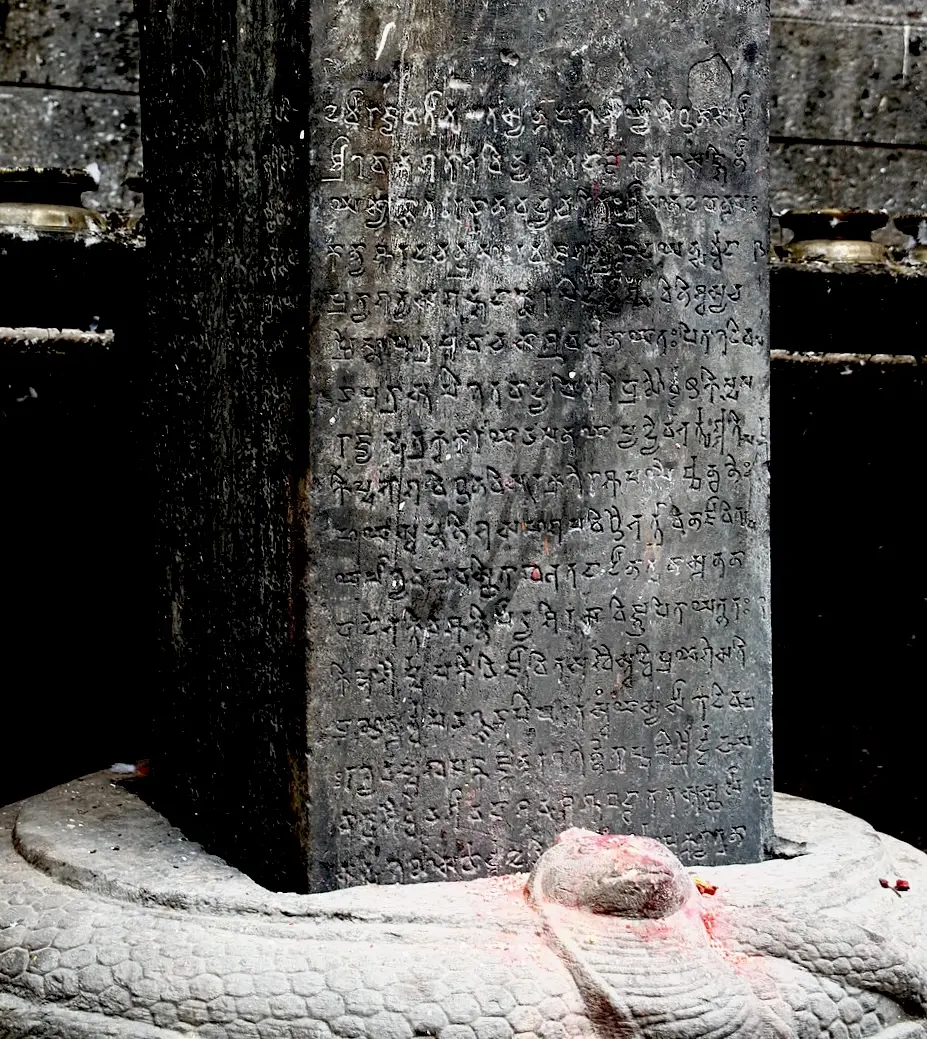
One of the oldest inscriptions of a Nepali king tells of a widow who didn’t go. On the pillar at Changu Narayan, near Bhaktapur, मानदेव (Mānadeva) had it carved that when his father died, his mother, the queen राज्यवती (Rājyavatī), said that today she would follow her husband’s path, words read as meaning onto his funeral fire. Her son pressed his head to her feet and said that if she went, he would give up his own life first. She stayed. The son gives no argument against the custom; what would the joys of life be to him, he asks, separated from her? That was in the fifth century, and Nepal’s History tells how the pillar is read.
In 1818, in Calcutta, the reformer Rammohan Roy published a short dialogue, in Bengali and then in English, between a defender of widow-burning and an opponent. The defender quotes the sages who promise her heaven. The opponent answers from inside the same tradition. Manu, the lawgiver whose word ranks highest, says a widow should live on simply, as an ascetic, devoted to virtue, and an old saying holds that no law against Manu’s is to be followed. The defender answers that what Manu doesn’t mention isn’t against him, and the two go back and forth. Rammohan wasn’t arguing that Hindus should become something else. He was arguing that their own best authorities were against the practice. The British government in India banned it on 4 December 1829, and his campaign had a large part in that. In Nepal, Jung Bahadur limited it, and Chandra Shumsher ended it in 1920.
In the end laws ended it, but the strongest answer to “is sati only different?” came from inside the tradition: a Bengali scholar quoting Manu against his own society’s custom. A reformer like that can’t be dismissed as an outsider who doesn’t understand. His argument only makes sense if a custom can be wrong.
Common ground
If there’s anything beyond custom, perhaps it shows where traditions agree. CDC’s Human Value Education course for Grades 11 and 12 names seven universal values: सत्य (truth), प्रेम (love), शान्ति (peace), सेवा (service), अहिंसा (non-harm), सहअस्तित्व (living side by side) and विश्वबन्धुत्व (the brotherhood of all).
Set a few old lists beside each other and the overlap is striking. The Buddhist पञ्चशील (pañcaśīla), the five precepts, are to refrain from killing living beings, from taking what isn’t given, from sexual misconduct, from false speech, and from drink and drugs that lead to carelessness. A Jain monk’s five vows are non-harm, truthfulness, not taking what isn’t given, chastity and non-attachment. The Ten Commandments of the Hebrew Bible forbid murder, adultery, stealing and bearing false witness against a neighbor. Killing, stealing, lying and sexual wrong are on all three lists, from traditions far apart.
But the agreement is partly in the words. अहिंसा is on everyone’s list, and for Jains it means that they must be vegetarians, since animals are living beings with souls. For many others it doesn’t. The commandment says not to murder, which leaves open who counts and when killing isn’t murder. So common ground is real, and worth a great deal, but it doesn’t settle the hard cases by itself. Who counts is the question of the chapter Who Counts.
Other traditions have their own teaching on right and wrong. The Kirat Mundhum carries its people’s customs and law, and the Sikh Gurus, Bon and those who gave प्रकृति (prakṛti), nature, as their religion have theirs. Each is told whole in its own chapter later in this book.
So where do right and wrong come from? From God, say many believers, though they argue over whether God commands what is good or makes it good by commanding it. From reason, say others, from feeling, say Hume and Mencius, from human welfare, says Gyekye, from custom, says Herodotus’s story. Each has a hard question it hasn’t fully answered. The last one’s is the sharpest: if custom is the whole of it, could anyone ever have been right to say no to sati or to slavery? Relativists answer that the reformers were drawing on their own people’s values, and the argument over whether that is enough goes on. Disagreeing with one’s own elders about what is right is very old, and the Life Skills tip “Disagree with an elder without raising your voice” has a few steps for doing it well.
Found a mistake? Please tell us.