
A fish can swim, but it can’t climb a tree. A monkey can climb, but it can’t swim very well. Everyone can do some things and can’t do others. What can you do?
This unit is about expressing ability: saying what you can and can’t do. You will read about the Paralympic Games, where athletes with disabilities compete, and a funny poem about a phone that can do everything. You will learn to use can, can’t, could and couldn’t.
Getting started
A. What can they do?
The unit opens with four pictures.
- A boy and a girl sit at a desk. The boy is writing, and the girl is reading.
- A girl combs her long hair.
- A builder lays bricks to make a wall.
- A boy with a crutch plays football with two friends.
Look at the pictures. What do you think these people can or cannot do? Talk to your friends.
Model answers
Look at the last picture again. The boy can’t do one thing, but he can still do many others. That is the big idea of this unit.
B. Listen and sing
The song is a string of eight short questions. Each one starts with Can you …? It asks if you can swim, dive, ride a bike, run, jump, drive a car, sing and dance.
To answer, say Yes, I can. or No, I can’t. You don’t need to say the action again.
There are different questions in the song. Look at them and give your true answers.
A model
Reading I: The Paralympic Games
Before you read
Why do you think games and sports are important to us?
A model answer
Can people with disabilities take part in sports? Discuss in the class.
A model answer
A disability is a condition of the body or the mind that makes some things hard to do. For example, a person may not be able to see, to hear or to walk.
The text, part by part
The text is about the biggest sports competition for athletes with disabilities.
What they are. The Paralympic Games are international sports competitions for people with disabilities. They take place shortly after the Olympic Games, in the same city. Para is an old Greek word for “beside”, so the name means beside the Olympics.
Who takes part. Athletes (sportspeople) come from all over the world. Some have a spinal cord injury. The spinal cord is the bundle of nerves inside your backbone. An injury to it can cause paralysis: a person can’t move or feel a part of their body. Some athletes have missing limbs: an arm or a leg is missing. They may use wheelchairs or artificial limbs (arms or legs that are made, not grown). Some athletes are blind or can see only a little. Athletes with intellectual disabilities (disabilities of the mind and learning) take part in some events too.
Who organizes them. The International Paralympic Committee (IPC) has organized the Games since 1989. It has two aims: to help athletes with disabilities reach excellence (be the very best) in sport, and to make the world respect and admire people with disabilities.
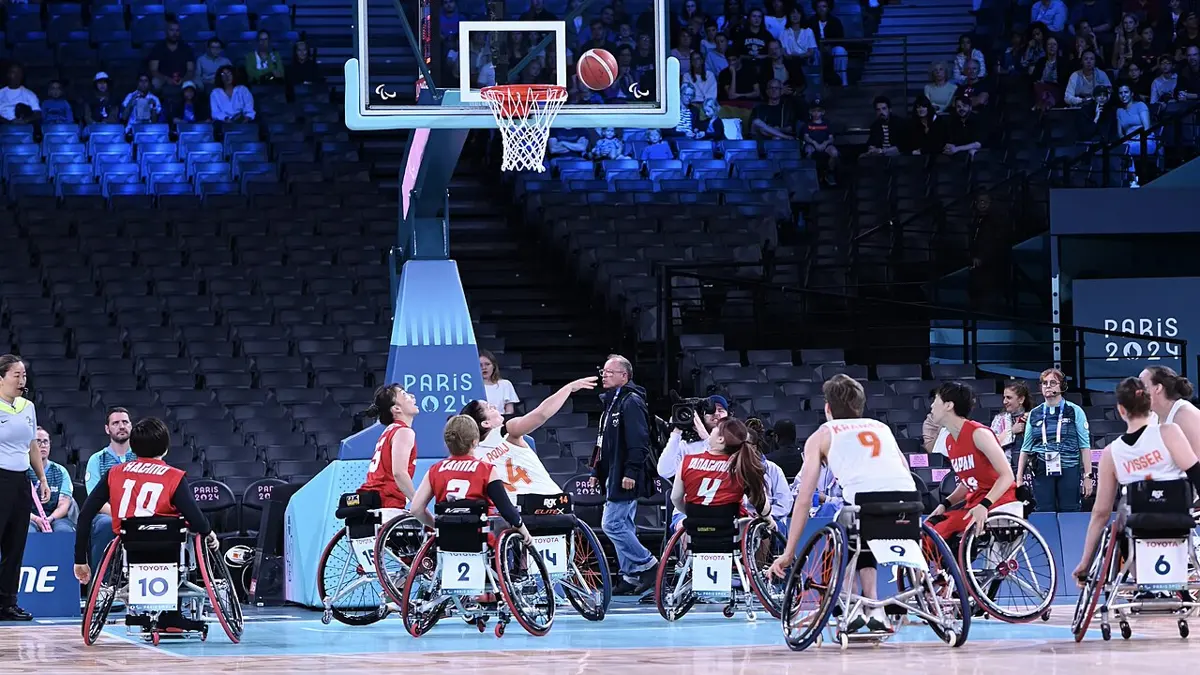
The sports. At the Summer Games there are more than a dozen sports. A dozen is twelve. Among them are archery, cycling, rowing, sitting volleyball, soccer, swimming, table tennis, wheelchair basketball and wheelchair fencing. At the Winter Games, athletes play ice sledge hockey and wheelchair curling, and they ski.
Fair play. Athletes compete against others with similar abilities. So a runner who is blind races other runners who are blind. Some events need special equipment (tools for a job): ice hockey players sit on a low sledge. In some events, a guide helps an athlete who can’t see. But in swimming and sitting volleyball, artificial limbs and wheelchairs aren’t allowed.
How it all began. In 1948, a doctor in England, Ludwig Guttmann, organized a sports competition at Stoke Mandeville Hospital. The athletes were men and women from the army, navy and air force who had been hurt in World War II. Their spinal cords were injured, so they couldn’t use their legs. The competition was held on the same day as the opening of the Olympic Games in London.
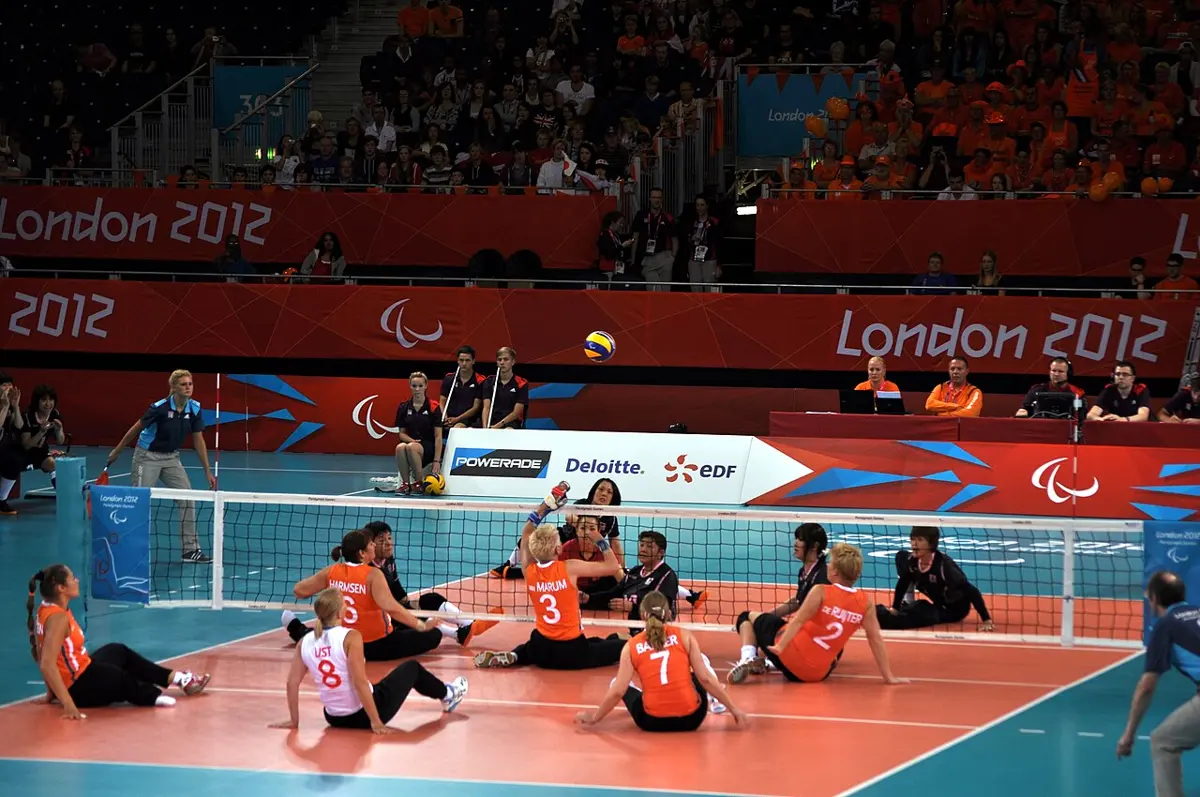
In sitting volleyball, the players …
Pick an answer to see why.
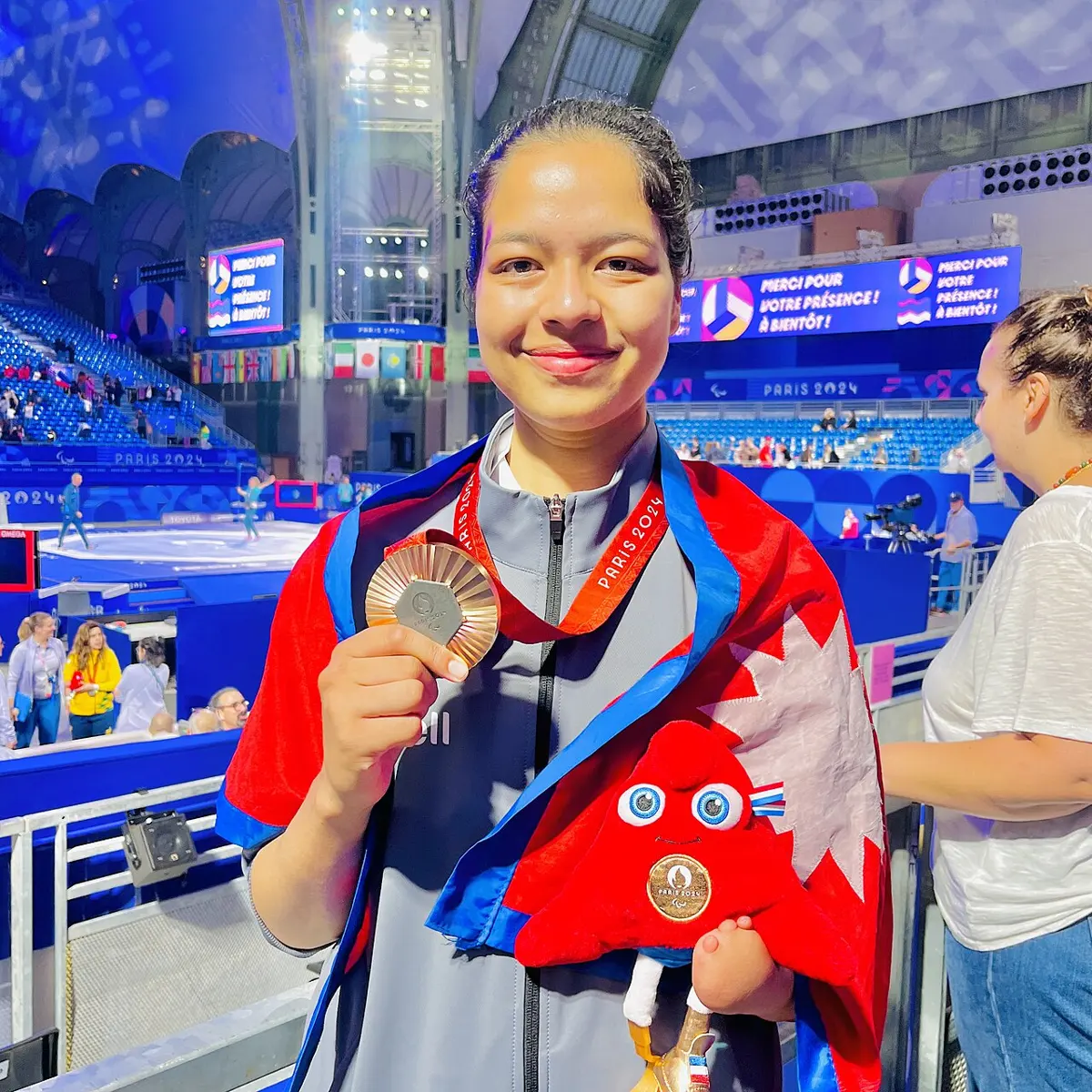
True or false? The Paralympic Games take place before the Olympic Games.
Pick an answer to see why.
A. Complete the sentences
Use these nine words: compete, athletes, admiration, excellence, disability, equipment, intellectual, paralysis, expert.
Use the correct words to complete the sentences.
- a.She has hearing ……… . However, she performs very well in all the subjects.
- b.The ……… are training hard for the National Games.
- c.Polio can cause ……… and sometimes death.
- d.Lack of proper nutrition can stop the ……… growth of children.
- e.The audience clapped in ……… of her beautiful dance.
- f.Are you going to ……… in any game in the Sports Week?
- g.Our school is famous in the area for its educational ……… .
- h.What ……… do you need to play table tennis?
- i.My uncle is a doctor. In fact, he is an ……… of skin.
Answer
Words linked here open in English Vocabulary, where you can practice them in a game.
| Word | Meaning |
|---|---|
| disability | a condition that makes some things hard to do, like seeing or walking |
| athlete | a person who is good at sports and takes part in them |
| paralysis | not being able to move or feel a part of the body |
| intellectual | to do with the mind, thinking and learning |
| admiration | a feeling that someone is very good and worth respect |
| compete | to take part in a game or race to try to win |
| excellence | being very, very good at something |
| equipment | the tools and things you need to do a job or play a game |
| expert | a person who knows a lot about one thing |
B. Choose the correct answers
a. When are the Paralympic Games played?
Pick an answer to see why.
b. How do the athletes with disabilities take part in the Paralympics?
Pick an answer to see why.
c. Who do these athletes compete with?
Pick an answer to see why.
d. Who organizes the Paralympic Games?
Pick an answer to see why.
e. When did the Paralympic Games start?
Pick an answer to see why.
C. Answer the questions
Who takes part in the Paralympic Games?
Answer
Write any two problems that Paralympic athletes have.
Answer
Why were the Paralympic Games organized?
Answer
What are the two types of Paralympic Games?
Answer
Who were the players of the first Paralympic Games?
Answer
D. Showing respect
How can we show our respect to people with disabilities? Discuss with your friends.
Model answers
Pronunciation
Long words are easier to say beat by beat. A syllable is one beat of a word: ath-letes has two.
Listen to your teacher and say these words: paralympic, disabilities, wheelchairs, competitions, archery, soccer, artificial, athletes.
Answer
Grammar I: can and can’t
A. What do they mean?
Can says that someone is able to do something. Can’t (cannot) says that they are not able.
Study the sentences. What do they mean?
- a.She can speak several languages.
- b.They can’t dance very well.
- c.He can swim like a fish.
- d.Help! I can’t breathe.
- e.I am too short. I can’t touch the ceiling.
Answer
Here is how can works. It is the same for everyone.
| Yes | No | Question |
|---|---|---|
| I can swim. | I can’t swim. | Can I swim? |
| She can swim. | She can’t swim. | Can she swim? |
| They can swim. | They can’t swim. | Can they swim? |
B. Can or can’t?
Complete the sentences with can or can’t.
- a.I ……… speak Chinese. I learned it from my Chinese friend.
- b.I ……… come to the party. I am really busy.
- c.We ……… hear you speak. The music is so loud.
- d.Where are my keys? I ……… find them.
- e.I ……… believe it. I won a prize.
- f.We ……… meet tomorrow if you want.
- g.……… you make me a cup of tea, please?
- h.He ……… jump. His leg hurts so much.
- i.Fish ……… swim, but birds ……… .
Answer
Pick the correct sentence.
Pick an answer to see why.
Writing I: sports I am good at
Think about the sports you are good at. What skills do you need for those sports? Why do you think you are good at them? Write a short paragraph.
A model paragraph
Reading II: My Phone
Before you read
Do you have a mobile phone?
A model answer
What can you do with a mobile phone?
A model answer
The poem, verse by verse
The poem My Phone is by Neal Levin, a writer of funny poems for children. It has four verses. The speaker is proud of a phone that can do everything.
Verse 1. The phone is full of gadgets (small useful tools). It has a hundred and fifty different rings (ringtones). It can store a thousand phone numbers and other nifty things. Nifty means clever and useful.
Verse 2. It can send email and news from far away. It can predict (tell before it happens) tomorrow’s weather. And it can tell the time.
Verse 3. It can download music and take photos in a flash (very quickly, like a flash of light). It can make videos and films, and it can really make a splash. To make a splash means to get a lot of attention.
Verse 4. Here is the joke. The speaker has heard that in the old days, people used their phones to talk to other people! The speaker isn’t sure what that means. The phone can do so much that its owner has forgotten what a phone was first made for.
What is funny about the last verse?
Pick an answer to see why.
A. Rhyming words
Match the rhyming words: a. rings · b. away · c. flash · d. means, with i. beings · ii. splash · iii. things · iv. day.
Answer
B. Find the words
Write the words from the text for these meanings.
- a.to say that something will happen in the future
- b.a sudden bright light
- c.useful and practical
- d.a small tool that does something useful
Answer
C. Answer the questions
How many rings does the phone have?
Answer
Does the speaker need a watch to tell the time? Why?
Answer
What can the speaker download using a mobile phone?
Answer
What can the speaker make using a mobile phone?
Answer
D. If you get a phone
What will you do with a mobile phone if you get one? Talk to your friends.
A model answer
Grammar II: could and couldn’t
Could is the past of can. It says that someone was able to do something. Couldn’t (could not) says they were not able.
Now I can ride a bike. When I was four, I couldn’t ride a bike.
| now | in the past | |
|---|---|---|
| able | can | could |
| not able | can’t | couldn’t |
But could has a second job. At the start of a question, Could you …? or Could I …? asks for something politely. Here, could is not the past: Could you open the window, please? means now.
A. Study the sentences
Study the sentences. What does each one say?
- a.I can’t write a poem, but I can write a letter.
- b.He couldn’t drive when he was at school.
- c.She can speak by using an electronic voice box.
- d.They can help you if you need.
- e.He can’t speak Chinese.
Answer
B. Can, can’t, could or couldn’t?
Complete these sentences with can, can’t, could or couldn’t. There may be more than one answer.
- a.……… I ask you something?
- b.She said I ……… call as often as I liked.
- c.Jack ……… go to work yesterday because he was ill.
- d.She ……… borrow my car if she asked.
- e.……… you lend me some money?
- f.When I was a child, I ……… play whenever I wanted to.
- g.It was a place where anything ……… happen.
- h.I ……… understand anything she said.
- i.You ……… get a better job if you speak English.
Answer
Listening
A. Before you listen
The picture shows a boy playing a drum. It looks like a madal, the two-sided drum played in Nepali folk music.
What musical instrument is the boy playing?
A model answer
What musical instruments do you know? Make a list.
A model list
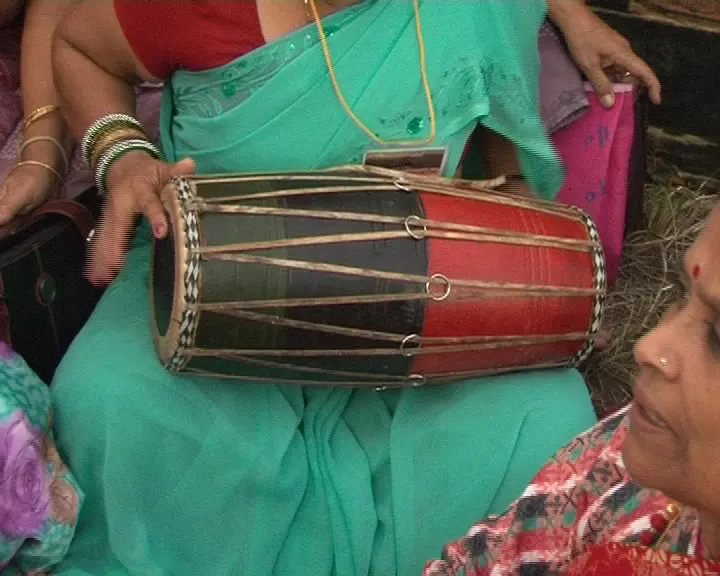
Now listen. Two friends, Tom and Jane, talk about playing music. Read the sentences in B first.
B. True or false?
a. Tom can play the guitar well.
Pick an answer to see why.
b. Tom takes guitar lessons.
Pick an answer to see why.
c. Jane can play the piano.
Pick an answer to see why.
d. Jane is very good at playing the piano.
Pick an answer to see why.
C. Your instrument
What musical instrument would you like to play? How would you learn it? Talk to your friends.
A model answer
Speaking
A. About you
Complete these sentences about you. Use can or can’t. Then take turns to say them to your friends.
a. I ……… read long stories. · b. I ……… jump high. · c. I ……… play video games for many hours. · d. I ……… fly. · e. I ……… ride a bicycle. · f. I ……… play the madal. · g. I ……… reach the ceiling. · h. I ……… smile.
A model
B. What can they do?
There are eight pictures: a boy on crutches with his leg in a cast, a frog, a man writing, a person drowning in water, children singing, a girl with a racket, a blind man with a white cane, and birds flying.
Look at the pictures. What can or can’t they do? Take turns to tell the class.
Model answers
C. Can you …?
Work in pairs. Ask and answer: Can you …? — Yes, I can. / No, I can’t.
a. write a letter · b. sing a song · c. carry a load on your head · d. swim in a river · e. cook food · f. read aloud for two hours · g. draw an elephant · h. touch the ceiling · i. type in Nepali
A model
Writing II: what my friend can do
Write a short description of what one of your friends can and can’t do.
A model description
Do it yourself
Exercise
Practice the whole unit. Try each one, then open the answer.
Fill the gaps with can or can’t.
a. A cheetah ……… run very fast. · b. A baby ……… drive a car. · c. Fish ……… breathe under water. · d. I ……… see the board. Can I sit at the front?
Answer
Change to the past with could or couldn’t.
- a.I can’t lift this box. (yesterday)
- b.She can read at the age of four. (when she was four)
Answer
Correct the mistakes.
a. He can swims well. · b. Can you to help me? · c. She cans dance.
Answer
Ask politely: you want your teacher to repeat the question.
Answer
Name two sports in the Summer Paralympics and one in the Winter Paralympics.
Answer
Tap the beats: how many syllables in artificial?
Answer
Printable PDFs
- Study notes 2 pages
- Harder practice questions 2 pages Answer key
Practice every question in the book, and keep track of the ones you miss →
A companion to your textbook, not a replacement for it: study from the book your school uses, and where the two differ, follow your teacher. Found a mistake? Please tell us.