
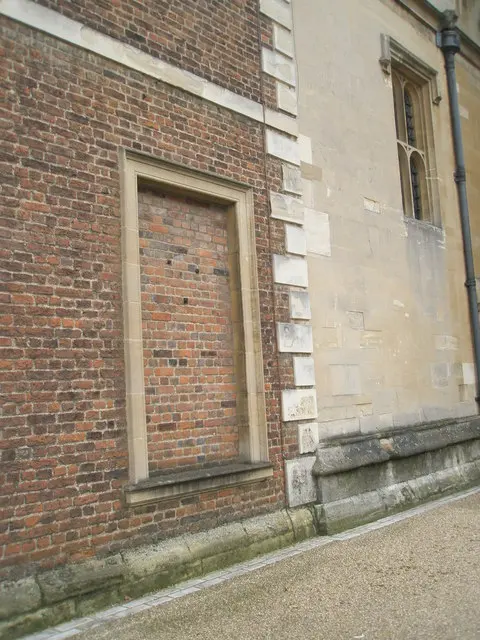
In 1696 England began taxing windows. The more windows a house had, the more its owner paid each year, and the reason was simple: a tax collector could stand in the street and count them. People soon found the answer. They bricked their windows up, and lived in darker rooms to pay less. The tax lasted until 1851, when it was abolished after pressure from doctors and others, who said the lack of light was making people ill. Walk past an old English building today and you can still sometimes see the blind outline of a window; some were filled in to pay less.
The window tax had a history before it. Earlier, England had taxed hearths, the fireplaces in a house, and to count them the collector had to walk into every room. People hated the visits so much that, Smith tells us, the hearth tax was thrown out as “a badge of slavery”. Windows, which could be counted from outside, seemed a kinder idea. Adam Smith, the Scottish thinker who wrote The Wealth of Nations in 1776, found the window tax unfair all the same. A small house in a country town, he pointed out, might have more windows than a house in London that rented for fifty times as much, so the poorer man could end up paying more.
Those two old taxes hold most of what this chapter is about. A state has to raise money. How it raises it decides who pays, how much the paying hurts, what people do to avoid it, and what it costs the country besides the money itself. Whether a government should spend to pull an economy out of a slump is one question. A plainer one comes first: where does a government’s money come from?
Why a state must collect
Some things a country needs can’t be bought one person at a time. A road, a court, an army at the border, a vaccination campaign, streetlights: each serves everyone, and nobody can be stopped from using it once it is there, so no shop could sell it and make a living. Chapter 26 looks at such shared things more closely. If they are to exist at all, someone has to pay for them together, and the usual way is for the state to take a share of what people earn and spend. That share is tax, कर: money a person or a firm must pay, set by law, with nothing in return that is theirs alone. Nepal’s Constitution puts the rule in one line, in Article 115: no tax may be levied or collected except under a law.
How a government raises its money, spends it and covers what it lacks is called public or government finance, सरकारी वित्त; this chapter is about the money coming in, and Chapter 19 about the money going out. Nepal’s Grade 10 book lists what the money is for, and the list is wider than roads and soldiers. It pays for schools, health posts and other services. It builds roads, bridges, canals and power lines. It can steady the economy, spending more in a slump. It can make the country fairer, by taking more from those who have more and spending it on those who have less. It creates jobs, and it builds the kind of setting in which people are willing to invest. Tax can do work of its own too. A heavy tax on cigarettes is meant to make people smoke less, a tax on imports can shelter a country’s own makers, and a tax on pollution can make it cheaper to pollute less. Chapters 20 and 25 come back to those last two.
In Nepal three levels of government collect. The Constitution’s schedules divide the taxes among them. The federal government in Kathmandu takes customs, excise, value added tax and the income tax of people and companies (Schedule 5). The provinces take, among others, taxes on vehicles, entertainment and advertising (Schedule 6). The municipalities and rural municipalities take property tax, land tax, house rent tax and business tax (Schedule 8). The big taxes are federal, so the money is shared down. By the law on sharing money between governments, the Intergovernmental Fiscal Arrangement Act, 2074 (अन्तर–सरकारी वित्त व्यवस्थापन ऐन), section 6, the VAT and the excise on goods made in Nepal go into one pool, of which 70% goes to the federal government, 15% to the provinces and 15% to the local levels. The budget for 2083/84 expected to pass about Rs. 175 billion down this way.
Four old tests
Smith wrote down four tests a good tax should pass, in Book V of The Wealth of Nations, and they are still how economists begin.
The first is fairness. People should pay “in proportion to their respective abilities”, by which Smith meant in proportion to the income each enjoys under the state’s protection. The window tax failed this test, since windows are a poor measure of income. The second is certainty. What each person must pay, and when and how, should be plain, not left to a collector’s mood. Smith thought a little uncertainty did more harm than a great deal of unfairness, because a person who doesn’t know what he owes can be bullied. The third is convenience: collect a tax when and how it is easiest to pay, as a tax on goods is paid little by little, as people buy. The fourth is economy. A tax should take as little as possible out of people’s pockets beyond what reaches the treasury.
Smith counted four ways a tax breaks the last rule. It may need an army of officers whose pay eats up much of what they collect. It may hold back work and trade that would have made everyone richer. It may tempt people to cheat, and then ruin those who are caught. Of a badly chosen tax he wrote that the law “first creates the temptation, and then punishes those who yield to it”. And it may bring endless inspections and visits. The bricked-up windows are a perfect case. The state got no money from a window that was filled in, and the family lost its light. A loss that nobody gains is the purest waste a tax can cause, and it comes from the way people change what they do to avoid it.
What these tests mean for a person in Nepal today, getting a PAN, paying the right amount and filing a return, is the subject of Money, for the Curious, Chapter 5.
Who gives up a larger share
Taxes are sorted in two ways. The first is by who hands the money over. A direct tax, प्रत्यक्ष कर, is paid by the person it is meant for: income tax is the main one, paid on what a person or a company earns. An indirect tax, अप्रत्यक्ष कर, is handed over by a seller who adds it to the price, so the buyer pays it without ever dealing with the tax office. Nepal has three big ones. Customs duty, भन्सार महसुल, is charged on goods brought in from abroad, at the border. Excise, अन्तःशुल्क, falls on particular goods, such as alcohol and tobacco, whether made here or brought in. Value added tax, VAT, is charged on nearly everything sold, at a single rate fixed by the Value Added Tax Act, 2052, section 7. Each business in the chain pays VAT only on the value it adds, since it takes back the tax it paid on what it bought (section 17), and the whole tax ends up in the final price.
The second way is by how the burden compares with what people have. Think of a family’s income as a cake, and ask what slice of it a tax takes. A proportional tax takes the same slice from everyone: 10% of a small income and 10% of a large one. A progressive tax, प्रगतिशील कर, takes a larger slice from larger incomes. Nepal’s income tax is built this way, in bands: the first part of a person’s income is taxed lightly, the next part at a higher rate, the part after that higher still. A regressive tax, अधोगामी कर, takes a larger slice from smaller incomes, even when everyone pays the same rupees.
That last point surprises people. A tax of Rs. 10 on a kilo of sugar is the same for everyone who buys a kilo. But a family earning Rs. 20,000 a month and a family earning Rs. 2 lakh buy much the same amount of sugar, so the tax is a far larger slice of the poorer family’s income. A tax on what people buy can be regressive in just this way. Smith, who usually wanted people to pay in proportion, made an exception here. It was “not very unreasonable”, he wrote, that the rich should contribute “something more than in that proportion”.
Countries soften the bite of a tax on spending by leaving out what the poor spend most on. Nepal’s VAT Act lists the goods and services that pay no VAT at all in its Schedule 1: rice and other basic farm produce, salt, medicines, books, schooling, bus and other passenger transport, and more. How much that softens it in Nepal, nobody we could find has measured. An indirect tax can also be dodged, by smuggling or by sales made without a bill, which is why the budget for 2083/84 promised a discount on VAT for paying digitally, so that more sales leave a record.
Who really pays
The law says who hands a tax over. It doesn’t say who carries it. Smith saw this too: many taxes, he noted, are not finally paid by the people they were aimed at. Economists call the question of who carries a tax its incidence.
Take sugar again. Before any tax, say 100 kilos a day sell at Rs. 100 a kilo. Now a tax of Rs. 20 a kilo is charged, handed over by the sellers. Will the price go up by the whole Rs. 20? Only if buyers keep buying the same amount whatever the price. Sugar is hard to give up, so buyers cut back a little; then the sellers can pass on most of the tax, and buyers carry most of it. If buyers could easily switch to something else, the price couldn’t rise much without losing them, and the sellers would carry most of the tax themselves, in less money kept for each kilo. The rule that falls out is short: whoever can less easily walk away carries more of the tax. It is the same idea as the elasticity of Chapter 8, put to work.
Land is the clearest case of a side that can’t walk away. Its owner can’t take it anywhere else, and the amount of land doesn’t shrink when it is taxed, so Smith reasoned that a tax on the rent of land, the ground rent that Chapter 12 explains, would fall wholly on the owner. At the other end, a tax on cigarettes falls mostly on smokers, because people who smoke go on buying nearly as much when the price rises.
There is a loss in the widget that no rectangle shows. Fewer kilos sell once the tax is in place, and the sales that no longer happen bring the state nothing, just as the bricked-up windows brought it nothing. Every tax that changes what people do has a little of the window tax in it.
Nepal’s money, and the border
Not everything a government takes in is tax. Nepal’s Grade 10 book sorts the rest into non-tax revenue, गैरकर राजस्व, and miscellaneous receipts, विविध प्राप्ति. Non-tax revenue is money the state earns for something: a fee for a passport or a driver’s license, a fine for breaking a law, a royalty for using something the nation owns, a share of the profits of the companies it owns, rent, and the sale of its land or other assets. In 2024/25 Nepal’s federal government earned about Rs. 8 billion in royalties, from electricity, forests, mines and mountains (climbers pay a royalty to climb its peaks), and about another Rs. 8 billion in dividends from its companies. Miscellaneous receipts are the odds and ends, such as old debts recovered and money handed back. Grants from other countries help pay for the budget too, but they are counted apart from revenue, and loans are not revenue at all: they have to be paid back, which is the next chapter’s subject.
In all, Nepal’s federal government took in about Rs. 1,241 billion in 2025/26. Close to two-thirds of it came from indirect taxes, a quarter from direct taxes, and a tenth from non-tax revenue. The year before, the part the federal government kept for itself, after sharing with the provinces and local levels, came to about 17% of everything the country produced. Rich countries collect far more: around 40% of their output in tax, while poor countries collect between 10% and 20%.
What stands out is where Nepal’s taxes are collected.
Of every Rs. 100 the federal government took in, Rs. 40 was collected at the border, as goods came in: customs duty, and the VAT and excise charged on imports there. Of the taxes alone, the border brought in 45%. More VAT was collected at customs points than on everything sold inside the country. A truckload of goods from India pays its customs duty and its VAT at the customs office, before any of it reaches a shop.
There are good reasons for this, and they are not Nepal’s alone. A country’s goods come in through a few roads and airports, and they can be counted, weighed and taxed there by a small staff. Taxing incomes is far harder. It means knowing what millions of people earn, many of them farming, trading in cash or working for families without any record. Economists who compare countries find that poorer countries lean on trade taxes for exactly this reason, and that moving from taxing goods at the border to taxing incomes inside the country is part of how a country grows richer. Nepal is moving that way. In mid-March 2026 more than 7.6 million people and firms had a PAN, and about 369,000 businesses were registered for VAT.
Leaning on the border has a price. When imports fall, the state’s money falls with them. In 2022/23 Nepal’s imports fell by about 16%. The taxes collected at the border fell by about 23%, and tax revenue as a whole by about 12%. And high duties on goods that are easy to carry across an open border make smuggling pay, as Smith warned two and a half centuries ago. Nepal’s customs law today, the Customs Act, 2082 (भन्सार ऐन, २०८२), sets how goods are valued at the border (section 31) and forbids bills that show a false price (section 33), and the budget for 2083/84 promised more watching of the border, cuts in many duties, and a VAT discount to bring more sales on to bills. Every one of those is an old problem, in Smith’s words, of a law that creates the temptation.
So a tax is never just a sum of money. It is a choice of whom to ask, how to find them, and what they will do to avoid paying. A good tax is fair to what people can afford, plain about what is owed, easy to pay, and cheap to collect, with as little as possible lost on the way. Who carries a tax depends less on who hands it over than on who can least easily walk away. Nepal raises most of its money from what people buy, and much of that at the border, because goods coming in are the easiest things in the country to count; the harder and fairer work of taxing incomes is still being built.
Found a mistake? Please tell us.