
At closing time Anshu counts her drawer. There are a few coins, a fat bundle of Rs. 10 and Rs. 20 notes, a couple of Rs. 100s. Then she opens the app on her phone and counts the rest, because by now many of her customers never touch a note. They hold up a phone to the printed square taped beside the stove, and a beep tells her the Rs. 25 has arrived. In one month of 2026, people in Nepal paid for things that way 78 million times.
The coins, the notes and the beep all count as the same thing, and none of them is worth anything in itself. A Rs. 100 note is a piece of printed paper, and the beep is a number in a bank’s books going up by 25. Anshu accepts them for one reason: she is sure that the milkman, the gas dealer and her landlord will accept them from her. That is the whole secret of money. It is anything that people in a place take in payment because they expect everyone else to take it too. Economists add that it does a few jobs at once. It is what people swap goods for, the ruler they measure prices with, and a way of keeping what they have earned for later. Everything else in this chapter, the shells and coins and paper, is the long story of what people have trusted for those jobs, and why.
The trouble with barter
Picture a world without it. Anshu has tea to sell and needs milk. To get milk she must find a milkman who wants tea, and wants it now, and wants as much as she can spare. Economists call that lucky match a double coincidence of wants, आवश्यकताको दोहोरो संयोग, and the name says how rare it is. The milkman may want rice, or a pair of sandals, or nothing at all until next week. Swapping goods for goods like this is called barter, वस्तु विनिमय प्रणाली, and it has three more troubles. With no common measure, every good needs a price in every other good: how many glasses of tea for a liter of milk, how many liters of milk for a goat. A buffalo can’t be cut into pieces to buy a little of five things. And much of what people grow, milk, curd, vegetables, fish, goes bad long before anyone wants it, so there is no keeping its value for later.
The English economist William Stanley Jevons began his book on money with a singer. Mademoiselle Zélie, of a Paris theater, gave a concert in the Society Islands of the Pacific for a third of the takings. Her share came to three pigs, twenty-three turkeys, forty-four chickens, five thousand coconuts and heaps of bananas, lemons and oranges. In Paris it might have sold for 4,000 francs. On the island there was almost no money to sell it for, she couldn’t eat more than a little of it, and in the meantime the fruit had to be fed to the pigs. Jevons also did the sum that shows why barter can’t grow. Between a hundred goods there are 4,950 prices, one for every pair, and they must all agree with each other. Choose one good to price everything in and the hundred goods need only ninety-nine.
Money removes all four troubles at a stroke. Anshu sells tea for rupees to anyone at all, and buys milk with rupees from anyone at all.
Nepal’s villages know the older ways too. पैँचो is borrowing something from a neighbor, a pathi of rice or a jar of oil, to give back when you can, and पर्म is taking turns working in each other’s fields. Neither is quite barter: they are favors remembered. In 1979 and 1980 the anthropologist Caroline Humphrey studied the Lhomi, farmers of the upper Arun valley close to the Tibetan border, and found an economy still run mostly by barter. Villages swapped maize for potatoes and wild garlic for rice, and until the Tibetan border closed in the early 1970s they carried Tibetan salt south to trade for grain. Yet the Lhomi knew money perfectly well: in the 1800s their headmen already collected taxes in rupees. Humphrey found that a straight swap, done on the spot, suited them where they couldn’t be sure of being paid later, and that people too poor to keep savings had little use for money anyway. Money hadn’t been forgotten; for them barter did the job.
That leads to a question economists and anthropologists still argue over. The textbook story, Jevons’s among them, runs from barter to money: people tired of hunting for a double coincidence settled on one handy good that everyone would take. Humphrey’s reply was blunt. “No example of a barter economy, pure and simple, has ever been described,” she wrote, “let alone the emergence from it of money.” In her view barter is not a stage that came before money but a way of trading that lives on beside it, among people who meet to swap at known times and places. Nobody was there to see money begin, so the argument goes on.
What money does
Whatever its beginnings, money’s jobs are clearest where people had to invent it again from nothing. In the Second World War a British economist, R. A. Radford, was a prisoner of war in camps in Italy and Germany, and afterwards he wrote down how the prisoners’ tiny economy worked. Each man got the same parcels from the Red Cross, with food such as jam, butter, chocolate and sugar, and cigarettes. Trading began at once, at first as straight barter, a non-smoker giving a friend his cigarettes for his chocolate. Within a month the prices of everything were being quoted in cigarettes, and men wandered through the camp calling out their offers: “cheese for seven”. And soon even the non-smokers were selling for cigarettes, because they knew they could buy something else with them later. Cigarettes had become the camp’s money.
That story shows money’s jobs one by one, and Nepal’s textbooks list five. Money is the medium of exchange, विनिमयको माध्यम, the thing taken in every swap: it is what lets Anshu sell tea to one person and buy milk from another. It is the measure of value, मूल्यको मापन, or unit of account: the ruler everything is priced in, so that a glass of tea is Rs. 25 and a goat some thousands, and anyone can compare them without a table of 4,950 rates. It is a store of value, मूल्यको सञ्चय: Anshu can put away a week’s profit in rupees and spend it in a year on a second burner, which she couldn’t do with a week’s milk. It carries value from one person or place to another, मूल्यको हस्तान्तरण: a family that sells a field can turn it into money and give each child a share, and a worker in Qatar can send part of his wage home to his family. And it is the basis of credit, ऋण वा साखको आधार: banks take in money and lend it out, which is the next chapter’s story.
Books from abroad usually leave out the last two jobs and add another: money is the standard of deferred payment, what debts are written in. Anshu takes her milk on account and pays at the end of the month, and the debt is in rupees, not in glasses of tea. A thing that does these jobs is money, whatever it looks like.
Radford’s camp also shows what makes some things better money than others. Machine-made cigarettes worked because they were all alike, easy to carry and to count, and wanted by nearly everyone. When the Red Cross handed out pipe tobacco instead, at a rate of 25 cigarettes to the ounce, the men found an ounce would roll 30. People broke up their factory-made cigarettes and rolled the tobacco thinner, the real ones vanished from trade, and every cigarette had to be inspected before anyone would take it. “For a time,” Radford wrote, “we suffered all the inconveniences of a debased currency.” The other trouble was that cigarettes were also smoked. When deliveries were held up, the stock of money went up in smoke, prices fell and trade dried up. When several hundred thousand cigarettes came in within two weeks, prices shot up. Chapter 16 comes back to what happens when there is suddenly much more money about.
So good money is durable, easy to carry, easy to divide into small amounts, the same piece after piece, hard to fake, easy to recognize, and limited in supply, so that it keeps its worth. Above all it is accepted. Jevons drew up a list like this a century and a half ago. That is why money matters so much. Without it, few people could live by doing one job, as Anshu’s helper does, and with it every price is in one unit, so a whole country’s output can be added up, as Chapter 13 did. Wages and taxes are paid in it, and savings can be gathered up and lent to people who will put them to work.
Shells, silver and paper
Nepal’s textbooks sort money into five kinds by what it is made of, and the kinds come roughly in the order people found them.
The first is commodity money, वस्तु मुद्रा: a useful good that also serves as money. Grain, cattle, salt, hides and cigarettes have all done the job. The best known of all is the cowrie, a small glossy shell gathered on the beaches of the Maldives and carried across the Indian Ocean. Cowries were money in ancient China, and when Jevons wrote, in 1875, they were still small change in India, in Siam and on Africa’s west coast; in India about 5,000 of them bought one rupee. Nepali remembers them. The Brihat Shabdakosh, the great Nepali dictionary, gives कौडो as a shell that was once used for buying and selling, and a कौडी is still a tiny sum of money.
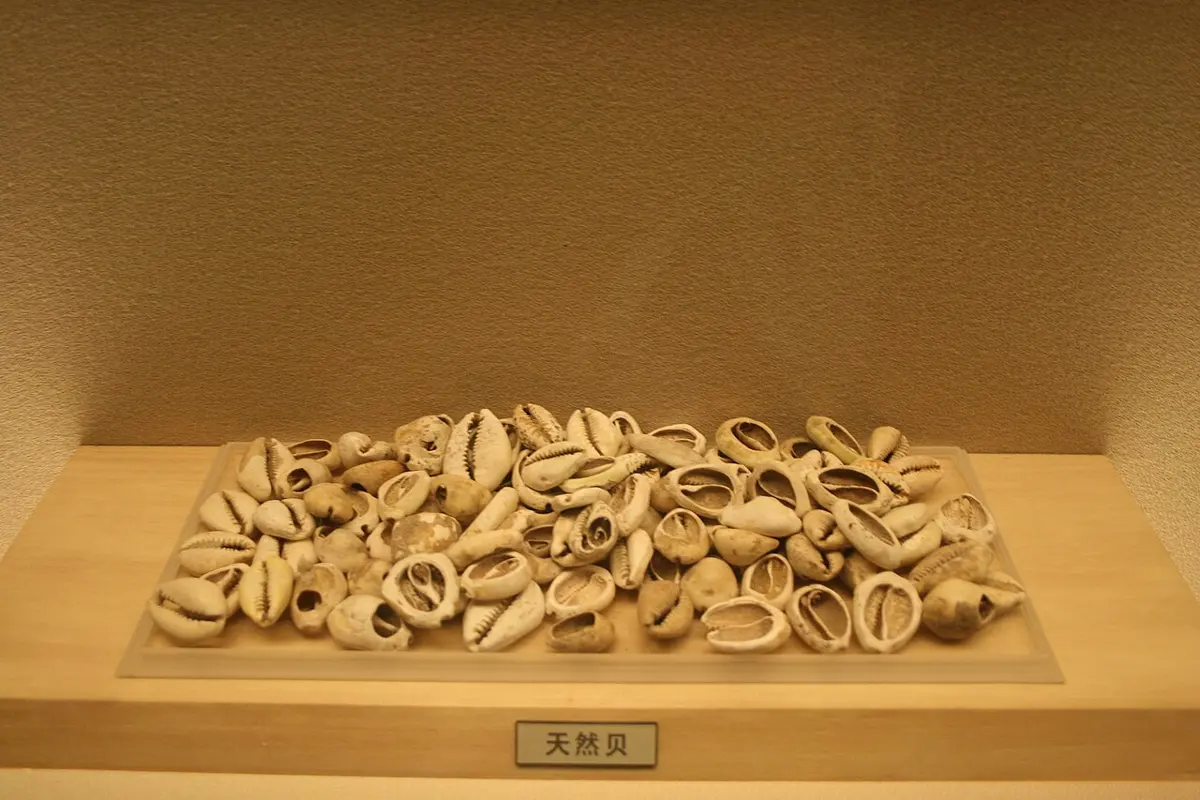
Commodity money has barter’s old troubles in a smaller form. Cattle can’t be split, grain rots, and shells and salt are bulky for a big purchase. Metal is better on every count, so the second kind is metallic money, धातु मुद्रा. The oldest coins found were struck about 2,600 years ago in Lydia, in what is now western Turkey, from electrum, a natural mix of gold and silver, most of them stamped with a lion’s head. A coin was a lump of metal whose weight and purity a ruler had vouched for, so nobody had to weigh it or test it at every sale. The Licchavi kings of the Kathmandu Valley struck copper coins more than 1,400 years ago.
Coins show how much of money is trust. From the 1600s the three Malla kingdoms of the Valley struck silver coins, called mohars, of about 5.4 grams, and they struck them for Tibet as well, which had no coins of its own. The trouble was the temptation. A coin is never pure silver; it has copper mixed in to harden it, and a mint can add a little more and keep a little of the silver. Nepal’s History, for the Curious tells the whole story, in its Chapters 15 and 19. In the 1700s some of the Valley’s coins were barely half silver, and the coins of Jaya Prakash Malla, the last Malla king of Kathmandu, were so poor that the Dalai Lama wrote to complain. When Prithvi Narayan Shah took the Valley, Nepal struck mohars of good silver again, but wanted each new coin to count for two of the old ones, and the Tibetans, who held the old coins, wouldn’t agree. The quarrel over whose coins Tibet should use, and what they were worth, was one of the causes of Nepal’s war with Tibet in 1788. A coin’s value rested on people believing what was stamped on it, and once that belief was spent it was very hard to buy back. The name outlived the coin: Nepali still calls a 50-paisa coin, half a rupee, a mohar.
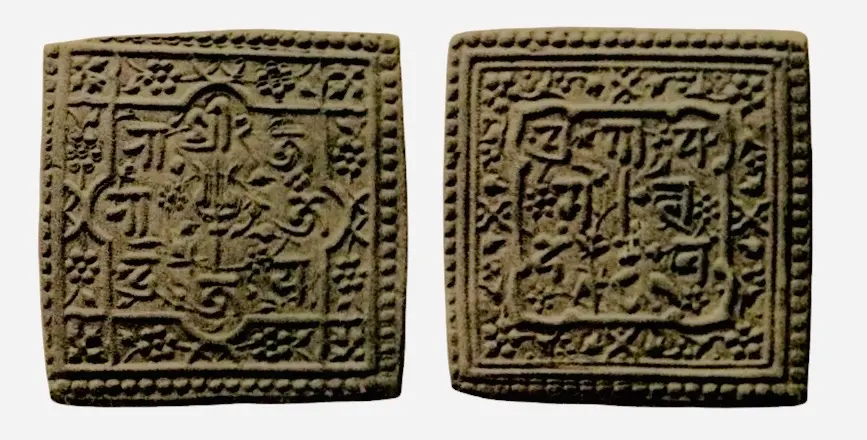
Metal is heavy and worth stealing, so the third kind, paper money, पत्र मुद्रा, began as a receipt for it. In the 11th century, merchants in Sichuan, in China, began giving out paper notes that could be exchanged for coins, and in the 1020s the government took over the printing. For most of history paper money worked that way: it was a promise of metal, and people trusted the paper because they trusted the promise.
Nepal’s first notes came late, in 1945 (2002 BS), issued by the government office that kept the state’s accounts. Even then Indian rupees were used widely across the country, and the two currencies changed hands side by side at a rate that jumped about. One of the reasons Nepal Rastra Bank was set up in 1956 was to spread the Nepali rupee through the country. By the end of the bank’s first ten years, the Nepali rupee had taken the Indian one’s place.
By then the promise behind paper money was fading. In 1971 the United States stopped swapping dollars held by other governments for gold, and that cut the last tie between the world’s main money and a metal. Today’s notes, Nepal’s among them, can’t be turned into gold or silver at all. They are what economists call fiat money: money because a government says so, and because people believe it. A German economist, Georg Friedrich Knapp, began his book of 1905 with the words “Money is a creature of law”, and Nepal’s books set his definition, money is whatever the state declares to be money, beside one built on money’s jobs. The law makes a note legal tender, which means a debt can be paid with it and the person owed must take it. The rest of the work is done by belief.
The clearest picture of that belief comes from Yap, a group of islands in the western Pacific. The Yapese prized great disks of stone with a hole in the middle, quarried on Palau, about 400 kilometers away, and brought home by canoe and raft at great risk. The biggest were nearly four meters across, so they were rarely moved. When one changed hands, it stayed where it stood, and everyone simply knew it had a new owner. An American visitor of the early 1900s was told of a family whose wealth was a stone nobody alive had ever seen. Generations earlier it had been lost in a storm on the way home and had sunk to the bottom of the sea. Since the men who had towed it all swore to its size, and its loss was nobody’s fault, it went on counting as the family’s, as good as if it leaned against their house.
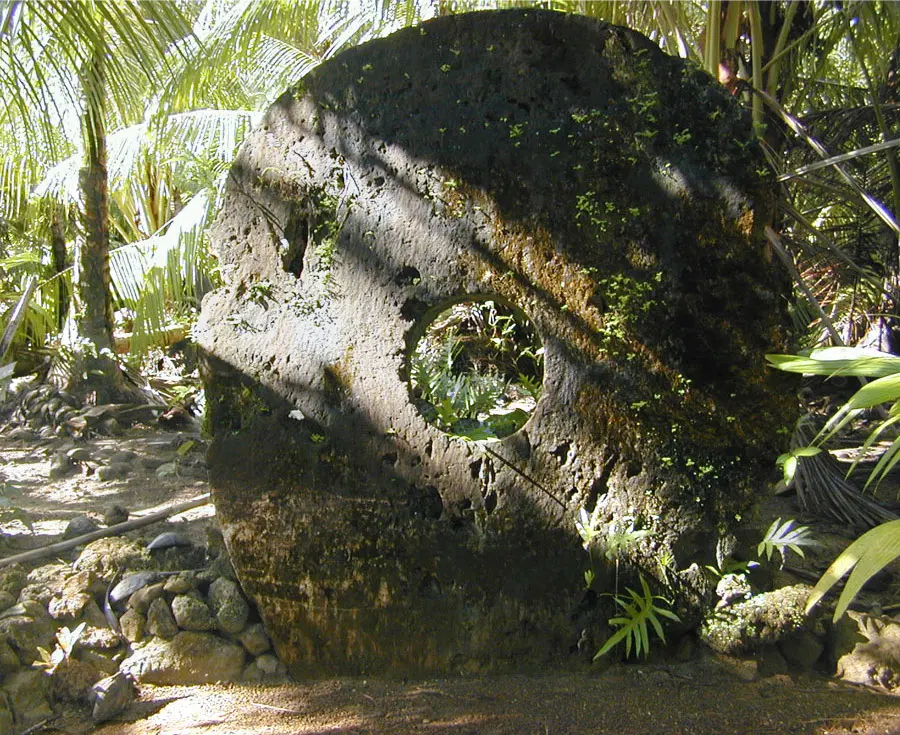
That sounds odd until you see that it is how most money works now. The fourth kind, bank money or credit money, साख / बैङ्क मुद्रा, is a balance in a bank account, a number in the bank’s books that its owner can spend by cheque, card or phone. Nobody needs to see it, any more than the Yapese needed to see their stone. In mid-October 2026 Nepalis held about Rs. 807 billion in notes and coins and had about Rs. 8,510 billion in deposits in the banks, more than ten rupees in the banks’ books for every rupee in anyone’s pocket. Where that money comes from, and what banks do with it, is Chapter 15.
Numbers in a phone
The fifth kind in Nepal’s books is digital money, डिजिटल मुद्रा. The word covers three quite different things, and it helps to keep them apart.
The first is the beep at Anshu’s stove. When a customer scans her code, nothing new is invented. Rupees move from the customer’s account to hers, in a bank or a licensed wallet company, and the phone only carries the message telling them to move. It is the same bank money as before, moved faster. Money, for the Curious, Chapter 13, explains how the accounts, wallets and codes work.
The second is what Nepal’s Grade 9 book means by digital money: money issued by the central bank itself, in digital form, as legal as a note. Economists call it a central bank digital currency. The Bahamas launched the first open to all its people in October 2020, and Nigeria and Jamaica followed. India’s central bank began trying out a digital rupee with the public in December 2022. Nepal Rastra Bank published a study of one for Nepal in 2022, which noted that the law then let it issue only notes and coins, and it is preparing a digital rupee of its own. In September 2026 a committee of parliament approved a bill that would give such money legal standing beside notes and coins. Ordinary Nepalis can’t hold one yet.
The third is cryptocurrency, of which Bitcoin is the best known. It was launched by someone calling themselves Satoshi Nakamoto, whose real name is still unknown. No government or bank issues it. Its record of who owns what is copied across many computers that check each other, so nobody can change it alone, and the program allows no more than 21 million bitcoins ever to exist.
Is it money? Put it through money’s jobs. As a medium of exchange it is rarely used, even where it is allowed: El Salvador made it legal tender in 2021, alongside the US dollar, and required shops to accept it, but few people paid with it, and in 2025, as part of a loan from the International Monetary Fund, the country made accepting it voluntary. Almost nothing is priced in it, so it isn’t a unit of account. And its price swings far more than any currency’s, which makes it a poor store of value for anyone who needs the money next year. Most people who hold it are betting that its price will rise. Its supporters answer that a money no government can print more of is exactly what is needed where governments print too much. In Nepal, Nepal Rastra Bank’s answer for now is a ban: since 2017 it has declared dealing in Bitcoin and other cryptocurrencies illegal, as Money, for the Curious tells.
So money is less a thing than an agreement. Barter needs two people who want each other’s goods at the same moment, a price for every pair of goods, goods that can be cut up and kept, and money does away with all of that. It is taken in exchange, it measures prices, it keeps value for later and carries it from one person to another, and debts are written in it. Grain, shells and cigarettes did these jobs for a while; metal did them better, and paper better still once people trusted it. Today almost all of it is numbers in a bank’s books, which work for the same reason the sunken stone of Yap did: everyone agrees whose they are. Whatever the material, money lasts only as long as people believe that others will take it, and the Malla kings found how quickly that belief could be lost. Most of today’s money sits in banks, and that is where the book goes next.
Found a mistake? Please tell us.