
Anshu decides a great deal on her own. She chooses what to sell, tea and perhaps biscuits, how much milk to buy each morning, and what to charge for a glass. Nobody signs off on any of it. If she charges too much, her customers drink their tea across the road. But the cooking gas under her pan is different. Its price is set by Nepal Oil Corporation, a company the state owns, which alone brings cooking gas into the country. And the road her customers walk in on was built and is mended by the government, out of taxes, and nobody pays her or anyone else for walking on it.
So even one small tea shop runs on more than one way of deciding. Every society has to answer the same three questions, what to make, how to make it and for whom, and there have only ever been a few ways of answering them. In some places custom answers: people make what their parents made, the way they made it, and share it out as they always have. Most of the modern world, though, has argued over three other answers.
The first is to leave it to markets. The land, the shops, the factories and the machines, what economists call the means of production, belong to private people and firms. Each decides for itself what to make and what to charge, hoping for a profit, and buyers decide what to buy. Prices, rising and falling, steer the whole thing. This is called a market economy, or a capitalist one.
The second is to plan. The state owns the means of production, and officials decide what will be made, how much of it, by which factory and at what price, all written into a plan. This is called a planned economy, or in Nepal’s textbooks a socialist one.
The third is to mix the two: private firms and markets for most things, and the state owning some firms, setting some prices and providing things that markets don’t. Nearly every country in the world today is some kind of mix, Nepal included. The argument that never ends is about the proportions.
Leaving it to prices
The case for markets is older than the word capitalism, which Adam Smith never used. What he described in 1776 was how people who are only looking after themselves can end up serving everyone. A merchant who puts his money into a business at home, he wrote, “intends only his own gain, and he is in this, as in many other cases, led by an invisible hand to promote an end which was no part of his intention.” He used the phrase only once in the whole of The Wealth of Nations, but it has stood for his argument ever since.
Smith was just as clear about the alternative. A ruler who tried to direct how private people used their money, he wrote, would be taking a power that could safely be trusted “not only to no single person, but to no council or senate whatever.”
The clearest explanation came in 1945, from the Austrian economist Friedrich Hayek. His question was simple: who knows what? The things that matter for making and using goods are scattered in pieces through millions of heads. One farmer knows his field floods in साउन (Saun), one trader knows which truck is half empty, one cook knows her customers would pay more for stronger tea. No office could collect it all, and it changes every day.
Hayek’s answer was that prices carry the message. Suppose, he wrote, that a new use has been found for tin somewhere, or a tin mine has closed. The people who use tin don’t need to know which. All they need to know is that tin now costs more, so they should use less of it. Those nearest the change move first, the next ones fill the gaps they leave, and the effect spreads to everything made of tin and everything that could stand in for it, though hardly anyone knows the cause. Tens of thousands of people use tin more sparingly “without an order being issued”. Hayek called that a marvel.
Nepal’s textbooks list the features of a market economy, and each one follows from this. Property is private, and the law protects a person’s right to own it, use it and sell it. The profit motive drives people to take risks, try new ways and cut costs. Prices are set by what buyers want and what sellers offer, the price mechanism, and they guide what is made and for whom. People are free to choose their work, start a business and spend as they like. What buyers like gets made, and what they don’t vanishes from the shelves, which economists call consumer sovereignty. And the government’s part is small: making laws, keeping the peace, protecting people and property, dealing with other countries. The United States, Britain and Japan are usually named as the countries closest to this.
There is no entirely free market, because someone has to protect property, stop cheating, enforce contracts and collect the taxes that pay for it all.
Marx’s reply
Seventy years after Smith, two German writers gave the most famous answer from the other side. The Communist Manifesto of 1848, by Karl Marx and his friend Friedrich Engels, began by praising what the new owners of factories had done. In barely a hundred years, it said, they had “created more massive and more colossal productive forces than have all preceding generations together”: machines, steamships, railways, telegraphs, whole continents cleared for farming.
Then came the charge. The same system, the Manifesto said, ran into crises again and again, when there was suddenly too much of everything, factories stood idle and workers went hungry. In his great book Capital, from 1867, Marx tried to show where profit came from. A worker owns nothing but the ability to work. The owner pays a day’s wage, enough to live on, and the worker produces more than that in a day; the extra, which Marx called surplus value, is the owner’s profit. To Marx this was exploitation built into the system, not the fault of a cruel boss, and he expected the workers to overturn it. Few economists now accept that labor alone creates value, but his picture of a restless system, always growing and always lurching into crisis, still has many readers.
What Marx did not leave behind was a plan. He wrote only a few pages on how the economy that replaced capitalism should be run, and those who came to power in his name had to work it out for themselves.
What they built shares the features that Nepal’s textbooks list for a socialist economy. The state owns the means of production, the land, the mines, the factories. A planning commission decides what to make, how much, how and for whom. Prices are fixed by the government, often from what a thing costs to make, not from what buyers want. The aim is everyone’s welfare and fairness, not profit: schooling, health care, food and housing for all at low cost, and help for the old, the sick and those out of work. And the government’s role has almost no limit, since it runs nearly everything itself.
The plan in practice
The first country to try it was Russia, after the revolution of 1917, which became the Soviet Union. Its leader, Lenin, had written that year that running a socialist economy would take only “extraordinarily simple operations”: “supervising and recording, knowledge of the four rules of arithmetic, and issuing appropriate receipts.” It was nothing like that simple. Within four years output had fallen to a small part of what it had been, and in 1921 Lenin brought back some private trade to get things moving. The same year a state planning office was set up, Gosplan, with a staff of a few dozen.
It grew. From 1928, under Lenin’s successor Joseph Stalin, the Soviet economy was run by five-year plans, and the first of them aimed at one thing above all: heavy industry. Peasants were forced off their own small farms into huge collective ones, and the grain taken from them fed the workers in the new factories and was sold abroad to pay for machines. Steel works, dams, power stations and whole new cities went up within a few years.
The cost was terrible. Collective farming, and the grain taken even as harvests failed, brought a famine in 1932 and 1933 that killed millions, in Ukraine and Kazakhstan worst of all. Scholars’ counts for the whole Soviet Union run from about five million to nearly eleven. Ukraine calls it the Holodomor, and its parliament and many other countries recognize it as a genocide, a famine meant to destroy Ukrainians as a people. Other historians hold that the deaths came from cruel policy and a real shortage of grain, not from a plan to kill a nation. That argument goes on.
Still, the plan built things. For about fifty years Soviet incomes grew steadily, until they passed Argentina’s. In 1957 the Soviet Union put the first satellite, Sputnik, into orbit, and into the 1960s it reported growth twice as fast as America’s.
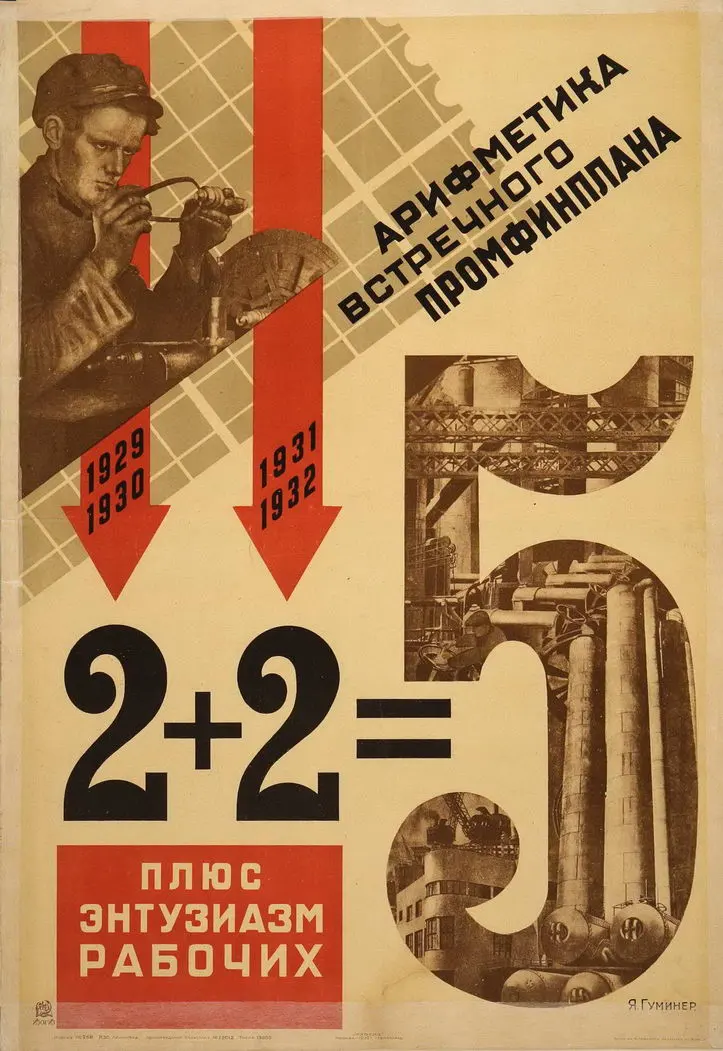
What it couldn’t do was what Hayek had described: notice small changes and answer them. The plan set targets in tons and meters, so managers chased tons and meters, not quality. A Soviet humor magazine showed a factory manager proudly displaying his record output: a single gigantic nail, hanging from a crane. Two Soviet economists, writing in the late 1980s, told the story of moleskins. In 1982 the state raised the price it paid for them, from 20 kopecks a pelt to 50, to get more gloves made. So many pelts came in that the skins rotted in warehouses. The ministry twice asked the price office to lower the price again, and nothing happened. The price office, they explained, had about 24 million other prices to keep track of.
Economists had argued about exactly this in the 1920s and 1930s. One side said that without prices from real buying and selling, planners would have no way to tell which use of steel or labor was worth more. A Polish economist, Oskar Lange, gave the strongest reply. Planners could set prices and watch their warehouses: if goods piled up, lower the price; if shelves emptied, raise it. Many economists of the time thought his answer had settled the argument. The moleskins show what happened in practice. The information did arrive, as a warehouse full of rotting skins. What was missing, as one economist who wrote planning’s history put it, was anyone with a reason to act on it. A shop that ignores its prices goes out of business. An official who changed one could only get into trouble.
China’s planners met the same trouble with far worse results. In the Great Leap Forward, from 1958, villages were pushed into enormous communes and ordered to deliver grain to the state. The famine of 1959 to 1961 has been called the deadliest in history: most estimates put the deaths between about 17 million and at least 45 million. A study of it found that in 1959 China grew far more food than its people needed to live, and that the regions growing the most per person had more deaths, not fewer. Its authors put the blame on the plan itself, which couldn’t learn quickly enough where the food really was.
Twenty years later, change began in one hungry village. In the winter of 1978 eighteen farmers in Xiaogang, in Anhui province, met in secret and signed a paper dividing the collective’s land among their families. Each family would farm its own plot and keep some of what it grew. Breaking up the collective was dangerous, and the paper ended with a promise: if any of them were jailed or executed, the others would raise their children until they were eighteen. The farmers worked harder, each family trying to grow more than the next, and the harvest was far bigger than any in years. Instead of punishing them, the new leaders under Deng Xiaoping held them up as a model, and within a few years farms across China were run the same way. In the forty years that followed, the number of Chinese people in extreme poverty fell by close to 800 million.
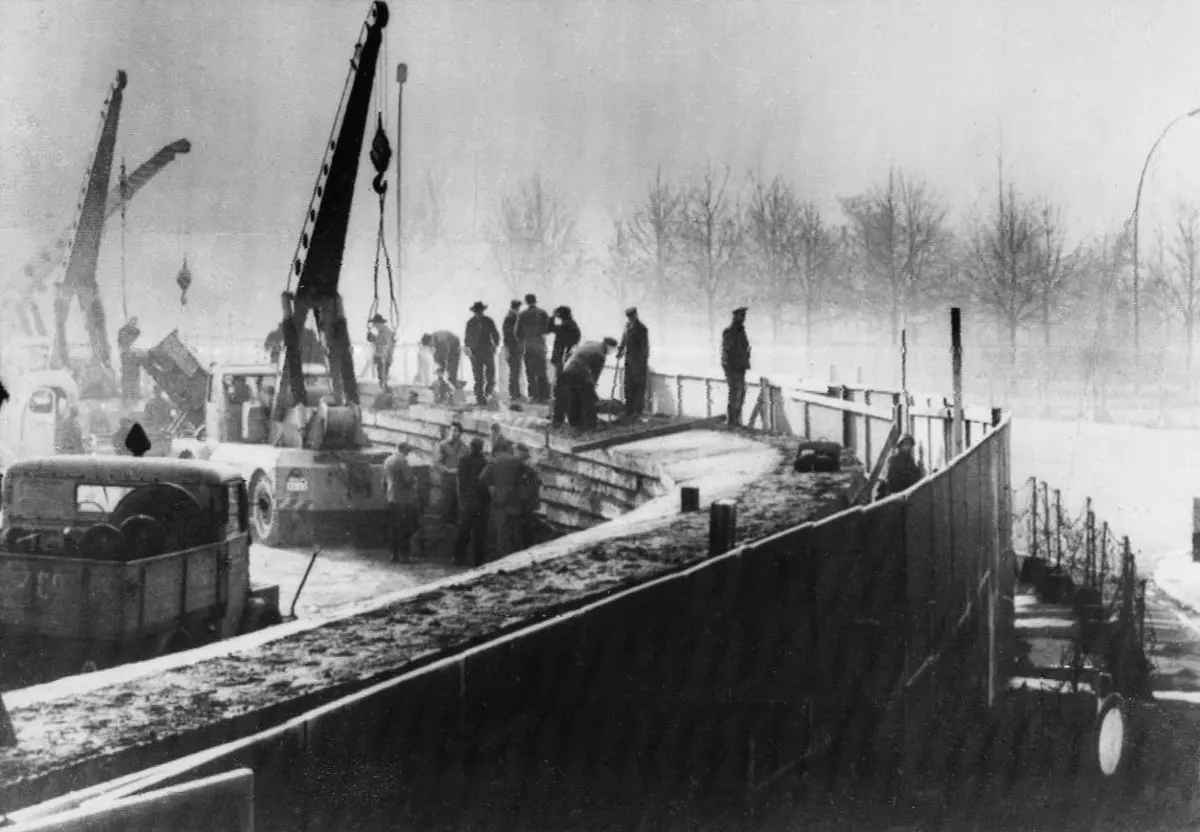
The clearest comparison comes from Germany. After the Second World War the country was split in two, and for over forty years the east was run by a plan and the west by markets. In 1936 the two halves had lived equally well, and some of the world’s best factories were in the east. In 1958 East Germany’s rulers predicted that their people would be better off than West Germans by 1961. Instead the Berlin Wall went up that year, and that failed promise was one of the reasons. When it came down in 1989, East Germany’s output per person was less than half of West Germany’s. That doesn’t prove markets always win, only that here the way the economy was run mattered a great deal. Giving up planning was painful too: after 1990 output in the old Soviet Union fell further than in the Second World War.
The mix
Nearly every country today lies somewhere in between. Only a few, North Korea and Cuba the best known, still run most of their economies by plan. At the other end, even the United States has state schools and state-paid pensions. China has private firms and markets alongside big state-owned companies and a state that steers far more than most.
Nepal’s textbooks list the features of the mixed economy too. Private and public ownership sit side by side, and sometimes compete in the same trade, as private and government schools, hospitals and banks do in Nepal. Private firms are free to invest and trade within the limits the law sets. They look for profit, and the government for people’s welfare, putting money where private firms won’t go. Most prices are left to the market, but the government may fix or control the price of a few essentials. The government acts as a regulator: it encourages private investment, watches for any firm that grows strong enough to have no competitors, tries to steady prices, and taxes higher incomes at higher rates to narrow the gap between rich and poor. And it plans the big things, roads, power and schools, alongside the private firms. Which mix a country chooses depends on what its people believe, what its constitution and laws say, how its society is arranged, and which countries it is close to.
The mixtures differ a lot. Some rich countries of northern Europe collect close to half of everything they produce in taxes, and use much of it to narrow the gap between rich and poor. Japan and South Korea collect much less, but their governments have steered hard: South Korea’s promoted chosen industries, made firms compete abroad and paid for good schools, what some economists call a developmental state.
Nepal is a mix of its own, and it is visible from Anshu’s bench. The tea is sold in a market. The gas comes in through a state-owned company, at a price it sets. The electricity reaches her through the wires of the government’s Nepal Electricity Authority, which makes some of it and also buys from privately owned power plants. Nepal’s constitution sets the economy’s aim in its own words, to be reached through public, private and cooperative effort together, and this book comes back to those words when it turns to Nepal’s own economy.
Why have a state in the market at all? Because markets fail at some things. A single seller with no rivals can charge what it likes. A brick kiln’s smoke reaches lungs that never agreed to it, and nothing in its price says so. A streetlight helps everyone who walks under it, whether or not they paid. And sometimes a whole economy stalls, with people wanting work and factories wanting buyers. Each of these has its own place later in this book. Together they are why no country leaves everything to prices.
But governments fail too, for reasons just as built in. A policy to fix a market’s failure isn’t worth it if it costs more than it saves. Officials and politicians follow their own incentives, like everyone else. A rule that brings a lot to a small, organized group, at a cost so spread out that each of many people pays only a little, is easy to pass, because the few fight for it and the many don’t notice. And a government, unlike a shop, rarely goes out of business when it gets something wrong.
How much market, how much state?
That leaves the question every country argues over: in its own mixture, how much should be market and how much state?
One side, with Hayek among its best-known voices, puts its trust in markets. Prices carry knowledge no planner can gather. People work hardest and try most when they keep what they earn, as the farmers of Xiaogang showed. Freedom to buy, sell and start a business is worth having for its own sake. It points to the two Germanies, the collapse of planning across the Soviet bloc, China’s rise once its farmers and firms could keep their earnings. In this view a government should keep the rules fair and stay out of most of the rest, because every power it takes can be misused.
The other side says markets alone have never made a poor country rich or a rich one fair. The American political economist Alice Amsden, who argued that South Korea grew so fast because its government steered it, is one of its voices. It points to the market’s failures, to the slumps and the gaps between rich and poor that markets leave behind, and to the countries that caught up fastest, Japan, South Korea and China, all of them with governments that steered hard. It points to the countries of northern Europe, which tax heavily and remain among the richest and most equal places on earth. In this view the question isn’t whether the state should act, but how well.
Both sides agree on more than their arguing suggests. Few want the state to run tea shops, and few want armies or courts run for profit. The real fights are about the things in between: hospitals and schools, electricity and fuel, banks and land, and the answer may differ with how honest and capable a country’s government is. No experiment can settle it, because nobody can run one country twice.
In the end, every economy answers the three questions with some mixture of prices and plans. A market economy leaves them to private owners, profits and prices, but it needs rules, can lurch into slumps, leaves wide gaps between rich and poor, and leaves some things undone. A planned economy hands them to the state, which can build steel works and launch satellites but finds it hard to notice and answer small changes, and in the Soviet Union and China its failures cost millions of lives. Almost every country now mixes the two, and the argument is about the mixture. To tell how any of them is doing, people watch a few numbers: how much is made, what it costs, how many have work.
Found a mistake? Please tell us.