
Small groups of schoolboys were once shown slides of paintings by two modern artists, Paul Klee and Wassily Kandinsky, and asked which they liked better. Each boy was then told, privately, that he belonged to the group that preferred one painter. He was not told who else was in it. Then he handed out small sums of real money to two other boys at a time, known to him only by a code number and a group. He could never give anything to himself.
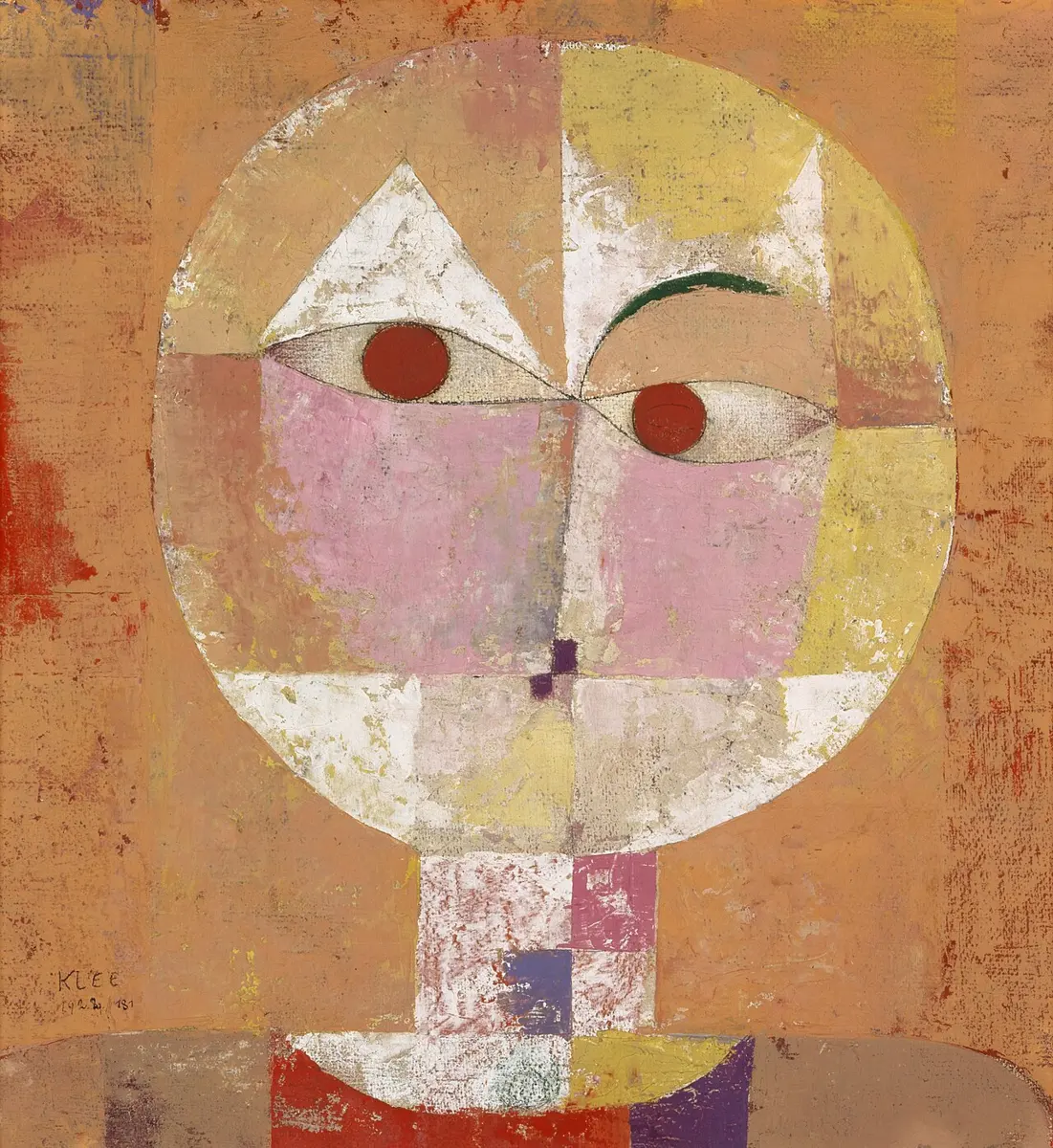
That was about as thin a group as a psychologist could invent, and it was meant to be. Henri Tajfel, who ran the study, wanted groups with no history, no quarrel and nothing to gain, so that nothing but the label could explain what the boys did. With nothing else to go on, the boys still gave more to members of their own group than to the other group. Some choices on their sheets let them give both boys more money, or give their own group the most money. The strongest pull was toward the option that made the gap between the groups widest, even when that meant their own side got less than it could have. Winning against the other group seemed to matter more than gaining.
And the groups were not really formed by taste at all; the boys were only told they were. In another version, boys were told they had overestimated or underestimated the number of dots on a page, and that was not true either. The pull toward “us” switched on for a label that meant nothing.
This is the minimal group, and it has been tested many times since, with coin tosses and dot-counting tasks. People usually stay fairly fair, but they tilt toward their own side. The tilt is called in-group bias. It goes with a second habit, seeing the other group as all alike while seeing your own as full of different people, which psychologists call out-group homogeneity. In the minimal groups, the tilt needed no history, no quarrel and no reason.
Why people do this is still argued. In one later experiment, people were told plainly that their own reward did not depend on anyone else’s choices, and the bias disappeared. Its authors think people favor their group as a way to gain more for themselves, a plan that can’t work but that the setup makes look as if it might. But the main lesson has lasted. It takes very little to make a group, and once there is a group, people lean toward it.
Their character, my situation
The mind fills in other people. It sees what someone does and, without being asked, supplies a reason. Those reasons come in two broad kinds. Some point inside the person, to their character, mood or ability: she shouted because she is rude. Others point outside, to what was happening around them: she shouted because the bus was about to leave without her child. Psychologists call the first kind dispositional and the second situational.
Two American researchers once asked students to read an essay about Fidel Castro, the leader of Cuba, written by another student. Some essays praised him and some attacked him. Some readers were told the writer had chosen which side to take; others were told the writer had been assigned a side and given no choice. Then everyone guessed what the writer really thought of Castro.
When the writer had chosen, readers took the essay at its word, which is reasonable. But even when they knew the side had been handed out, they still judged the writer of a pro-Castro essay to be more pro-Castro. The pull was weaker, but it was there. They knew the situation had decided what was written, and they still read it as character.
A psychologist later gave this a grand name, the fundamental attribution error: the habit of explaining other people’s actions by who they are, and making too little of what they were up against. Studies in many countries since have found people drawing conclusions about a person’s character from behavior that the situation plainly forced. In one set of experiments, Koreans and Americans both did it. When the pressure on the writer was made very obvious, the Koreans adjusted their judgments and the Americans didn’t.
A tidier idea grew up beside it, and you will find it in many textbooks: that we explain other people’s actions by their character, but our own by our situation. You were late because you are careless; I was late because of the traffic. The psychologist Bertram Malle gathered every study of this he could find, 173 of them over more than thirty years, and combined them. The difference, on average, came to almost nothing. In about two studies out of five it pointed the wrong way or not at all. He concluded that it appears to be “a widely held yet false belief”.
What he did find was narrower. For bad things, people did tend to blame their own circumstances more than an observer would. For good things it reversed, and people gave themselves the credit. That pattern, taking the credit and blaming the traffic, has its own name, the self-serving bias, and it has better support than the grand rule. So the habit of reading character into what others do is real. The neat mirror image, their character and my situation, mostly isn’t.
What children learn
Joan Miller, an American psychologist, wondered whether the habit is part of being human or something people learn. She talked with middle-class Hindus in Mysore, in southern India, and middle-class Americans in Chicago, in the United States: children aged 8, 11 and 15, and adults. Each person described two good deeds and two wrongs done by someone they knew, and explained why the person had done them.
The answers were rich. One American explained a neighbor’s cheating on her taxes: “That’s just the type of person she is. She’s very competitive.” A Hindu adult explained why a contractor had kept a 1,500 rupee advance and never done the work: “The man is unemployed. He is not in a position to give that money.”
At 8 and 11, the two groups of children explained wrongs in much the same way. The difference grew with age. American children pointed more and more to character as they grew up, until adults did so in close to half their reasons. Hindu children pointed more and more to the circumstances: the person’s place in a family or a job, who they were with, the time and the place. By adulthood the two had drifted far apart. The habit of seeing character everywhere, in other words, is partly learned, and what a culture teaches about people seems to shape it. One study, with a few dozen people of each age in each city, can’t say how far this runs across India or America, let alone Nepal, but the pattern of children starting alike and growing apart points to learning.
Pictures in the head
If the mind fills in strangers by their character, it also fills them in by their group. A stereotype is a general picture of what members of a group are like: the people of one country are hard-working, girls are bad at math, old people can’t learn new things. Stereotypes save effort. Knowing nothing about a person, the mind supplies a guess from their label, and it is ready at once. The cost is that the guess is applied to people it doesn’t fit, and often it fits nobody.
When a stereotype carries a feeling, usually dislike or contempt, it becomes prejudice, an attitude against a whole group. When the attitude turns into action, refusing a job, a room, a seat at a meal, it is discrimination. The three can come apart. People can hold a stereotype they don’t act on, and discriminate because everyone around them does, without much feeling at all.
In South Asia the oldest and best-known of these divides is caste. Karla Hoff and Priyanka Pandey, two economists at the World Bank, set out to test whether the label itself, simply said aloud, could change how children perform.
They worked with nearly 600 boys in Grades 6 and 7 in villages in Hardoi district of Uttar Pradesh, in northern India. About half were from the high castes and half were Dalit. The boys came in groups of six and solved paper mazes, paid one rupee for each maze solved in fifteen minutes. A young high-caste woman led every session.
In some sessions nobody’s caste was mentioned. There, the Dalit boys solved mazes just as well as the high-caste boys. The gap between them was very small.
In other sessions, with boys of both groups in the room, the woman read out each boy’s name, his village, his father’s and grandfather’s names, and his caste, and the boy nodded. Then they did the same mazes. Now a gap opened: the Dalit boys did about 20 percent worse than the high-caste boys. And in sessions where all six boys were from the high castes and their caste was announced, the high-caste boys solved about a quarter fewer mazes than when caste was never mentioned. Saying the word was enough to change how hard and how well the boys worked. Making caste public could cut the number of mazes solved by about a quarter, which the authors reckoned was twice what a boy would lose by being a year younger.
The mazes were the same, and so were the boys. Only what was said in the room had changed. The two groups moved in different ways: in the mixed sessions neither group’s score shifted much on its own, but together they opened a gap, and in the one-caste sessions both groups did worse. The authors thought the high-caste boys put in less effort once their caste was announced in a room of their own caste, and that the Dalit boys were held back by the fear of confirming a stereotype about them.
This was India, not Nepal, and boys, not girls. No similar experiment in Nepal was found, though the search was not exhaustive. Caste discrimination in Nepal is real and recorded, and it is against the law. The Caste-Based Discrimination and Untouchability (Offence and Punishment) Act of 2068 (2011) forbids untouchability and discrimination in its section 3, and its section 4 says what counts: acts done on grounds of caste, descent, occupation and the like, in any public or private place. What the Indian mazes add is a picture of how such a label works inside a person, even a child, even for a quarter of an hour.
Hidden attitudes, and a worry in the air
Psychologists wondered whether people carry attitudes toward groups that they can’t, or won’t, report. A team of American psychologists built a test of speed, the Implicit Association Test. You sort words and names as fast as you can, pressing one key for, say, “good word or this group” and another for “bad word or that group”, and then the pairings swap. If you are quicker when one group is paired with “good”, the test reads that as a hidden association, an implicit attitude.
The test became famous. Then came a hard question: if you change someone’s score, do you change what they do? One team gathered 492 studies, with about 87,000 people, that had tried to change these hidden associations. The scores could be moved, a little. But nearly all the studies measured people in a single session, minutes after the attempt, and only about one in sixteen looked again later. And where behavior was measured, it barely changed, and the changes in the scores did not explain the changes in behavior. The test may measure something real, but nudging it was not the same as changing what anyone did.
A second idea about how stereotypes act on people went the other way, onto the person stereotyped. Two American psychologists gave Black and White university students in America a hard verbal test. When it was described as a measure of ability, the Black students did worse than White students with similar past scores. When the same test was described as an exercise that measured no ability, they did about as well. The idea, stereotype threat, was that the worry of confirming a stereotype about your group can itself pull your performance down. It is close to what the economists said they saw in the Dalit boys’ mazes.
It was soon being tested in classrooms. Then the studies were added up. The best-known version, girls doing worse in math when reminded that girls are supposed to be bad at it, showed signs that studies finding nothing had gone unpublished, perhaps enough to distort the whole picture. In a careful test with over 2,000 Dutch students aged 13 and 14, its plan registered before any data came in, the reminder made no difference to girls’ math scores at all. For girls and math at school, then, the effect is much less certain than it once seemed; whether it holds up in other groups and settings is a separate question these studies don’t settle. That is a reason for caution about the Dalit boys’ result too: it is one experiment, in one district, and no repeat of it was found.
What helps
If it takes so little to make a group, it is fair to wonder what it takes to soften one. The best-supported answer is plain: contact. People who spend time with members of another group tend, on the whole, to think better of the whole group, not only of the people they met.
Two psychologists once combined 515 studies of contact, from many countries and many kinds of groups. Contact typically went with less prejudice. The effect wasn’t explained away by prejudiced people avoiding contact, and the more carefully done studies found larger effects, not smaller. The conditions long proposed for it, meeting as equals, working toward common goals, with the backing of law or custom, made it work better, but contact often helped without them.
The trouble is that many of the experiments are too light to tell. When another team looked at 418 experiments on reducing prejudice published between 2007 and 2019, three out of four were light touches, often a single short session: imagining meeting someone from another group, or hearing about someone who had. Smaller studies reported bigger effects, a sign that the ones that failed were going unpublished. The few large experiments in real places found modest changes.
One of those was in villages in Uttar Pradesh again. Matt Lowe, an economist, signed up over 1,200 young men and put about 800 of them, chosen at random, into month-long cricket leagues; the rest were left out for comparison. Some teams were all of one caste; others were mixed, also at random. Men on mixed teams made more friends from other castes, favored their own caste less when voting on who should win free cricket coaching, and later traded more readily with men of other castes. Men who faced more opponents from other castes, by contrast, made fewer friends across caste. Meeting was not enough; it was being on the same side that helped, what psychologists call a superordinate goal, something two groups can only get by working together.
A soccer league in Iraq, mixing Christians who had fled their homes with Muslim teammates, found the Christian players treated Muslim players better on the field and kept training with them months later. They didn’t change much off the field, or in what they said they felt. Contact changed what people did with each other without much changing their opinions, and only in the places they had met.
Groups form fast, on almost nothing. The mind reads other people’s actions as their character and their group as all alike, and a culture can teach it to look more at the situation or less. Labels can change how well people perform, though the best-known finding about this, girls and math, has shrunk under closer testing, and moving people’s scores on a test of hidden bias barely moved what they did. What helps most clearly is ordinary: people of different groups working on the same side, long enough to become “us”.
Found a mistake? Please tell us.