Optional Science, Explained
CDC publishes no textbook for Optional Science, only its curriculum. These books follow the Secondary Curriculum 2079 unit by unit, in its order: biology, chemistry, physics and the Earth, with worked numericals and every question answered.
Grade 9
-
Grade 9 Optional Science, Explained
15 units
Cell Biology · Life and Life Process · Genetics · Ecology · Applied Biology · Atomic Structure · Gas Laws · Electrolysis · Organic Compounds · Inorganic Materials · Force · Radioactivity · Light · Electricity and Magnetism · Geology
Open Grade 9 Optional ScienceModel papers
Full 75-mark practice papers set to CDC’s specification grid, with model answers, marking schemes and a 2.25-hour timer to mark yourself against. 3 papers.
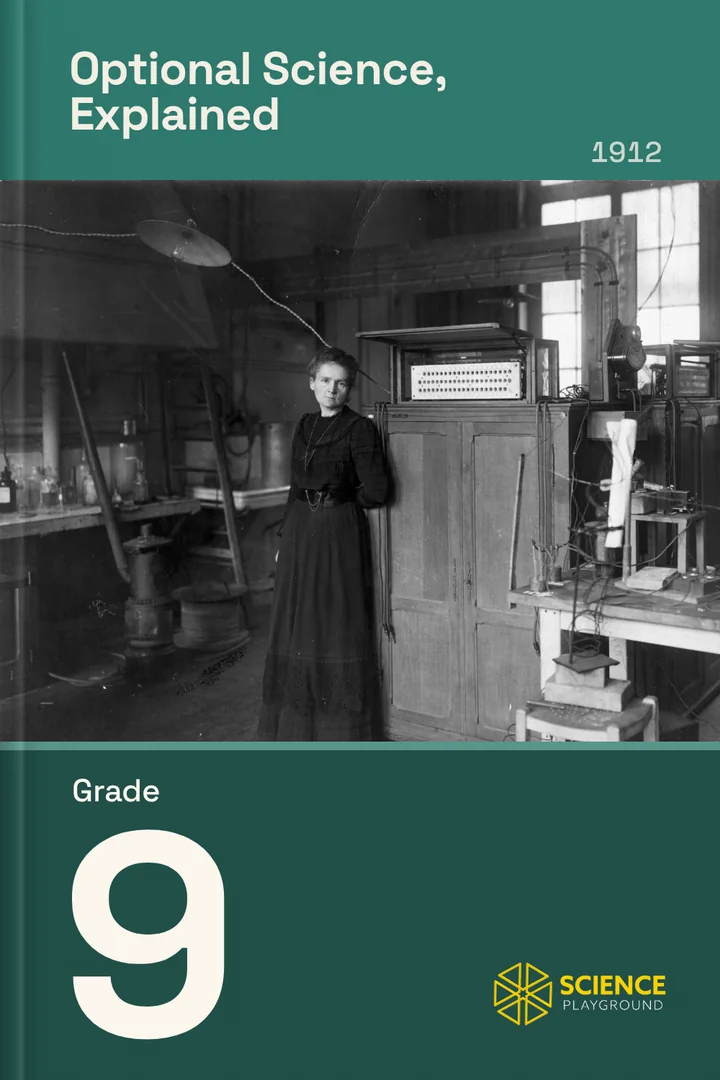
1912 · Marie Curie standing in her laboratory in Paris, among the instruments she used to study radioactivity
Cover photo: unattributed, Public domain
Grade 10
-
Grade 10 Optional Science, Explained
15 units
Cell Biology · Life and Life Process · Genetics · Ecology · Applied Biology · Periodic Table · Chemical Bonding · Chemical Reaction · Organic Compounds · Metallurgy · Force · Heat · Light · Electricity and Magnetism · Earth and the Universe
Open Grade 10 Optional ScienceModel papers
Full 75-mark practice papers set to CDC’s specification grid, with model answers, marking schemes and a 2.25-hour timer to mark yourself against. 3 papers.
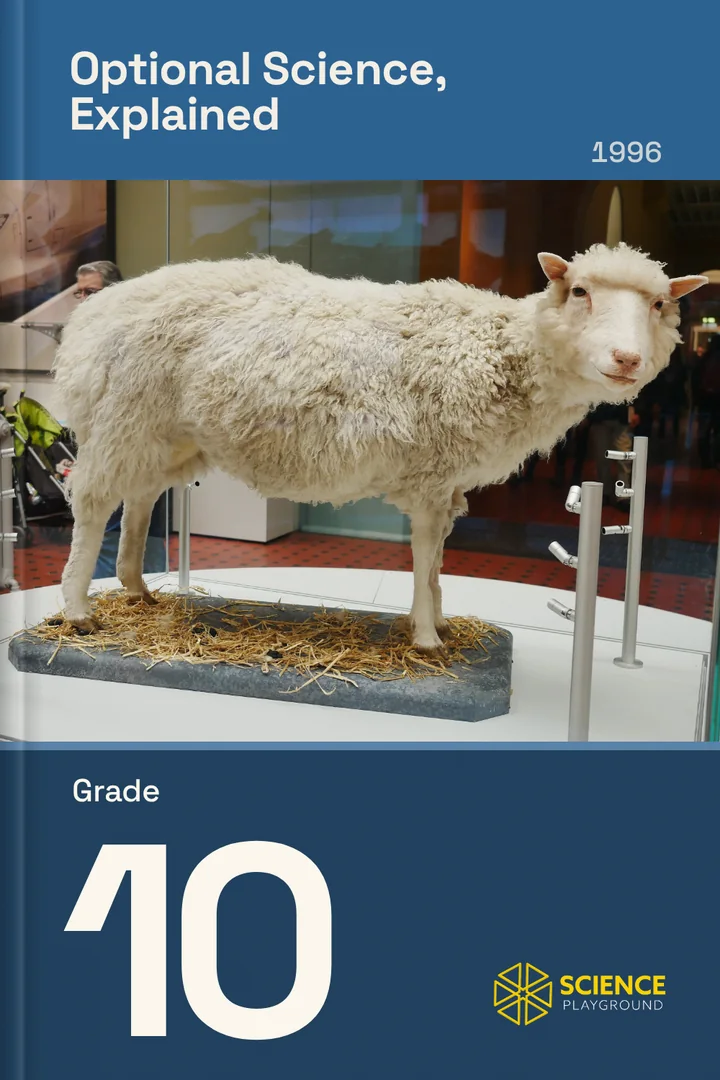
1996 · Dolly the sheep, the first mammal cloned from an adult cell, preserved at the National Museum of Scotland
Cover photo: Sgerbic, CC BY-SA 4.0