
Puzzles that fool the eye
Hooper’s paradox
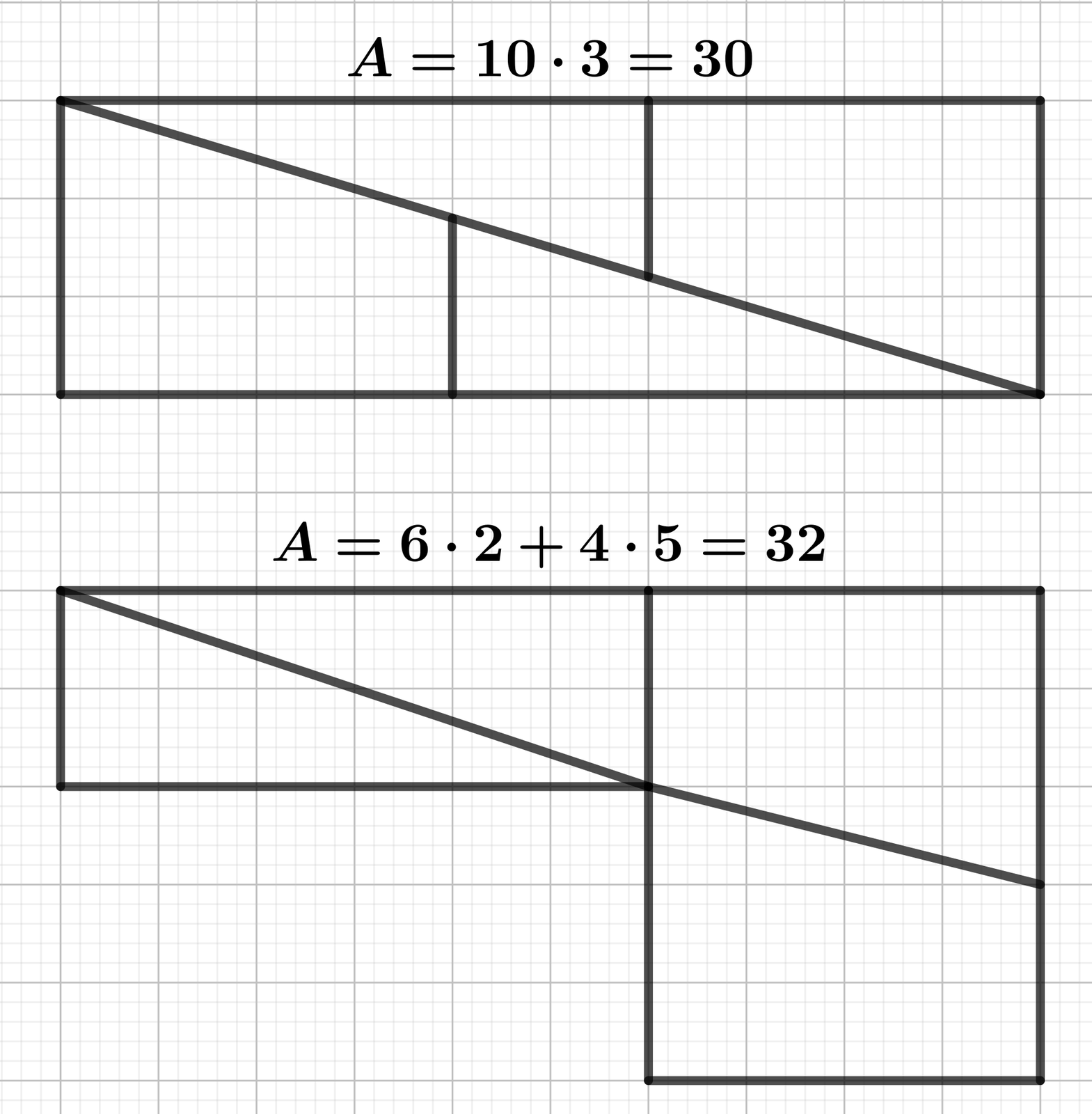
The same four pieces make both shapes. How can one have an area of 30 and the other 32?
They don’t quite fit: in the second shape the long cuts don’t line up, and there is a thin gap along them, as big as the two extra squares.
Why? The cuts look like one straight line, but their slopes differ a little, so the pieces leave a sliver too thin to notice. William Hooper published it in 1774.
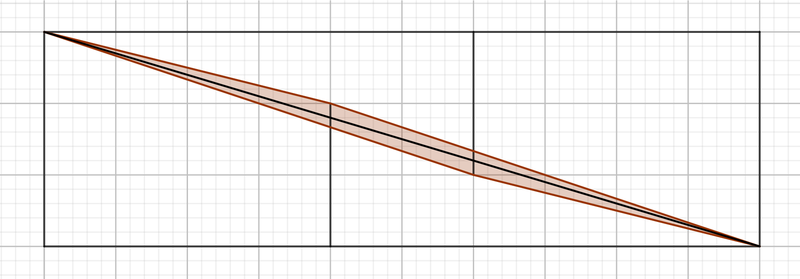
Picture: Kmhkmh, CC BY 4.0