
One Genus, Many Forms
Every plant here is a Euphorbia, yet one looks like a cactus, another like a leafy shrub, and one is the poinsettia. Botanists group plants by their flowers and seeds, not their looks: all of them share the same tiny, unusual flower structure and milky sap.
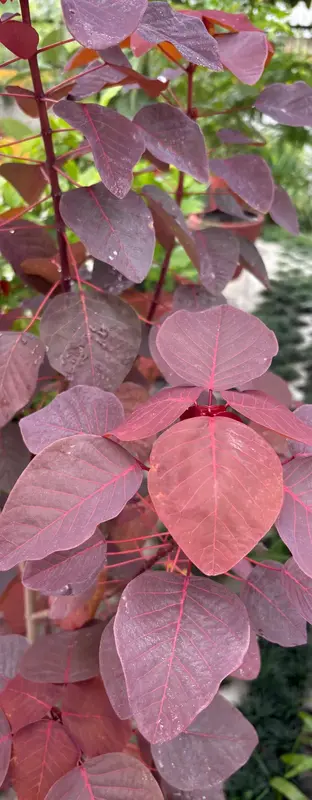
Caribbean Copper Plant
लाल झारी
Euphorbia cotinifolia
A leafy shrub whose new leaves come out wine-red and turn coppery green. Nothing about it looks like a cactus, yet its tiny flowers and milky sap show it is a Euphorbia too.
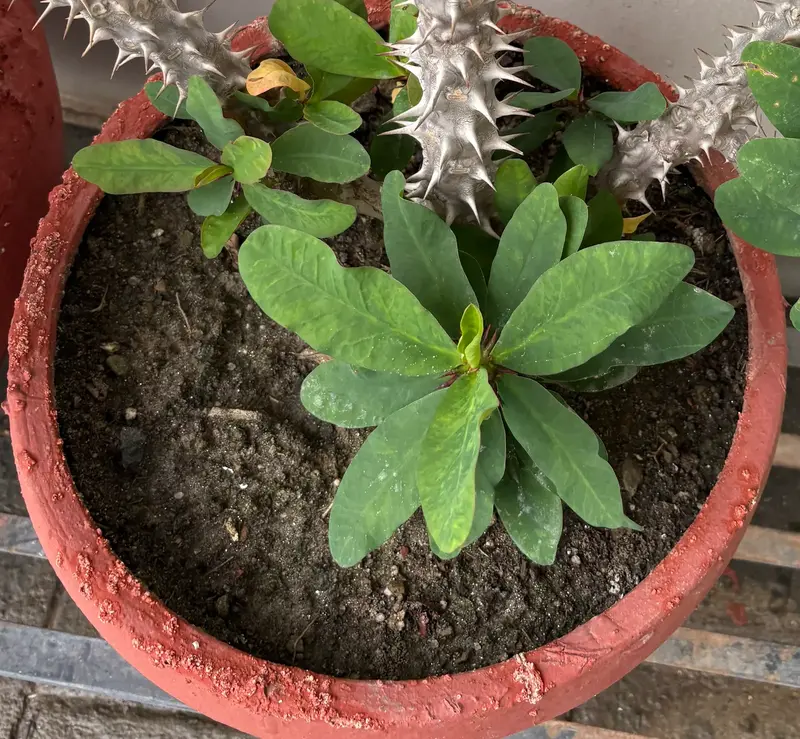
Crown of Thorns
Euphorbia milii
Its stems are armed with long, sharp spines, and its bright “flowers” are really pairs of colored bracts around tiny true flowers. A legend says it was used for the crown of thorns.
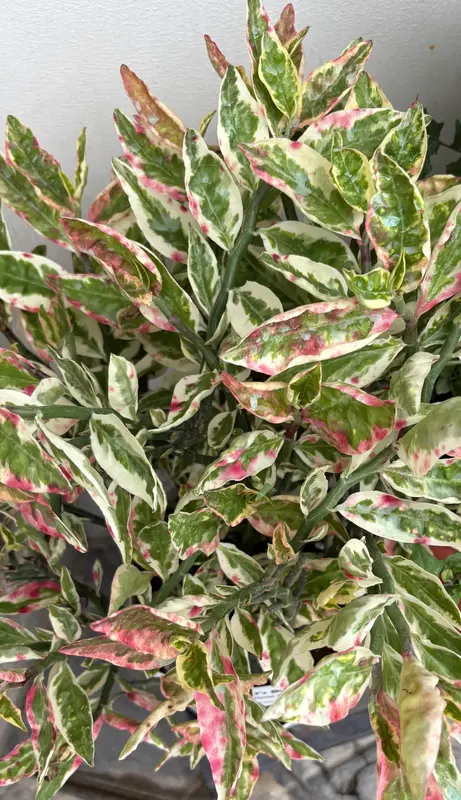
Devil’s Backbone
Euphorbia tithymaloides ‘Variegata’
Its stems zigzag at every leaf, like a spine or a staircase, and its small red flowers look like birds’ heads. This one has leaves splashed with white and pink.
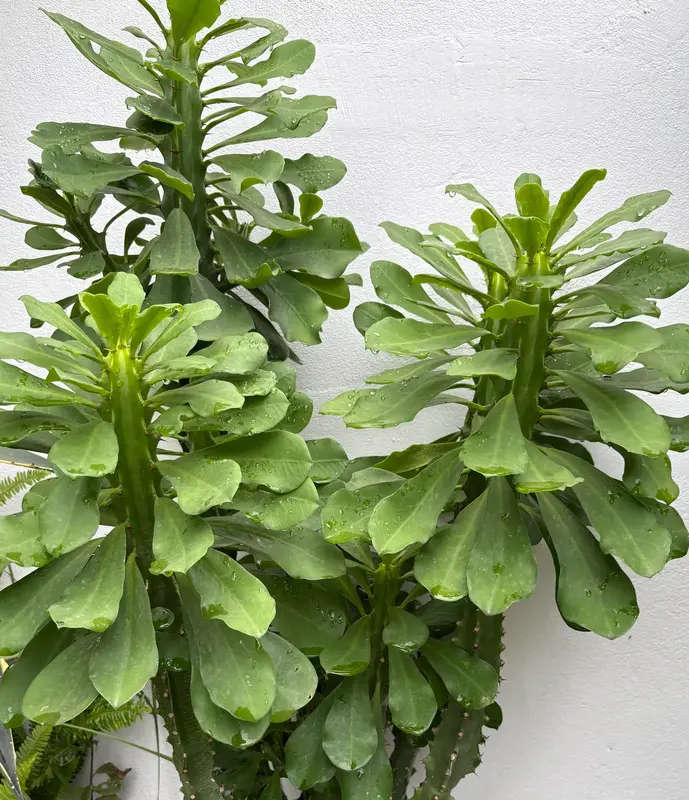
Indian Spurge Tree Cactus
सिउँडी
Euphorbia neriifolia
With its thick, ribbed, spiny stems, it looks just like a cactus, but it grows wild in India and Nepal, far from any cactus, and has leaves along the ribs. In Nepal it is सिउँडी and grown as a living fence.
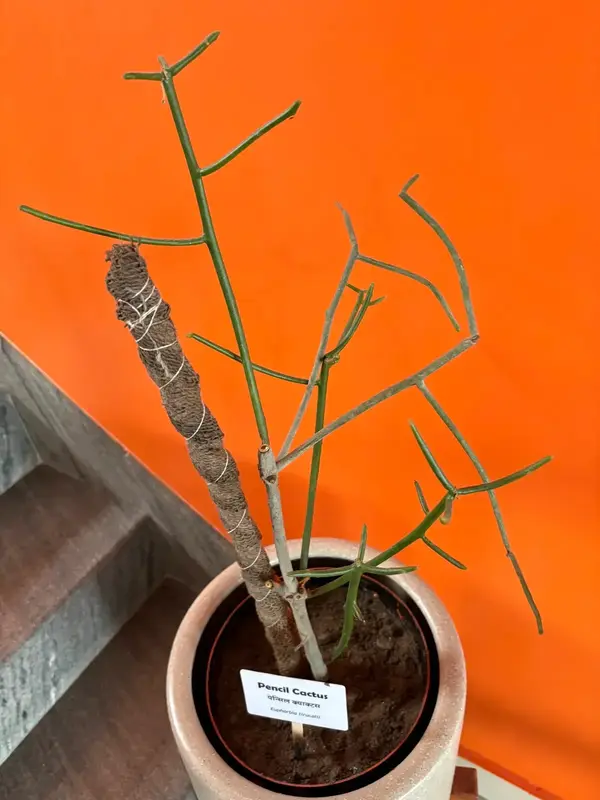
Pencil Cactus
Euphorbia tirucalli
Its pencil-thin green stems do all the food-making, since its leaves are tiny and fall off early. Its milky sap burns the skin and eyes, so look but don’t touch.
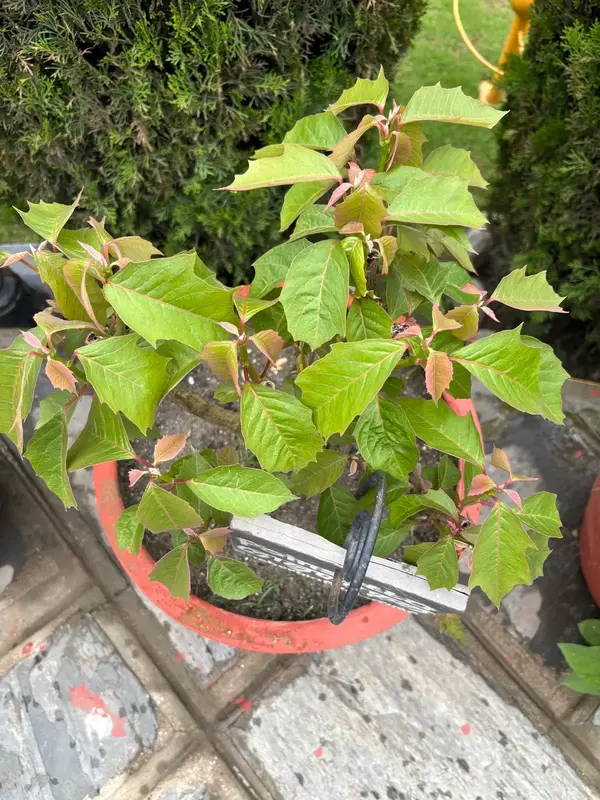
Poinsettia
लालुपाते फूल
Euphorbia pulcherrima
The red “petals” are bracts, special leaves that turn red as the nights grow long, around the tiny yellow flowers in the middle. That is why it blooms around Christmas and is called लालुपाते in Nepal.
More in The Plant Family Tree
The garden is alive and changes through the year. Some plants flower, fruit, or rest only in certain seasons, so what you see depends on when you visit.
See them for yourself
Every plant here grows on our campus in Bhaktapur. Walk the garden on your visit.
Book a Visit